
Scent Work Training for Dogs Near Me: How to Find a Class and Get Started
Quick Answer: To find scent work training for dogs near you, search for local kennel clubs, dog training facilities, and organizations like the National Association of Canine Scent Work (NACSW) or AKC Scent Work clubs. Many trainers offer introductory nose work classes that are open to all breeds and ages. Online courses are also available if no local classes exist. Expect to pay $150 to $250 for a six-week introductory course, or $30 to $50 per drop-in class. Scent work is low-impact, mentally enriching, and builds confidence in shy or anxious dogs.
You have seen the videos: dogs eagerly sniffing out hidden scents, tails wagging, tails high, completely absorbed in the hunt. You want that for your dog. But when you search for scent work training for dogs near me, the results can be confusing. Who teaches it? What does it cost? Is your dog even eligible? This guide will help you find a reputable class, understand what scent work is, and get started on the right foot.
Scent work is one of the fastest-growing dog sports in the world, and for good reason. It taps into every dog’s natural instinct, requires no special athleticism, and is accessible to dogs of all breeds, ages, and temperaments. Whether your dog is a high-energy working breed or a senior who prefers a slow sniff, there is a place for them in scent work.
What Is Scent Work Training for Dogs?
Scent work is a dog sport and activity that teaches dogs to find specific odors and alert their handler when they locate the source. It is modeled on the work of professional detection dogs — the same skills used by search-and-rescue, narcotics, and explosives detection K9s — but adapted for pet dogs as a fun, enriching activity.
In scent work training, dogs learn to search for target odors like birch, anise, clove, and cypress. These odors are hidden in containers, on vehicles, in interior spaces, or outdoors. When the dog finds the odor, they perform a trained “alert” — sitting, staring, or another behavior that signals the handler. The handler then tells the judge or instructor that the dog has found the hide.
The beauty of scent work is that it requires very little physical capability. Dogs do not need to run fast or jump high. They simply need to use their nose, which every dog is naturally equipped to do. This makes scent work ideal for senior dogs, dogs with physical limitations, and even dogs who are shy or reactive in other settings.

Why Is Scent Work So Beneficial for Dogs?
The benefits of scent work go far beyond a fun hobby. Scent work provides mental stimulation that tires a dog out more effectively than physical exercise alone. Twenty minutes of sniffing can be as exhausting as an hour-long walk for many dogs, because the brain uses so much energy processing scent information.
Scent work also builds confidence. For shy, fearful, or reactive dogs, scent work gives them a job to do that does not involve interacting with other dogs or strangers. The activity is inherently rewarding — dogs are doing what they were born to do — and success builds self-assurance.
It is also low-impact and accessible. Dogs with arthritis, missing limbs, blindness, or deafness can still participate. Scent work does not require jumping, running, or navigating obstacles. It requires sniffing, which is a natural and comfortable behavior for almost every dog.
How Do I Find Scent Work Training for Dogs Near Me?
Finding a local class is easier than you might think. Start with these search strategies.
Where to Look for Scent Work Classes
- Search for local kennel clubs. The American Kennel Club (AKC) and other organizations maintain lists of clubs that offer scent work classes and trials. Many local kennel clubs run beginner classes for members and the public.
- Check NACSW and AKC club directories. The National Association of Canine Scent Work (NACSW) and AKC Scent Work programs maintain directories of instructors, trainers, and clubs. Their websites list certified instructors and upcoming events.
- Ask your veterinarian or groomer. Vets and groomers often know which local trainers offer scent work. They may have seen clients benefit from specific instructors.
- Search online directories. Sites that list dog training professionals often have filters for “nose work” or “scent work.”
- Look for online classes if nothing is local. If you live in a remote area, online courses like Scent Work University offer structured introductory programs that you can do at home.
- Attend a local trial as a spectator. Watching a scent work trial is a great way to meet local trainers and see if the sport appeals to you and your dog.
What Should You Look for in a Scent Work Instructor?
Not all scent work instructors are created equal. Look for someone with credentials and experience specific to scent work, not just general dog training.
- Certified Nose Work Instructor (CNWI) through NACSW or similar credential
- Experience competing or titling in scent work with their own dogs
- Positive reinforcement-based training methods
- Small class sizes for individual attention
- Clear introduction to foundation skills before odor work
- Focus on dog confidence and independent searching
- Willingness to answer questions and explain the “why” behind the training
What Does a Scent Work Class Typically Cover?
A good introductory scent work class starts with foundation skills before introducing target odors. Here is what a typical progression looks like.
| Class Level | What You Learn | Skills Developed |
|---|---|---|
| Introduction to Nose Work | Searching for food or toys | Independent searching, motivation, focus |
| Introduction to Odor | Imprinting on target odor (birch) | Odor recognition, alert behavior |
| Continuing Nose Work | Adding new odors (anise, clove) | Odor discrimination, handler observation |
| Advanced Nose Work | Complex search environments | Off-leash work, elevated hides, exterior searches |
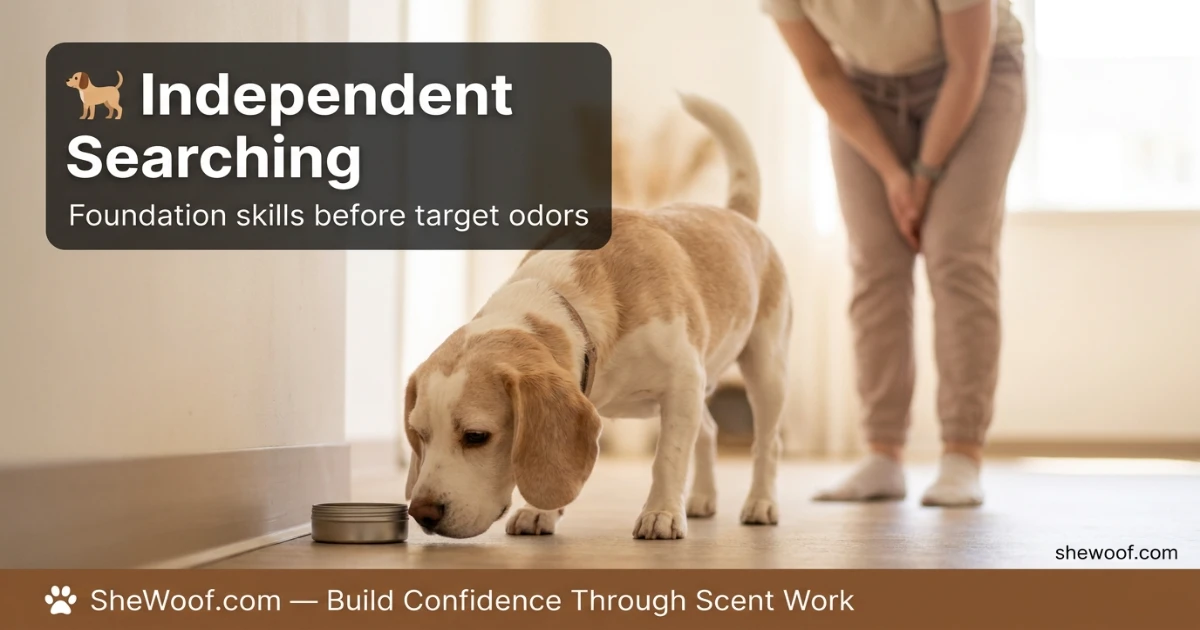
At the introductory level, many instructors use food or toys instead of target odors. This teaches dogs to search independently and rewards them for finding something they love. Once the dog is confident in searching, the instructor introduces the target odor, typically birch first because it is distinctive and easy for dogs to detect.
How Much Does Scent Work Training Cost?
6-week introductory course: $150 – $250
Drop-in class (per session): $30 – $50
Private lesson (per hour): $60 – $120
Workshop or seminar (per day): $75 – $175
Online introductory course: $50 – $150
Prices vary by region and instructor experience. Urban areas and highly credentialed instructors charge more. Online courses are the most affordable option and can be done at home, but they lack the personalized feedback of in-person classes.
What Do Most Owners Get Wrong About Scent Work?
The biggest mistake is assuming their dog is not “the right kind” for scent work. Scent work is open to every breed, every age, and every temperament. You do not need a Beagle or a Bloodhound. Any dog with a nose can do scent work.
Another mistake is starting with target odors before building foundation skills. Dogs need to learn how to search independently, how to problem-solve, and how to signal a find before you introduce a specific odor. Skipping the foundation leads to frustration for both dog and handler.
A third mistake is expecting immediate results. Scent work is a skill that takes time to develop. Some dogs pick it up quickly; others need weeks or months of foundation work. Patience and consistency matter more than speed.
What About Puppies and Senior Dogs in Scent Work?
Puppies can start scent work as early as eight weeks old. Introductory classes for puppies often use food or toys to build motivation and confidence. The activity is gentle on growing joints and provides mental enrichment that is especially valuable for young dogs.
Senior dogs are some of the best scent work candidates. Because the activity does not require physical exertion, senior dogs can participate comfortably even with arthritis or reduced mobility. The mental stimulation is excellent for cognitive health and can help slow age-related decline.
Can You Do Scent Work Training at Home?
Yes, you can absolutely do scent work at home. In fact, at-home practice between classes is essential for progress. Here is how to get started.
- Start with food or a favorite toy. Hide a treat or toy in an easy-to-find spot and let your dog search. Reward them enthusiastically when they find it.
- Increase difficulty gradually. Once your dog understands the game, make the hides slightly harder. Move the object to a different room, place it under something, or elevate it slightly.
- Use a target odor when ready. Birch is the standard starter odor. You can purchase birch-scented cotton swabs or essential oil (use sparingly) from scent work suppliers.
- Keep sessions short. Five to ten minutes of scent work is plenty for most dogs. End on a success.
- Practice in different environments. Once your dog is confident at home, practice in the yard, in a friend’s house, or on a quiet walk.
If you cannot find a local class, online courses provide structure and progression that self-teaching alone cannot. They are a great supplement to in-person training or a standalone option for remote areas.
What Realistic Progress Looks Like
In a six-week introductory course, most dogs learn to search for food or a toy independently, and some begin working with target odor. Real progress is measured in the dog’s confidence and enjoyment, not in titles or ribbons.
What is unrealistic: expecting your dog to be trial-ready in a few weeks. Scent work is a lifelong activity. Even experienced teams continue refining their skills for years.
What is realistic: a dog who gets excited when the harness comes out, who searches eagerly, and who is mentally tired and happy after every session. That is the real reward of scent work training.

Frequently Asked Questions About Scent Work Training for Dogs
Search for local kennel clubs, NACSW or AKC Scent Work clubs, and dog training facilities. Ask your veterinarian or groomer for referrals. If nothing is local, online courses are a great alternative. Watching a local trial as a spectator is a good way to meet instructors.
Yes. Scent work is open to every breed, every age, and every energy level. It is low-impact and requires no athletic ability. Shy, reactive, senior, and disabled dogs can all participate and often excel.
A typical six-week introductory course costs $150 to $250. Drop-in classes are $30 to $50 per session. Private lessons run $60 to $120 per hour. Online courses are $50 to $150.
Puppies can start as early as eight weeks old using food or toys. Adult dogs can start at any age. Senior dogs often excel because scent work does not require physical exertion.
Yes. Start by hiding treats or toys and rewarding your dog for finding them. Gradually increase difficulty. You can purchase target odors like birch from scent work suppliers. Online courses provide structure if you cannot find a local class.
The most common target odors are birch, anise, clove, and cypress. Most programs start with birch because it is distinctive and easy for dogs to detect. These odors are standardized across major scent work organizations.
Yes. Scent work is excellent for anxious and reactive dogs because it gives them a job to do that does not involve interacting with other dogs or strangers. It builds confidence and provides a positive outlet for nervous energy.
Very little equipment is needed to start. For foundation work, you just need treats or a favorite toy and some cardboard boxes or containers. Once you introduce target odors, you will need the odor itself (cotton swabs or oil) and small tins or containers to hold it.
- To find scent work training for dogs near you, search local kennel clubs, NACSW and AKC club directories, and dog training facilities. Ask your vet or groomer for referrals.
- Scent work is open to all dogs — every breed, age, and temperament. It is low-impact and builds confidence in shy, reactive, and senior dogs.
- A six-week introductory course typically costs $150 to $250. Drop-in classes are $30 to $50 per session. Online courses are a great alternative if nothing is local.
- Start with food or toy searches to build foundation skills before introducing target odors like birch.
- You can practice scent work at home between classes to reinforce what your dog is learning and keep their skills sharp.