
How to Brush a Golden Retriever: A Complete Owner’s Guide to a Healthy, Tangle-Free Coat
Estimated read time: 11 minutes
Quick Answer: To brush a Golden Retriever, use a slicker brush and metal comb on dry fur, working in sections from head to tail. Brush 3 to 5 times per week for 10 to 15 minutes, paying extra attention to the ears, tail, and underbelly where mats form most. During heavy shedding seasons, daily sessions keep loose undercoat under control and reduce tumbleweeds in your home.
Golden Retrievers have a double coat that feels like velvet on top and functions like insulation underneath — which is exactly why brushing one is nothing like running a quick comb through a Lab or a Poodle. That thick, water-resistant outer coat and dense, fluffy undercoat work together to keep your dog warm in winter and cool in summer. They also trap dead hair, dirt, and debris at an impressive rate. Learning how to brush a Golden Retriever properly is one of the most valuable skills you can develop as an owner, because it affects your dog’s comfort, your home’s cleanliness, and your ability to catch skin problems early.
I have brushed more Golden Retrievers than I can count — my own, foster dogs, and the neighborhood crew that somehow knows when I have a new slicker brush. Here is what actually works, what most owners get wrong, and how to make brushing something your dog looks forward to instead of tolerates.

What Makes a Golden Retriever’s Coat Different?
A Golden Retriever has a double coat: a long, water-repellent outer coat and a soft, dense undercoat. The outer coat protects against weather, burrs, and minor scrapes. The undercoat regulates temperature and sheds heavily twice a year — sometimes more in climates with mild winters. Both layers need attention, but they need different tools.
The outer coat is what gives Goldens their signature golden glow. It lies relatively flat and can develop feathering on the legs, tail, and chest. The undercoat is where the trouble hides. It mats close to the skin, especially behind the ears, under the front legs, around the collar line, and on the tail. If you only brush the top layer, you will create a smooth-looking dog with painful knots hiding underneath.
This is why a single brush is never enough. A slicker brush handles the surface and loosens debris. A metal comb checks your work and finds the mats you missed. Together, they form the backbone of every good Golden Retriever grooming routine.
Why Regular Brushing Matters More Than Most Owners Realize
Brushing is not just about appearance. It spreads natural oils through the coat, which keeps skin healthy and fur glossy. It removes dead hair before it ends up on your couch, your car seats, and somehow inside your refrigerator. It gives you a hands-on health check every few days — you will notice lumps, hot spots, ticks, or skin irritation long before they become serious.
There is also a behavioral benefit. A Golden Retriever who is brushed regularly from puppyhood learns that handling is safe and normal. That makes vet visits, nail trims, and bath time easier for everyone. Dogs who are only brushed when they are already matted learn to associate grooming with pain. The difference between those two experiences is routine.
What Most Owners Get Wrong About Brushing a Golden Retriever
The biggest mistake is brushing only the top of the coat. It looks productive — the brush glides, hair comes off, the dog looks smoother — but the undercoat stays compacted against the skin. Over time, that compacted undercoat forms felt-like mats that cannot be brushed out. They have to be cut or shaved, which damages the coat and can affect how it grows back.
The second mistake is using the wrong tools. A human hairbrush, a pin brush with plastic tips, or a fine-toothed comb designed for people will not penetrate a Golden’s undercoat. They may even scratch the skin or snap hair. A quality slicker brush with angled metal pins and a sturdy metal comb are non-negotiable.
The third mistake is brushing a dirty or wet coat. Dirt acts like sandpaper against the hair shaft, and wet undercoat clumps together into mats that tighten as they dry. Brush when the coat is dry and free of heavy debris. If your dog is muddy, rinse and dry first — or at least hose off the worst of it before you start.

How to Brush a Golden Retriever: Step-by-Step
- Gather your tools. You need a slicker brush, a metal comb (sometimes called a greyhound comb), a detangling spray or leave-in conditioner for tough spots, and treats. A grooming glove or rubber curry brush can help with loosening undercoat during shedding season, but it does not replace the slicker and comb.
- Start with a dry, debris-free coat. Check for burrs, sticks, or dried mud. Pick out anything embedded in the fur with your fingers before you brush. If your dog is damp from rain or swimming, towel dry and wait — or use a low-heat blow dryer on the cool setting to speed things up.
- Work in sections. Start at the head and work backward. Brush the neck and chest first, then the shoulders, sides, back, belly, legs, and tail. Part the coat with one hand and brush in the direction the hair grows. For the underbelly and armpits, use gentle, short strokes — this skin is sensitive.
- Use the slicker brush first. Hold the slicker lightly. You are not scrubbing a floor. Let the pins glide through the coat and lift loose hair. Work in small sections, about the size of your palm. If you hit resistance, stop and use your fingers to separate the hair before continuing.
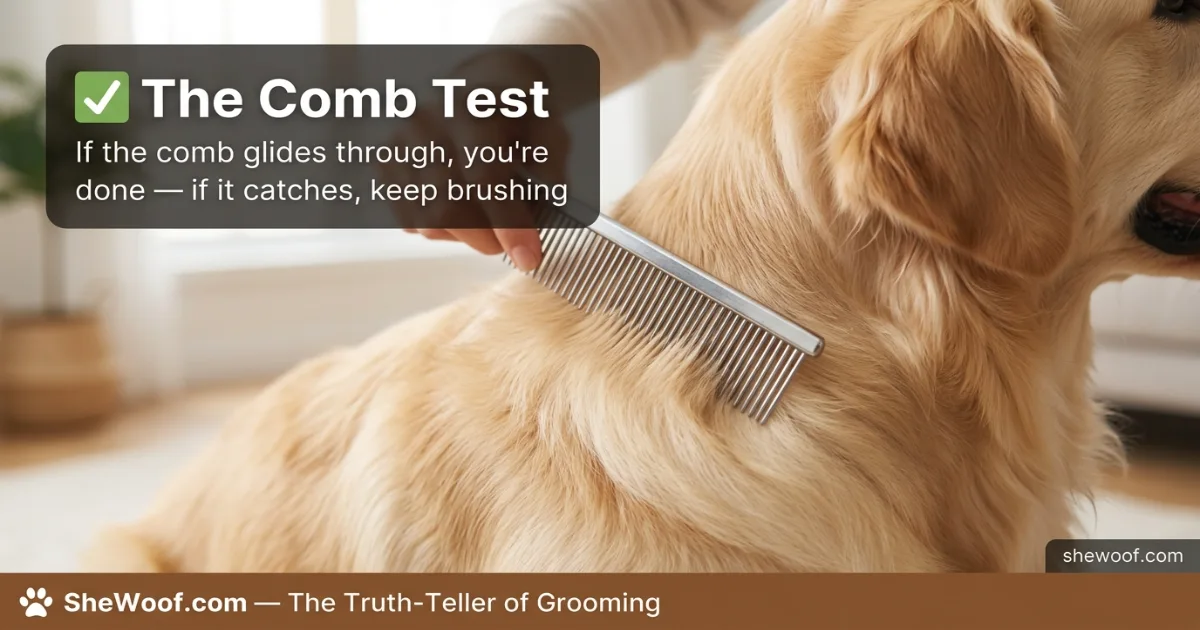
- Follow with the metal comb. The comb is your quality check. Run it through each section after the slicker. If it passes through smoothly from skin to tip, that section is done. If it catches, go back to the slicker, then comb again. Pay special attention to the ears, tail, and britches — the areas where mats form first.
- Reward and repeat. Treats during and after brushing build positive associations. Keep sessions short at first — five minutes is plenty for a puppy — and gradually extend as your dog relaxes. End on a good note, even if you only finished half the dog.
Puppy vs. Adult Golden Retriever: What Changes
Puppy coat is soft, short, and relatively easy to brush. That is exactly why puppyhood is the best time to build the habit. A 10-week-old Golden does not need a full grooming session, but two or three minutes of gentle brushing with a soft slicker teaches handling and makes the adult coat easier to manage later.
Adult Goldens have the full double coat and need consistent, thorough sessions. Seniors may have thinner coats, arthritis, or skin sensitivity that makes long sessions uncomfortable. For older dogs, use a softer brush, shorter sessions, and consider a grooming table or floor mat that reduces the need to stand for long periods.
| Life Stage | Brush Frequency | Session Length | Key Considerations |
|---|---|---|---|
| Puppy (8–16 weeks) | 2–3× per week | 2–5 minutes | Build trust, use soft brush, reward heavily |
| Puppy (4–12 months) | 3–4× per week | 5–10 minutes | Coat changing, introduce comb |
| Adult (1–7 years) | 3–5× per week | 10–15 minutes | Full double coat, watch for mats |
| Senior (7+ years) | 3–4× per week | 5–10 minutes | Gentle handling, check for lumps, arthritis-friendly positions |

Shedding Season: How to Handle the Fluff Storm
Golden Retrievers shed year-round, but twice a year — typically spring and fall — they blow their undercoat in dramatic fashion. During those weeks, daily brushing is not overkill. It is damage control.
During heavy shedding, start with a rubber curry brush or undercoat rake to loosen dead hair, then follow with the slicker and comb. Brush outside if possible. If you brush indoors, do it on a hard floor that is easy to sweep or vacuum. A bath during shedding season can help loosen undercoat, but only if you dry thoroughly and brush afterward.
- Brush before bath, not after — wet undercoat mats faster.
- Use a high-velocity pet dryer on cool setting if your dog tolerates it.
- Keep lint rollers in your car and near your favorite chair.
- Consider a professional deshedding treatment once or twice a year.
- Do not shave your Golden to reduce shedding — it can permanently damage the coat.
Common Brushing Mistakes That Cause Problems
Brushing too hard is a common issue. Slicker brushes have sharp pins, and pressing down aggressively can scratch skin and cause brush burn. Let the brush do the work. If your dog flinches, yelps, or tries to move away, you are pressing too hard or hitting a mat.
Brushing only when the dog is matted is another. Mats tighten over time. A small tangle behind the ear can become a solid knot in a week. Regular sessions prevent that entirely.
Ignoring the tail and britches is a recipe for trouble. The tail feathers and the fur around the rear collect debris and mat easily. These areas need deliberate attention every session, not just a quick pass.
Using the wrong tool for the job — a pin brush for undercoat, a fine comb for surface fur — wastes time and can damage the coat. Match the tool to the task.
When to Call a Professional Groomer or Vet
If your Golden Retriever has mats that are tight against the skin, do not try to brush them out yourself. Brushing over a tight mat causes pain and can tear skin. A professional groomer has the tools and experience to remove mats safely, sometimes with clippers.
If you notice skin redness, hot spots, bald patches, scabs, lumps, or a sudden change in coat texture, call your veterinarian. These can be signs of allergies, infections, thyroid issues, or other conditions that need diagnosis and treatment. Do not attempt to treat skin problems with over-the-counter products without veterinary guidance.
If your dog becomes anxious, aggressive, or panicked during brushing, a trainer or behaviorist can help. Grooming anxiety is common and treatable with counter-conditioning and desensitization. It is not a character flaw.
How Much Does Golden Retriever Grooming Cost?
- Full groom (bath, brush, trim, nails): $60–$100
- Deshedding treatment: $40–$80
- Bath and brush only: $35–$60
- Nail trim: $15–$25
- Mobile groomer premium: $85–$150
Prices vary by region, coat condition, and whether the groomer specializes in double-coated breeds. A Golden with severe matting may cost more because of the extra time required. Mobile groomers charge more for convenience. If a price seems suspiciously low, ask what is included — some budget groomers skip the undercoat comb-out that Goldens actually need.
Most owners find that a professional groom every 6 to 8 weeks, combined with home brushing 3 to 5 times per week, keeps a Golden Retriever comfortable and reduces grooming costs over time.
Building a Brushing Routine That Actually Sticks
Consistency beats intensity. A 10-minute session every other day is far better than a 45-minute marathon once a month. Pick a time that fits your schedule — after the evening walk, before dinner, during a favorite TV show — and make it part of the daily rhythm.
Keep your tools where you can reach them. If the brush is buried in a closet, you will not use it. A basket near the couch or a hook by the door makes brushing frictionless.
Involve your dog in the process. Let them sniff the brush, reward calm behavior, and stop before they get restless. Brushing should feel like a shared activity, not a chore imposed on them.
- Slicker brush with angled metal pins
- Metal comb for checking undercoat
- Detangling spray for stubborn spots
- Rubber curry or undercoat rake for shedding season
- Treats within reach
- Good lighting to see skin and mats
- Non-slip surface for your dog to stand on
- Patience and a calm voice
Frequently Asked Questions
How often should I brush my Golden Retriever?
Brush your Golden Retriever 3 to 5 times per week for 10 to 15 minutes per session. During heavy shedding seasons in spring and fall, daily brushing is ideal. Puppies need shorter, more frequent sessions to build comfort with handling.
What is the best brush for a Golden Retriever?
A slicker brush with angled metal pins is the primary tool, paired with a metal comb for checking undercoat. A rubber curry brush or undercoat rake helps during shedding season. Avoid pin brushes with plastic tips and human hairbrushes.
Can I brush my Golden Retriever when the coat is wet?
No. Brushing a wet Golden Retriever coat causes mats to tighten and can damage hair. Wait until the coat is completely dry. If your dog is wet from swimming or a bath, towel dry and use a low-heat dryer on the cool setting before brushing.
Why does my Golden Retriever hate being brushed?
Common reasons include past pain from mats, brushing too hard, or sensitivity in certain areas. Use gentle strokes, keep sessions short, reward calm behavior, and never force it. If anxiety is severe, consult a trainer or behaviorist for counter-conditioning guidance.
Should I shave my Golden Retriever to reduce shedding?
No. Shaving a Golden Retriever can permanently damage the double coat and affect its ability to regulate temperature. The coat may grow back unevenly or not at all in some areas. Regular brushing and deshedding treatments are the safe way to manage shedding.
How do I brush a Golden Retriever’s tail and ears?
Use a metal comb on the tail feathers and ear fringe, working from the ends toward the skin in small sections. Hold the hair near the base to avoid pulling skin. These areas mat easily, so check them every session.
When should I see a vet about my Golden Retriever’s coat or skin?
Contact your veterinarian if you notice redness, hot spots, bald patches, scabs, persistent scratching, lumps, or a sudden change in coat texture. These can indicate allergies, infections, or other conditions that need professional diagnosis.
Can I use human detangling spray on my Golden Retriever?
Some human detanglers are safe, but pet-specific products are formulated for dog skin pH and are less likely to cause irritation. Always patch-test first and avoid products with strong fragrances or alcohol. Ask your groomer or vet if unsure.
- Brush your Golden Retriever 3 to 5 times per week with a slicker brush and metal comb.
- Always brush a dry coat — wet undercoat mats faster and tighter.
- Pay extra attention to ears, tail, underbelly, and britches where mats form first.
- Never shave a Golden Retriever to reduce shedding — it can damage the double coat permanently.
- Professional grooming every 6 to 8 weeks complements home brushing and keeps costs manageable.
- See a vet for skin redness, hot spots, bald patches, or sudden coat changes.