How Old Can a Puppy Be to Get Shots? A Complete Vaccination Timeline for New Owners
Estimated read time: 12 minutes
Quick Answer: Puppies can start their first vaccinations as early as 6 to 8 weeks of age. The core vaccine series is then repeated every 2 to 4 weeks until the puppy is at least 16 weeks old, with a final dose at 14 to 16 weeks being the most critical for lasting protection. Rabies is typically given between 12 and 16 weeks, depending on local laws.
The question of how old a puppy can be to get shots comes up in almost every new-owner conversation I have had — whether it is a family bringing home a Golden Retriever puppy or a foster parent taking in a litter of mixed-breed rescues. The answer is not a single number. It is a range, and understanding why that range exists will help you make better decisions about your puppy’s health during the most vulnerable weeks of their life.
I have raised puppies who started their vaccines at six weeks in a shelter setting and puppies who began at eight weeks in a quiet home. The timing shifted based on risk, but the principle stayed the same: start early enough to protect, repeat often enough to overcome maternal antibodies, and finish late enough to ensure the puppy’s own immune system has taken over.
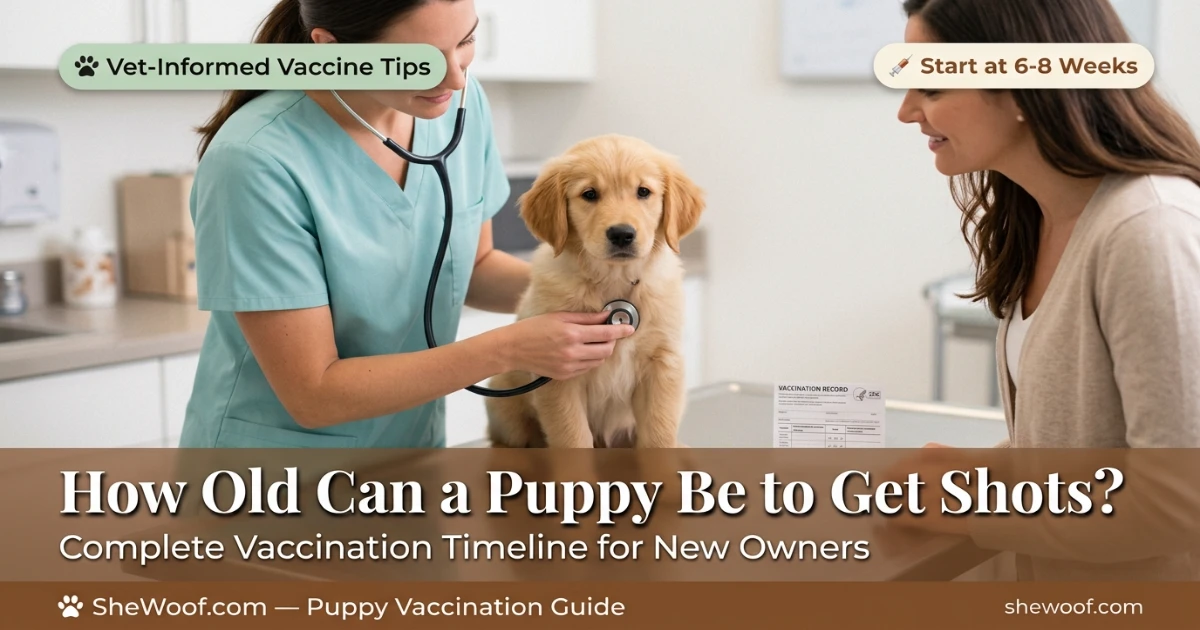
Why Puppies Need a Series of Shots, Not Just One
The reason puppies need multiple vaccinations instead of a single dose comes down to maternal antibodies. When a puppy nurses during the first 24 to 48 hours of life, they absorb protective proteins from their mother’s colostrum. These antibodies shield the puppy from disease during the earliest weeks, when their own immune system is still developing.
But those same antibodies create a problem for vaccination. As long as they are present in high enough levels, they neutralize the vaccine before the puppy’s immune system can learn from it. The maternal antibodies decline at different rates in different puppies — sometimes disappearing by 8 weeks, sometimes lingering until 16 weeks or later .
Since there is no reliable way to know exactly when a specific puppy’s maternal antibodies will drop below the threshold that allows vaccination to work, veterinarians give a series of shots spaced 2 to 4 weeks apart. The goal is for at least two of those doses to land in the window after maternal antibodies have faded but before the puppy encounters the real disease .
How Old Can a Puppy Be to Get Shots? The Standard Timeline
For most puppies in typical home environments, vaccinations begin between 6 and 8 weeks of age . The exact starting point depends on the puppy’s living situation, the risk of disease exposure in the area, and the veterinarian’s assessment of the individual puppy.
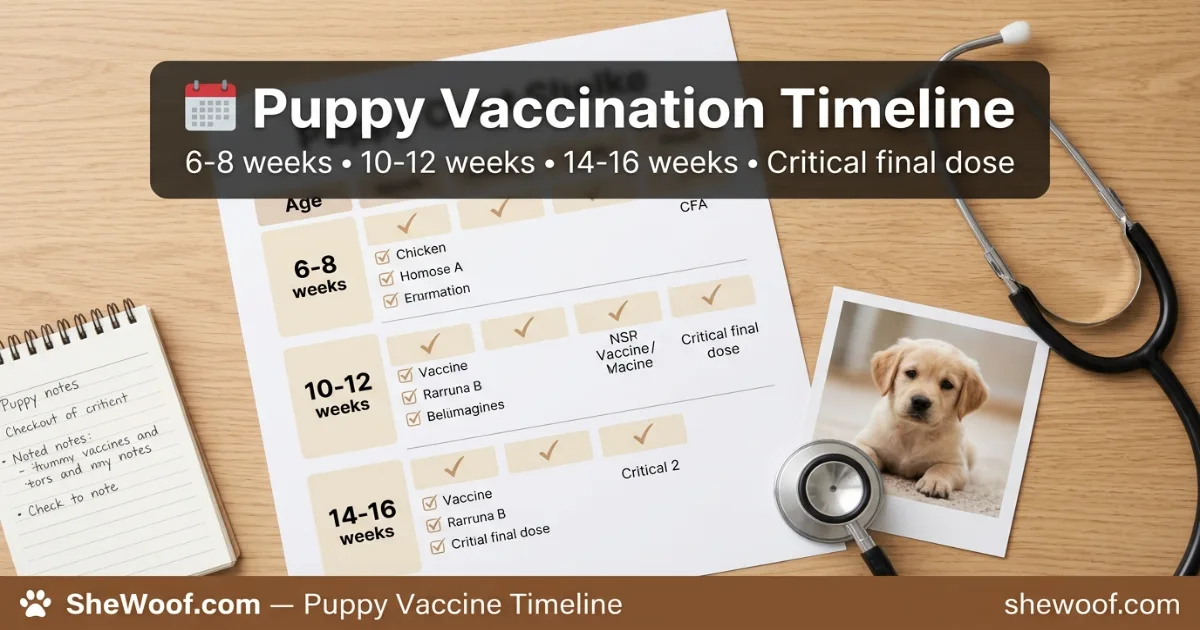
Typical Puppy Vaccination Schedule
- 6–8 weeks: First core vaccine (usually a combination protecting against distemper, adenovirus, parvovirus, and parainfluenza). This visit often includes a full health exam, fecal test for parasites, and deworming.
- 10–12 weeks: Second core vaccine booster. Non-core vaccines like leptospirosis or Bordetella may be added based on lifestyle and geographic risk.
- 14–16 weeks: Final core vaccine booster. This is the critical dose that ensures protection even for puppies whose maternal antibodies lasted longer than average. Rabies is often given at this visit or shortly after.
- 16–20 weeks (high-risk areas): In regions with high parvovirus risk or in shelter settings, veterinarians may recommend an additional booster at 18 to 20 weeks to close any remaining gaps in protection .
The rabies vaccine follows a slightly different timeline because it is governed by local laws. In most areas, the first rabies shot is given between 12 and 16 weeks of age . Some countries and states have specific regulations about the minimum age, so your veterinarian will follow local requirements.
| Age | Core Vaccines | Common Additions | Key Notes |
|---|---|---|---|
| 6–8 weeks | DHPP (first dose) | Deworming, fecal exam | Earliest standard starting point for most puppies |
| 10–12 weeks | DHPP (second dose) | Leptospirosis, Bordetella (lifestyle) | Booster interval 2–4 weeks |
| 14–16 weeks | DHPP (final dose) | Rabies | Most critical dose — do not skip |
| 16–20 weeks | DHPP (high-risk areas only) | — | Recommended in shelters or outbreak zones |
What Most New Owners Get Wrong About Puppy Shots
The most common misunderstanding is that one shot equals full protection. It does not. A puppy who receives a single vaccine at 8 weeks is not protected against parvovirus or distemper. The maternal antibodies may have blocked that dose entirely, or the puppy’s immune system may not have mounted a strong enough response yet. The series is what builds reliable immunity.
The second mistake is waiting until the puppy is “older” to start. Some owners hear that 16 weeks is the finish line and assume there is no rush to begin. But delaying the start extends the window of vulnerability. A puppy who starts at 8 weeks and finishes at 16 weeks has been building protection the entire time. A puppy who starts at 12 weeks has been unprotected for an extra month.
The third mistake is thinking the puppy is fully safe immediately after the last shot. The immune system needs about one to two weeks after the final dose to reach full protective levels . During that brief window, caution is still warranted.
How Breed and Size Affect Puppy Vaccination
Vaccine doses are the same for all puppies regardless of breed or adult size. A Chihuahua puppy and a Great Dane puppy receive the same amount of vaccine at the same ages . That said, some research suggests small dogs may mount stronger antibody responses to certain vaccines than large dogs, and small breeds like French Bulldogs, Dachshunds, and Boston Terriers appear to have a higher risk of adverse reactions to vaccines .
For most owners, this does not change the schedule. It does mean that if your puppy is a small breed or has a history of reactions in the litter, it is worth discussing timing and product choices with your veterinarian. Splitting vaccines across multiple visits rather than combining several into one appointment may reduce the risk of a reaction in sensitive puppies .
When Puppies Might Start Shots Earlier Than 6 Weeks
In high-risk environments — animal shelters, puppy mills, or areas experiencing a parvovirus outbreak — veterinarians may start vaccinations as early as 4 to 6 weeks of age . This is a calculated decision. The risk of the puppy contracting a deadly disease outweighs the possibility that the early vaccine will be blocked by maternal antibodies.
Even in these cases, the puppy still needs to complete the full series through 16 weeks. Starting early does not shorten the schedule. It just adds extra doses at the beginning to increase the chance that at least some of them will overcome maternal antibody interference.
What About Puppy Classes and Socialization?
There is a common tension between waiting for full vaccination and wanting to socialize a young puppy during their critical developmental window. The American Veterinary Society of Animal Behavior recommends starting socialization before the vaccination series is complete, using controlled, safe environments .
Puppy classes that require proof of vaccination, use clean facilities, and separate puppies by age are generally considered low-risk. Playdates with healthy, vaccinated adult dogs in private homes are also safe options. The goal is to avoid high-traffic public areas and unknown dogs while still exposing your puppy to new experiences, sounds, and gentle handling .
Common Mistakes to Avoid
Missing or delaying boosters is the most frequent error. If life gets busy and a booster is skipped by a week or two, the series can usually be resumed without starting over — but the gap leaves the puppy vulnerable. Try to stay on schedule, and if you miss an appointment, reschedule as soon as possible .
Giving vaccines at home without veterinary guidance is another. While some owners administer their own vaccines to save money, the risks include improper storage, incorrect injection technique, and missed reactions. A veterinarian also tracks the official record, which you will need for boarding, training classes, and travel.
Assuming a puppy is protected because the mother was vaccinated is a third mistake. Maternal antibodies help early on, but they fade unpredictably. The puppy’s own vaccination series is what builds lasting immunity.
- Bring any records from the breeder, shelter, or previous owner to the first visit.
- Keep the appointment calm — a tired or stressed puppy handles the exam more easily.
- Ask your vet to demonstrate how to check for lumps or swelling at the injection site in the days after.
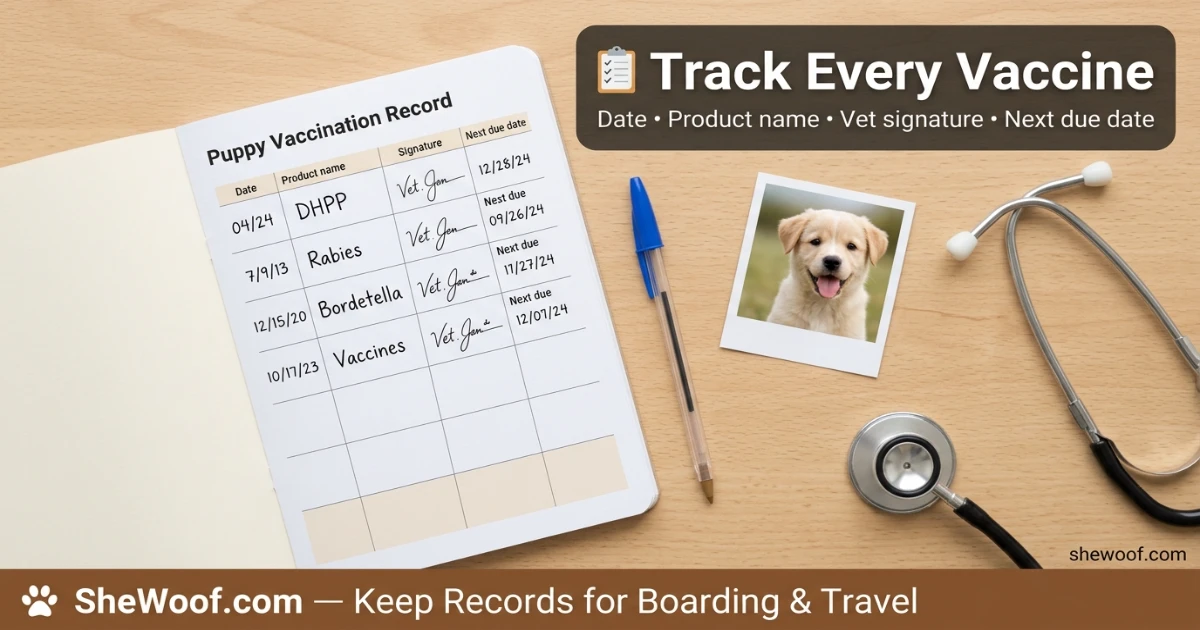
- Note the date and product name of each vaccine in a puppy journal or phone app.
- Schedule the next booster before you leave the clinic.
What Realistic Protection Looks Like
By the time your puppy completes the full series at 16 weeks and waits the additional one to two weeks for immunity to mature, they are generally considered protected against the core diseases. That does not mean they can never get sick, but the risk drops dramatically.
Some puppies, despite proper vaccination, may still not develop full immunity — a phenomenon known as vaccine failure. This is rare, but it is one reason why avoiding high-risk environments until the series is complete matters even for vaccinated puppies .
What is unrealistic is expecting a single shot or an early series to provide complete protection before 16 weeks. The immune system needs time, and the maternal antibodies need to fade. Patience during this window is one of the most important things you can offer a young puppy.
- Puppies can start their first vaccinations as early as 6 to 8 weeks of age, with boosters every 2 to 4 weeks until at least 16 weeks.
- The final dose at 14 to 16 weeks is the most critical for ensuring lasting protection against parvovirus and distemper.
- Rabies is typically given between 12 and 16 weeks, depending on local laws.
- A puppy is not fully protected until about one to two weeks after the final dose in the series.
- Avoid dog parks and high-traffic areas until the series is complete; controlled socialization with vaccinated dogs is safe and beneficial.
Frequently Asked Questions
How old can a puppy be to get shots?
Puppies can start their first vaccinations as early as 6 to 8 weeks of age. In high-risk settings like shelters, some may start at 4 to 6 weeks. The standard series continues with boosters every 2 to 4 weeks until at least 16 weeks of age.
Can I take my puppy outside before all their shots are done?
You can take your puppy outside for potty breaks in your own yard or other low-traffic areas, but avoid public places where unknown dogs may have been. Controlled socialization with healthy, vaccinated dogs in private settings is recommended during this window.
What happens if my puppy misses a booster shot?
If you miss a booster by a week or two, you usually do not have to start the series over. Call your vet to reschedule as soon as possible. A longer gap may require an extra dose to ensure protection.
Is one puppy shot enough to protect my dog?
No. A single vaccine dose is not enough for reliable protection. Maternal antibodies can block the vaccine, and the puppy’s immune system needs multiple exposures to build strong, lasting immunity.
When can my puppy meet other dogs?
Your puppy can meet healthy, vaccinated dogs in private homes before the series is complete. Avoid dog parks and areas with unknown dogs until about two weeks after the final vaccine at 16 weeks.
How much do puppy shots cost?
Costs vary by location and clinic. Core vaccine visits often range from $30 to $100 per visit depending on what is included. Some clinics offer puppy packages that bundle vaccines, exams, and deworming at a lower total cost.
Do small breeds need different vaccines than large breeds?
The vaccine dose is the same regardless of breed or size. However, small breeds and certain breeds like French Bulldogs may have a higher risk of vaccine reactions. Your vet may adjust the timing or split vaccines across visits for sensitive puppies.
When is my puppy fully vaccinated?
Most puppies are considered fully vaccinated around 16 to 18 weeks of age, after the final core vaccine and a one-to-two-week waiting period for immunity to mature. Rabies timing depends on local law.