King Charles Cavaliers Light in Color: What Owners Should Know About Coat Shades
Estimated read time: 12 minutes
Quick Answer: King Charles Cavaliers light in color are usually within the normal range of the breed’s four recognized coat colors — Blenheim, Ruby, Tricolor, and Black and Tan. Light shading can result from genetics, puppy coat transitions, sun exposure, or natural color variation within a litter. A light-colored Cavalier is not inherently less healthy or less purebred than a darker one, though very pale or washed-out coats may occasionally warrant a closer look at overall health.
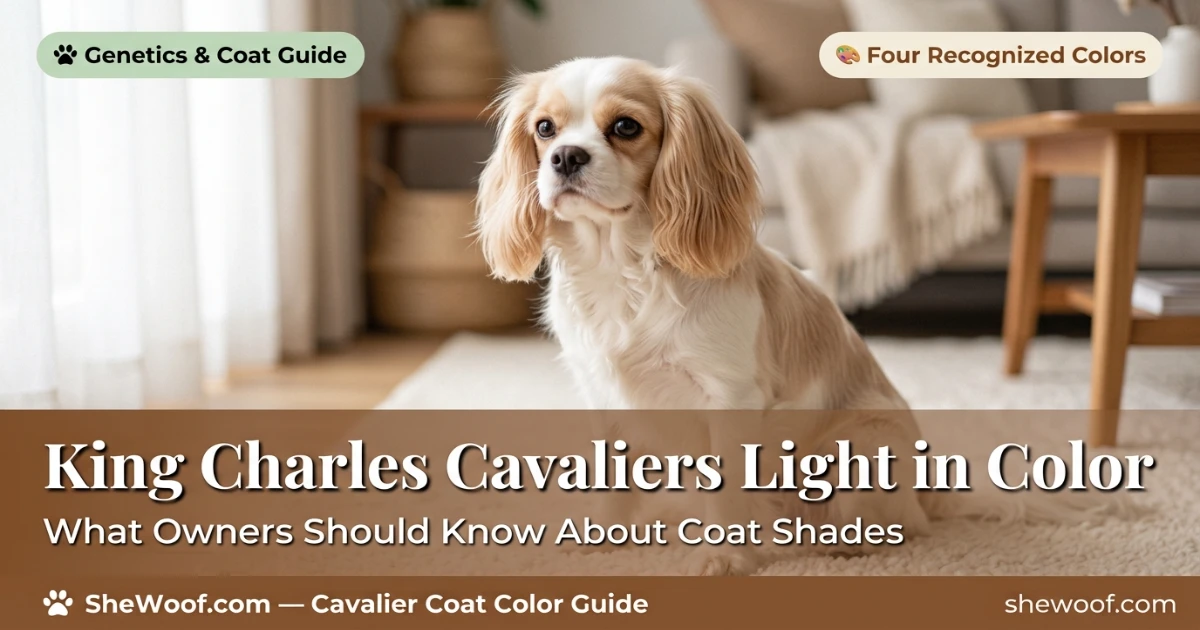
If you have spent time around Cavalier King Charles Spaniels, you have probably noticed how much their coat colors can vary. Two Blenheims from the same litter can look almost like different breeds — one rich chestnut and white, the other so pale the markings seem barely there. King Charles Cavaliers light in color are not a separate category or a sign of poor breeding. They are simply expressing the natural genetic variation that exists within this beloved breed.
I have met Cavaliers whose coats looked like pale cream with the faintest hints of color, and others whose Blenheim markings were so deep and saturated they looked almost painted on. Both are normal. Both are beautiful. But understanding why some Cavaliers are lighter than others helps owners know what to expect as their dog matures and when a change in coat color might warrant a vet visit.
What Are the Four Recognized Cavalier Colors?
The Cavalier King Charles Spaniel breed standard recognizes exactly four coat colors: Blenheim, Tricolor, Ruby, and Black and Tan . Each has specific characteristics, and none is ranked as “better” than the others — it is purely a matter of preference.
Blenheim is the most common and recognizable Cavalier color. It consists of rich chestnut markings on a pearly white background, with the chestnut patches well broken up and evenly divided on the head . The ideal Blenheim has a lozenge-shaped spot on the top of the head, sometimes called the “queen’s thumbprint” . Blenheims are the color most likely to show the kind of light variation that prompts questions from new owners.
Tricolor combines black and white with tan markings over the eyes, on the cheeks, inside the ears, and under the tail . The black markings on a tricolor can vary significantly in extent, and some tricolor puppies are born with so much white that their adult markings look dramatically different.
Ruby is a solid, rich red color with no white markings . Ruby Cavaliers are whole-colored dogs, meaning they have no white patches. Their coat color can range from deep mahogany to a lighter, more orange-red shade.
Black and Tan features a raven black coat with bright tan markings above the eyes, on the cheeks, chest, legs, and under the tail . This is often described as the rarest of the four recognized colors .
Why Are Some Cavaliers Lighter in Color Than Others?
Light coat color in Cavaliers comes down to three main factors: genetics, age, and environment. Understanding each one helps explain why your Cavalier might look different from another dog of the same color type.
Genetics play the largest role. The intensity of red and chestnut pigments in Cavaliers is a polygenic trait — meaning multiple genes contribute to how rich or pale the color appears . Two Blenheim parents with lighter coats will likely produce lighter puppies. The specific combination of genes controlling pigment production determines whether a Cavalier’s markings are deep and saturated or soft and pale.
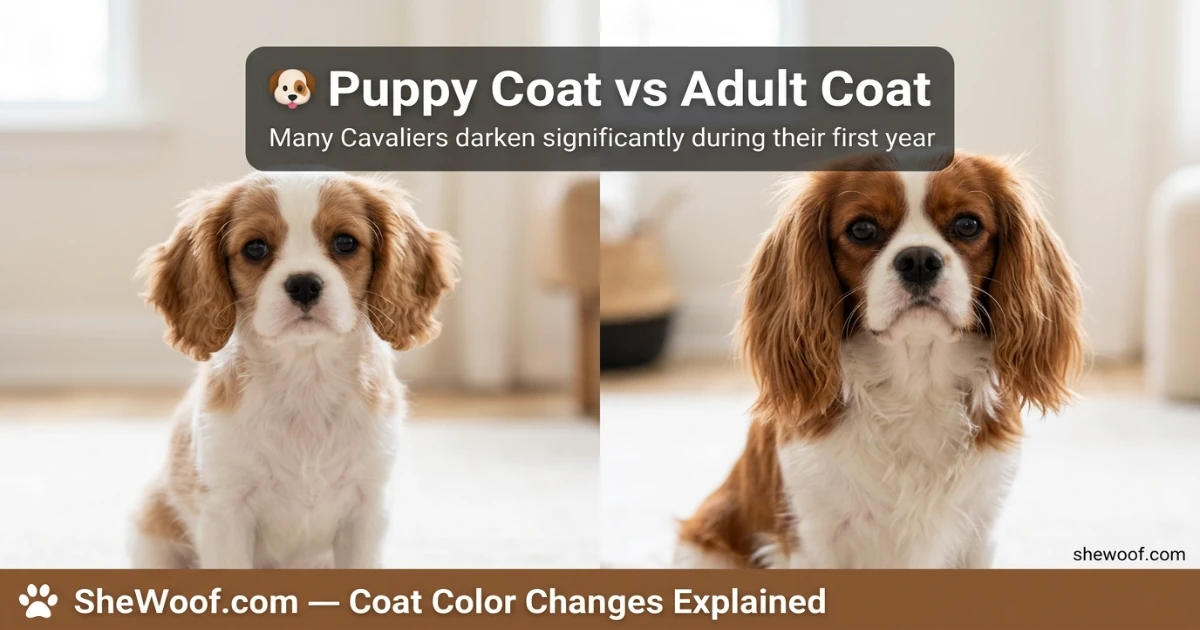
Age is a major factor that surprises many new owners. Cavalier puppies are often significantly lighter than adults. A Blenheim puppy that looks almost cream-colored at eight weeks may darken considerably by the time it reaches one or two years of age . Puppy coats are softer, shorter, and often less pigmented than adult coats. The transition from puppy fur to adult coat typically happens between four and twelve months, and the color can shift noticeably during this period.
Sun exposure can lighten a Cavalier’s coat over time. Ultraviolet light breaks down melanin in the hair shaft, which is why dogs who spend a lot of time outdoors in sunny climates may develop lighter coats than dogs who are primarily indoors. This effect is gradual and usually subtle, but it can be noticeable over months and years.
Is a Light-Colored Cavalier Healthy?
Light coat color itself is not a health concern. A pale Blenheim or a Ruby with a lighter shade is no more or less healthy than a darker one. Coat color genetics and overall health genetics are separate systems.
There is one important caveat, however. The Cavalier King Charles Spaniel breed carries a high number of potentially harmful genetic mutations, including variants linked to heart conditions like myxomatous mitral valve disease . These health issues are related to the breed’s genetic history and population size, not to coat color. A light-colored Cavalier and a dark-colored Cavalier face the same breed-specific health risks.
That said, any sudden or dramatic change in coat color in an adult dog — especially if accompanied by other symptoms like lethargy, weight loss, or skin changes — is worth mentioning to your veterinarian. Coat changes can occasionally indicate thyroid issues, nutritional deficiencies, or other underlying conditions.
How Does Coat Color Change as a Cavalier Grows?
The most dramatic coat color changes happen during the transition from puppy to adult. Here is what owners typically observe.
| Age | Typical Coat Appearance | What to Expect |
|---|---|---|
| 8–12 weeks | Soft, short, often pale or washed-out markings | Puppy coat; color may not reflect adult shade |
| 4–6 months | Beginning transition; feathering starts | Color may deepen or shift as adult coat grows in |
| 8–12 months | Adult coat largely established | Markings usually more defined; color often richer |
| 1–2 years | Fully mature coat | Feathering complete; final color mostly set |
| Senior years | May lighten slightly or develop white hairs | Normal aging; similar to graying in humans |
Tricolor Cavaliers tend to show the most dramatic changes. The black markings often grow in over white areas as the puppy matures, and a tricolor puppy with a wide white blaze at birth may retain that broad blaze into adulthood . Blenheims also change — their chestnut markings often become richer and more defined with age, though the degree varies.
What About “Mis-Marked” or Non-Standard Colors?
Occasionally, Cavaliers are born with coat colors or patterns that fall outside the four recognized standards. These are sometimes called “mis-marks” or “off-colors.”
The AKC notes that chocolate and chocolate-and-white Cavaliers may be registered but cannot be shown in conformation rings . These colors appear rarely and are considered mutations or the result of unusual genetic combinations. Other non-standard colors like black-and-white without tan markings, or merle, exist but are not part of the breed standard. Merle in particular is considered a “color gimmick” that only substandard breeders produce, since the merle gene must be introduced from another breed .
If you are looking for a Cavalier puppy, be cautious of breeders advertising “rare” colors or charging premium prices for them. A responsible breeder will not market non-standard colors as desirable or valuable. The breed standard recognizes four colors, and none of them is rare enough to justify inflated prices.
Does Light Color Affect Grooming Needs?
Light-colored Cavaliers may show stains and discoloration more visibly than darker dogs. Tear stains, in particular, are more noticeable on white or light-colored fur around the eyes . This is purely cosmetic — tear staining is not a health problem in itself, though excessive tearing can sometimes indicate eye irritation or blocked tear ducts.
Regular grooming helps maintain a light coat’s appearance. Brushing removes dirt and distributes natural oils. Bathing every four to six weeks with a dog-safe shampoo keeps the coat clean without stripping essential oils. For tear stains, gentle daily wiping with a damp cloth or pet-safe eye wipe can reduce discoloration.
- Wipe around the eyes daily to minimize tear staining.
- Use a whitening shampoo formulated for dogs if stains are persistent.
- Avoid human whitening products — they can irritate dog skin.
- Brush regularly to keep the coat clean and prevent mats.
- Check ears weekly — light-colored Cavaliers are not more prone to ear issues, but discharge is easier to spot on light fur.
What Should You Do If Your Cavalier’s Color Changes Suddenly?
Gradual color changes as a Cavalier matures are completely normal. Sudden, dramatic changes in an adult dog are different and warrant attention.
If your Cavalier’s coat becomes significantly lighter, duller, or develops patches of discoloration over a short period, that is worth a conversation with your veterinarian. Potential causes include thyroid dysfunction, nutritional deficiencies, hormonal imbalances, or skin conditions. None of these can be diagnosed from coat color alone, but a vet can assess your dog’s overall health and determine whether further testing is needed.
What Realistic Expectations Look Like
If you are choosing a Cavalier puppy, understand that the color you see at eight weeks is not necessarily the color you will have at two years. Puppies darken, markings shift, and feathering changes the overall appearance. A light-colored puppy may become a richly marked adult, or it may stay on the lighter side — both outcomes are normal.
If you already have a light-colored Cavalier, there is nothing to fix. Light coloring is not a defect, a health risk, or a sign of poor breeding. It is simply one expression of the breed’s natural genetic diversity. The Cavalier’s value comes from its temperament, its companionship, and its health — not the saturation of its markings.
- Cavalier King Charles Spaniels come in four recognized colors: Blenheim, Tricolor, Ruby, and Black and Tan. Light shading within these colors is normal genetic variation.
- Puppies are often much lighter than adults. Most Cavaliers darken significantly during their first year as the adult coat grows in.
- Light coat color is not a health concern and does not indicate poor breeding or lower quality.
- Sudden coat color changes in adult dogs warrant a veterinary check to rule out underlying health issues.
- Be cautious of breeders advertising “rare” colors at premium prices — the breed standard recognizes only four colors, and non-standard colors may indicate questionable breeding practices.
Frequently Asked Questions
Are light-colored King Charles Cavaliers rare or special?
No. Light shading within the four recognized colors is normal genetic variation, not a rare trait. The breed standard recognizes Blenheim, Tricolor, Ruby, and Black and Tan — none of which is ranked above the others. A light Blenheim is simply a Blenheim with less saturated chestnut markings.
Why is my Cavalier puppy lighter than its parents?
Puppy coats are often much lighter than adult coats. The color you see at eight weeks is not the final color. Most Cavaliers darken significantly during their first year as the adult coat grows in. Genetics also play a role — pigment intensity is polygenic, meaning multiple genes contribute to how rich or pale the color appears.
Does a light coat mean my Cavalier is unhealthy?
No. Coat color and overall health are determined by different genetic factors. A light-colored Cavalier is not inherently less healthy than a darker one. However, sudden coat changes in an adult dog can occasionally indicate thyroid issues or nutritional deficiencies, so those should be checked by a vet.
What are the four recognized Cavalier King Charles Spaniel colors?
The four recognized colors are Blenheim (chestnut on white), Tricolor (black, white, and tan), Ruby (solid rich red), and Black and Tan (black with tan markings). Any other color or combination is considered non-standard.
Will my light-colored Cavalier darken as it grows?
Often, yes. Many Cavaliers darken significantly between puppyhood and adulthood, especially during the transition from puppy coat to adult coat between four and twelve months. However, the degree of darkening varies by individual and by genetics.
Should I pay more for a rare-colored Cavalier?
No. Be cautious of breeders advertising “rare” or “exotic” Cavalier colors at premium prices. The breed standard recognizes only four colors, and non-standard colors like merle or chocolate may indicate breeding practices that prioritize appearance over health. Prioritize health testing instead.
Does light fur make grooming harder?
Light-colored Cavaliers may show tear stains and dirt more visibly, but the grooming routine is the same. Regular brushing, bathing every four to six weeks, and daily wiping around the eyes keep a light coat looking its best.
Can a Cavalier’s coat change color suddenly?
Gradual changes during puppyhood and aging are normal. Sudden or dramatic coat changes in an adult dog are not typical and should be evaluated by a veterinarian to rule out thyroid issues, nutritional deficiencies, or skin conditions.