Female Cavalier King Charles Spaniel Cycle: What Every Owner Should Know About Heat
Estimated read time: 12 minutes
Quick Answer: A female Cavalier King Charles Spaniel typically has her first heat cycle between 6 and 12 months of age, though some start as early as 4 months or as late as 18 months. After the first cycle, most Cavaliers go into heat every 6 to 8 months, with each season lasting about 2 to 4 weeks. The cycle includes distinct stages, and owners should watch for vulvar swelling, discharge, and behavioral changes.
The first time your female Cavalier King Charles Spaniel goes into heat can feel like a crash course in canine reproduction — especially if you have never lived with an intact female dog before. One day she is her usual affectionate self, and the next she is leaving small spots on the furniture and attracting every unneutered male in the neighborhood. Understanding the female Cavalier King Charles Spaniel cycle helps you prepare for what is normal, recognize what is not, and make informed decisions about spaying, breeding, or managing intact life.
I have lived through several heat cycles with Cavaliers in my extended dog family, and the range of experiences is wider than most owners expect. Some sail through with barely a change in behavior. Others become clingy, restless, or temporarily forget their house training. The variation is normal. What matters is knowing the timeline and watching for signs that something needs veterinary attention.
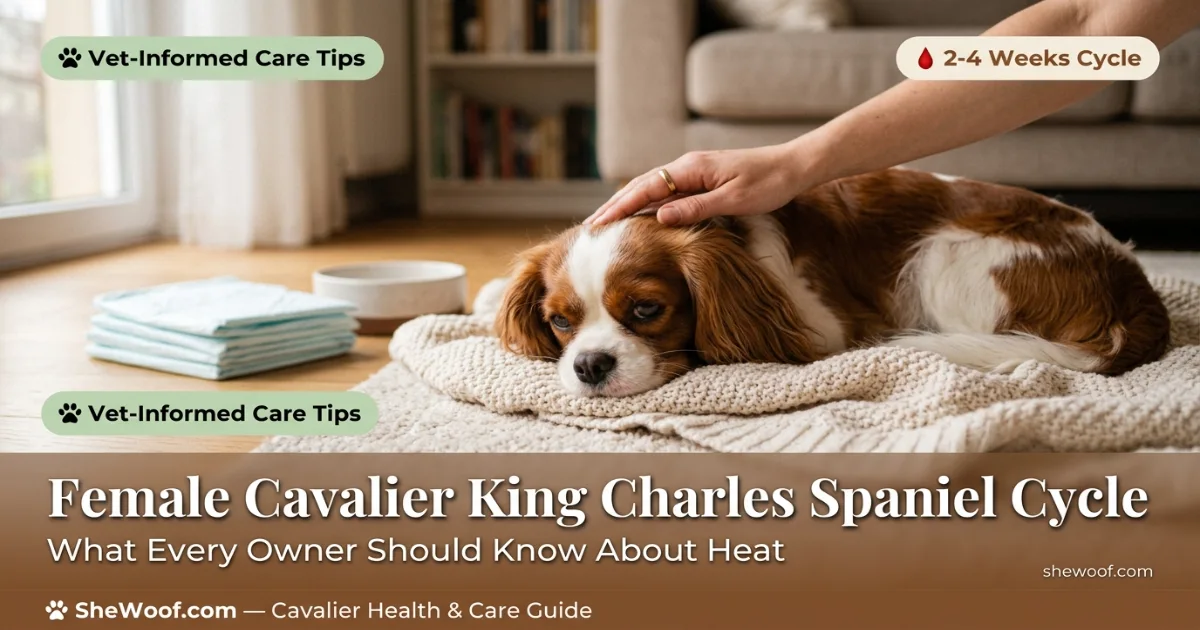
When Does a Female Cavalier King Charles Spaniel First Go Into Heat?
The first heat cycle — also called estrus or season — usually arrives between 6 and 12 months of age in Cavalier King Charles Spaniels . Some individuals start as early as 4 months, and others may not have their first cycle until 18 months. The timing depends on genetics, body condition, and overall health.
Smaller breeds like Cavaliers tend to mature earlier than large breeds. A Cavalier is more likely to have her first season before her first birthday than a Labrador or Golden Retriever would be. That said, there is no single “correct” age. A Cavalier who starts at 10 months and one who starts at 14 months can both be perfectly normal.
If your Cavalier reaches 18 months without any sign of a heat cycle, that is worth a conversation with your veterinarian. Delayed puberty can sometimes indicate an underlying health issue, and a vet can assess whether further investigation is needed.
What Are the Stages of the Cavalier Heat Cycle?
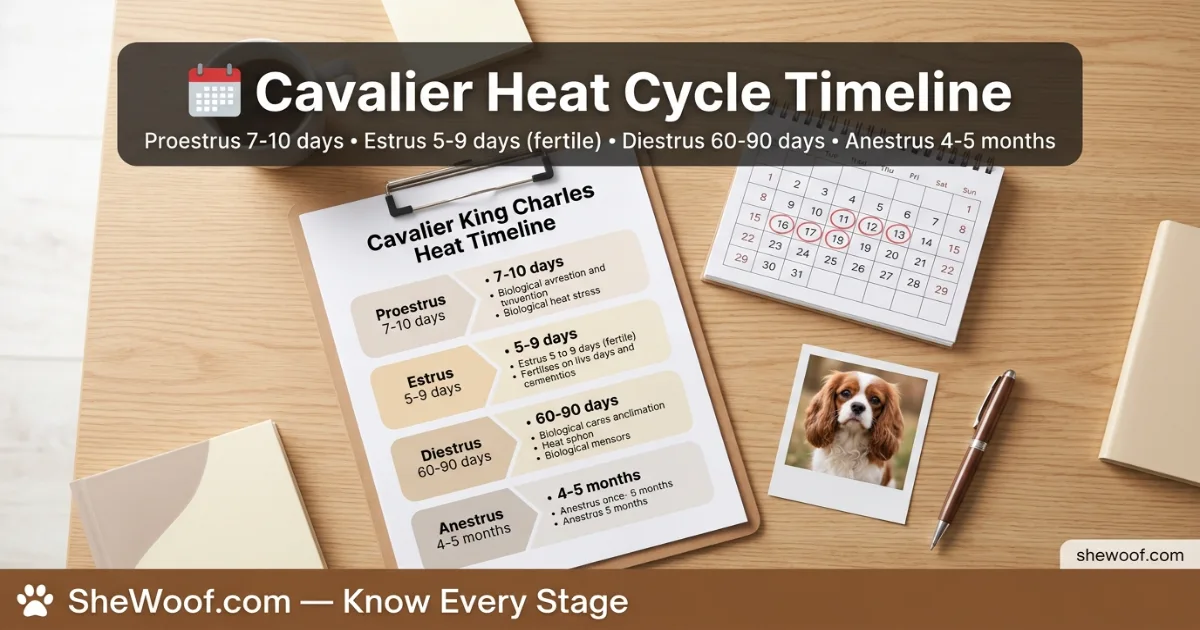
The canine estrous cycle has four distinct stages. Understanding them helps you predict when your Cavalier will be fertile, when she needs extra supervision, and when the cycle is winding down.
The Four Stages of the Female Cavalier Cycle
- Proestrus (7–10 days): This is the beginning of the cycle. The vulva swells, and you may see bloody discharge. Your Cavalier may attract males but will not yet accept them. She might be more clingy or restless than usual.
- Estrus (5–9 days): This is the fertile window. Discharge may become lighter in color — often described as straw-colored or pinkish. Your Cavalier will now stand for males and may flag her tail. This is the time when pregnancy is possible.
- Diestrus (60–90 days): Whether or not she becomes pregnant, your Cavalier’s body goes through hormonal changes similar to pregnancy. Discharge stops, swelling decreases, and behavior returns to normal. If she was bred, this is when gestation would occur.
- Anestrus (4–5 months): The resting phase between cycles. No outward signs of heat. This is when most veterinarians prefer to spay if the timing allows.
The total heat cycle — from the first day of proestrus to the end of estrus — typically lasts about 2 to 4 weeks . Bleeding usually lasts 7 to 10 days, though some Cavaliers bleed longer or shorter .
What Are the Common Signs Your Cavalier Is in Heat?
Some signs are obvious; others require closer observation. The most reliable indicator is physical, but behavioral changes often appear first.
- Swollen vulva — often the earliest physical sign
- Bloody or pinkish discharge from the vulva
- Frequent licking of the genital area
- More frequent urination
- Restlessness or pacing
- Increased clinginess or attention-seeking
- Changes in appetite — some eat less, others more
- Attracting male dogs, even from a distance
- Tail flagging (moving the tail to the side when touched near the rear)
- Temporary regression in house training
One of the less-discussed signs is behavioral change. A Cavalier who is normally calm might become anxious or irritable. She might bark more, sleep less, or seem unsettled. These changes are hormonal and typically resolve when the cycle ends.
How Long Does a Cavalier’s Heat Cycle Last?
Most Cavalier King Charles Spaniels experience a heat cycle that lasts approximately 2 to 4 weeks from start to finish . The bleeding phase — proestrus — usually runs 7 to 10 days, though it can be shorter or longer depending on the individual dog.
The fertile window occurs during estrus, typically around days 9 to 14 of the cycle . During this time, your Cavalier should not be left unattended outdoors, even in a fenced yard. Male dogs can detect a female in heat from a considerable distance and may attempt to dig under or climb over fences.
The discharge itself changes over the course of the cycle. It starts as bright red blood, then gradually lightens to a pinkish or straw color during estrus. Some owners mistakenly think the cycle is over when the bleeding stops or lightens, but that is often when fertility peaks .
What Most Owners Get Wrong About the Cavalier Cycle
The most common misunderstanding is that bleeding equals fertility. In reality, a female dog is usually not fertile during the heaviest bleeding days. Fertility peaks later, when the discharge lightens and she begins to stand for males . This is why owners who rely only on “when the bleeding stops” often miss the actual fertile window.
A second mistake is assuming a Cavalier cannot get pregnant on her first heat. She absolutely can. Some owners believe first cycles are “practice” cycles, but ovulation can occur and pregnancy is possible. If you are not planning to breed, supervision during the first heat matters just as much as during any other cycle.
A third mistake is ignoring changes in cycle frequency. While 6 to 8 months is typical, some Cavaliers cycle every 4 months, and others go 9 to 10 months between seasons . If your Cavalier’s cycle suddenly becomes irregular — much shorter, much longer, or skips a season entirely — that warrants a vet visit.
How Does the Cavalier Cycle Differ From Other Breeds?
The basic structure of the estrous cycle is the same across dog breeds. Cavaliers are not outliers in terms of cycle length or frequency. What varies is the age at first heat and the intensity of symptoms.
| Factor | Cavalier King Charles Spaniel | Large Breed (e.g., Labrador) |
|---|---|---|
| First heat | 6–12 months (sometimes earlier) | 12–24 months |
| Cycle frequency | Every 6–8 months | Every 6–8 months |
| Cycle duration | 2–4 weeks | 2–4 weeks |
| Bleeding volume | Usually light to moderate | Often heavier |
| Behavioral changes | Variable; some become clingy | Variable |
The main practical difference is timing. A Cavalier is likely to have her first heat while she is still very much a puppy in size and maturity. A large breed may not cycle until she is closer to adult size. This affects decisions about spaying, socialization, and management of intact life.
Practical Tips for Managing a Cavalier in Heat
Managing a heat cycle is about hygiene, supervision, and comfort. With a little planning, it becomes a manageable routine rather than a crisis.
- Use dog-specific sanitary pads or washable heat pants to protect furniture and carpets.
- Take your Cavalier out for potty breaks on a leash, even in a fenced yard, to prevent unexpected visitors.
- Increase the frequency of potty breaks — hormonal changes can increase urgency.
- Keep walks short and avoid areas where other dogs are off-leash.
- Wipe the vulva gently with a damp cloth or pet-safe wipe once or twice daily to keep her clean.
- Provide a quiet, comfortable space where she can rest without disruption.
- Note the start date of each cycle in a journal or phone app so you can track patterns over time.
If you have male dogs in the home, separation is essential during the fertile window. Even neutered males may show interest, though they cannot impregnate her. Intact males should be kept in a separate area or crate when you cannot supervise directly.
When to Call the Vet About Your Cavalier’s Cycle
Most heat cycles proceed without complications. But some signs warrant prompt veterinary attention.
If you are considering spaying your Cavalier, your veterinarian can advise on the best timing. Many vets recommend spaying either before the first heat or 2 to 3 months after a cycle ends . Spaying during a heat cycle is generally avoided because of increased surgical risks.
What Realistic Cavalier Cycle Management Looks Like
Your first heat cycle with a Cavalier will probably feel more complicated than it actually is. By the second or third cycle, you will know your dog’s patterns — how long she bleeds, how her behavior changes, and how to manage the household during those weeks.
What is unrealistic is expecting zero disruption. There will be some mess, some management, and some vigilance. A Cavalier in heat may temporarily forget her house training or become more demanding of attention. That is normal.
What is realistic is a smooth, predictable routine: knowing when to expect the next cycle, having supplies ready, adjusting walks and supervision, and watching for anything unusual. Cavaliers are adaptable, and most handle their cycles with the same gentle temperament they bring to everything else.
- A female Cavalier King Charles Spaniel typically has her first heat at 6–12 months of age and cycles every 6–8 months afterward.
- Each heat cycle lasts about 2–4 weeks, with a fertile window around days 9–14 when discharge lightens.
- Signs include vulvar swelling, discharge, frequent licking, and behavioral changes like clinginess or restlessness.
- Supervision is essential during the fertile window — even in a fenced yard — to prevent unwanted pregnancy.
- See a vet for cycles lasting over 4 weeks, foul discharge, lethargy, or any signs of illness during or after heat.
Frequently Asked Questions
How old is a female Cavalier King Charles Spaniel when she first goes into heat?
Most Cavaliers have their first heat between 6 and 12 months of age. Some start as early as 4 months, and others may not cycle until 18 months. If your Cavalier reaches 18 months without a heat cycle, consult your veterinarian.
How often do female Cavalier King Charles Spaniels go into heat?
After the first cycle, most Cavaliers go into heat every 6 to 8 months, roughly twice per year. Some individuals cycle slightly more or less frequently. Sudden changes in cycle frequency are worth discussing with your vet.
How long does a Cavalier’s heat cycle last?
Each heat cycle typically lasts 2 to 4 weeks from start to finish. The bleeding phase usually runs 7 to 10 days, but the fertile window occurs later, around days 9 to 14, when discharge lightens.
Can my female Cavalier get pregnant on her first heat?
Yes. A Cavalier can become pregnant during her first heat cycle. Ovulation can occur, and if she has access to an intact male during her fertile window, pregnancy is possible. Supervision is essential from the very first cycle.
What are the first signs my Cavalier is going into heat?
The earliest signs are usually a swollen vulva and increased licking of the genital area. You may also notice bloody discharge, restlessness, or more frequent urination. Behavioral changes like clinginess can appear before physical signs.
Should I spay my Cavalier before or after her first heat?
This depends on your veterinarian’s recommendation and your Cavalier’s individual health. Some vets recommend spaying before the first heat, while others prefer to wait until she has matured. Discuss the timing with your vet to weigh the benefits and risks for your specific dog.
What is pyometra and should I worry about it?
Pyometra is a serious uterine infection that can occur after a heat cycle. Signs include excessive drinking, lethargy, vomiting, abdominal swelling, and sometimes foul-smelling discharge. It requires emergency veterinary treatment. Contact your vet immediately if you notice these signs.
How can I keep my house clean during my Cavalier’s heat cycle?
Use dog-specific sanitary pads or washable heat pants. Place washable covers on furniture she frequents. Wipe her gently once or twice daily, and increase potty breaks. These simple steps make management much easier.