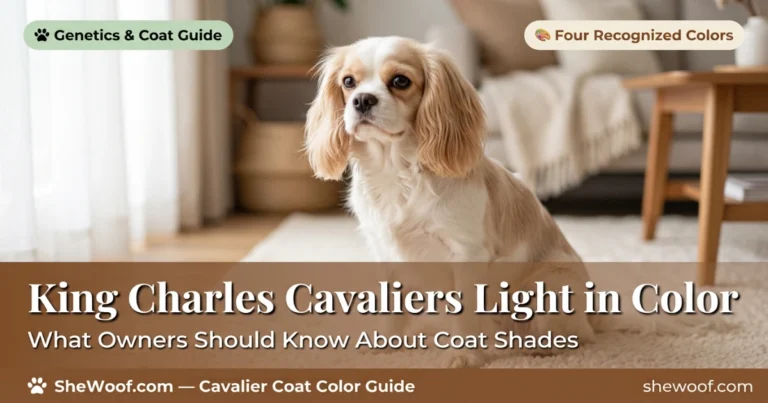
Basic Things to Buy for Your Cavalier: The Complete Starter Guide
Estimated reading time: 12 minutes
Quick Answer: The basic things to buy for your Cavalier include a supportive bed with raised edges, a well-fitted harness, a slicker brush for their silky coat, safe chew toys, stainless steel food and water bowls, and a crate for a safe space. You will also need nail clippers, dog-safe toothpaste, ear cleaning solution, and identification tags. Budget roughly $200 to $400 for initial supplies, not including ongoing food and veterinary care.
Bringing home a Cavalier King Charles Spaniel is one of those decisions you do not fully understand until you are in it — the velcro-dog affection, the silky ears that collect everything, the way they look at you like you are the entire world. But before all that sweetness arrives, there is a practical reality: you need the right gear. The basic things to buy for your Cavalier are not complicated, but some are genuinely important, and others are complete wastes of money. Knowing the difference saves you hundreds of dollars and a closet full of unused gadgets.
I have helped set up homes for Cavaliers at every life stage — tiny eight-week-old puppies, adolescent rescues, and senior dogs who came with their own quirks. The shopping list shifts slightly depending on age and background, but the core essentials stay the same. Here is what actually matters.
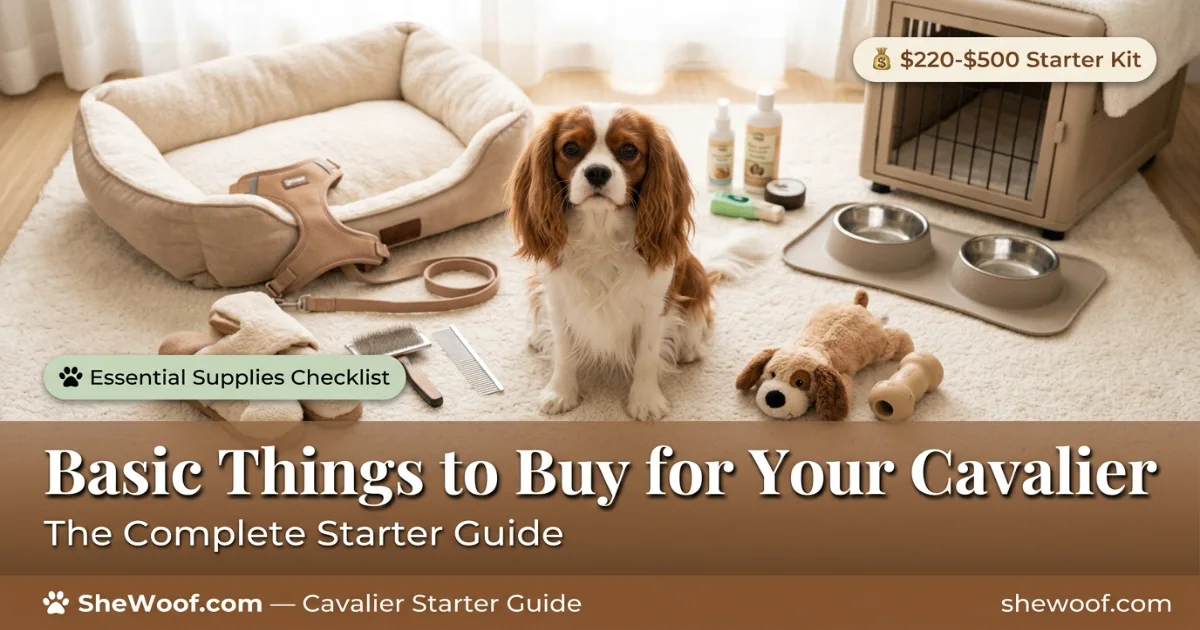
What Kind of Bed Does a Cavalier Actually Need?
Cavaliers are small dogs with a strong instinct to curl up and nest. They lose body heat faster than larger breeds, and many seek out enclosed, cozy spaces rather than sprawling on an open mat . That is why a bolster bed or cave-style bed tends to work better for this breed than a flat cushion.
Bolster beds have raised edges on three or four sides, giving your Cavalier something to lean against and a sense of security . Cave beds go further — they have a hood or partial cover that the dog crawls inside, which suits Cavaliers who like to burrow. Both styles help retain warmth, which matters if you live in a cooler climate or keep your home on the chilly side.
Size matters more than most owners expect. A bed that is too large can feel exposed and unsettling for a small dog. Measure your Cavalier in their natural sleeping position — curled or stretched — and add about 20 to 25 centimeters. That gives you the minimum usable sleeping surface . For bolster beds, check the internal dimensions, not just the overall size.
Washability is not optional. Cavaliers shed, occasionally have accidents, and love to carry toys into their beds. A removable, machine-washable cover makes maintenance manageable. If you are bringing home a puppy, consider an inexpensive bed for the first few months since they will outgrow it quickly .
What Kind of Harness and Leash Works Best for a Cavalier?
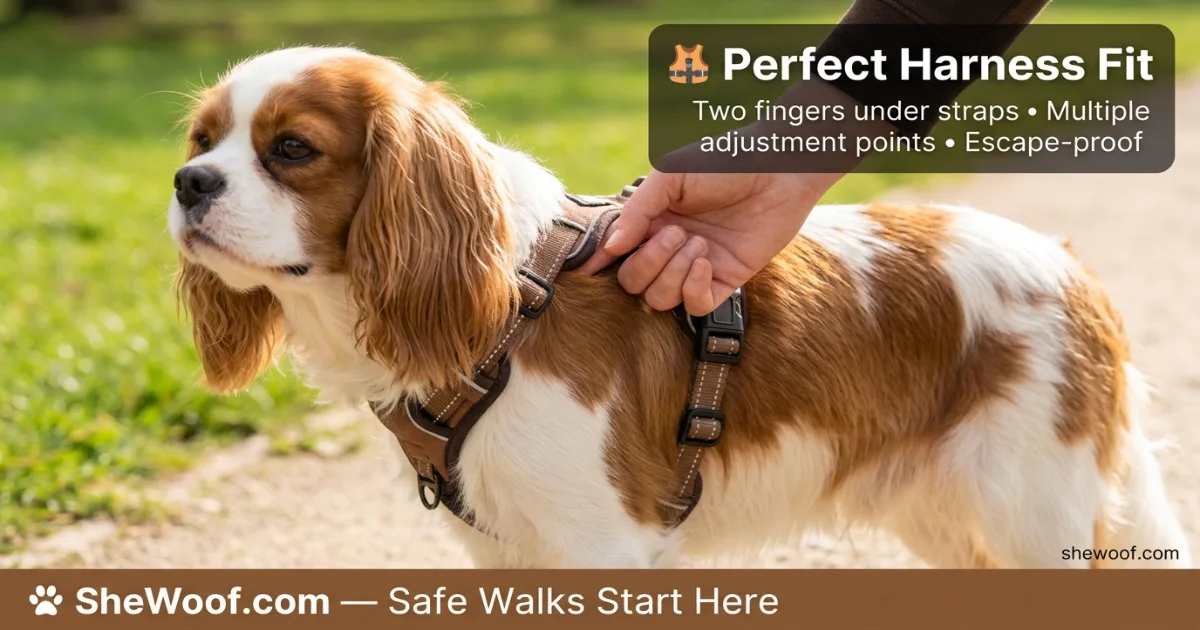
The best harness for a Cavalier is one that fits securely, is lightweight, and cannot be backed out of. This breed is small but surprisingly strong when they want to go somewhere, and their deep chest and narrow shoulders make them escape artists in poorly fitted harnesses .
Look for a harness with multiple adjustment points — at least around the chest, neck, and waist. A second belt around the waist is what prevents backing out for many Cavaliers . Padded straps reduce rubbing, especially on longer walks. A handle on the back is a bonus for lifting your dog quickly out of harm’s way.
For leashes, a standard 6-foot nylon or leather leash is the most practical choice. Retractable leashes teach pulling and are difficult to control in traffic or around other dogs. A lightweight leash suits a Cavalier’s size and does not add unnecessary tension.
| Item | What to Look For | What to Avoid |
|---|---|---|
| Harness | Multiple adjustment points, padded, lightweight, escape-proof | Single-strap designs, heavy hardware, poor fit |
| Leash | 6-foot standard length, lightweight, secure clip | Retractable leashes, heavy chains |
| Collar | Soft nylon or fabric, ID tags attached | Tight collars, choke chains |
What Grooming Tools Does a Cavalier Need?
Cavaliers have a single-layer, silky coat that is beautiful but prone to tangling, especially behind the ears, under the legs, and around the groin . They need regular brushing — ideally daily or at least several times per week — to prevent mats and keep the coat healthy .
The must-have tools are simple. A slicker brush handles the bulk of the coat, removing loose fur and preventing tangles . A metal comb checks your work and finds mats the brush missed. A pin brush is useful for the feathering on the ears and legs. That is the core kit.
- Slicker brush — for the main coat
- Metal comb — for checking undercoat and finding tangles
- Pin brush — for feathering on ears and legs
- Dog-safe shampoo and conditioner — for monthly baths
- Nail clippers or grinder — for trims every 3–4 weeks
- Styptic powder — for accidental nicks
- Ear cleaning solution and cotton pads — for weekly checks
- Dog toothbrush and enzymatic toothpaste — for dental care
- Scissors with rounded tips — for trimming paw fur and small knots
Do not bother with grooming gloves for a Cavalier. They are clumsy, gimmicky, and ineffective on this breed’s coat type . Invest in quality brushes instead — they last for years and make the job easier for both of you.
- Start brushing your Cavalier as a puppy, even for just a minute at a time, so they learn to accept handling.
- Pay extra attention to the ears and armpits, where mats form first.
- Bathe every 4 to 6 weeks, or when your dog gets genuinely dirty. Over-bathing strips natural oils.
- Check ears weekly for redness or odor — Cavaliers’ floppy ears trap moisture and are prone to infections .
- Brush teeth several times a week with dog-safe toothpaste. Dental disease is common and preventable.
What Toys Should You Buy for a Cavalier?
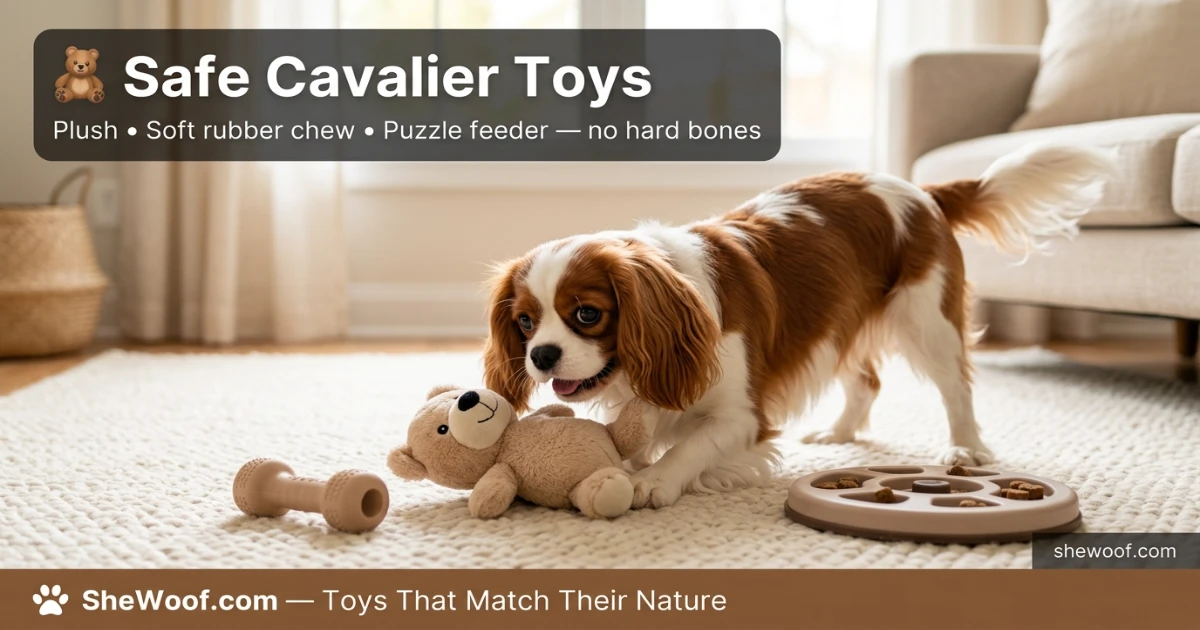
Cavaliers are playful and people-oriented, but they are not destructive power-chewers. They tend to prefer soft, interactive toys that they can carry around and cuddle . A mix of comfort toys, gentle chew toys, and puzzle toys keeps them happy and mentally engaged.
Plush toys are a hit with many Cavaliers. Look for well-stitched toys sized appropriately for a small dog, with no small parts that can be chewed off . Some Cavaliers become attached to a specific plush toy and treat it like a comfort object.
Chew toys should be soft and flexible, not rock-hard. Hard bones and antlers can fracture a Cavalier’s teeth. Soft rubber toys, puppy-safe teething toys, and durable but pliable materials are safer choices .
Interactive toys — puzzle feeders, treat-dispensing balls, snuffle mats — provide mental stimulation and help prevent boredom . These are especially useful if your Cavalier spends time alone during the day.
What Feeding Supplies Do You Need?
Two stainless steel bowls — one for food, one for water — are the standard recommendation. Stainless steel is durable, easy to clean, and does not harbor bacteria the way plastic can. Ceramic bowls work too, as long as they are lead-free and chip-resistant.
A non-slip feeding mat underneath the bowls keeps them from sliding across the floor. Cavaliers are not messy eaters by breed standard, but a mat makes cleanup easier and protects your floors.
Some Cavaliers eat quickly and benefit from a slow feeder bowl, which has ridges or maze patterns that force the dog to work for their food. This can reduce gulping, which may decrease the risk of bloat — though bloat is less common in small breeds than in large ones.
If you have a puppy, ask the breeder what food they were feeding and buy a small bag of the same brand. Transitioning to a new food should be gradual, over seven to ten days, mixing increasing amounts of the new food with the old to avoid digestive upset.
What About Crates, Gates, and Safety Supplies?
A crate gives your Cavalier a safe, den-like space and makes potty training and travel easier. For a Cavalier, a crate sized for small breeds is appropriate — large enough to stand up, turn around, and lie down comfortably, but not so large that they can eliminate in one corner and sleep in another .
If you do not plan to use a crate, a baby gate or pet gate can confine your Cavalier to a safe area when you are away or unable to supervise. This is especially useful for puppies who are still learning household rules.
Identification is non-negotiable. A collar with ID tags containing your current phone number is the bare minimum. Consider a tag that does not include your dog’s name — if someone finds your dog, they cannot use the name to lure them . A microchip is also essential; ask your vet to scan and register it if your Cavalier does not already have one.
How Much Do Basic Cavalier Supplies Cost?
- Bed: $30–$80 (bolster or cave style)
- Harness and leash: $25–$60
- Collar and ID tags: $10–$25
- Grooming kit: $40–$80 (brushes, nail clippers, shampoo, dental supplies)
- Toys: $25–$50 (mix of plush, chew, and interactive)
- Bowls and mat: $15–$35
- Crate: $40–$100 (depending on size and style)
- Food and treats: $20–$40 to start
- Ear cleaner and eye rinse: $15–$30
Total realistic initial spend: $220–$500, depending on quality and whether you buy a crate.
Ongoing monthly costs — food, treats, flea and heartworm prevention, and occasional toy replacements — typically run $50 to $150 per month. Professional grooming, if you choose it, adds $50 to $80 per session and is usually needed two to six times per year .
What Most New Owners Get Wrong
The most common mistake is buying too much of the wrong thing. New owners often stock up on cheap toys that fall apart in days, harnesses that do not fit properly, and grooming tools that do not match the Cavalier’s coat type. It is better to buy a few quality items than a pile of bargain-bin gear that frustrates both of you.
A second mistake is skipping the crate because it “feels mean.” A crate, introduced properly with treats and positive association, is not a cage — it is a bedroom. Cavaliers often seek out their crates voluntarily once they learn it is a safe, comfortable space.
A third mistake is underestimating grooming needs. Cavaliers look low-maintenance because their coat is silky and they do not shed like a Husky. But those silky ears and feathering tangle easily, and mats can become painful if ignored. Daily or near-daily brushing is part of life with this breed.
- Core supplies for a Cavalier include a bolster or cave bed, a well-fitted escape-proof harness, a slicker brush and comb, soft chew toys, stainless steel bowls, and a crate.
- Grooming tools are essential — Cavaliers need regular brushing to prevent mats in their silky coat, and weekly ear checks.
- Budget $220–$500 for initial supplies, plus $50–$150 per month for ongoing food, preventatives, and occasional replacements.
- Pet insurance is strongly recommended for this breed due to inherited health conditions like syringomyelia and mitral valve disease.
- Buy quality over quantity — a few well-chosen items serve your Cavalier better than a closet full of cheap gear.
Frequently Asked Questions
What are the basic things to buy for your Cavalier?
The essentials are a supportive bed, a well-fitted harness and leash, a slicker brush and comb, safe chew and plush toys, stainless steel food and water bowls, a crate, and basic grooming supplies like nail clippers and ear cleaner. Identification tags and a microchip are also non-negotiable.
What kind of bed is best for a Cavalier King Charles Spaniel?
Bolster beds or cave-style beds work best because Cavaliers like to curl up and feel enclosed. They lose body heat faster than larger dogs, so a bed with raised edges or a hood helps them stay warm. Choose one with a removable, washable cover.
Do Cavaliers need a harness or a collar for walks?
A harness is safer for Cavaliers because it avoids pressure on their delicate neck. Look for one with multiple adjustment points and a second belt around the waist — this breed can back out of poorly fitted harnesses. A collar with ID tags is still useful for identification.
What grooming tools do I need for a Cavalier?
You need a slicker brush for the main coat, a metal comb for checking tangles, a pin brush for feathering, dog-safe shampoo, nail clippers, ear cleaning solution, and a toothbrush with enzymatic toothpaste. Grooming gloves are not effective for this breed.
How much does it cost to buy supplies for a Cavalier?
Initial supply costs typically range from $220 to $500, depending on whether you buy a crate and the quality of the items. Ongoing monthly costs for food, treats, and preventatives run $50 to $150. Pet insurance adds another $20 to $50 per month.
What toys are safe for a Cavalier King Charles Spaniel?
Soft plush toys, gentle chew toys made of flexible rubber, and interactive puzzle toys are all good choices. Avoid hard bones and antlers that can fracture their teeth. Check toys regularly for wear and replace anything damaged.
Do I need pet insurance for a Cavalier?
Pet insurance is strongly recommended for Cavaliers because the breed is prone to inherited conditions like syringomyelia and mitral valve disease. Enrolling while your dog is young and healthy gives you the best coverage options and can help with treatment costs if issues arise.
What should I feed my new Cavalier puppy?
Ask the breeder what food they were using and buy a small bag of the same brand. Transition to a new food gradually over seven to ten days to avoid digestive upset. Choose a high-quality puppy formula appropriate for small breeds.