Silky Terrier vs Yorkshire Terrier Pictures: Key Differences With Pictures
Quick Answer: The Silky Terrier and Yorkshire Terrier look similar at first glance, but they are distinct breeds with different origins, sizes, and coat types. The Silky Terrier is slightly larger — typically 8 to 11 pounds with a more robust, wedge-shaped head and a coat that is finer and less floor-length than the Yorkie. The Yorkshire Terrier is smaller — usually 4 to 7 pounds — with a more delicate build, a rounded skull, and a long, silky coat that traditionally sweeps the floor. When you see them side by side in pictures, the Silky looks longer in the body and snout, while the Yorkie looks more compact and doll-like. Both are toy terriers with big personalities, but their care needs, energy levels, and ideal homes differ in important ways.
You are scrolling through photos of small, blue-and-tan terriers with flowing coats, and you cannot tell whether you are looking at a Silky Terrier or a Yorkshire Terrier. The confusion is completely understandable — these two breeds share a color palette, a similar size range, and a common ancestor. Searching for “silky terrier vs yorkshire terrier pictures” means you want more than a written description. You want to know what to look for visually — and what the differences mean for your life with the dog.
This guide breaks down the visual distinctions, the temperament differences, and the practical ownership realities of both breeds. If you are trying to decide which one is right for your home — or you are simply curious about whether the dog at the park was a Silky or a Yorkie — here is exactly how to tell them apart.
The Visual Differences: How to Tell a Silky Terrier From a Yorkshire Terrier in Pictures
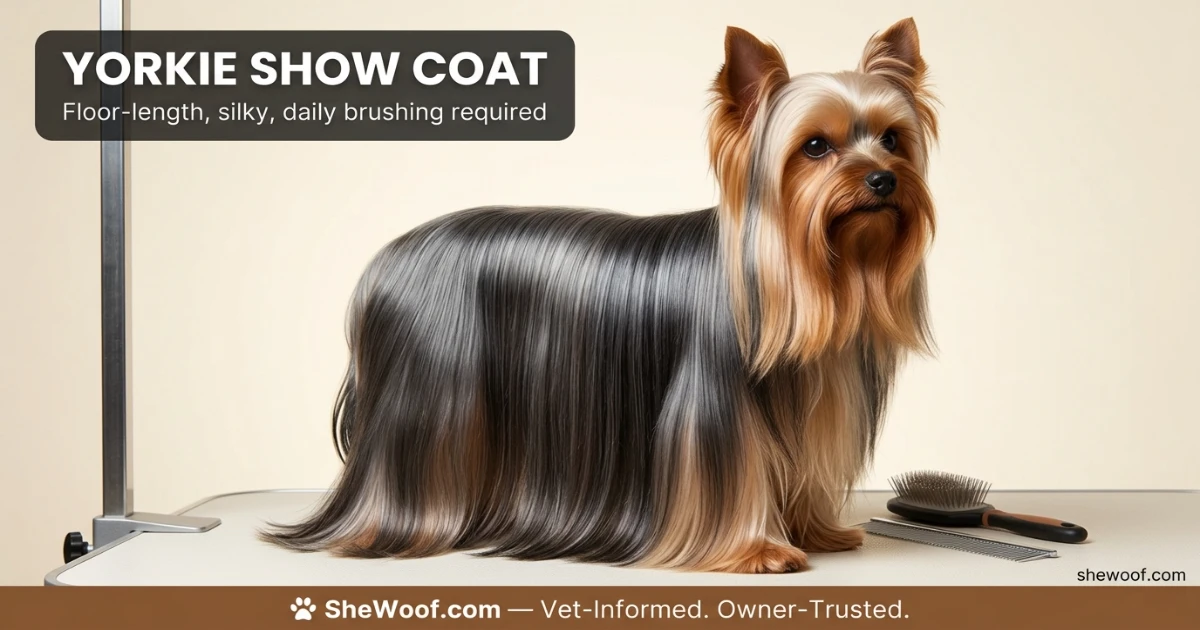
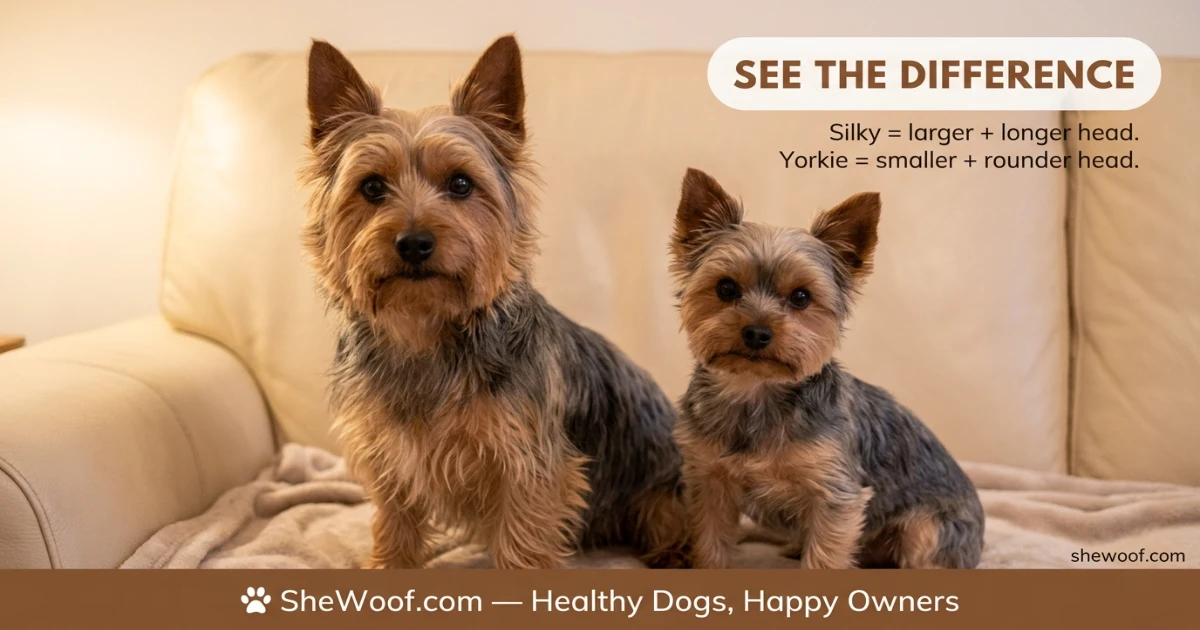
When you see a Silky Terrier and a Yorkshire Terrier side by side, the size difference is usually the first clue. Silkies are noticeably larger — not by a huge margin, but enough that a 10-pound Silky next to a 5-pound Yorkie looks like two different size categories. The Silky’s body is slightly longer in proportion to their height, giving them a more rectangular silhouette. The Yorkie’s body is more compact and square, with a shorter back relative to leg length.
The head shape tells a clear story once you know what to look for. A Silky Terrier has a wedge-shaped head — think of a blunt triangle, wider at the ears and tapering to the nose. The snout is moderately long and strong. A Yorkshire Terrier has a more rounded, domed skull with a distinctly shorter, finer muzzle. The Yorkie’s face often looks more delicate and doll-like, while the Silky’s face looks more terrier-like — sharper, more defined, with a stronger jaw.
The ears are another reliable tell. Both breeds have V-shaped ears that stand erect, but the Silky’s ears are set higher on the head and are slightly larger in proportion. The Yorkie’s ears are smaller, set a bit wider apart, and often appear more delicate. When both dogs are alert, the Silky’s ears give them a more intense, focused expression, while the Yorkie’s ears contribute to their characteristic bright, curious look.
Coat Differences: Texture, Length, and Grooming Needs
The coat is where these two breeds diverge most dramatically in care requirements. Both have a single coat — no undercoat — that is similar to human hair in texture. It grows continuously, sheds minimally, and requires regular grooming. But the similarities end there.
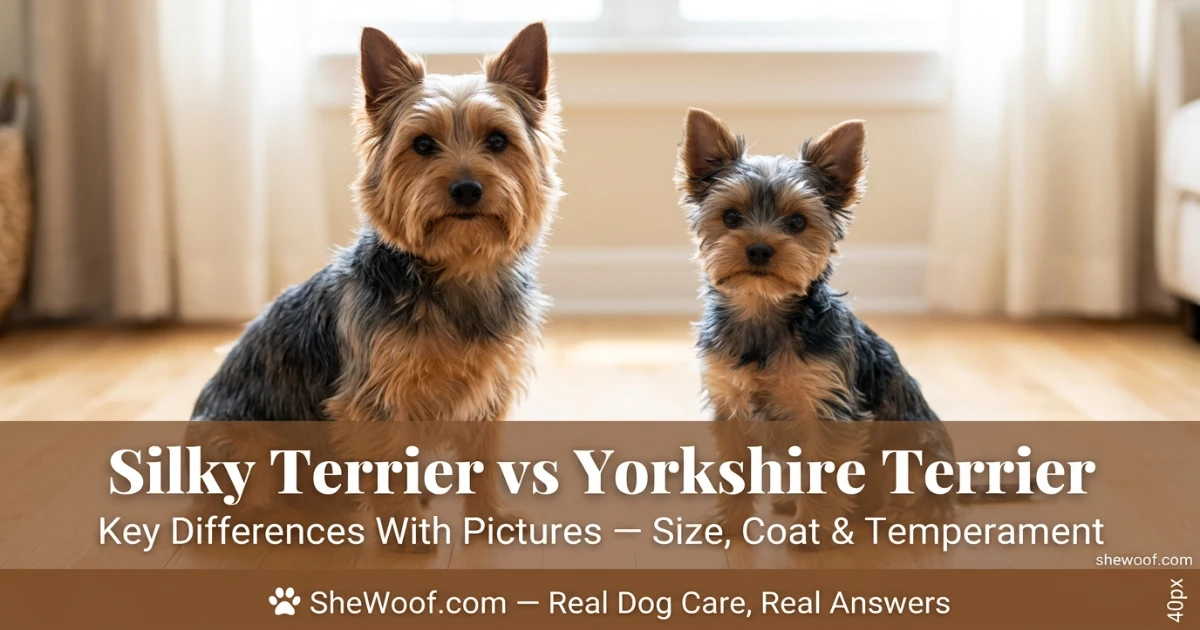
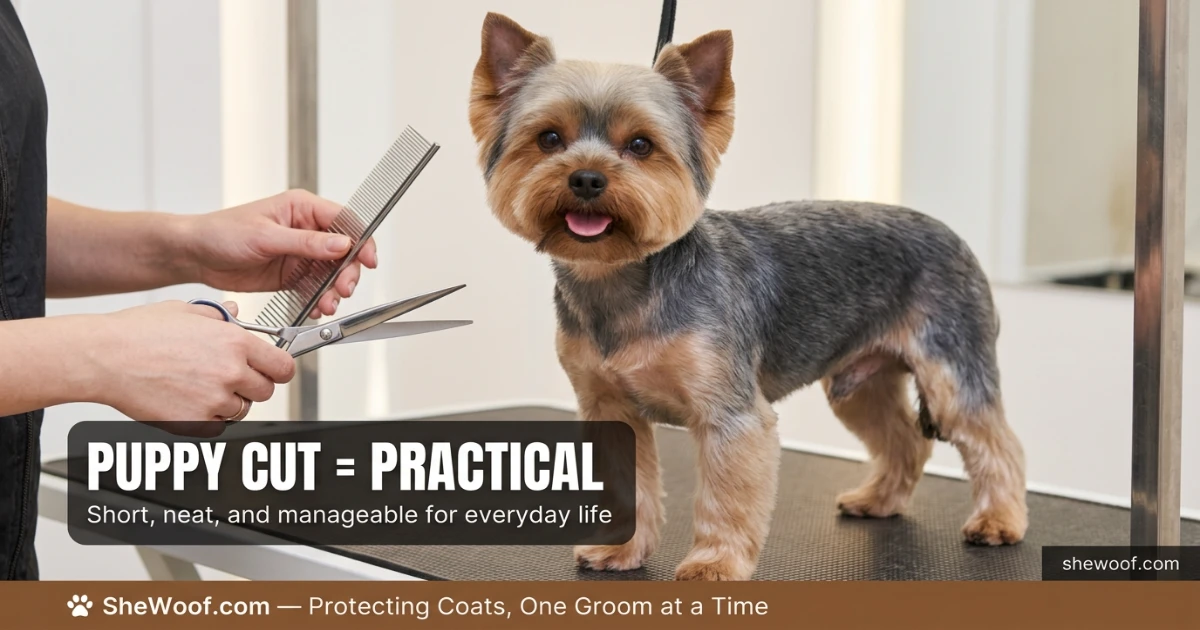
A Yorkshire Terrier’s coat is traditionally kept long — in show dogs, it sweeps the floor like a silken curtain. The texture is fine, glossy, and straight. Owners who keep their Yorkies in full coat commit to daily brushing, weekly baths, and protective wrapping to prevent breakage. Most pet Yorkies, however, are kept in a shorter “puppy cut” that is far more practical — requiring brushing 3 to 4 times per week and professional grooming every 6 to 8 weeks.
A Silky Terrier’s coat is also straight and glossy, but it is shorter by breed standard. It should not reach the floor. The texture is slightly coarser than a Yorkie’s — still silky, but with more body and less tendency to tangle. Silkies shed slightly more than Yorkies, though both are considered low-shedding breeds. Grooming a Silky typically involves brushing 2 to 3 times per week and grooming every 6 to 8 weeks. The Silky’s coat is more forgiving for owners who want a lower-maintenance version of the flowing toy terrier look.
| Characteristic | Silky Terrier | Yorkshire Terrier |
|---|---|---|
| Average Weight | 8 to 11 pounds | 4 to 7 pounds |
| Average Height | 9 to 10 inches | 7 to 8 inches |
| Head Shape | Wedge-shaped; longer snout | Rounded skull; shorter, finer muzzle |
| Ears | V-shaped; set high; slightly larger | V-shaped; set wider; smaller, delicate |
| Body Type | Rectangular; longer than tall | Compact; square proportions |
| Coat Length (Standard) | Shorter; does not reach floor | Long; traditionally floor-length |
| Coat Texture | Fine, straight, glossy; slightly coarser | Very fine, silky, glossy |
| Color | Blue & tan; richer tan markings | Blue & tan; often lighter tan |
| Energy Level | Higher — more terrier drive | Moderate — more lapdog tendencies |
Temperament and Personality: More Different Than They Look
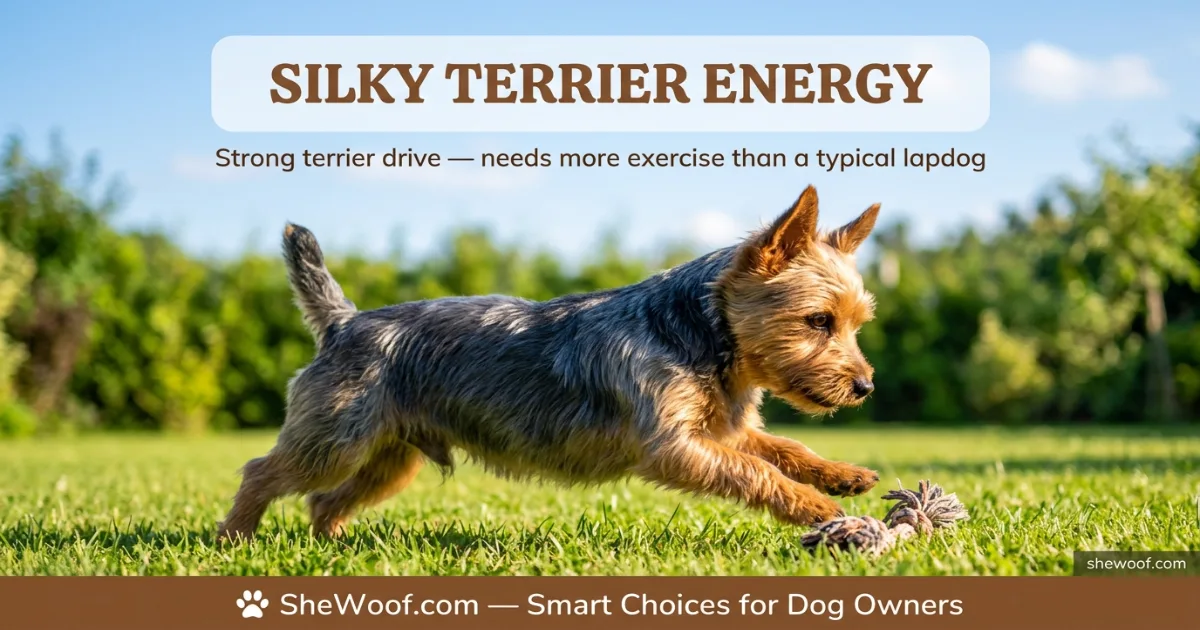
If you assume a Silky Terrier is just a big Yorkie, their personality will surprise you. Silkies are terriers through and through — they have a stronger prey drive, more independence, and a higher energy level than the typical Yorkshire Terrier. They were developed in Australia as companion dogs with genuine ratting ability, and that working background still shows. A Silky is more likely to chase squirrels, dig in the yard, and approach life with a confident, sometimes stubborn terrier attitude.
The Yorkshire Terrier, despite also being a terrier by classification, was developed primarily as a companion. They have been bred for generations to be lapdogs, and it shows in their temperament. Yorkies are typically more people-focused, more portable, and more content to spend hours curled up beside their owner. They still have terrier spark — they are not shy or retiring — but their energy is usually channeled into play and interaction rather than hunting and exploring.
Both breeds are intelligent and trainable — but neither is a pushover. Silkies can be more challenging to train because of their independent streak. Yorkies can be more challenging to housebreak because of their tiny bladders and sometimes diva-like preferences. Both respond well to positive reinforcement and poorly to harsh corrections. Consistency, patience, and a sense of humor serve owners of both breeds equally well.
What Most People Get Wrong About These Two Breeds
The most common misconception is that a Silky Terrier is simply a larger Yorkshire Terrier — or that the breeds are interchangeable. They are not. They have different ancestry. The Yorkshire Terrier was developed in Yorkshire, England, from Scottish terrier breeds brought by mill workers. The Silky Terrier was developed in Australia by crossing Yorkshire Terriers with Australian Terriers — which is why the Silky is larger, has a stronger terrier drive, and a slightly coarser coat. They share a common ancestor — the Yorkie contributed to the Silky’s development — but they are separate breeds with separate standards.
Another common error: buying a “teacup” version of either breed. There is no officially recognized teacup Silky or teacup Yorkie. Dogs advertised as teacups are simply unusually small individuals — often the runts of litters — and they come with higher risks of health problems including hypoglycemia, fragile bones, collapsing trachea, and liver shunts. Responsible breeders do not breed for extreme miniaturization. A healthy Silky or Yorkie should be within the standard weight range for their breed — not dangerously underweight for the sake of fitting in a purse.
A third misunderstanding involves grooming. Some owners assume that because both breeds have hair-like coats, they are hypoallergenic and low-maintenance. Neither is entirely true. Both breeds shed less than many dogs — but they still produce dander, which is what triggers most pet allergies. And the coat maintenance is significant for both breeds — especially the Yorkie if kept in a long coat. There is no such thing as a truly no-maintenance coat in either breed.
Health and Longevity: What to Expect From Each Breed
Both Silky Terriers and Yorkshire Terriers are generally long-lived breeds, with typical lifespans of 12 to 15 years — and many individuals live longer with good care. Both breeds share some health predispositions common to small dogs: luxating patellas (slipping kneecaps), collapsing trachea, dental disease due to small mouths crowding teeth, and Legg-Calvé-Perthes disease (a hip joint disorder).
Yorkshire Terriers have a few breed-specific concerns worth knowing. They are more prone to liver shunts — a congenital condition where blood bypasses the liver, preventing proper detoxification. Symptoms include poor growth, seizures, and behavioral changes, and the condition requires surgical correction. Yorkies are also more susceptible to hypoglycemia — low blood sugar — especially as puppies. A Yorkie puppy who goes too long without eating can become weak, lethargic, or even collapse. Small, frequent meals are essential for this breed.
Silky Terriers tend to be a bit hardier overall, with fewer breed-specific genetic conditions. They share the dental and patellar concerns of most toy breeds but do not have the same elevated risk of liver shunts. Both breeds benefit from annual veterinary check-ups, dental cleanings as recommended, and a high-quality diet appropriate for small breed dogs.
A well-bred Silky Terrier puppy from a reputable breeder typically costs $1,200 to $2,500. A well-bred Yorkshire Terrier puppy typically costs $1,500 to $3,500, with show-quality or particularly small individuals at the higher end. Puppies from pet stores or online marketplaces priced significantly below these ranges are almost certainly from puppy mills. The purchase price is a fraction of the lifetime cost of owning either breed — grooming, veterinary care, quality food, and supplies add up to far more over a 12-to-15-year lifespan. Adoption through breed-specific rescues is a more affordable and deeply rewarding option, typically costing $200 to $600.
Frequently Asked Questions About Silky Terriers and Yorkshire Terriers
Look at the size and head shape first. Silkies are larger (8-11 pounds) with a wedge-shaped head and longer snout. Yorkies are smaller (4-7 pounds) with a rounded skull and shorter, finer muzzle. The Silky’s body is more rectangular and longer in proportion. The Yorkie’s body is more compact and square. If the dog has a floor-length coat, it is almost certainly a Yorkie — Silkies’ coats do not reach the floor by breed standard.
Yes — they share a common ancestor. The Silky Terrier was developed in Australia by crossing Yorkshire Terriers with Australian Terriers. This is why Silkies look like larger, more terrier-like Yorkies. They are separate, distinct breeds with their own breed standards, but the Yorkshire Terrier is part of the Silky’s genetic history.
The Silky Terrier is generally the sturdier choice for families with gentle, respectful children. Their larger size and slightly tougher build make them less fragile than the tiny Yorkie. The Yorkshire Terrier can be easily injured by rough handling and is better suited to homes with older children who understand how to interact carefully with a very small dog. Neither breed is ideal for households with young, unpredictable children without close adult supervision.
Both breeds are low-shedding, but the Yorkshire Terrier sheds slightly less than the Silky Terrier. Neither has an undercoat, and both have hair-like coats that grow continuously and lose minimal fur. Regular brushing removes loose hair before it ends up on furniture. Both breeds are often tolerated better by people with mild pet allergies, but no dog is truly hypoallergenic.
Not exactly. A Yorkshire Terrier kept in a full show coat needs daily brushing, weekly baths, and coat wrapping. A pet Yorkie in a puppy cut needs brushing 3 to 4 times per week. A Silky Terrier — whose coat does not reach the floor — needs brushing 2 to 3 times per week. Both need professional grooming every 6 to 8 weeks. The Silky’s coat is slightly more forgiving and lower-maintenance overall.
Teacup is a marketing term — not an officially recognized size. It refers to dogs bred to be unusually small, often 3 pounds or under. These dogs face significantly higher risks of health problems including hypoglycemia, fragile bones, collapsing trachea, liver shunts, and shortened lifespans. Responsible breeders do not breed for extreme miniaturization. A healthy Yorkie or Silky should be within the standard weight range for their breed.
Yorkshire Terriers are typically more people-pleasing and slightly easier to train for basic obedience. Silky Terriers have a more independent terrier streak and can be more stubborn. Both are intelligent and respond well to positive reinforcement. Housebreaking can be challenging for both breeds — Yorkies because of tiny bladders, Silkies because of independence. Consistency and patience win with either breed.
- The Silky Terrier is larger (8-11 pounds) with a wedge-shaped head, longer snout, and a rectangular body. The Yorkshire Terrier is smaller (4-7 pounds) with a rounded skull, shorter muzzle, and a compact square body.
- Both breeds share a blue-and-tan color pattern, but the Silky’s coat is shorter by breed standard while the Yorkie’s coat traditionally reaches the floor. The Silky’s coat is slightly coarser and more forgiving to maintain.
- The Silky Terrier has a stronger terrier drive, higher energy, and a more independent personality. The Yorkshire Terrier is more people-focused, more of a lapdog, and slightly easier to train for basic obedience.
- The breeds are related — the Silky was developed by crossing Yorkies with Australian Terriers — but they are distinct breeds with separate standards, not variations of the same dog.
- Both are long-lived (12-15 years), low-shedding companion breeds that need consistent grooming, early socialization, and homes where they are not left alone for extended periods.
- Avoid teacup marketing and puppy mills. A reputable breeder provides health clearances and breeds to the standard — not for extreme miniaturization.