Why Is My Dog Losing Fur? Causes, Symptoms & When to See a Vet
Why Is My Dog Losing Fur? Causes, Symptoms, and When to See a Vet
Estimated reading time: 13 minutes
Quick Answer: Dogs lose fur for many reasons, ranging from normal shedding to medical conditions. Seasonal shedding and breed-specific coat blow are normal. Abnormal hair loss — bald patches, thinning coat, redness, or itching — is usually caused by allergies, parasites (fleas, mites), skin infections, hormonal imbalances (thyroid, Cushing’s), nutritional deficiencies, or stress. If your dog has bald spots, visible skin irritation, or hair loss that is not seasonal, see your veterinarian for a proper diagnosis.
You are petting your dog and suddenly notice a patch where the fur feels thinner. Or you find clumps of hair on the couch, in the car, and somehow inside the refrigerator. Some fur loss is completely normal — dogs shed, and some breeds shed enough to fill a pillow every week. But when the loss is patchy, accompanied by itching or redness, or happens outside of the normal shedding season, something else is going on. The question of why is my dog losing fur is one of the most common concerns owners bring to their veterinarian, and the answer covers a wide range of possibilities.
I have fostered dogs who arrived with bald patches from untreated skin conditions and watched my own dogs blow their coats twice a year with dramatic results. Learning to tell normal shedding from abnormal hair loss is one of the most useful skills a dog owner can develop. Here is what to look for and when to get help.
What Is Normal Shedding vs Abnormal Hair Loss?
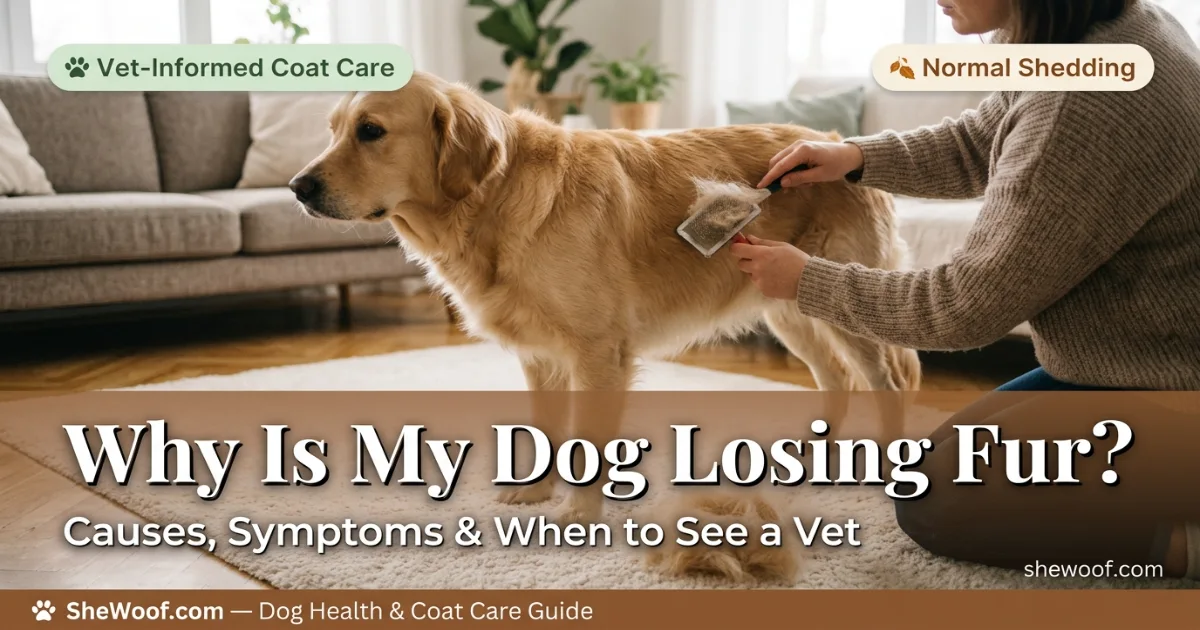
Before you worry, it helps to understand the difference between shedding and hair loss. Shedding is the natural process of replacing old hair with new. It happens year-round in most dogs, with heavier periods in spring and fall. The hair comes out evenly across the body, and you never see bare skin. The coat stays full and healthy even while you are vacuuming twice a day.
Abnormal hair loss — called alopecia in veterinary terms — is different. It produces visible thinning, bald patches, or areas where the skin is exposed. It may be accompanied by redness, scaling, crusting, itching, or a dull, brittle coat. It may appear suddenly or develop gradually. When hair loss is abnormal, the underlying cause needs to be identified and treated.
Some breeds shed more than others. Double-coated breeds like Huskies, Golden Retrievers, and German Shepherds shed heavily, especially during seasonal coat blows. Single-coated breeds like Poodles and Yorkies shed less but still lose hair. Hairless breeds like Xoloitzcuintli and Chinese Crested have very little coat to begin with, and their “hair loss” is simply their normal state.
Why Is My Dog Losing Fur? Common Causes
The causes of hair loss in dogs fall into several broad categories. Identifying the category is the first step toward a solution.
1. Allergies
Allergies are one of the most common causes of abnormal hair loss in dogs. When a dog is allergic to something in their environment (pollen, dust mites, mold) or their food (protein sources, grains), the immune system overreacts and causes itching and inflammation. The dog scratches, chews, and licks at the itchy areas, which damages the hair follicles and causes hair to fall out .
Allergy-related hair loss is often concentrated in specific areas: the paws, face, ears, armpits, groin, and around the tail base. The skin underneath may be red, thickened, or darkened. Secondary bacterial or yeast infections are common and can worsen the hair loss.
2. Parasites
Fleas, mites, and other external parasites can cause significant hair loss. Flea allergy dermatitis — an allergic reaction to flea saliva — is one of the most common causes of hair loss in dogs, especially along the back near the tail. Mites like Demodex and Sarcoptes (scabies) can also cause hair loss, often with intense itching and crusty skin .
Fleas and mites are diagnosed through skin scrapings, flea combing, or visual inspection. Treatment involves eliminating the parasite and addressing secondary skin infections. Some parasites, like Sarcoptes, are contagious to humans and other pets.
3. Skin Infections
Bacterial and fungal skin infections can cause hair loss, often with redness, pustules, crusting, and a foul odor. Ringworm — which is actually a fungus, not a worm — causes circular bald patches with scaly edges. Yeast infections cause greasy, thickened, and darkened skin with a musty smell .
Skin infections are often secondary to another underlying condition, like allergies or hormonal imbalances. Treating the infection without addressing the root cause often leads to recurrence.
4. Hormonal Imbalances
Hormones play a significant role in coat health. When hormone levels are out of balance, hair loss can occur without itching or redness. The two most common hormonal causes of hair loss in dogs are hypothyroidism and Cushing’s disease .
Hypothyroidism — an underactive thyroid — causes a dull, dry coat, symmetrical hair loss on the trunk and tail, and often weight gain, lethargy, and cold intolerance. It is diagnosed with blood tests and treated with thyroid supplementation.
Cushing’s disease — an overproduction of cortisol — causes hair loss on the body, a pot-bellied appearance, increased thirst and urination, and thinning skin. It is more common in older dogs and requires veterinary diagnosis and management.
5. Nutritional Deficiencies
A poor-quality diet or one that lacks essential fatty acids, zinc, or certain vitamins can lead to a dull, brittle coat and hair loss . However, true nutritional deficiencies are less common than most owners assume. Most commercial dog foods are complete and balanced, so a deficiency usually only occurs with homemade diets, severe malnutrition, or underlying gastrointestinal disease that prevents nutrient absorption.
6. Stress and Behavioral Causes
Stress, anxiety, and compulsive disorders can cause hair loss. Some dogs over-groom or lick themselves excessively when anxious, creating bald patches on the flank, tail, or legs. This is sometimes called acral lick dermatitis or “lick granuloma.” Environmental changes like moving, a new pet, or the loss of a family member can trigger this behavior .
7. Other Medical Conditions
Several other conditions can cause hair loss in dogs, including autoimmune diseases, certain cancers, and reaction to medications. In some cases, hair loss is a side effect of chemotherapy or other treatments. Your veterinarian can perform diagnostic tests to rule these out.
| Cause | Typical Pattern | Other Signs |
|---|---|---|
| Allergies | Paws, face, ears, groin, tail base | Itching, redness, ear infections |
| Fleas/mites | Back near tail, ears, elbows | Intense itching, crusting, visible parasites |
| Bacterial/yeast infection | Anywhere, often circular | Redness, odor, crusting, pustules |
| Hypothyroidism | Symmetrical on trunk and tail | Weight gain, lethargy, cold intolerance |
| Cushing’s disease | Trunk, sparing head and limbs | Pot belly, thirst, urination, thin skin |
| Stress/licking | Flank, legs, tail | Bald patches, thickened skin, no redness |

How Do Puppies, Adults, and Senior Dogs Differ?
Age affects both the causes and the significance of hair loss. Puppies lose their soft puppy coat and grow an adult coat between four and twelve months. This transition can look dramatic, but it is normal and does not create bald patches.
Adult dogs may lose hair due to allergies, parasites, or infections, which can occur at any age. Hormonal causes like hypothyroidism and Cushing’s disease tend to appear in middle-aged to older dogs. Senior dogs may experience thinning coat as part of the natural aging process, but new or worsening hair loss should still be evaluated.
When Should You See a Veterinarian?
Some hair loss resolves on its own, especially if it is related to seasonal shedding. But many causes require diagnosis and treatment. Contact your veterinarian if:
- Your dog has bald patches or visible skin
- The hair loss is accompanied by itching, redness, scaling, or crusting
- The coat is dull, brittle, or falling out in clumps
- Your dog is licking, chewing, or scratching excessively
- There is a foul odor from the skin or coat
- The hair loss is spreading or getting worse
- Your dog has other symptoms like weight change, lethargy, or increased thirst
- The hair loss is not seasonal and does not improve with grooming
How Is Hair Loss Treated?
Treatment depends entirely on the cause. Allergies may be managed with hypoallergenic diets, flea prevention, antihistamines, or immunotherapy. Parasites are treated with appropriate antiparasitic medications. Bacterial and yeast infections require antibiotics or antifungals. Hormonal conditions are managed with medication to correct the imbalance.
Nutritional support is often part of the plan. Omega-3 fatty acids, zinc, and other nutrients support skin and coat health . A high-quality diet and appropriate supplements can help, but they are not a substitute for treating the underlying cause.
If the hair loss is caused by excessive licking due to stress or anxiety, behavior modification, environmental management, and sometimes medication may be needed. A veterinary behaviorist or trainer can help develop a plan.
What Most Owners Get Wrong About Hair Loss
The biggest mistake is assuming hair loss is just “shedding” when it is not. Shedding is even and does not leave bald spots. Hair loss that creates visible skin is a symptom, not a phase.
Another mistake is treating the symptom without diagnosing the cause. Owners often try switching foods, adding supplements, or using medicated shampoos without knowing what is actually wrong. This can delay effective treatment and allow the condition to worsen.
A third mistake is ignoring the problem because the dog does not seem bothered. Some causes of hair loss — like hypothyroidism — are not itchy but have significant effects on overall health. Others, like Cushing’s disease, can affect the heart, kidneys, and other organs if left untreated.
- Normal shedding is even and seasonal; abnormal hair loss causes bald patches or visible skin.
- Common causes include allergies, fleas and mites, skin infections, hormonal imbalances, and stress.
- Hair loss with itching, redness, crusting, or odor requires veterinary diagnosis.
- Hypothyroidism and Cushing’s disease are common hormonal causes of non-itchy hair loss in middle-aged and older dogs.
- Treatment depends on the cause — do not use human skin products or guess at treatments without veterinary guidance.
Frequently Asked Questions
Why is my dog losing fur?
Dogs lose fur for many reasons, including normal seasonal shedding, allergies, parasites like fleas and mites, skin infections, hormonal imbalances such as hypothyroidism or Cushing’s disease, nutritional deficiencies, and stress. If the loss is patchy, itchy, or accompanied by redness, see your vet.
How can I tell if my dog’s fur loss is normal shedding?
Normal shedding is even across the body and does not create bald spots or expose skin. It typically follows seasonal patterns in spring and fall. Abnormal hair loss causes visible thinning, patches, or bald areas and may be accompanied by itching, redness, or scaling.
What causes bald patches on dogs?
Bald patches can be caused by allergies, parasites, skin infections, hormonal imbalances, or excessive licking due to stress. The location and appearance of the patches can help your vet determine the cause. Diagnosis often requires skin scrapings, blood tests, or allergy testing.
Can stress cause hair loss in dogs?
Yes. Stress and anxiety can lead to excessive licking, chewing, or grooming, which damages hair follicles and causes hair loss. Environmental changes, separation anxiety, or compulsive disorders can all trigger this behavior. Addressing the underlying stress is key to resolving the hair loss.
What foods help with dog hair loss?
A high-quality, complete and balanced diet supports healthy skin and coat. Omega-3 fatty acids, zinc, and certain vitamins are important for coat health. However, food alone will not fix hair loss caused by allergies, parasites, or hormonal conditions — those require specific treatment.
When should I take my dog to the vet for hair loss?
See a vet if your dog has bald patches, visible skin, itching, redness, scaling, crusting, or a foul odor. Also see a vet if the hair loss is spreading, not seasonal, or accompanied by other symptoms like lethargy, weight change, or increased thirst.
Is dog hair loss contagious to other pets?
Some causes of hair loss, like fleas, mites, and ringworm, are contagious to other pets and sometimes to humans. Others, like allergies and hormonal conditions, are not contagious. Your vet can advise on whether isolation or treatment of other pets is needed.
Will my dog’s fur grow back after hair loss?
In most cases, hair grows back once the underlying cause is treated. However, if the hair follicles have been severely damaged by chronic infection or scarring, regrowth may be partial or may not occur. Early treatment improves the chances of full recovery.