Can You Use Human Shampoo on Dogs? Risks, Safe Alternatives & Tips
Quick Answer: No, you should not use human shampoo on dogs. Human shampoo is formulated for human skin, which has a different pH balance than a dog’s skin. Using it can strip natural oils, cause dryness, itching, and skin infections. In some cases, ingredients like tea tree oil, salicylates, and artificial fragrances can be toxic to dogs. Always use a dog-specific shampoo formulated for canine skin. If you are out of dog shampoo, a mild, fragrance-free, hypoallergenic baby shampoo can be a one-time emergency substitute — but not a regular solution.
You are giving your dog a bath. You reach for the shampoo, and realize you are out of dog shampoo. You look at your own bottle of shampoo and wonder: can you use human shampoo on dogs? It is a common question. The answer is important because using the wrong shampoo can cause real harm. Your dog’s skin is not the same as yours. It has a different pH, a different structure, and different sensitivities. Using human shampoo can disrupt the skin barrier, leading to irritation, dryness, and infection.
This guide explains why human shampoo is not safe for dogs, what to look for in a dog-specific shampoo, how to bathe your dog properly, and what to do if you have no dog shampoo on hand.
Why Can’t You Use Human Shampoo on Dogs?
The main reason comes down to pH. Human skin is acidic, with a pH between 4.5 and 5.5. This acidic environment helps protect against bacteria and fungi. Human shampoos are formulated to maintain this pH. Dog skin, on the other hand, is closer to neutral, with a pH between 6.5 and 7.5. It is significantly less acidic than human skin.
When you use an acidic human shampoo on a dog’s more neutral skin, it disrupts the skin’s natural balance. The shampoo strips away the natural oils that protect the skin and coat. This leaves the skin dry, vulnerable to irritation, and more susceptible to bacterial and yeast infections. The dog may start scratching, which can lead to broken skin and secondary infections.
Beyond pH, human shampoos contain ingredients that can be harmful to dogs. Sulfates, parabens, artificial fragrances, and essential oils like tea tree, eucalyptus, and citrus can cause allergic reactions or toxicity. Some human shampoos contain salicylates (from willow bark or aspirin), which are toxic to dogs if absorbed through the skin or ingested. Even “natural” or “organic” human shampoos may contain ingredients that are not safe for dogs.

Why This Matters for Dog Owners
Skin problems are one of the most common reasons dogs visit the vet. Many of these problems are preventable. Using the right shampoo — one formulated for dogs — helps maintain healthy skin and coat. Using the wrong shampoo can trigger a cycle of itching, scratching, and infection that requires veterinary treatment.
There is also the cost factor. A bottle of dog shampoo costs $10 to $25. A vet visit for a skin infection, including medication, costs $100 to $300 or more. Using the right shampoo saves money and keeps your dog comfortable.
Finally, there is the comfort factor. A dog with itchy, irritated skin is miserable. They scratch, chew, and lose sleep. Their coat looks dull and unhealthy. Using the right shampoo keeps their skin balanced and their coat shiny. It is a simple change with a big impact.
What Most Owners Get Wrong About Dog Shampoo
The most common mistake is assuming that because a shampoo is gentle for humans, it is gentle for dogs. This is not true. “Gentle” or “natural” human shampoos can still be too acidic or contain ingredients that are toxic to dogs.
Another error is using human medicated shampoos on dogs. These often contain salicylic acid, coal tar, or ketoconazole — ingredients that may be helpful for humans but are not formulated for dogs. Some can be toxic if absorbed through the skin or licked off.
Some owners also use dish soap as a makeshift dog shampoo. Dish soap is designed to cut grease, and it is far too harsh for a dog’s skin. It strips oils aggressively and can cause severe dryness and irritation. It is never a safe substitute.
How Puppies, Adults, and Seniors Differ
Puppies have more sensitive skin than adult dogs. Their skin barrier is still developing, and their immune system is learning to distinguish between safe and harmful substances. Use a gentle puppy-specific shampoo. Avoid any product with strong fragrances or essential oils.
Adult dogs can handle a wider range of dog-specific shampoos, including medicated ones for specific skin conditions. If your adult dog has allergies or sensitive skin, choose a hypoallergenic, fragrance-free formula.
Senior dogs often have thinner, drier skin. They may benefit from moisturizing or oatmeal-based shampoos. Avoid harsh or drying formulas. Senior dogs may also have mobility issues that make bathing more challenging — consider a professional groomer if needed.
| Life Stage | Skin Sensitivity | Recommended Shampoo | Frequency |
|---|---|---|---|
| Puppy (under 1 year) | High | Gentle puppy-specific formula | Every 4-6 weeks |
| Adult (1-7 years) | Moderate | Dog-specific, based on coat type | Every 4-6 weeks |
| Senior (7+ years) | Moderate to high | Moisturizing or oatmeal-based | Every 4-6 weeks or as needed |
| Dogs with skin conditions | Variable | Medicated (vet-recommended) | As directed by vet |
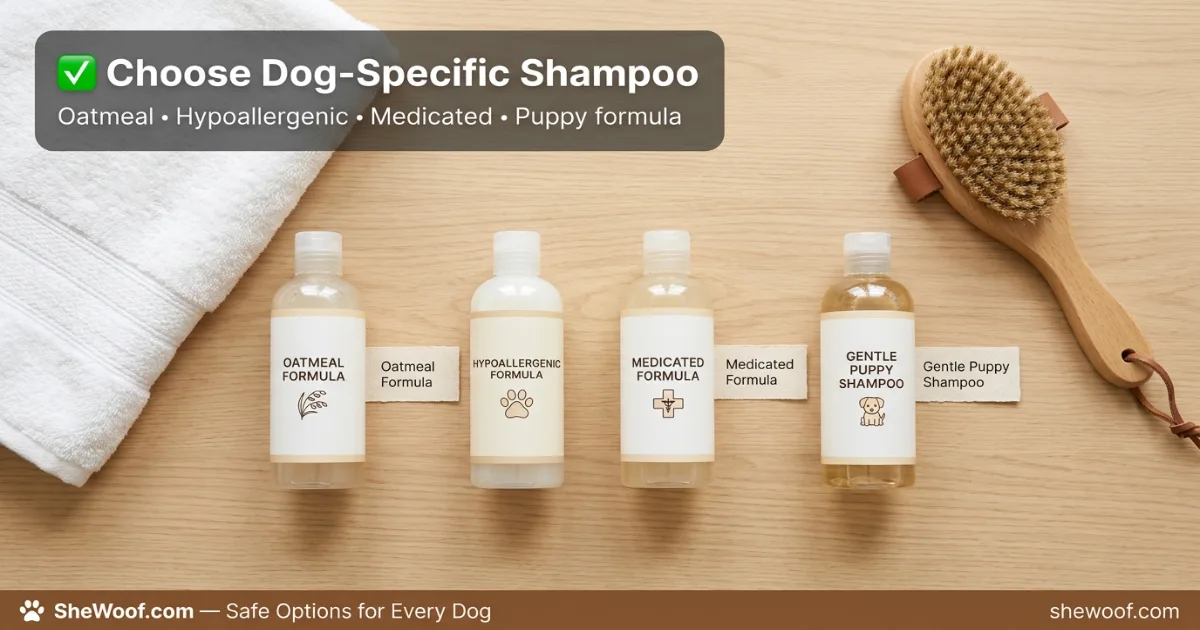
What to Look for in a Dog Shampoo
When choosing a shampoo for your dog, look for these qualities:
- pH-balanced for dogs: Look for products formulated specifically for canine skin pH.
- Natural, gentle ingredients: Oatmeal, aloe vera, and coconut oil are soothing and moisturizing.
- No harsh chemicals: Avoid sulfates, parabens, and artificial fragrances.
- No essential oils: Many essential oils are toxic to dogs, especially tea tree, eucalyptus, and citrus.
- Hypoallergenic formulas: For dogs with sensitive skin or allergies.
- Medicated options: For dogs with specific skin conditions, use a vet-recommended medicated shampoo.
Step-by-Step: How to Bathe Your Dog Safely
- Brush your dog first. Remove loose hair, mats, and tangles before wetting the coat.
- Gather supplies. Dog shampoo, towels, a cup or sprayer for rinsing, and a non-slip mat for the tub.
- Use lukewarm water. Test the temperature on your wrist — it should be comfortably warm, not hot.
- Wet your dog thoroughly. Use a sprayer or cup to wet the coat down to the skin. Avoid the eyes, ears, and nose.
- Apply diluted shampoo. Mix the shampoo with water according to instructions. Massage into the coat, working from the neck down.
- Rinse thoroughly. Rinse until the water runs clear. Leftover shampoo can cause irritation and itching.
- Dry your dog. Towel dry, then use a hairdryer on the lowest heat setting if needed. Keep the dryer moving to avoid burns.
- Reward your dog. Give treats and praise to make bath time a positive experience.
Dog-specific shampoos range from $10 to $25 for a standard bottle. Medicated shampoos prescribed by a vet cost $20 to $40. Hypoallergenic and specialty formulas cost $15 to $35. Compared to the cost of treating a skin infection — which can be $100 to $300 or more — the right shampoo is a smart investment. Buying in bulk or choosing concentrated formulas can reduce the cost per bath.

What to Do If You Have No Dog Shampoo
If you are out of dog shampoo and your dog desperately needs a bath, here is what you can do:
- Use a mild, fragrance-free baby shampoo. This is the safest emergency substitute. Dilute it with water (1 part shampoo to 5 parts water) and rinse thoroughly.
- Use plain warm water. If your dog is not very dirty, a warm water rinse can remove surface dirt and allergens.
- Use a dog-safe grooming wipe. For quick clean-ups, dog-specific wipes are a good option.
- Do not use dish soap, hand soap, or body wash. These are too harsh for a dog’s skin.
Remember, baby shampoo is an emergency substitute — not a regular solution. Get proper dog shampoo as soon as you can. Your dog’s skin will thank you.
Frequently Asked Questions About Human Shampoo on Dogs
No, you should not use human shampoo on dogs. Human shampoo is formulated for human skin pH (4.5-5.5), while dog skin is closer to neutral (6.5-7.5). Using human shampoo can strip natural oils, cause dryness, itching, and skin infections. Always use a dog-specific shampoo.
A single use of a mild human shampoo is unlikely to cause serious harm, but it can strip oils and cause temporary dryness or irritation. If your dog has sensitive skin, even one use can trigger itching or a rash. Rinse thoroughly and monitor for signs of irritation. Switch to dog shampoo for future baths.
Mild, fragrance-free baby shampoo can be used as a one-time emergency substitute if you are out of dog shampoo. Dilute it with water and rinse thoroughly. However, it is not a long-term solution. Baby shampoo still has a different pH than dog skin and can cause dryness with repeated use.
Choose a dog-specific shampoo that is pH-balanced for canine skin. Look for natural, gentle ingredients like oatmeal and aloe vera. Avoid sulfates, parabens, artificial fragrances, and essential oils. For dogs with skin conditions, use a vet-recommended medicated shampoo.
Dog shampoo is formulated for a higher pH than human skin. Using it on humans can disrupt the skin’s acid mantle, leading to dryness, irritation, and increased susceptibility to infections. It is not recommended for regular human use.
Most dogs need a bath every 4-6 weeks. Dogs with skin conditions may need more frequent bathing with a medicated shampoo, as directed by your vet. Over-bathing can strip natural oils and cause dryness. Always use a dog-specific shampoo.
No. Human dandruff shampoos often contain salicylic acid, coal tar, or ketoconazole, which can be toxic to dogs if absorbed through the skin or licked off. If your dog has dandruff, see your vet for a dog-safe medicated shampoo.
- Human shampoo is not safe for dogs because of the pH difference between human and dog skin.
- Using human shampoo can strip natural oils, cause dryness, itching, and skin infections.
- Always use a dog-specific shampoo that is pH-balanced for canine skin.
- In an emergency, a mild, fragrance-free baby shampoo diluted with water can be used once — but not regularly.
- Never use human medicated shampoos, dish soap, or products with tea tree oil, salicylates, or harsh chemicals on your dog.