Best Way to Get Burrs Out of Dog Fur: Safe Removal & Prevention
Quick Answer: The best way to get burrs out of dog fur is to work slowly with your fingers first, then use a metal comb or slicker brush to loosen the burr in small sections. Apply a pet-safe detangling spray or a small amount of coconut oil to soften the burr, then gently work it free from the tips of the fur upward. Never pull or cut a burr out with scissors near the skin — you risk cutting your dog. For severe mats or burrs embedded close to the skin, see a professional groomer or veterinarian.
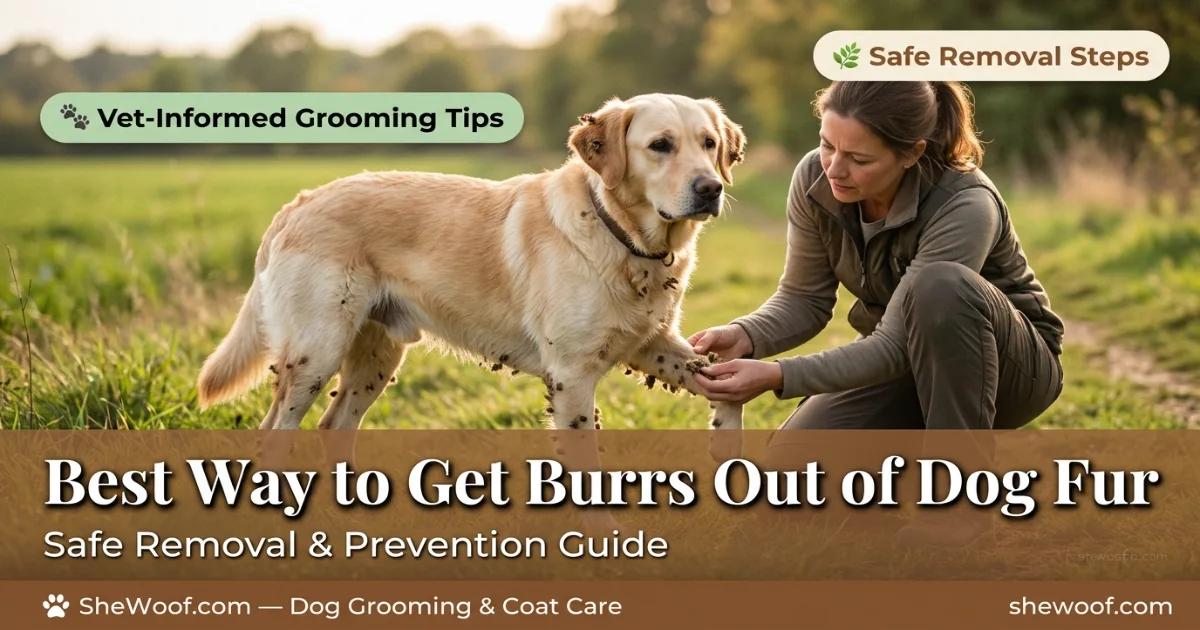
Your dog comes bounding out of the tall grass, tail wagging, thrilled with themselves. Then you see it: their legs, chest, and ears are covered in burrs. If you are searching for the best way to get burrs out of dog fur, you already know this is not a quick fix. Burrs are designed by nature to cling. Their tiny hooks latch onto fur the same way they latch onto animal coats in the wild, and pulling them out carelessly can hurt your dog and damage their coat.
I have removed hundreds of burrs from dogs with every coat type — silky, curly, double-coated, and short. The method matters. Done right, burr removal is calm and painless. Done wrong, it becomes a wrestling match that leaves your dog sore and your patience shredded. Here is exactly what to do.
Why Are Burrs So Hard to Remove From Dog Fur?
Burrs are seed pods from plants like burdock, cocklebur, and beggar’s lice. Their outer surface is covered in tiny hooks that catch onto anything with a fibrous texture — and dog fur is a perfect target. Each hook latches onto individual strands of hair, and as your dog moves, the burr works deeper into the coat. By the time you notice it, the burr may be tangled into several layers of fur and pulled tight against the skin.
The longer a burr stays in the coat, the harder it becomes to remove. The fur wraps around the hooks, creating a mat that traps the burr in place. Pulling a burr out without loosening it first is painful for the dog and often leaves behind broken hair and small fragments that can irritate the skin. That is why the “just pull it out” approach usually fails.
What Is the Best Way to Get Burrs Out of Dog Fur?
The safest, most effective method follows a specific order: protect your dog, soften the burr, work it loose in sections, and check the skin afterward. Rushing any step makes the process harder on both of you.
- Stay calm and secure your dog. Use a non-slip surface and a helper if possible. Speak softly and reward cooperation with treats. A stressed dog is harder to work with and more likely to be hurt accidentally.
- Do not pull the burr out immediately. Instead, use your fingers to gently separate the fur around the burr. Loosen any hair that has wrapped around it. Work slowly and stop if your dog shows signs of pain.
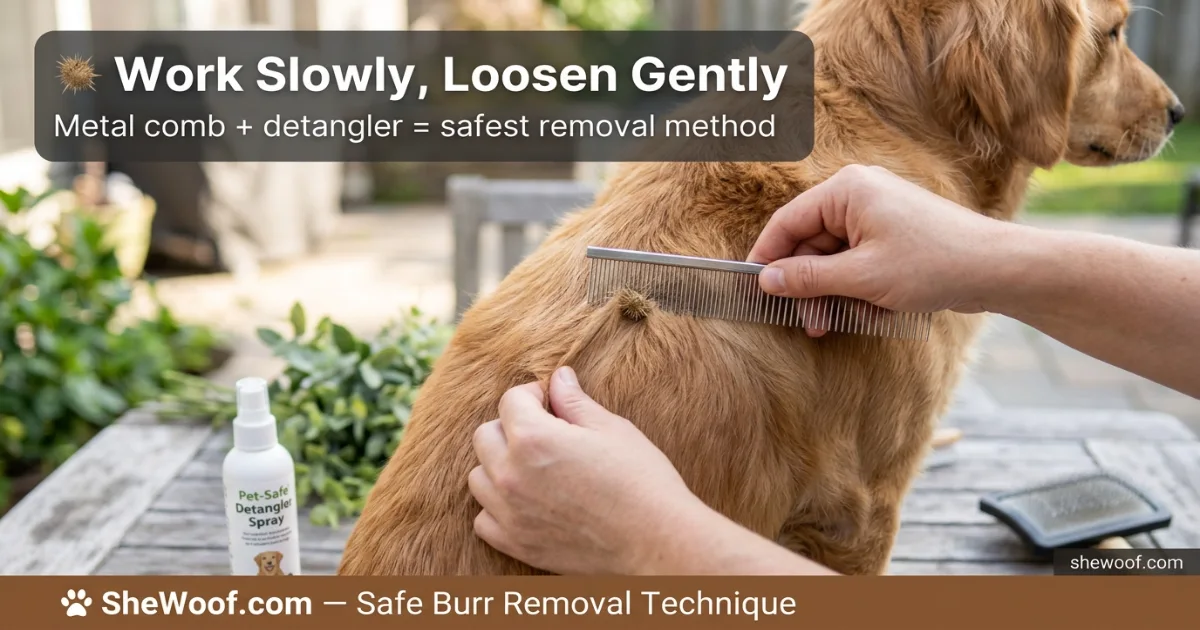
- Apply a pet-safe detangling spray or a small amount of coconut oil. Lubricant softens the burr and helps the hooks release their grip. Do not soak the coat — a light spritz is enough. Let it sit for a minute or two.
- Use a metal comb to loosen the burr in sections. Start at the outer edge of the burr and work inward. Hold the fur close to the skin so you are not pulling the skin. Comb in small, gentle strokes until the burr breaks apart.
- Break the burr into smaller pieces with your fingers. Larger burrs come apart more easily if you crumble them into smaller sections rather than trying to remove the whole thing at once.
- Remove the final pieces with your fingers or a comb. Once the burr has loosened, the remaining fragments should slide out easily. Continue until the fur is clean.
- Check the skin for irritation. Burrs can scratch the skin or leave small sores. If you see redness, cuts, or swelling, clean the area gently and contact your veterinarian if the irritation looks serious.
- Brush the coat out thoroughly afterward. Use a slicker brush and metal comb to remove any leftover fragments and prevent mats from forming where the burr was.
- Reward your dog. Give praise and treats so the experience ends on a positive note — especially if you will need to remove burrs again in the future.
What Tools Do You Need?
Burr removal does not require a professional grooming kit, but a few basic tools make the job much easier and safer. Anything sharp, like scissors or clippers, should be avoided unless used by a professional.
- Metal comb (greyhound comb) — the most important tool
- Slicker brush — for finishing the coat after burr removal
- Pet-safe detangling spray — softens burrs and fur
- Coconut oil (small amount) — natural alternative to detangler
- Blunt-tipped scissors — only for cutting burrs that are safely away from the skin, and only if absolutely necessary
- Treats — for rewarding cooperation
- Non-slip mat — for stability and safety
How Do You Remove Burrs From Different Coat Types?
Coat type changes the technique. A silky coat snags burrs loosely; a dense double coat traps them. Curly coats tangle burrs into tight mats. Here is how to approach each.
| Coat Type | Common Breeds | Best Approach |
|---|---|---|
| Silky / single coat | Yorkie, Maltese, Cavalier | Comb gently from tips inward, use detangler, avoid pulling |
| Double coat | Husky, Shepherd, Labrador | Work in sections, use undercoat rake after detangling |
| Curly / woolly coat | Poodle, Bichon, Doodle | Detangle first, then comb in small sections — do not brush dry |
| Short / smooth coat | Beagle, Boxer, Dachshund | Fingers and detangler usually enough; check skin closely |
| Long feathering | Setter, Spaniel | Pay extra attention to ears, tail, and leg feathers — common burr traps |
What Do Most Owners Get Wrong About Burr Removal?
The most common mistake is pulling the burr out. It looks like the fastest solution, but pulling forces the hooks deeper into the fur and causes your dog significant pain. Many dogs become fearful of grooming after a painful burr removal, which makes future sessions harder.
Another error is cutting burrs out with scissors. Dog skin is thin and easily cut, and burrs are often tangled tight against the skin. Even experienced owners have accidentally cut their dogs this way. Unless you can clearly see the skin and feel the burr’s edges, do not use scissors.
A third mistake is wetting the coat before removing the burr. Water tightens mats and makes burrs harder to remove. Always work with dry fur and a small amount of detangler or oil.
Some owners also skip the post-removal skin check. Burrs can leave scratches, small cuts, or embedded fragments that become infected if not noticed. Always check the skin after removing each burr, especially in dense coats.
How Do You Prevent Burrs From Getting Into Your Dog’s Fur?
Prevention is easier than removal. A few habits make a huge difference, especially if you walk in areas with tall grass or brush.
- Avoid tall grass and brush during peak burr season. Late summer and early fall are the worst months for burrs in most climates.
- Keep fur trimmed in high-risk areas. Ask your groomer to keep the leg feathers, chest, and ear fringe shorter during burr season.
- Brush after every walk in nature. A quick brush catches burrs before they work their way into the coat.
- Use a light coat conditioner. Conditioned fur is smoother and less likely to catch burrs.
- Consider protective clothing. A lightweight dog vest or bodysuit can protect the chest and legs in areas with heavy burrs.
- Stick to cleared trails when possible. If you know an area has burrs, avoid it during peak season.
What If the Burr Is Embedded in a Mat?
Burrs and mats often go together — the burr tangles the fur, and the tangle tightens into a mat. Removing a burr from a mat is trickier than removing one from loose fur.
Start by breaking the mat apart with your fingers, working from the outside in. Apply detangler or coconut oil to soften the fur. Use a metal comb to work through the mat in small sections. If the mat is large or very tight, do not try to force it. Cutting mats out with scissors is risky. A professional groomer can safely remove matted fur with clippers, which is often faster and less stressful for the dog.
When to Call a Professional Groomer or Vet
Most burrs can be removed at home. But some situations call for professional help.
- The burr is embedded close to the skin.
- The burr has created a mat that you cannot safely loosen.
- Your dog is in pain or reacting aggressively to the removal attempt.
- You see cuts, sores, or signs of infection where the burr was.
- Your dog has many burrs across a large area.
- You are unsure whether the burr is a burr or something else (like a tick).
A groomer can safely remove difficult burrs and mats without hurting your dog. A veterinarian is the right call if the skin is damaged, if the burr is embedded deeply, or if your dog shows signs of pain or infection.
What Realistic Burr Removal Looks Like
A single small burr in loose fur takes one to three minutes to remove safely. A burr tangled into a mat can take five to fifteen minutes. A dog covered in burrs after a hike might need a full grooming session and possibly a professional appointment.
What is unrealistic: expecting to pull a burr out in seconds without hurting your dog. What is realistic: a calm, careful process with the right tools, plenty of treats, and a willingness to stop if your dog is uncomfortable.
Frequently Asked Questions About Removing Burrs From Dog Fur
The safest method is to work slowly with your fingers first, apply a pet-safe detangler or a small amount of coconut oil, then loosen the burr in small sections using a metal comb. Never pull or cut burrs out with scissors. For burrs close to the skin, see a professional groomer or vet.
No. Cutting burrs out with scissors is dangerous. Dog skin is thin and loose, and it is very easy to cut your dog accidentally. If a burr is too close to the skin to remove by hand, leave it for a professional groomer or veterinarian.
A pet-safe detangling spray works well. A small amount of coconut oil is a safe alternative. Apply lightly and let it sit for a minute or two to soften the burr before working it loose with a metal comb.
Small burrs may eventually work their way out, but most stay in the coat and tighten over time, creating mats and pulling on the skin. Removing them promptly is safer and less stressful for your dog.
Yes. Burrs can scratch the skin, cause mats that pull on the skin, and lead to irritation or infection if left in place. They can also work deeper into the coat over time, becoming harder to remove.
Avoid tall grass and brush during burr season. Keep fur in high-risk areas trimmed shorter. Brush your dog after every walk in nature. Consider a light coat conditioner or a protective vest. Stick to cleared trails when possible.
Some human detanglers are safe, but pet-specific products are formulated for dog skin pH and are less likely to cause irritation. Always patch-test first and avoid products with strong fragrances or alcohol. Ask your groomer or vet if unsure.
See a groomer if the burr is embedded close to the skin, if your dog has many burrs across a large area, if the burr has created a mat you cannot loosen, or if your dog is in pain. A groomer can safely remove difficult burrs and mats without hurting your dog.
- The best way to get burrs out of dog fur is to work slowly with your fingers, apply a pet-safe detangler, and loosen the burr in sections with a metal comb.
- Never pull or cut burrs out with scissors — this risks cutting your dog or causing pain.
- Coat type matters. Silky coats snag burrs loosely; double and curly coats trap them deeply. Use the right technique for your dog’s coat.
- Prevent burrs by avoiding tall grass during peak season, brushing after walks, and keeping high-risk fur trimmed.
- See a professional groomer or vet for burrs embedded close to the skin, large mats, or any sign of skin damage or infection.