Old Dog Doesn’t Like New Dog? Here’s How to Turn Tension Into Tolerance
Quick Answer: When an old dog doesn’t like a new dog, the most common causes are resource guarding, pain or health issues in the senior dog, disrupted routine, and normal canine social dynamics where the older dog sets boundaries with an energetic newcomer. Start by having your senior dog checked by a veterinarian to rule out pain or illness. Then reintroduce the dogs slowly — on neutral territory first, with separate feeding areas, individual attention for the older dog, and zero punishment for growling or correcting the puppy. The older dog’s tolerance builds when they feel safe, respected, and not displaced by the newcomer.
You brought home a new dog hoping your older dog would welcome a companion. Instead, your senior dog growls when the newcomer approaches. They avoid rooms the puppy is in. They seem depressed, annoyed, or outright hostile. You search “old dog doesn’t like new dog” because the guilt is setting in — you wanted to enrich your older dog’s life, and now it feels like you have made a terrible mistake.
You have not made a mistake. You have made a common, fixable miscalculation about how dogs experience new additions to their territory. An older dog who has lived as the only dog for years — or who simply prefers calm and predictability — does not automatically celebrate the arrival of a bouncy, boundary-testing newcomer. The behaviors you are seeing are communication, not rejection. The question is whether you can translate that communication and adjust the environment so both dogs feel safe. In most cases, the answer is yes.
Why Your Older Dog Is Reacting This Way
An older dog who growls, snaps, avoids, or seems depressed after a new dog arrives is not being mean, jealous, or stubborn. They are communicating stress in the only language they have. For years — maybe their entire life — your home was their territory. The routine was predictable. The resources were exclusively theirs. The attention from you was undivided. Then, without their consent, a stranger moved in. A stranger who smells unfamiliar, moves unpredictably, demands attention, and does not yet understand the unspoken rules of the household.
This is not a personality conflict. It is a predictable response to a major life disruption. Older dogs, like older humans, value routine, predictability, and a sense of control over their environment. The arrival of a new dog — especially a puppy or young adult with endless energy — strips all three away at once. The behaviors you are seeing are your older dog’s attempt to restore a sense of safety and order in a world that suddenly feels chaotic.
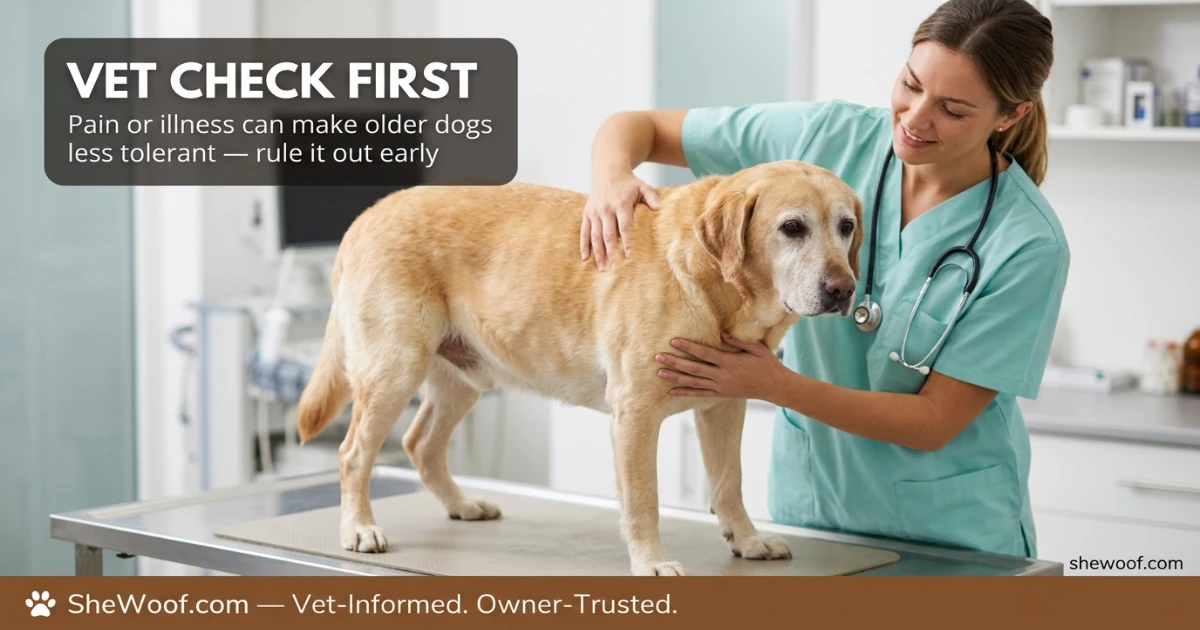
Pain adds another layer. Senior dogs often have undiagnosed arthritis, dental disease, or other chronic conditions that make them less tolerant of being bumped, jostled, or chased. A dog who was patient with puppies five years ago may snap at one today — not because their personality changed, but because their body hurts and their tolerance threshold is lower. Every older dog who suddenly dislikes a new dog should have a veterinary examination before behavioral interventions begin.
What Most Owners Get Wrong About Old Dog and New Dog Introductions
The most damaging mistake is forcing proximity. Owners bring the new dog into the living room, set them down in front of the older dog, and expect them to sniff and become friends. The older dog growls. The owner scolds the older dog for being “mean.” The older dog now associates the new dog with stress, punishment, and negative attention from the owner. The relationship is poisoned before it has a chance to begin.
Growling is not the problem. Growling is a warning system. A dog who growls is communicating discomfort before escalating to a snap or bite. Punishing a growl teaches the dog not to warn — not to feel differently. The next time the dog is pushed past their threshold, they may skip the growl and go directly to a bite. Accept the growl as information. “I am uncomfortable. Give me space.” Then adjust the environment so the dog does not feel the need to growl in the first place.
Another common error: treating both dogs equally from day one. Equality sounds fair. It feels fair. But to a senior dog who has earned their place in the home over years, sudden equality with a stranger feels like demotion. The older dog should be fed first, greeted first, walked first, and given attention first — at least during the initial weeks of the transition. This is not favoritism. It is respecting the established hierarchy and reducing the older dog’s anxiety about being displaced. The new dog — especially a puppy — does not suffer from going second. The older dog suffers deeply from losing their first-place status.
Step-by-Step: Introducing a New Dog to an Older Dog
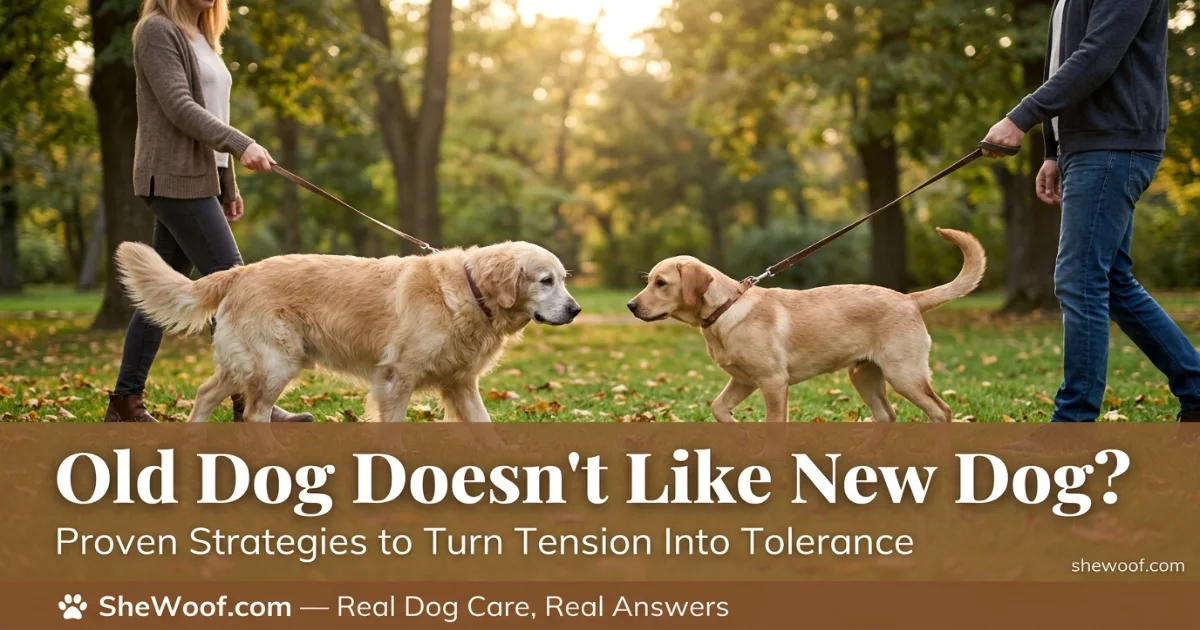
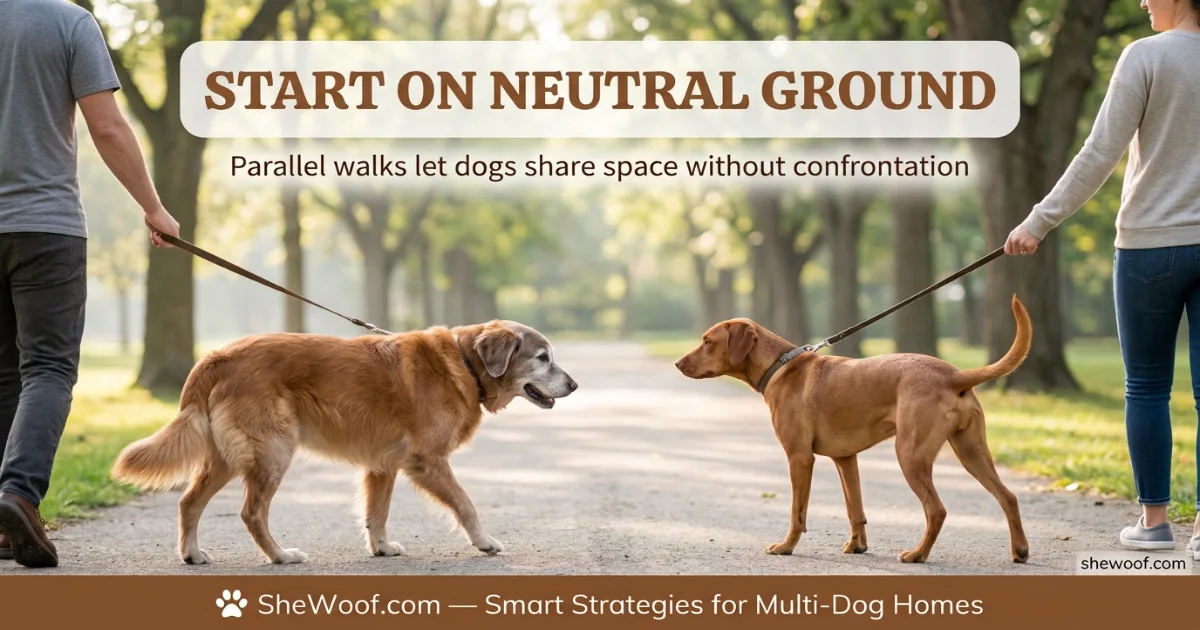
Step 1 — Start on Neutral Ground: The first meeting should happen somewhere neither dog considers their territory. A quiet park, a friend’s fenced yard, or an empty street corner all work. Both dogs are on leashes held by different people. Walk them parallel to each other at a distance — 20 to 30 feet apart — where they can see each other but are not close enough to feel threatened. Gradually decrease the distance over the course of the walk if both dogs remain calm. Sniffing is allowed if both dogs are relaxed. If either dog stiffens, stares, or growls, increase the distance and try again. End the session while both dogs are calm — even if that means a 5-minute walk where they never got closer than 15 feet.
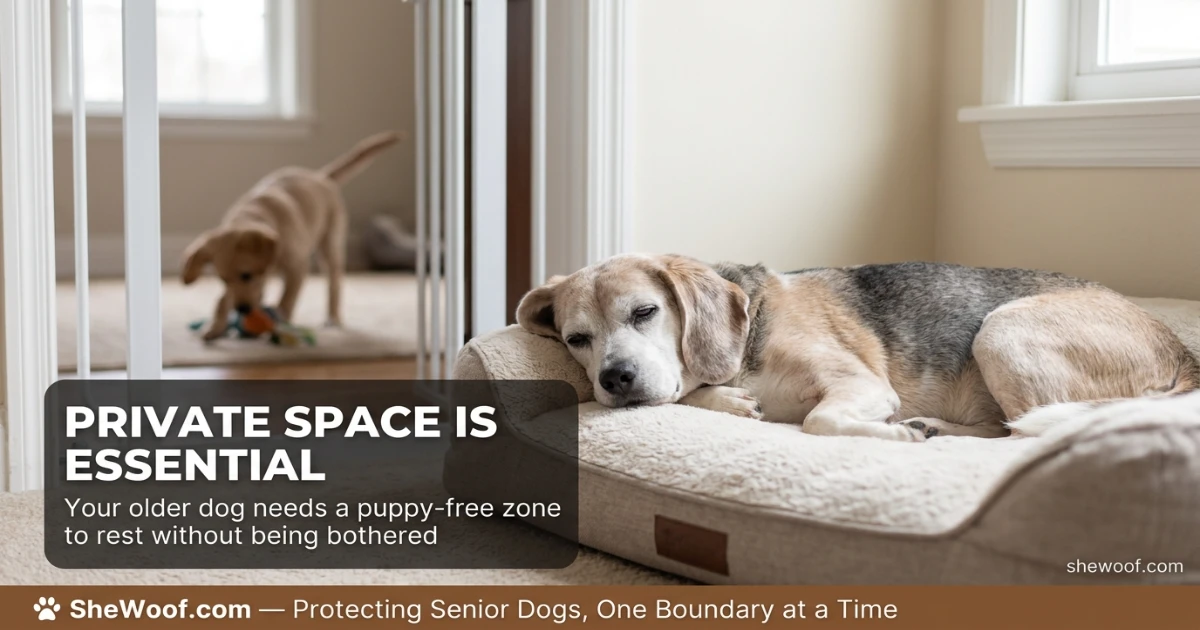
Step 2 — Separate Spaces at Home: When you bring the new dog home, do not bring them directly into the older dog’s space. The new dog should have a separate area — a spare room, a gated section of the house — where they can decompress without the older dog’s presence. The older dog retains access to their normal spaces. The dogs can hear and smell each other through the door. Rotate who has access to shared spaces, so both dogs become accustomed to each other’s scent without direct contact. This phase lasts at least a few days and sometimes a week or more.
Step 3 — Supervised, Leashed Coexistence: When both dogs are calm during scent swapping, move to short, supervised in-home meetings. Both dogs are on leashes. Sessions are short — 10 to 15 minutes. Reward calm behavior, disengagement, and any moment where the dogs choose to look away from each other. Do not force interaction. If the older dog growls or walks away, respect that. End the session calmly. Increase duration gradually over many days.
Step 4 — Gradual Integration: As both dogs demonstrate consistent calm behavior during supervised meetings, you can allow longer periods together — still supervised, still with the older dog having escape routes and private spaces. Separate feeding areas are non-negotiable. Separate beds, separate water bowls, and separate alone time with you are equally important. Full, unsupervised integration may take weeks or months. Some pairs reach it. Some pairs always need management during high-excitement moments. Both outcomes are acceptable.
| Introduction Phase | Duration (Typical) | Key Actions | Signs of Readiness to Progress |
|---|---|---|---|
| Neutral territory meeting | 1-3 sessions | Parallel walks; no face-to-face pressure | Both dogs can walk near each other calmly |
| Separate home spaces | 3-7 days minimum | Scent swapping; rotation through shared areas | Neither dog fixates on the door separating them |
| Leashed indoor meetings | 7-14 days | Short sessions; reward calm disengagement | Old dog relaxes; new dog can settle |
| Gradual integration | 2-8 weeks+ | Longer supervised time; separate resources | Both dogs can rest in same room without tension |
How Age, Size, and Energy Level Affect the Dynamic
A 10-year-old Labrador with arthritis has different needs and tolerance levels than a 2-year-old Labrador. A senior small dog may feel physically vulnerable around a large-breed puppy who does not yet know their own strength. The match matters. An older dog paired with a high-energy puppy of a similar size may be stressed not by the puppy’s personality but by the sheer physical intensity of the interaction. Management in these cases means giving the older dog abundant quiet time away from the puppy — not just hoping the puppy learns to be gentle.
A new adult dog joining a home with a senior resident has its own dynamics. Two adult dogs may clash over status in ways a puppy and senior dog typically do not. Same-sex pairs — especially two females or two males — can be more prone to tension than opposite-sex pairs. None of this makes the match impossible. It means you need to be realistic about the management required and willing to adjust if the pairing creates chronic stress for either dog.
When to Seek Professional Help
If your older dog’s response includes biting that breaks skin, if either dog is living in a state of chronic stress, or if you have followed a slow introduction protocol for several weeks and seen no improvement, it is time to bring in a professional. A certified dog trainer or veterinary behaviorist who uses positive reinforcement methods can assess the dynamic in person — something no article, including this one, can do. They can see body language you may miss, identify triggers you have not recognized, and create a customized behavior modification plan.
Some pairings simply do not work. Acknowledging this is not failure. It is responsible ownership. If your older dog is genuinely suffering — losing weight, hiding constantly, developing stress-related health problems — rehoming the new dog to a better-matched home may be the kindest choice for both animals. This is a last resort, not a first response. Most old dog and new dog tensions can be resolved with time, structure, and the right management. But when they cannot, the welfare of the existing, established family member must come first.

Frequently Asked Questions About Older Dogs and New Dogs
Growling is communication — your older dog is telling the puppy to back off. This is normal and should not be punished. The growl is a warning that prevents escalation to a bite. Respect it by giving the older dog space. If growling is frequent, the older dog may be in pain, stressed by the puppy’s energy, or feeling displaced. A veterinary check and a slower introduction pace typically help.
For most pairs, 2 to 4 weeks of structured introduction produces noticeable improvement. Full, relaxed integration can take 2 to 3 months. Some senior dogs never become playful friends with a new dog but learn to coexist peacefully — and that counts as success. A small percentage of pairings require ongoing management indefinitely, and a professional trainer can help you determine what is realistic for your specific dogs.
A brief, controlled correction — a short growl, a quick snap that does not make contact — is part of how adult dogs teach puppies social boundaries. Do not punish the older dog for this. Do intervene if the correction is prolonged, if the puppy is not backing off, or if either dog seems stressed. Your job is not to eliminate all communication but to ensure the puppy respects the older dog’s signals and the older dog does not feel the need to escalate.
Depression-like behavior — withdrawal, reduced appetite, loss of interest in walks or play — is a common stress response in older dogs after a new dog arrives. Increase one-on-one time with your older dog. Maintain their routines as much as possible. Feed, walk, and greet them first. Give them a private, new-dog-free zone. If symptoms persist beyond 2 to 3 weeks or include physical signs like vomiting, diarrhea, or weight loss, see your veterinarian.
Completely normal. An 8-year-old dog is not obligated to entertain a 6-month-old puppy. Play is not a measure of acceptance. Peaceful coexistence — sharing space without tension, eating near each other without guarding, resting in the same room — is a perfectly successful outcome. Do not force play. Celebrate the calm moments. They matter far more than whether the dogs ever wrestle or chase each other.
Yes — many do. But “friends” means different things for different pairs. Some older dogs and new dogs become genuine playmates. Others develop a quiet, respectful coexistence that looks more like tolerant roommates than best friends. Both outcomes are wins. The goal is a home where both dogs feel safe, neither lives in chronic stress, and you are not constantly intervening in conflict. Friendship, when it happens, is a bonus.
- When an old dog doesn’t like a new dog, start with a veterinary exam to rule out pain or illness — especially if the reaction is sudden or severe.
- Introduce dogs on neutral territory first. Keep them separated in the home for several days while they adjust to each other’s scent. Never force face-to-face contact.
- Respect the older dog’s communication. Growling is a warning, not defiance. Punishing it removes the warning system without changing the underlying discomfort.
- Prioritize the older dog for the first 4 to 6 weeks — feed first, greet first, walk first. This reduces anxiety about being displaced by the newcomer.
- Separate all resources: food bowls, water stations, beds, toys, and alone time with you. Competition over resources is one of the most common triggers for tension.
- Most old dog and new dog tensions resolve within weeks to months with structure and patience. If they do not, consult a certified professional trainer or veterinary behaviorist.