What Happens If My Dog Swallows a Bee? Risks, Symptoms & What to Do
Quick Answer: If your dog swallows a bee, the most common outcome is a sting inside the mouth or throat. This can cause swelling, pain, drooling, and difficulty swallowing. Most dogs recover with home care — but if the swelling is severe, affects breathing, or your dog shows signs of an allergic reaction (hives, vomiting, collapse), this is a veterinary emergency. Watch for facial swelling, pawing at the mouth, and difficulty breathing. If you see these signs, call your vet immediately. Do not try to remove a stinger from inside the mouth yourself — you could get stung or push it deeper.
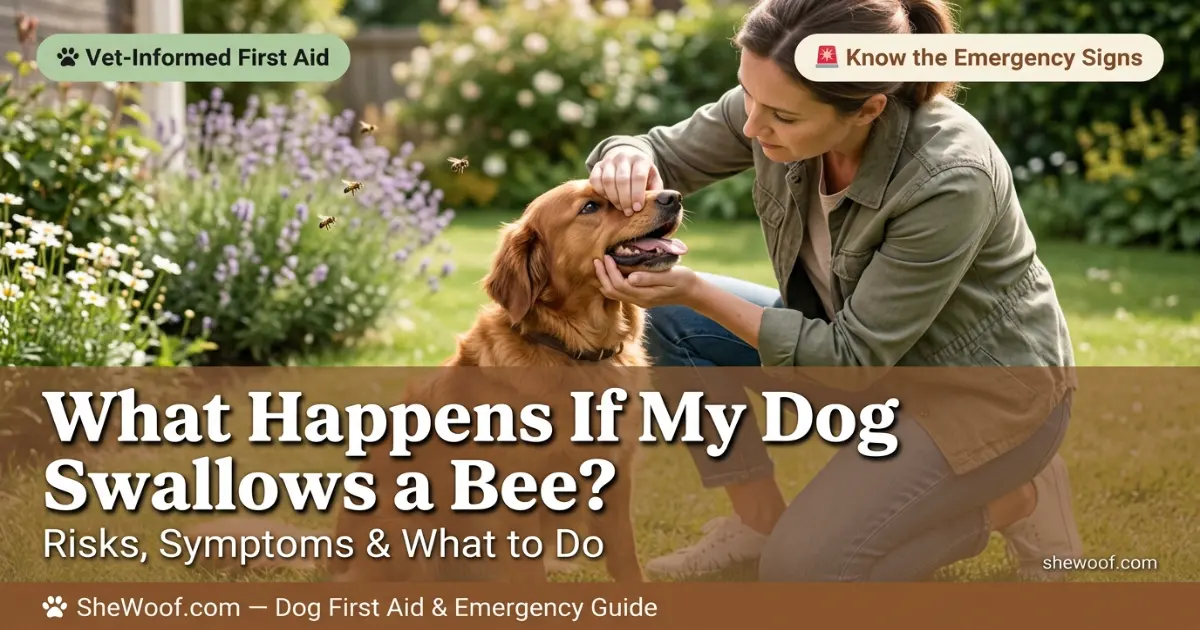
You are in the backyard. Your dog is snapping at the air, chasing something. Then they gulp. And you realize — they just swallowed a bee. Your heart sinks. You wonder: what happens if my dog swallows a bee? It is a common scenario, especially in summer when bees are active and dogs are curious. The good news is that most dogs recover without serious problems. But there are real risks — and knowing what to do can make all the difference.
This guide explains exactly what happens when a dog swallows a bee, the symptoms to watch for, how to treat a bee sting at home, and when to call the vet. It also covers the difference between a mild reaction and a serious allergic reaction — because knowing the difference can save your dog’s life.
What Happens When a Dog Swallows a Bee?
When a dog swallows a bee, the bee typically stings on the way down. The sting can occur in the mouth, throat, or esophagus. The venom causes localized pain, swelling, and inflammation. In most cases, the dog swallows the bee and the sting is a minor event. The bee dies, the venom is released, and the body’s immune system responds.
The severity depends on where the sting occurs and how the dog reacts. A sting on the tongue or lip is painful but usually not dangerous. A sting in the throat or back of the mouth can cause swelling that interferes with breathing or swallowing — which is much more serious. A sting in the stomach or intestines is less common, but can cause gastrointestinal upset.
In some dogs, the venom triggers an allergic reaction. This can range from mild (hives, itching, mild swelling) to severe (anaphylaxis). Anaphylaxis is a life-threatening emergency that requires immediate veterinary care. Signs include difficulty breathing, collapse, vomiting, diarrhea, and loss of consciousness.
Why This Matters for Dog Owners
Bee stings are common in dogs, especially during spring and summer. Dogs are curious and often chase or snap at flying insects. Knowing what to do — and what not to do — helps you respond calmly and effectively. It also helps you recognize when a situation is an emergency versus a minor event.
Some dogs are allergic to bee venom. If your dog has had a reaction before, they are more likely to have a more severe reaction next time. Knowing the signs of anaphylaxis and having a plan in place can save your dog’s life. If your dog has a known allergy, talk to your vet about emergency protocols.
Bee stings can also cause secondary problems. A dog who is stung in the mouth may refuse to eat or drink because of pain. Swelling in the throat can make swallowing difficult. In rare cases, the sting can become infected. Monitoring your dog after a sting helps you catch these issues early.
What Most Owners Get Wrong About Bee Stings
The most common mistake is trying to remove a stinger from the mouth with fingers or tweezers. This is dangerous. You could get stung yourself, or you could push the stinger deeper into the tissue. Do not attempt to remove a stinger from inside your dog’s mouth. If the stinger is visible on the outside of the face or paw, you can scrape it off with a credit card or stiff paper — but never use tweezers, which can squeeze more venom into the skin.
Another error is assuming that a mild reaction means the dog is fine. Bee sting reactions can worsen over time. A dog who seems fine immediately after a sting may develop swelling or breathing difficulty 30 minutes to an hour later. Always monitor for at least 24 hours.
Some owners also give human antihistamines without checking with a vet. While some antihistamines are safe for dogs, the dosage and type matter. Never give your dog any medication — including over-the-counter antihistamines — without veterinary guidance. Some human medications are toxic to dogs.
Symptoms of a Bee Sting in Dogs
Most bee stings cause localized symptoms. The severity depends on where the sting occurred and how sensitive your dog is to the venom. Common signs include:
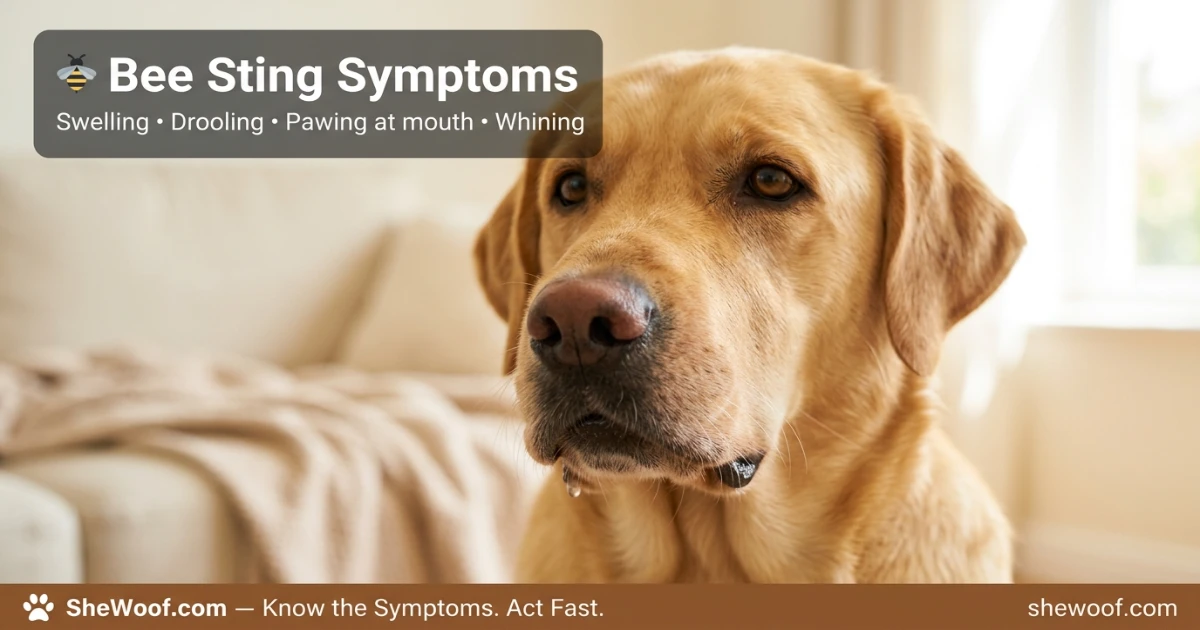
- Pawing at the mouth or face. The most common sign of a sting in the mouth.
- Drooling or excessive salivation. The mouth may be painful or swollen.
- Swelling of the lips, muzzle, or face. Can develop quickly or over 30-60 minutes.
- Whining or crying. Signs of pain.
- Difficulty eating or drinking. Swelling in the mouth or throat makes it hard to swallow.
- Head shaking or rubbing the face. Attempts to relieve the irritation.
- Redness or a visible sting site. If the stinger is on the outside of the face or paw.
- Vomiting or diarrhea. More common with stings in the throat or with allergic reactions.
- Hives or rash. A sign of an allergic reaction.
- Difficulty breathing. A life-threatening emergency — call the vet immediately.
How Puppies, Adults, and Seniors Differ
Puppies are more likely to chase and snap at bees because they are curious and playful. Their smaller size means a sting can have a greater impact — even a mild reaction can cause more swelling relative to their body. Puppies are also more vulnerable to dehydration if they refuse to eat or drink due to mouth pain.
Adult dogs with healthy immune systems typically handle bee stings well. The sting is painful, but the reaction is usually localized and resolves within a few days. Adult dogs with known allergies are at higher risk and should be monitored closely.
Senior dogs may have weaker immune systems and underlying health conditions that make a bee sting more dangerous. They may also have dental issues or difficulty swallowing that make mouth pain more problematic. Senior dogs should be evaluated by a vet after any bee sting in the mouth or throat.
| Dog Type | Risk Level | What to Watch For |
|---|---|---|
| Puppy (under 1 year) | Moderate to high | Swelling, dehydration, refusal to eat |
| Adult dog (1-7 years) | Low to moderate | Localized swelling, pain, drooling |
| Senior dog (7+ years) | Moderate to high | Swelling, difficulty swallowing, immune response |
| Dogs with known allergies | High | Anaphylaxis — emergency vet care |
| Small breeds (under 10 lbs) | Moderate | Swelling has greater impact on smaller bodies |
Step-by-Step: What to Do If Your Dog Swallows a Bee
- Stay calm and assess your dog. Check for swelling, drooling, pawing at the mouth, or difficulty breathing.
- Look for a visible stinger. If it is on the outside of the face or paw, scrape it off with a credit card. Do not use tweezers, and do not reach into the mouth.
- Apply a cold compress. Wrap an ice pack or cold cloth in a towel and apply it to the outside of the face or mouth area for 10 minutes at a time.
- Call your veterinarian. Describe the situation and ask for guidance. They may recommend a vet-approved antihistamine or suggest bringing the dog in.
- Offer water. If your dog can swallow, offer small amounts of water. Do not force food or water if swallowing seems difficult.
- Monitor for at least 24 hours. Watch for signs of a worsening reaction — increased swelling, hives, vomiting, or breathing difficulty.
- Go to the emergency vet if needed. If your dog shows signs of anaphylaxis — difficulty breathing, collapse, or severe swelling — go immediately.
When to See the Vet Immediately
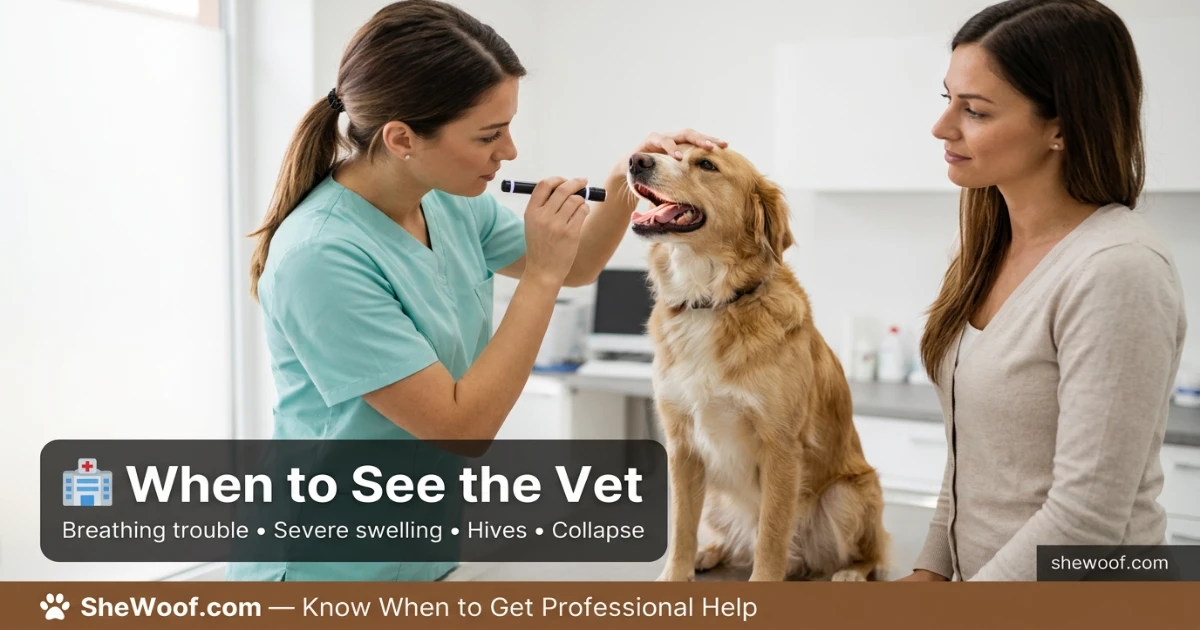
Some bee stings are emergencies. Call your vet or go to the emergency clinic if your dog shows any of these signs:
- Difficulty breathing or noisy breathing.
- Swelling of the face, throat, or neck.
- Hives or rash spreading across the body.
- Vomiting or diarrhea.
- Collapse or loss of consciousness.
- Weakness or disorientation.
- Excessive drooling and inability to swallow.
- Signs of pain that do not improve within an hour.
Do not wait to see if symptoms improve. Anaphylaxis can progress rapidly. Early treatment with steroids, antihistamines, or epinephrine can save your dog’s life.
What Does a Vet Visit for a Bee Sting Cost?
A basic vet visit for a mild bee sting typically costs $50 to $100. If treatment is needed — antihistamines, steroids, or fluids — the cost ranges from $100 to $300. Emergency treatment for anaphylaxis, including hospitalization and injectable medications, can cost $500 to $1,500 or more. Pet insurance can help cover these costs, especially if your dog has a history of allergic reactions.
Basic vet exam: $50 – $100
Antihistamine or steroid injection: $50 – $150
Emergency treatment for anaphylaxis: $500 – $1,500+
Follow-up visit: $40 – $80
Pet insurance: $30 – $70 per month (varies by breed and age)
Frequently Asked Questions About Dogs Swallowing Bees
Most commonly, the bee stings on the way down, causing pain and swelling in the mouth or throat. Most dogs recover with home care, but severe swelling can affect breathing or swallowing. Some dogs have allergic reactions that require emergency veterinary care.
If your dog has mild symptoms — minor drooling or slight swelling — you can monitor at home and call your vet for guidance. But if you see facial swelling, difficulty breathing, hives, vomiting, or collapse, go to the vet immediately. These are signs of a severe allergic reaction.
Yes, in rare cases. A bee sting in the throat can cause swelling that blocks the airway, and anaphylaxis can be fatal without emergency treatment. However, most bee stings are not life-threatening. Prompt recognition and treatment make a full recovery likely.
Stay calm and assess your dog. Look for swelling or difficulty breathing. If you see a stinger on the outside of the face or paw, scrape it off with a credit card — do not use tweezers or reach into the mouth. Apply a cold compress and call your vet for guidance.
Benadryl (diphenhydramine) can be safe for dogs, but the dosage depends on your dog’s weight and health. Never give any medication without consulting your veterinarian first. Some human antihistamines contain additional ingredients that are toxic to dogs.
Mild swelling and pain usually resolve within 24 to 72 hours. Severe allergic reactions can progress quickly and require emergency care. Monitor your dog for at least 24 hours after a sting, and call your vet if symptoms worsen.
It is rare, but possible if the sting causes severe swelling in the throat or triggers anaphylaxis. Most dogs recover fully with prompt treatment. If your dog has a known bee allergy or shows signs of a severe reaction, seek emergency veterinary care immediately.
- If your dog swallows a bee, the most common outcome is a sting in the mouth or throat. Most cases are painful but not dangerous.
- Watch for facial swelling, drooling, pawing at the mouth, and difficulty breathing. Severe signs require emergency veterinary care.
- Never try to remove a stinger from inside your dog’s mouth. Scrape off visible stingers on the outside with a credit card — do not use tweezers.
- Apply a cold compress, offer water, and call your vet for guidance. Do not give any medication without veterinary approval.
- Monitor your dog for at least 24 hours. Reactions can worsen over time, and anaphylaxis is a life-threatening emergency.