Can You Use Dog Diapers to Potty Train? What Owners Need to Know
Quick Answer: Dog diapers are not an effective potty training tool for healthy puppies or dogs. They can actually slow down training by preventing the dog from feeling the discomfort of being wet — the very sensation that teaches them to hold their bladder and seek an appropriate place to eliminate. Diapers are best used for specific, temporary situations: senior dogs with incontinence, females in heat, dogs recovering from surgery, or managing accidents in a home where a dog is not yet fully trained. For active potty training, a consistent schedule, crate training, close supervision, and immediate outdoor trips after drinking, eating, and sleeping work far better than any diaper.
You are exhausted. Your puppy has peed on the rug three times today, and you are seriously considering whether putting a diaper on them would solve the problem — at least temporarily. You search “can you use dog diapers to potty train” hoping the answer is yes. You want permission to make the mess stop while the training catches up.
Here is the honest answer: dog diapers are a management tool, not a training tool. They prevent accidents from reaching your floor. They do not teach your dog where to go or how to hold it. In many cases, they slow down the very learning process you are trying to accelerate. This guide explains why — and what to do instead if you want a reliably house-trained dog, not a dog who simply wears a diaper.
Why Dog Diapers Work Against Potty Training
Potty training works through a simple biological feedback loop. The puppy feels the urge to urinate. If they are in the right place — outside — they relieve themselves and feel relief. If they are in the wrong place — inside — the discomfort of a full bladder builds until they learn to hold it or signal to go out. Over weeks, the puppy’s brain connects the sensation of a full bladder with the action of going to the door, going outside, and relieving themselves in the designated spot.
A diaper short-circuits this entire process. The puppy urinates whenever the urge strikes. The diaper absorbs the urine. The puppy never feels wet. The puppy never learns that urinating indoors is undesirable because the consequence — the wet, uncomfortable feeling — never registers. The diaper becomes a mobile potty pad, and the puppy learns that anywhere, anytime is fine. When you eventually remove the diaper — and you will have to — the puppy has learned nothing about where or when to go. They have simply learned that the diaper handles it.
This is why professional dog trainers and veterinarians almost never recommend diapers as a potty training tool for healthy dogs. Diapers manage the mess. They do not teach the dog. Management and training are different things. Management prevents accidents. Training creates a dog who chooses to eliminate in the right place. A diaper does the first job but actively interferes with the second.

When Dog Diapers Are Actually Appropriate
Diapers are not a potty training tool — but they are a legitimate management tool in specific situations. Knowing when they are appropriate prevents frustration and helps you use them correctly.
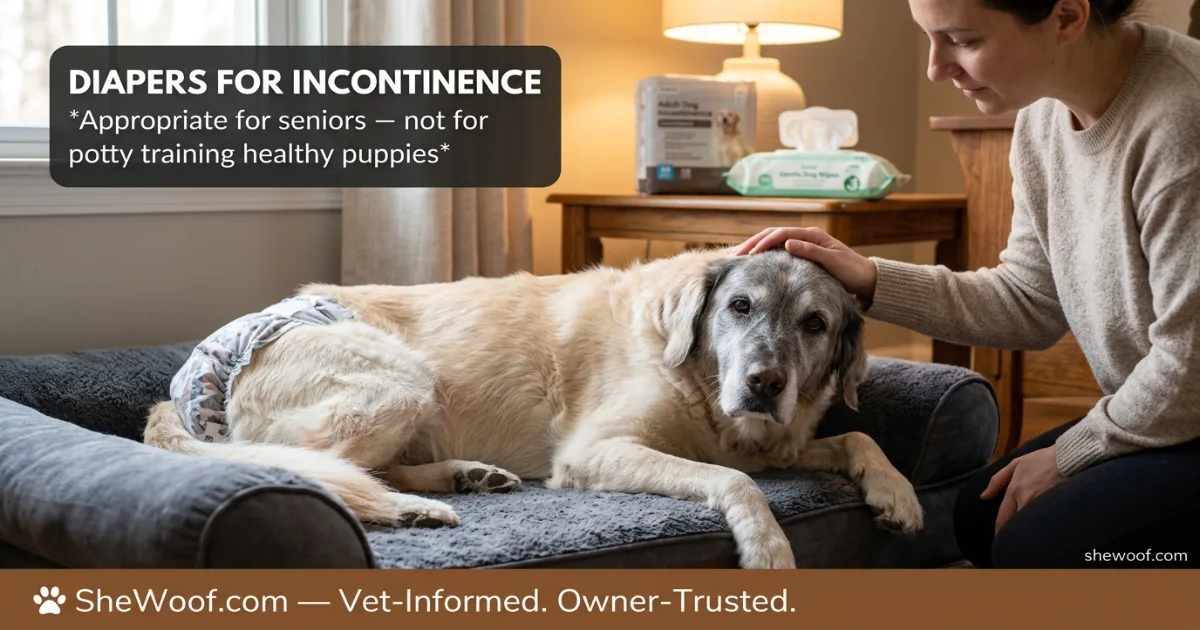
Senior dogs with incontinence: An older dog who leaks urine due to weakened sphincter muscles, cognitive decline, or age-related conditions is not a training candidate. They are a management candidate. Diapers — along with veterinary care to address the underlying cause when possible — keep the dog comfortable and the home clean. This is the most legitimate and common use of dog diapers.
Female dogs in heat: An unspayed female in estrus will have bloody discharge for approximately 2 to 3 weeks. A diaper keeps your home clean and prevents unwanted mating during this period. This is not a training situation — it is a biological event that diapers manage effectively.
Dogs recovering from surgery or illness: A dog on diuretics, recovering from spinal surgery, or temporarily incontinent due to medication may need a diaper for a short period. This is a temporary medical accommodation, not a training strategy.
Marking behavior in intact males: Some male dogs — especially those who are not neutered — urine-mark indoors. A belly band (a male dog diaper that wraps around the waist) can prevent damage while you address the underlying behavior through training, neutering, or both. The belly band manages the mess. The training — not the band — solves the problem.
What Most Owners Get Wrong About Dog Diapers and Training
The most common mistake is using diapers as a substitute for taking the dog outside. An owner puts a diaper on the puppy in the morning, goes about their day, and assumes the diaper is handling the problem. Hours pass. The diaper becomes soaked. The puppy has urinated multiple times with zero feedback — no trip outside, no praise, no learning. When the diaper comes off at night, the puppy has no idea that the rules have changed. The result is a dog who is reliably house-trained to a diaper — and nothing else.
Another frequent error: using diapers for convenience rather than necessity. Potty training a puppy is inconvenient. It requires frequent outdoor trips, close supervision, and patience. Diapers offer a shortcut around that inconvenience — and shortcuts in dog training almost always produce short-term relief and long-term problems. If you are using diapers because taking your puppy outside every hour is exhausting, the solution is not a diaper. It is adjusting your schedule, recruiting help, or using a crate and playpen to contain the mess while you actively train.
A third mistake involves removing the diaper too abruptly. If your dog has worn diapers for weeks — for any reason — and you suddenly take them off, expect accidents. The dog has learned that the diaper handles elimination. They need a transition period with frequent outdoor trips, close supervision, and positive reinforcement to relearn — or learn for the first time — that elimination happens outside. Removing diapers cold turkey without increasing potty breaks is a recipe for frustration for both of you.
How to Transition a Dog Out of Diapers
If your dog has been wearing diapers — for any reason — and you are ready to transition away from them, the process mirrors initial potty training. Start with a veterinary check to rule out any medical cause for the need to urinate frequently or inappropriately. Then establish a strict schedule of outdoor potty trips: first thing in the morning, after every meal, after every drink, after every nap, after every play session, and before bedtime. For the first week of transition, take them out every 1 to 2 hours during the day — even if they do not seem to need it. The goal is to create so many opportunities for success that accidents become rare.
When the diaper comes off, supervision must be constant. If you cannot watch your dog, they are in a crate or a small, puppy-proofed area with an easy-to-clean floor. Every outdoor elimination earns a high-value treat and genuine praise. Indoor accidents are cleaned without punishment — the dog is not being bad. They are unlearning a pattern you inadvertently taught them. Patience plus consistency over 2 to 4 weeks typically produces reliable results, provided there is no underlying medical issue.

Puppies vs. Adult Dogs vs. Seniors: Different Needs, Different Tools
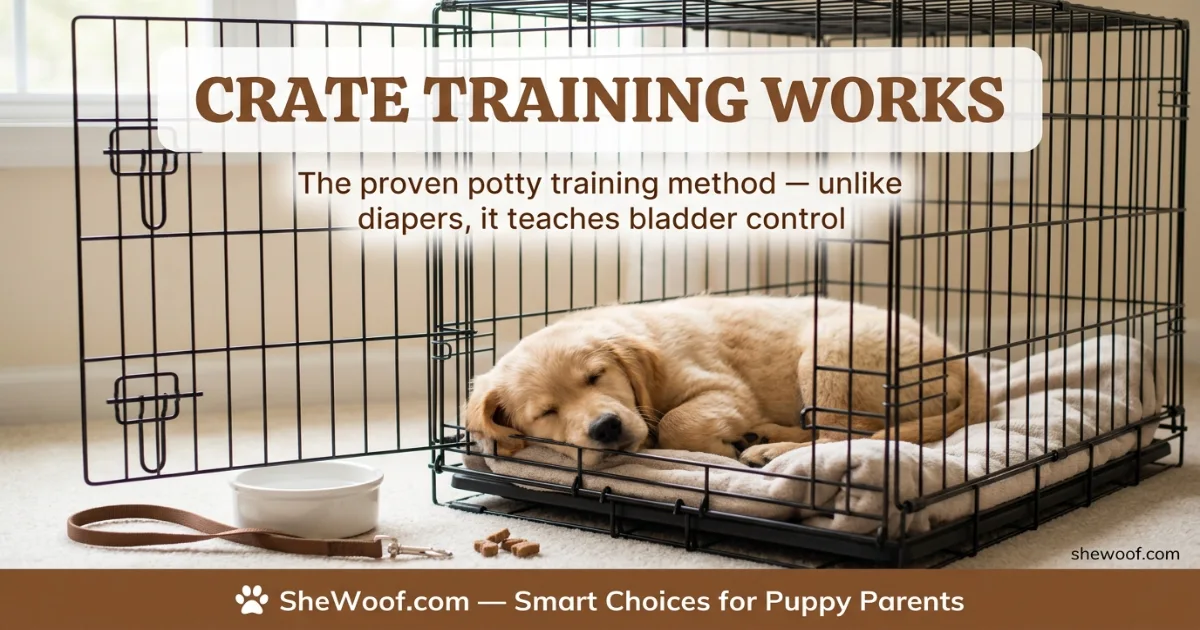
Puppies should almost never wear diapers for potty training. Their developing brains and bladders need the feedback loop of feeling the urge, holding it, and releasing it in the right place. Diapers break that loop. For puppies, confinement tools like crates and playpens plus a rigorous schedule produce far better results. If you are struggling with puppy potty training, the answer is not a diaper — it is more frequent trips outside, better supervision, and possibly professional training support.
Adult dogs with new house-soiling behavior need a veterinary exam before anything else. A previously house-trained dog who suddenly starts urinating indoors may have a urinary tract infection, bladder stones, diabetes, kidney disease, or Cushing’s disease. Putting a diaper on them without investigating the medical cause risks missing a treatable condition. If the medical workup is clear, return to basic potty training principles — schedule, supervision, reward — to re-establish the habit.
Senior dogs with incontinence deserve compassion, not correction. They are not choosing to urinate indoors. Their bodies are failing them. A diaper — changed frequently, with gentle cleaning and drying of the skin — preserves their dignity and your home. Combine it with washable bedding, waterproof mattress protectors, and regular veterinary care to manage any underlying conditions. This is the appropriate and kind use of dog diapers.

Frequently Asked Questions About Dog Diapers and Potty Training
No — diapers actively work against potty training. They prevent the puppy from feeling wet after urinating, which is the natural feedback that teaches bladder control. For effective potty training, use a consistent schedule, crate training, close supervision, and immediate outdoor trips after drinking, eating, napping, and playing.
Diapers are appropriate for senior dogs with incontinence, female dogs in heat, dogs recovering from surgery or illness, and intact males with marking behavior (belly bands). These are management situations — not training situations. Diapers should be changed every 2 to 4 hours, and the skin underneath cleaned and dried each time.
Belly bands manage urine marking — they do not teach a dog to stop marking. The band prevents damage while you address the underlying behavior through training, neutering if appropriate, or both. Without active training, the marking returns the moment the band comes off.
Start with a veterinary check to rule out medical causes. Establish a strict outdoor schedule — every 1 to 2 hours at first. Supervise constantly when the diaper is off. Reward outdoor elimination immediately. Expect accidents during the transition. Most dogs relearn within 2 to 4 weeks with consistent, positive training.
Yes. Wet or soiled diapers left on for hours cause urine scald, skin infections, rashes, and increase the risk of urinary tract infections. Diapers must be changed every 2 to 4 hours. The skin must be cleaned and completely dried before a fresh diaper goes on. Leaving a dog in a soiled diaper is neglect.
Crate training combined with a consistent potty schedule is the most effective method. Take your puppy out after every drink, meal, nap, and play session. Supervise closely indoors. Use an enzymatic cleaner for accidents. If you are struggling, hire a professional positive-reinforcement dog trainer for personalized guidance.
Sudden house-soiling in a previously trained dog often signals a medical problem — urinary tract infection, bladder stones, diabetes, kidney disease, or Cushing’s disease. See your veterinarian for a full workup before assuming it is behavioral. If medical causes are ruled out, return to basic potty training principles to re-establish the habit.
- Dog diapers are a management tool — not a training tool. They prevent messes but do not teach a dog where or when to eliminate. For healthy puppies and dogs, they can actually delay potty training progress.
- Diapers are appropriate for specific situations: senior dog incontinence, female dogs in heat, post-surgical recovery, and managing marking behavior while actively training to stop it.
- Effective potty training uses a consistent schedule, crate training, close supervision, and immediate outdoor trips after drinking, eating, napping, and playing — plus generous rewards for outdoor success.
- If your dog has been wearing diapers and you want to stop, transition gradually with a strict outdoor schedule, constant supervision, and positive reinforcement. Most dogs relearn within 2 to 4 weeks.
- Always rule out medical causes for house-soiling before assuming it is behavioral — especially in adult or senior dogs. A veterinary exam is the essential first step.
- Diapers must be changed every 2 to 4 hours with thorough skin cleaning and drying. Leaving a dog in a soiled diaper can cause skin infections, rashes, and urinary tract infections.