
Clean Dog Tear Stains Home Remedy: Safe, Natural Solutions That Work
Quick Answer: The safest and most effective home remedy for cleaning dog tear stains is a daily routine of gentle wiping with a warm, damp cloth or a diluted solution of equal parts water and hydrogen peroxide (applied carefully with a cotton ball, never in the eyes), followed by keeping the fur around the eyes trimmed short and the area dry. Other natural options include colloidal silver, coconut oil, and a teaspoon of apple cider vinegar added to food or water. Avoid products containing bleach, alcohol, or strong astringents. If tear stains are excessive, accompanied by redness, swelling, discharge, or odor, see your veterinarian — these can signal an underlying eye condition, allergy, or blocked tear duct.
Your white Maltese has reddish-brown streaks running from the corners of their eyes. Your Bichon Frise looks like they are wearing rust-colored goggles. You search “clean dog tear stains home remedy” because the commercial tear stain removers at the pet store are expensive, full of ingredients you cannot pronounce, and you are not entirely sure they are safe. You want something simple. Something that uses what you already have in your kitchen. Something that works.
Tear stains are one of the most common cosmetic concerns in dogs — especially in white and light-colored breeds — but they can also be a window into your dog’s health. Understanding what causes them, which home remedies are safe and which are not, and when tear staining crosses the line from cosmetic to medical gives you a complete plan. This guide covers all three.
What Actually Causes Tear Stains in Dogs
Tear stains are not dirt. They are not an infection — at least, not initially. The reddish-brown discoloration is caused by a molecule called porphyrin, which is a natural byproduct of red blood cell breakdown. Porphyrins are excreted through saliva, urine, and tears. When tears sit on light-colored fur, the porphyrins oxidize and stain the hair — the same way iron in well water leaves rust-colored deposits on a white sink.
Some dogs produce more porphyrins than others. Some dogs have eyes that water more heavily due to breed-specific facial anatomy, allergies, blocked tear ducts, or eyelid abnormalities. The staining itself is cosmetic — it is not hurting your dog. But the underlying cause of excessive tearing sometimes does need attention. A dog who suddenly develops tear stains after years of clear eyes may have developed an allergy, an eye infection, or a blocked nasolacrimal duct. A dog with tear stains plus redness, swelling, squinting, or thick discharge needs a veterinary exam — not a home remedy.
Breed plays a significant role. Brachycephalic breeds — Shih Tzus, Maltese, Poodles, Bichon Frises, Lhasa Apsos, and any small white or light-colored dog with a short nose and prominent eyes — are tear stain magnets. Their facial anatomy creates shallow eye sockets, tight tear ducts, and fur that sits close to the eye surface, wicking tears onto the face. It is not a design flaw — but it means these breeds need ongoing maintenance to keep tear stains at bay.

The Best Home Remedies for Cleaning Dog Tear Stains
Warm Water and a Soft Cloth — Daily Wiping: This is the simplest, safest, and most effective home remedy. Twice a day — morning and evening — dampen a soft, clean washcloth or cotton pad with warm water. Gently wipe from the inner corner of the eye outward, removing any tears before they have a chance to dry and stain the fur. Do not rub. Do not scrub. Do not use the same cloth on both eyes if there is any sign of infection — use a fresh pad for each eye. Dry the area thoroughly afterward with a separate soft cloth. Moisture left on the skin breeds bacteria and yeast, which darken the stain and create odor.
Diluted Hydrogen Peroxide (Careful Application Only): A solution of equal parts 3% hydrogen peroxide and water can lighten existing stains — but it must be applied with extreme care. Never let the solution drip into your dog’s eyes. Use a cotton ball or Q-tip, dab — do not soak — the stained fur only, and rinse the area with plain water afterward. This is a stain-lightening tool, not a daily cleaner. Limit use to once or twice per week. If you are uncomfortable working this close to your dog’s eyes, skip this remedy entirely. There are safer alternatives.
Coconut Oil: A thin layer of virgin, unrefined coconut oil applied to the stained fur creates a protective barrier that repels tears. It also has mild antimicrobial properties that help prevent the bacteria and yeast that darken tear stains. Apply a tiny amount — a pea-sized dab is enough for both eyes — with a clean finger or cotton swab. Do not get it in the eyes. Coconut oil is safe if your dog licks a small amount, but do not let them rub their face on furniture immediately after application.
Apple Cider Vinegar (Added to Food or Water): A teaspoon of raw, unfiltered apple cider vinegar added to your dog’s drinking water or food once daily may help shift the pH of their tears slightly, making them less hospitable to the yeast and bacteria that darken stains. Start with half a teaspoon for small dogs and see how they tolerate it. Some dogs refuse water with ACV added — do not force it. If your dog has kidney disease, digestive issues, or is on medication, ask your veterinarian before adding ACV to their diet.
Filtered or Distilled Water: High mineral content in tap water — especially iron — can worsen tear stains in some dogs. Switching to filtered, distilled, or reverse-osmosis water is a simple, zero-risk change that reduces mineral intake and may lighten stains over time. It does not work for every dog, but it is so easy and safe that it is worth trying for 4 to 6 weeks to see if it makes a difference.
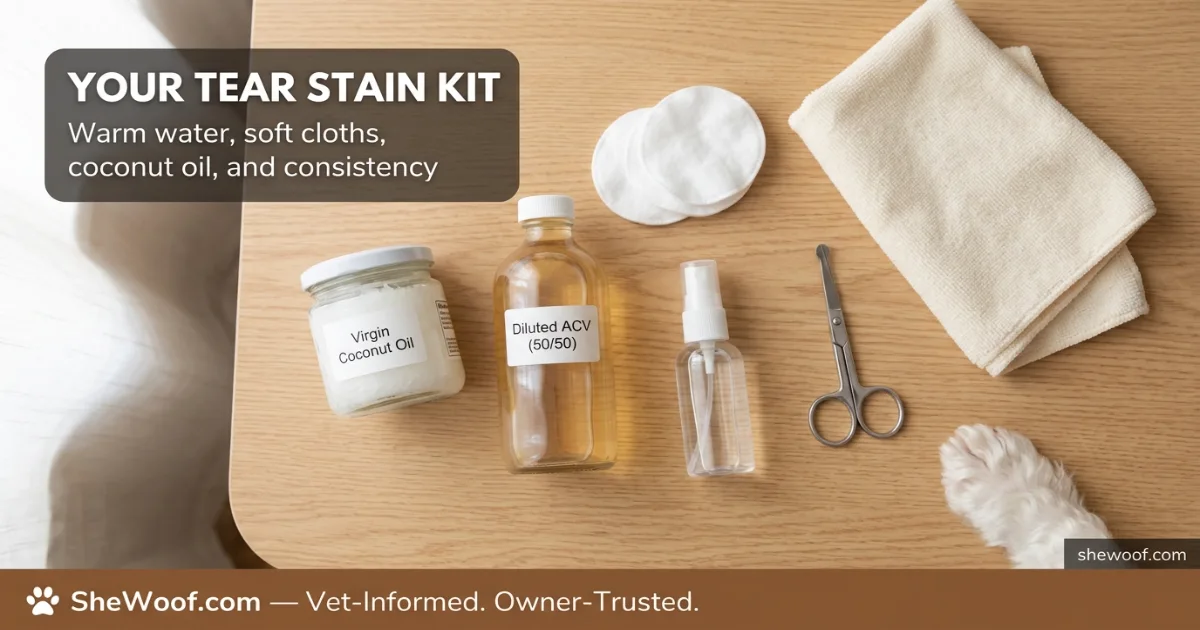
| Home Remedy | How It Helps | How Often | Safety Notes |
|---|---|---|---|
| Warm water + soft cloth | Removes tears before they stain | Twice daily | Safest option — no risk |
| Coconut oil barrier | Repels tears; mild antimicrobial | Once daily | Tiny amount; avoid eyes |
| Diluted hydrogen peroxide | Lightens existing stains | 1-2x per week max | Keep out of eyes; rinse after use |
| Apple cider vinegar (oral) | May shift tear pH slightly | Daily in food or water | Ask vet first if health issues |
| Filtered / distilled water | Reduces mineral intake | Daily — replaces tap water | Zero risk; worth trying |
| Colloidal silver (diluted) | Mild antimicrobial for stain area | 1-2x daily on fur only | Use only on fur; never in eyes |
What Most Owners Get Wrong About Tear Stain Removal
The most dangerous mistake is using products not intended for use near the eyes — bleach, rubbing alcohol, undiluted hydrogen peroxide, or harsh astringents. These can cause corneal burns, ulcers, and permanent vision loss. Tear stains are cosmetic. Your dog’s eyesight is not. Never risk the latter for the former. If a product burns when it gets in your eyes, do not put it near your dog’s eyes.
Another common error: relying on a product to clean stains without addressing the moisture that causes them. No wipe, powder, or supplement replaces daily mechanical cleaning. If you use a whitening product but leave the fur wet underneath, the stain returns — sometimes darker than before, because moisture breeds the yeast that deepens discoloration. Cleaning plus drying is the formula that works. Either one without the other fails.
A third mistake involves diet. Some owners assume all tear stains are caused by food allergies and switch their dog’s food repeatedly without ever seeing improvement. Food allergies can cause excessive tearing — but they are one of many possible causes. If your dog has no other allergy symptoms — no itching, no ear infections, no digestive upset — tear stains alone are unlikely to be food-related. A single, stable, high-quality diet plus the daily cleaning routine described here is a better starting point than a revolving door of novel proteins.
How Breed, Age, and Coat Color Affect Tear Staining
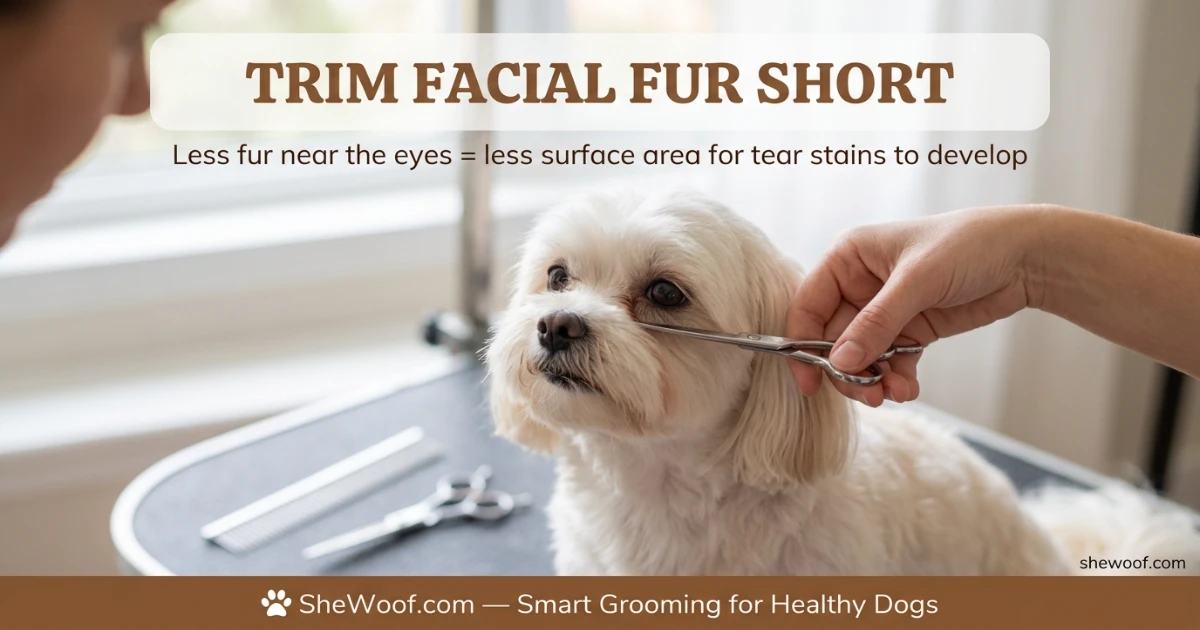
White and light-colored dogs show tear stains more visibly — but the staining mechanism is the same in all dogs. A black Labrador produces the same porphyrins as a white Maltese. You simply cannot see them against dark fur. The breeds most commonly associated with tear staining — Maltese, Shih Tzu, Poodle, Bichon Frise, Lhasa Apso, West Highland White Terrier — share three traits: light coats, prominent eyes, and facial hair that wicks tears onto the face.
Puppies may develop tear stains during teething. The inflammation and discomfort of adult teeth erupting can increase tearing. These puppyhood tear stains often resolve or significantly improve once the adult teeth are fully in — around 6 to 8 months. Do not assume a 4-month-old puppy with tear stains will have them forever. Maintain the cleaning routine, and reassess once teething is complete.
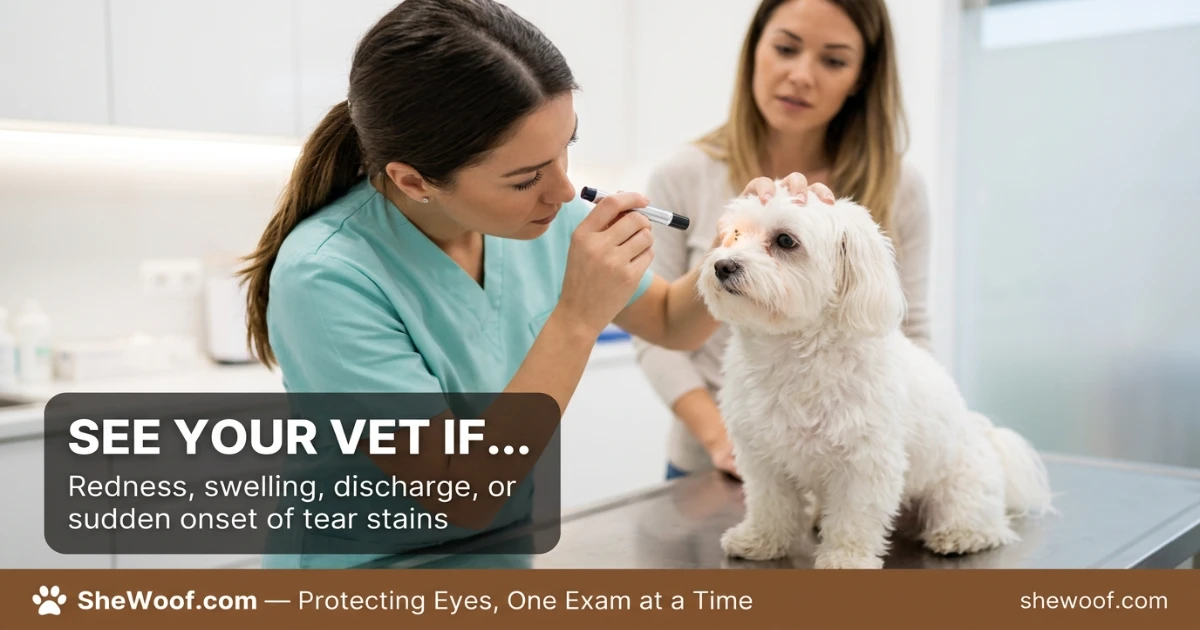
Senior dogs may develop new tear stains as a symptom of age-related eye changes — dry eye, entropion (inward-rolling eyelids), or blocked tear ducts. A senior dog with new tear staining should have a veterinary eye exam. Treating the underlying condition often resolves the tearing — and the stains fade as a result.
Frequently Asked Questions About Dog Tear Stains
The best home remedy is twice-daily gentle wiping with a warm, damp soft cloth followed by thorough drying. This removes tears before porphyrins oxidize and stain the fur. Coconut oil applied sparingly as a moisture barrier and switching to filtered water can also help. No product replaces daily mechanical cleaning — consistency matters more than any single ingredient.
Diluted hydrogen peroxide — equal parts water and 3% peroxide — can lighten existing stains when dabbed carefully on the fur only, never in the eyes. Rinse with plain water afterward. Limit to once or twice per week. If you are uncomfortable working near your dog’s eyes, skip this remedy and use warm water and coconut oil instead — they are safer and still effective with consistent use.
A teaspoon of raw, unfiltered apple cider vinegar added daily to food or water may help by slightly altering tear pH, making the area less hospitable to yeast and bacteria. Results are not guaranteed. Start with half a teaspoon for small dogs. Consult your veterinarian before adding ACV if your dog has kidney disease, digestive issues, or takes medication.
Combine daily wiping with warm water, thorough drying, a thin coconut oil barrier, filtered water, and keeping facial fur trimmed short. For existing stains, diluted hydrogen peroxide or colloidal silver applied to the fur only can lighten them over time. If stains persist despite consistent care, or are accompanied by redness or discharge, see your veterinarian to rule out underlying causes.
Sometimes — but food allergies are only one possible cause of excessive tearing. If your dog has no other allergy symptoms like itching, ear infections, or digestive issues, tear stains alone are unlikely to be food-related. High-quality food without artificial dyes, fillers, and common allergens supports overall health, but the daily cleaning routine usually makes a bigger difference for tear stains than any single diet change.
Not always. Many tear stains are purely cosmetic — the result of porphyrin pigments in tears oxidizing on light fur. But excessive tearing can be caused by allergies, blocked tear ducts, eyelid abnormalities, eye infections, or teething in puppies. If tear stains appear suddenly, are accompanied by redness, swelling, discharge, or odor, or if the skin around the eyes is irritated, see your veterinarian.
Prevention requires ongoing maintenance — not a one-time fix. Wipe and dry the eye area twice daily. Apply coconut oil as a moisture barrier. Keep facial fur trimmed. Use stainless steel or ceramic bowls. Switch to filtered water. Wash your dog’s face after meals. Consistency over weeks and months keeps stains from returning. There is no permanent cure because tear production is a normal physiological process.
- The most effective and safe home remedy for dog tear stains is twice-daily wiping with a warm, damp soft cloth followed by thorough drying — this removes tears before porphyrins oxidize and stain the fur.
- Coconut oil applied sparingly creates a moisture barrier, diluted hydrogen peroxide on the fur only can lighten existing stains, and filtered water reduces mineral intake that may worsen discoloration.
- Never use bleach, alcohol, undiluted peroxide in the eyes, or any product not specifically formulated for use near eyes. Tear stains are cosmetic. Your dog’s eyesight is not worth risking.
- Keep facial fur trimmed short, use stainless steel or ceramic bowls, wash your dog’s face after meals, and maintain a consistent daily routine — prevention is ongoing, not a one-time fix.
- See your veterinarian if tear stains are accompanied by redness, swelling, thick discharge, odor, or if they appear suddenly in a dog who has never had them before. These signal an underlying condition that needs treatment.