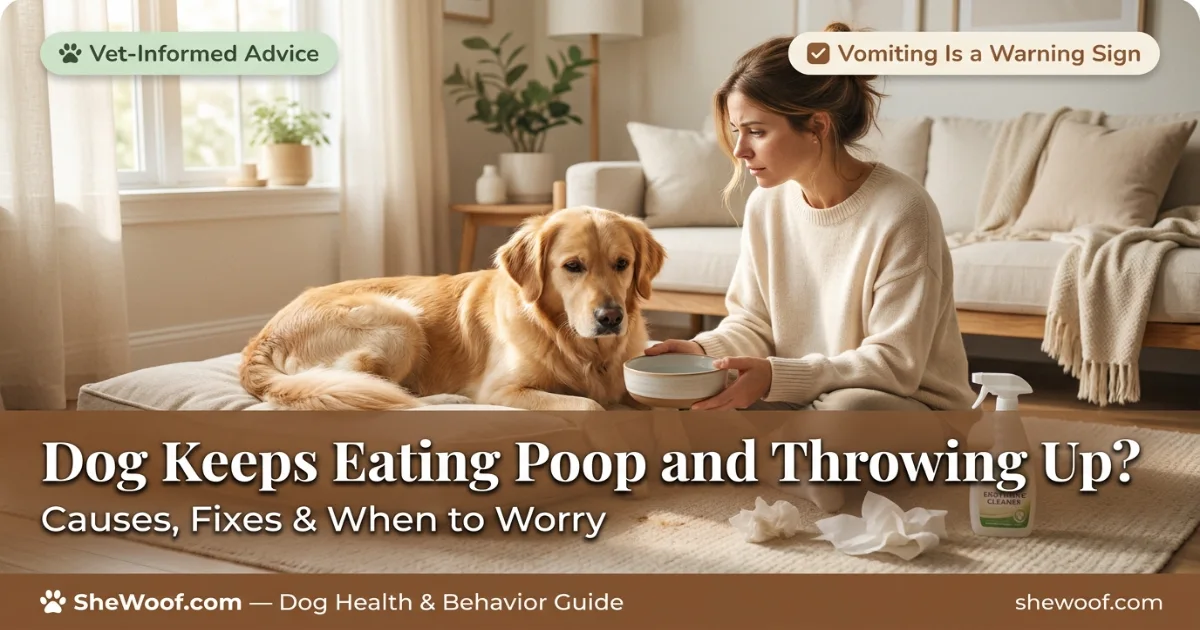
Dog Keeps Eating Poop and Throwing Up? Causes, Fixes & When to Worry
Quick Answer: If your dog keeps eating poop and throwing up, the vomiting is likely caused by digestive upset from ingesting feces. Poop contains bacteria, parasites, and undigested food that can irritate your dog’s stomach. In most cases, the vomiting stops within 24 hours once the material passes. However, if vomiting persists beyond 24 hours, your dog is lethargic, has diarrhea, or shows signs of pain, this is a veterinary emergency. The eating behavior itself — called coprophagia — is common but can be managed with training, dietary changes, and environmental management.
You catch your dog eating poop in the yard. Then, hours later, they throw up. You clean up the mess, worried and frustrated. You ask yourself: why does my dog keeps eating poop and throwing up? It is a distressing combination of behaviors. One is a disgusting habit. The other is a clear sign that something is wrong. Together, they can be alarming.
The good news is that both issues are usually manageable. The eating part — coprophagia — is a common canine behavior with several possible causes. The throwing up is often a direct result of the eating. But sometimes, vomiting indicates a more serious problem that has nothing to do with the poop-eating. This guide helps you understand both behaviors, fix what you can at home, and know exactly when to call the vet.
Why Do Dogs Eat Poop?
Coprophagia — the technical term for eating feces — is one of the most common and most puzzling dog behaviors. It is also one of the most disgusting for owners. But understanding why dogs do it is the first step to stopping it.
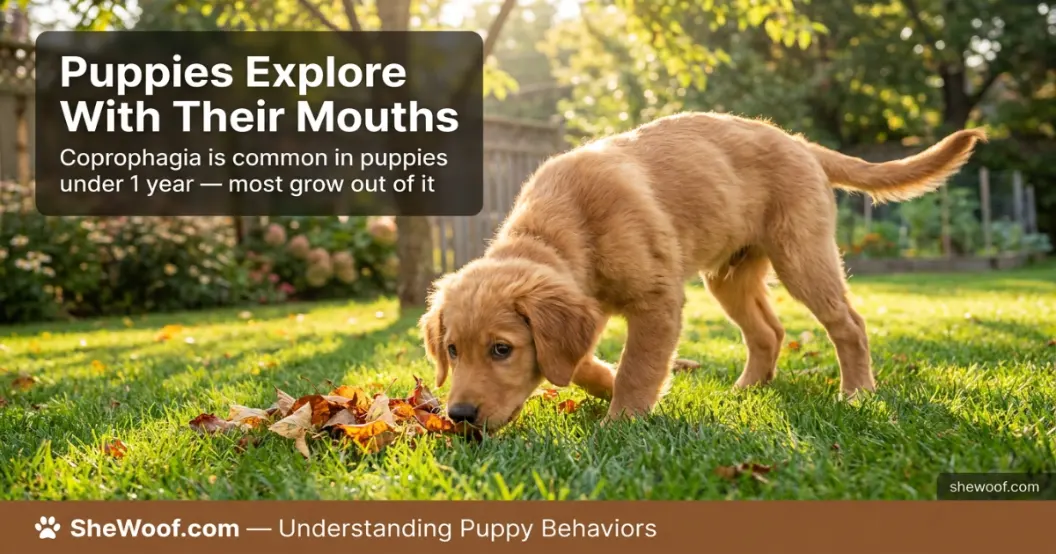
There are several possible reasons. Some are behavioral, some are nutritional, and some are instinctual. Puppies often eat poop out of curiosity or exploration. They are learning about the world with their mouths, and feces is a strong-smelling, interesting object. Most puppies grow out of this behavior by the time they are adults.
In adult dogs, coprophagia can be a sign of nutritional deficiency. If your dog is not absorbing enough nutrients from their food, they may seek them elsewhere — including from feces. Poor-quality food, digestive enzyme deficiencies, and malabsorption issues can all contribute. Some dogs also eat poop because they are anxious, bored, or seeking attention.
Another factor is instinct. Mother dogs naturally eat their puppies’ feces to keep the den clean and protect the puppies from predators. This instinct can persist in some dogs. The behavior can also be learned — if one dog in a household eats poop, others may copy them.
Why Does Eating Poop Cause Vomiting?
When a dog eats feces, they are ingesting bacteria, parasites, and undigested food particles. The digestive system is not designed to process these materials. The stomach becomes irritated, and the body tries to expel the irritants through vomiting. This is a protective response.
Feces can contain harmful bacteria like Salmonella, E. coli, and Campylobacter. It can also contain intestinal parasites like roundworms, hookworms, and giardia. These pathogens can cause inflammation in the stomach and intestines, leading to vomiting, diarrhea, and other gastrointestinal issues.
The vomiting may occur within a few hours or the next day. It is often a single episode or a few episodes over several hours. Once the material has been expelled or passed through the digestive tract, the vomiting usually stops. However, if the poop contained a significant amount of parasites or bacteria, the vomiting may persist.
What Most Owners Get Wrong About Poop-Eating and Vomiting
The most common mistake is assuming that the vomiting is unrelated to the poop-eating. While there are many causes of vomiting in dogs, if you know your dog ate poop, that is the most likely cause. Treating the vomiting as a separate issue without addressing the behavior will not solve the problem.
Another error is punishing the dog for vomiting. Vomiting is an involuntary response, not a behavioral choice. Punishing a dog for being sick is unfair and ineffective. It can also damage your relationship with your dog.
Some owners also try to stop the behavior by adding deterrents to the dog’s food — like pineapple or commercial products designed to make poop taste unpleasant. These products have mixed results and may not work for all dogs. Addressing the underlying nutritional or behavioral cause is more effective.
How Puppies, Adults, and Seniors Differ
Puppies are the most likely to eat poop. It is a normal exploratory behavior during the first year of life. They are also more likely to vomit because their digestive systems are more sensitive. In most cases, puppies grow out of both behaviors. However, consistent training and supervision are important to prevent the habit from becoming ingrained.
Adult dogs that eat poop and vomit often have a nutritional or behavioral issue. If your adult dog suddenly starts eating poop, it is worth a vet visit to rule out medical causes. Sudden changes in behavior can signal underlying health problems.
Senior dogs may eat poop due to cognitive decline or dental issues that make eating difficult. They may also have reduced digestive efficiency, leading to malnutrition and craving nutrients from feces. Senior dogs are also more vulnerable to the effects of vomiting — dehydration and weakness can be more serious in older dogs.
Step-by-Step: How to Stop Your Dog from Eating Poop
- Clean up immediately. Remove feces from your yard or walk area as soon as possible. This is the most effective prevention method.
- Improve your dog’s diet. Switch to a high-quality food with named proteins, digestible grains, and proper nutrient balance. Some dogs benefit from added digestive enzymes or probiotics.
- Add a supplement. Some owners find that adding pineapple, pumpkin, or commercial coprophagia deterrents to food helps make poop less appealing. Results vary, so experiment carefully.
- Train a “leave it” command. Teach your dog to leave poop alone on command. This takes time but is effective.
- Supervise outdoor time. Watch your dog closely when they are outside. Redirect their attention with a toy or treat if they show interest in poop.
- Keep your dog busy. Boredom is a common trigger. Provide plenty of exercise, toys, and mental stimulation.
- Consider a muzzle. In severe cases, a basket muzzle can prevent eating while allowing normal breathing and drinking.
When to See the Vet
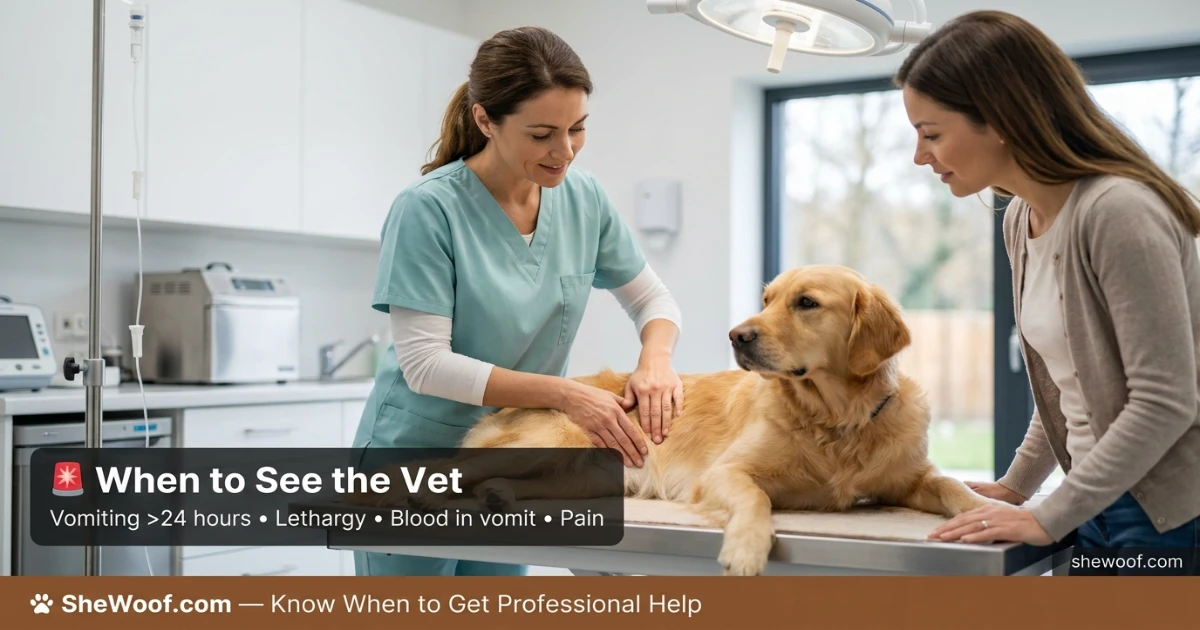
While occasional poop-eating with mild vomiting is usually not an emergency, some situations require immediate veterinary care. Go to the vet if your dog shows any of these signs:
- Vomiting persists for more than 24 hours.
- Your dog is lethargic or weak.
- Vomiting blood or bloody diarrhea.
- Signs of pain — whining, panting, or reluctance to move.
- Your dog refuses to eat or drink for more than 12 hours.
- Bloated or painful abdomen.
- Your dog has a known medical condition like diabetes, pancreatitis, or kidney disease.
Also see the vet if the poop-eating behavior is new or sudden in an adult dog. This can indicate a medical issue that needs attention.
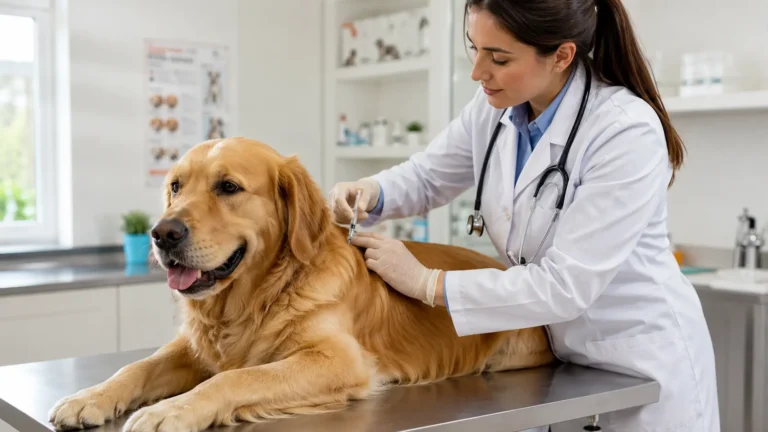
A basic veterinary exam for vomiting and digestive issues typically costs $50 to $100. Diagnostic tests — like blood work, fecal exams, and x-rays — range from $100 to $400 depending on the tests needed. Treatment for parasites or infections may cost $50 to $200. More serious conditions requiring hospitalization can cost $500 to $2,000+. Early intervention is almost always cheaper and less stressful than waiting for a crisis.
| Symptom | What It May Indicate | Action Needed |
|---|---|---|
| Mild vomiting (1–2 episodes) | Stomach irritation from eating poop | Monitor at home, offer small amounts of water, withhold food for 4–6 hours |
| Persistent vomiting (>24 hours) | Possible infection, parasite, or obstruction | Vet visit needed — may require medication or fluids |
| Lethargy + vomiting | Dehydration or systemic illness | Immediate vet visit |
| Blood in vomit or stool | Internal bleeding, severe infection, or ulcer | Emergency vet visit |
| Coprophagia only (no vomiting) | Behavioral or nutritional issue | Training, diet change, environmental management |
What to Do at Home After Your Dog Vomits
If your dog vomits after eating poop, follow these steps:
- Withhold food for 4–6 hours. This gives the stomach time to settle. Do not withhold water — offer small amounts frequently to prevent dehydration.
- Offer a bland diet. After the fasting period, offer plain boiled chicken (no skin or seasoning) and white rice in small portions.
- Watch for improvement. If vomiting stops and your dog keeps food down, gradually transition back to their regular food over 1–2 days.
- If vomiting continues, call your vet. Do not wait more than 24 hours.
Frequently Asked Questions About Dogs Eating Poop and Vomiting
The vomiting is usually caused by stomach irritation from ingesting feces. Poop contains bacteria, parasites, and undigested food that can irritate the stomach. The eating behavior — coprophagia — may be due to nutritional deficiency, boredom, anxiety, or instinct. Most cases resolve with diet changes, training, and environmental management.
Yes, eating poop can be dangerous. It can transmit parasites (worms, giardia), bacteria (Salmonella, E. coli), and viruses. It can also cause vomiting, diarrhea, and gastrointestinal infections. In some cases, it can lead to more serious conditions like pancreatitis or intestinal obstruction.
Clean up immediately, improve your dog’s diet, teach a “leave it” command, supervise outdoor time, and keep your dog busy with exercise and toys. Some owners find adding pineapple or pumpkin to food helps. In severe cases, consult a veterinary behaviorist.
Take your dog to the vet if vomiting persists for more than 24 hours, if there is blood in the vomit, if your dog is lethargic or in pain, or if they refuse to eat or drink for more than 12 hours. Puppies and senior dogs should be seen sooner.
Yes, eating poop — especially from other dogs or animals — can transmit intestinal parasites like roundworms, hookworms, and giardia. Regular deworming and fecal exams are important for dogs that eat poop. If you see worms in your dog’s stool, contact your veterinarian.
Many puppies grow out of coprophagia by 6–12 months of age. However, adult dogs can also develop this behavior due to nutritional deficiencies, boredom, or anxiety. With consistent management and training, most dogs can be trained to stop.
After your dog vomits, withhold food for 4–6 hours, then offer a bland diet of plain boiled chicken (no skin, no seasoning) and white rice in small portions. Gradually transition back to their regular food over 1–2 days. If vomiting continues, contact your veterinarian.
- If your dog keeps eating poop and throwing up, the vomiting is usually caused by stomach irritation from ingesting feces. Most cases resolve within 24 hours.
- Coprophagia — eating poop — is a common behavior with many causes: nutritional deficiency, boredom, anxiety, instinct, or learned behavior.
- Prevent the behavior by cleaning up immediately, improving your dog’s diet, teaching a “leave it” command, and supervising outdoor time.
- See a vet if vomiting persists for more than 24 hours, if there is blood in the vomit, or if your dog is lethargic, in pain, or refuses to eat.
- Addressing the underlying cause — whether nutritional, behavioral, or medical — is the key to stopping both behaviors.