Best Thing for Dog Bad Breath: What Actually Works and What to Skip
Estimated read time: 12 minutes
Quick Answer: The best thing for dog bad breath is consistent daily tooth brushing with enzymatic dog toothpaste, combined with VOHC-approved dental chews and regular veterinary dental exams. If bad breath persists despite good oral hygiene, a vet visit is essential because persistent halitosis can signal dental disease or underlying health conditions.
Your dog greets you at the door, tail wagging, ready for a kiss — and then you catch a whiff that makes you pull back. Bad breath in dogs is one of the most common complaints owners bring to the vet, and it is rarely just a cosmetic problem. Finding the best thing for dog bad breath starts with understanding that the odor is a symptom, not the disease itself. The right solution depends on what is actually causing it.
I have lived with dogs whose breath could clear a room and dogs whose teeth stayed reasonably clean with minimal effort. The difference was never luck. It came down to routine, the right tools, and knowing when something more serious was going on. Here is what works, what does not, and how to tell the difference.

What Actually Causes Dog Bad Breath?
Most dog bad breath — roughly 80 to 90 percent of cases — comes from the mouth itself. Bacteria in the mouth break down proteins and produce volatile sulfur compounds (VSCs), the same family of chemicals that makes human breath smell foul after eating garlic. When plaque and tartar build up along the gumline, those bacteria thrive, and the odor gets worse.
The progression is predictable. Plaque forms within hours of eating. If it is not removed, it hardens into tartar within 24 to 72 hours. Tartar irritates the gums, causing inflammation that can progress to gingivitis and then periodontal disease. As gum tissue pulls away from the teeth, pockets form where bacteria multiply even more aggressively. That is when breath goes from mildly doggy to genuinely offensive.
But not all bad breath starts in the mouth. Certain metabolic conditions can change how your dog’s breath smells. Kidney disease may produce an ammonia-like odor. Uncontrolled diabetes can cause a sweet or fruity smell. Liver disease sometimes creates a musty or metallic scent. These are less common, but they are exactly why persistent bad breath deserves a veterinary look rather than just a breath mint.
Why Most Owner Remedies Fail
The pet store shelf is crowded with sprays, mints, and water additives that promise fresh breath. Most of them work the same way: they mask odor temporarily. That is not the same as fixing the problem.
Masking odor is like spraying air freshener in a room with a leak. The underlying issue — plaque, tartar, bacterial overgrowth — keeps getting worse. Meanwhile, the owner thinks they are managing the problem because the breath smells better for an hour or two after a spray.
Generic advice like “just give your dog a bone” or “feed a raw diet and the problem disappears” often fails for different reasons. Bones can fracture teeth, and hard chews can cause painful dental injuries. Raw diets may help some dogs, but they do not replace mechanical plaque removal, and they carry their own nutritional and safety considerations that should be discussed with a vet.
The Best Thing for Dog Bad Breath: Daily Brushing
Tooth brushing is the gold standard for a reason. Nothing else removes plaque from the gumline as effectively. Even a few sessions per week makes a measurable difference, but daily brushing is what vets actually recommend.
The catch is that most dogs do not start out loving it. The solution is not to force it. It is to build the habit slowly, in tiny steps, with rewards at every stage.
How to Train Your Dog to Accept Tooth Brushing
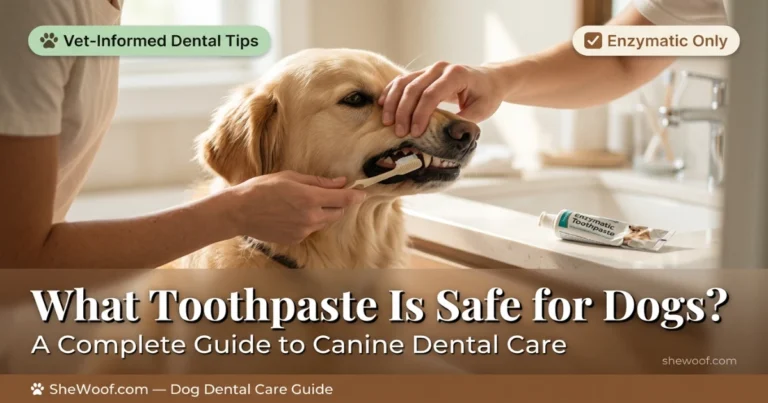
- Start with the toothpaste, not the brush. Let your dog lick a small amount of enzymatic dog toothpaste off your finger. Do this for a few days until they associate the taste with something good. Never use human toothpaste — xylitol and fluoride are toxic to dogs.
- Touch the mouth without brushing. Lift your dog’s lip gently, touch a tooth with your finger, then reward. Ten seconds is enough at first. The goal is to make handling boring and safe.
- Introduce a finger brush or soft toothbrush. Let them chew on it briefly, then reward. Do not try to brush yet — just build comfort with the object in their mouth.
- Brush one or two teeth. Use gentle circular motions along the gumline. Focus on the outside surfaces of the upper teeth, where plaque accumulates most. Reward and stop after a few seconds.
- Gradually extend the session. Add a few more teeth each day. Within two to four weeks, most dogs tolerate a full-mouth brushing that takes 30 to 60 seconds.
- Make it part of the routine. Brush at the same time each day — after the evening meal works for many owners. Consistency matters more than perfection.
- Try a finger brush instead of a standard toothbrush — it is softer and less intimidating.
- Use dental wipes as a stepping stone if your dog panics at the sight of a brush.
- Pair brushing with something your dog already loves, like a calm petting session afterward.
- Keep sessions under 30 seconds at first. End while your dog is still relaxed.
- If your dog has never had oral care and has visible tartar, book a vet dental cleaning first. Brushing over infected gums hurts.
Dental Chews, Water Additives, and Powders: What Works
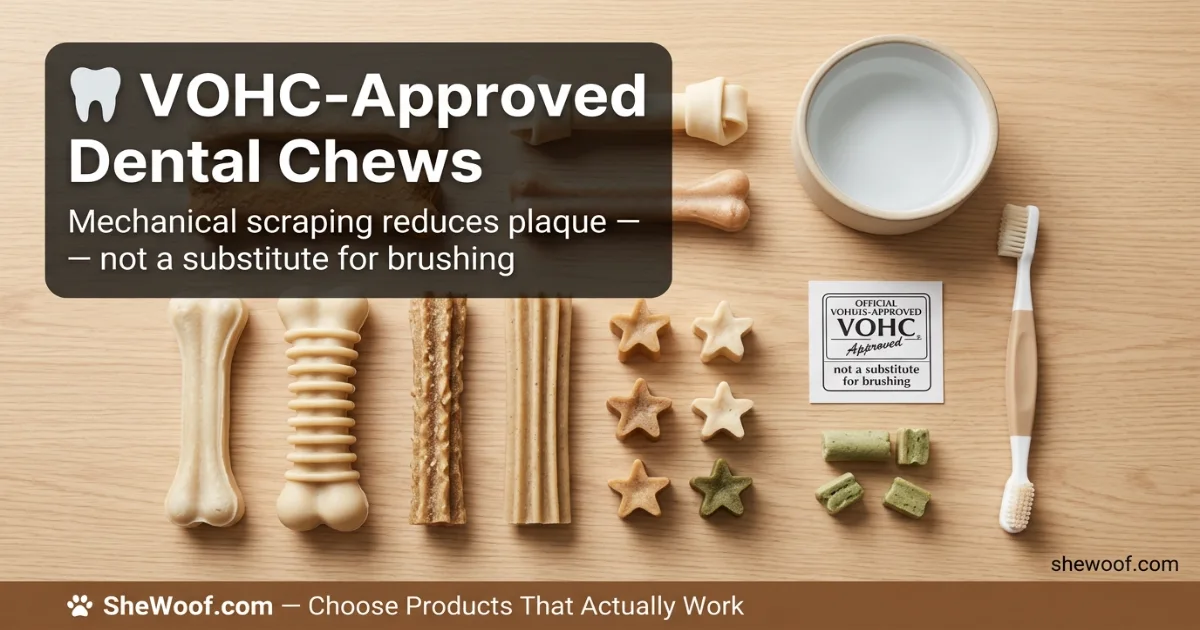
When brushing is not possible every day — and for most owners, there will be missed days — the right secondary products can help. The key is choosing ones with actual evidence behind them.
| Product Type | How It Works | Effectiveness | Best For |
|---|---|---|---|
| VOHC dental chews | Mechanical scraping of plaque | High (with daily use) | Dogs who tolerate chewing but not brushing |
| Water additives | Antibacterial compounds in drinking water | Moderate | Dogs who drink plenty of water; useful between brushings |
| Dental powders | Mixed into food, may slow plaque buildup | Moderate | Dogs who eat quickly and resist other methods |
| Oral rinses/sprays | Temporary antibacterial effect | Low to moderate | Quick freshening; not a long-term solution |
| Hard chews (bones, antlers) | No plaque benefit; risk of fracture | None (dangerous) | Not recommended |
The pattern here is that mechanical removal beats chemical masking. Chews and brushes physically disrupt plaque. Water additives and rinses may reduce bacterial load temporarily, but they do not scrape tartar off teeth. Hard chews are in a category of their own — they carry real risk of tooth fracture and should be avoided, especially for dogs with existing dental issues.
Puppy vs. Adult vs. Senior Dog: How Bad Breath Differs
Bad breath in a puppy is often a temporary phase. Puppies go through teething, and their mouths are in constant flux. Retained baby teeth can trap food and bacteria, creating odor. A vet check during puppyhood can catch retained teeth early before they cause problems.
Adult dogs with bad breath almost always have plaque or tartar buildup. This is the stage where establishing a brushing routine pays the biggest dividends. By age three, most dogs already have some degree of dental disease, but the progression can be slowed dramatically with consistent home care.
Senior dogs are a different story. Persistent bad breath in an older dog deserves closer attention. Dental disease is more advanced, and systemic conditions like kidney disease become more common with age. If a senior dog suddenly develops foul breath when they never had it before, that is a signal to book a vet visit sooner rather than later.
When Bad Breath Means Something More Serious
Some smells are more than just “doggy breath.” The specific odor can offer clues about what is going on beneath the surface.
- Breath that smells like ammonia or urine — may indicate kidney issues
- Sweet, fruity, or acetone-like breath — may indicate diabetes
- Musty or metallic odor — may indicate liver problems
- Bad breath combined with drooling, pawing at the mouth, dropping food, or reluctance to chew
- Bleeding gums, loose teeth, facial swelling, or visible pus
- Weight loss, vomiting, or changes in appetite or thirst alongside bad breath
These signs do not diagnose anything on their own. They are reasons to have your dog examined by a veterinarian who can run appropriate tests and determine what is actually happening.
What Realistic Progress Looks Like
If you start brushing today, do not expect minty-fresh breath by tomorrow. Plaque that has been building for months does not disappear in a week.
With daily brushing, most owners notice gradual improvement within two to four weeks. The breath becomes less offensive, the teeth look cleaner, and the gums appear less red. But if your dog already has significant tartar buildup, home brushing will not remove it. Tartar is hard and mineralized. It needs professional scaling.
The realistic sequence for most adult dogs with existing bad breath looks like this: vet exam and professional cleaning first, then daily home brushing to maintain the results. Skipping the professional cleaning and trying to brush away years of tartar is like trying to scrub a rock with a toothbrush. It is not going to work.

Common Mistakes That Keep Bad Breath Coming Back
Brushing inconsistently is the most common one. A frantic brushing session once a month does not undo the daily plaque accumulation that happens in between. Plaque begins forming within hours of a meal. Daily brushing keeps it from hardening. Occasional brushing does not.
Using the wrong toothpaste is another. Human toothpaste contains xylitol, fluoride, and foaming agents that can upset a dog’s stomach. Even “natural” human toothpastes may contain ingredients that are not safe for dogs to swallow. Only use toothpaste formulated for dogs.
Ignoring the gums is a third. Plaque accumulates at the gumline, not just on the flat surfaces of teeth. If you are brushing the crowns and skipping the gumline, you are missing the most important area.
Delaying the vet visit is the fourth. Owners often spend months trying home remedies before finally booking a dental exam. By then, what could have been a simple cleaning may have progressed to periodontal disease requiring more extensive treatment.
- The best thing for dog bad breath is daily tooth brushing with enzymatic dog toothpaste, supported by VOHC-approved dental chews and regular vet dental exams.
- Most dog bad breath comes from plaque and tartar buildup — persistent odor can signal dental disease or systemic health issues.
- Masking products like sprays and mints do not fix the underlying problem; look for the VOHC seal when choosing dental products.
- If your dog already has significant tartar, a professional veterinary cleaning is necessary before home brushing can be effective.
- See a vet promptly if bad breath is accompanied by drooling, difficulty eating, bleeding gums, or changes in appetite or thirst.
Frequently Asked Questions
What is the best thing for dog bad breath?
Daily tooth brushing with enzymatic dog toothpaste is the single most effective home remedy. Combine it with VOHC-approved dental chews and schedule professional veterinary dental exams at least once a year. If your dog already has heavy tartar buildup, a vet cleaning is necessary before home care can work effectively.
Can I use human toothpaste on my dog?
No. Human toothpaste often contains xylitol, fluoride, and foaming agents that are toxic or irritating to dogs when swallowed. Always use toothpaste formulated specifically for dogs. Enzymatic dog toothpastes are safe to swallow in small amounts.
How do I get rid of dog bad breath fast?
There is no safe overnight fix for bad breath caused by dental disease. You can freshen breath temporarily with a dog-safe oral rinse or water additive, but the real solution is addressing the underlying cause. If the odor is severe or your dog shows other symptoms, see a vet rather than relying on quick fixes.
Why does my dog’s breath smell like fish?
Fishy breath can come from several sources, including recent fish-based food or treats, poor oral hygiene, or gastrointestinal issues. If your dog has not eaten fish and the smell persists for more than a couple of days, have a vet check for dental disease or other underlying problems.
Are dental chews enough to fix bad breath?
Dental chews help reduce plaque between brushings, but they are not a substitute for brushing or professional cleanings. Look for chews with the VOHC seal, and use them as part of a broader routine. If your dog already has tartar, chews alone will not remove it.
When should I see a vet for my dog’s bad breath?
See a vet if bad breath persists despite consistent home care, or if it is accompanied by drooling, difficulty eating, pawing at the mouth, bleeding gums, weight loss, vomiting, or changes in thirst or urination. These signs may indicate dental disease or a systemic condition that needs diagnosis.
How often should I brush my dog’s teeth?
Daily brushing is ideal. If daily is not realistic, aim for at least three to four times per week. Even a few sessions weekly makes a meaningful difference compared to no brushing at all. Consistency matters more than duration per session.