Bordetella Parainfluenza Vaccine on Cavaliers: Safety, Schedule & Side Effects
Quick Answer: The Bordetella parainfluenza vaccine is safe for Cavalier King Charles Spaniels and is generally recommended for those who visit dog parks, groomers, boarding facilities, or training classes. It protects against two common causes of kennel cough — Bordetella bronchiseptica bacteria and canine parainfluenza virus. The intranasal form provides the fastest protection, usually within 72 hours, and is preferred for dogs needing quick immunity before boarding. Side effects are usually mild and temporary, including sneezing, nasal discharge, or a mild cough for a few days. Cavaliers with the rare PIPS2 immunodeficiency variant may be more susceptible to respiratory pathogens, making vaccination especially important — but always discuss timing and type with your veterinarian.
Your Cavalier King Charles Spaniel has a playdate at the dog park, or maybe you are planning a boarding stay. The facility asks for proof of a Bordetella vaccine. You wonder: Bordetella parainfluenza vaccine on Cavaliers — is it safe? Is it necessary? Does their breed have any special risks? These are smart questions. Cavaliers are prone to several health issues, including heart disease and a rare immune condition that affects their response to respiratory infections.
This guide explains exactly what the Bordetella parainfluenza vaccine is, how it works, whether it is safe for Cavaliers, the recommended schedule, and what side effects to expect. It also covers the breed-specific considerations that make vaccination decisions slightly different for Cavalier owners.
What Is the Bordetella Parainfluenza Vaccine?
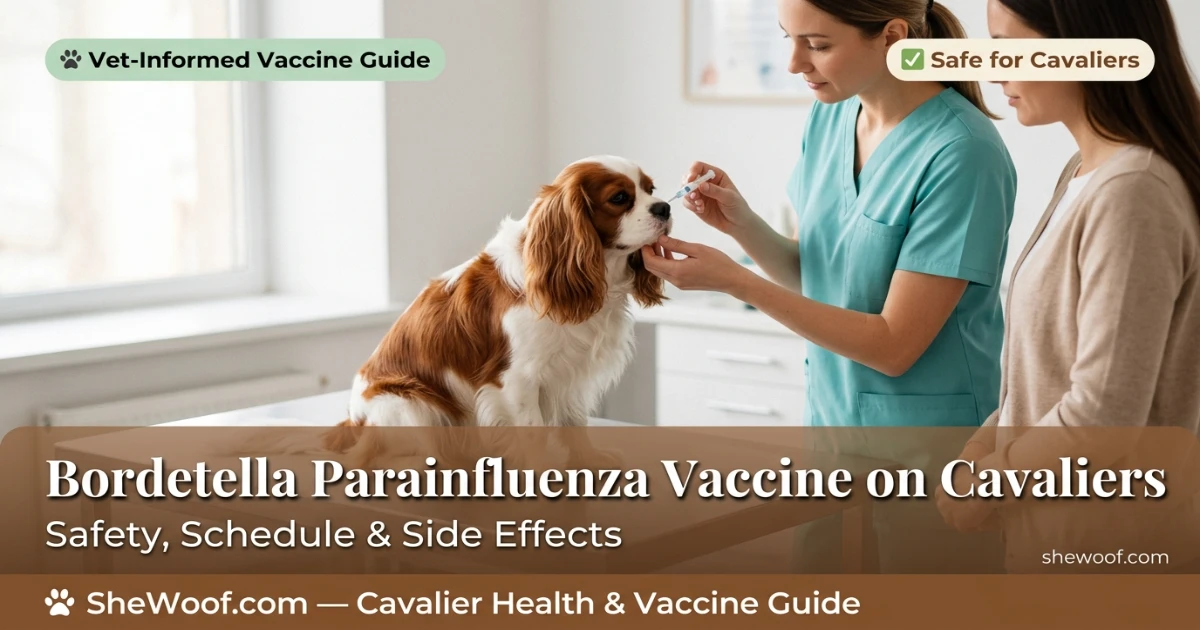
The Bordetella parainfluenza vaccine is a combination vaccine that protects dogs against two of the most common causes of kennel cough: the bacterium Bordetella bronchiseptica and the canine parainfluenza virus. It is often referred to simply as the “Bordetella vaccine” or the “kennel cough vaccine,” but the combined vaccine offers broader protection than Bordetella alone[citation:2].
Kennel cough — more accurately called canine infectious respiratory disease complex (CIRDC) — is a highly contagious respiratory syndrome. It can be caused by at least a dozen different pathogens, but Bordetella bronchiseptica and parainfluenza virus are among the most common and most contagious[citation:2][citation:14]. The vaccine targets these two specifically.
What does the vaccine actually do? It does not provide sterile immunity — meaning it will not guarantee your Cavalier never catches kennel cough. But it significantly reduces the severity of symptoms, shortens the duration of illness, and reduces the amount of bacteria and virus the dog sheds to others[citation:2]. In short, vaccinated dogs get less sick and are contagious for less time.
Is the Bordetella Parainfluenza Vaccine Safe for Cavaliers?
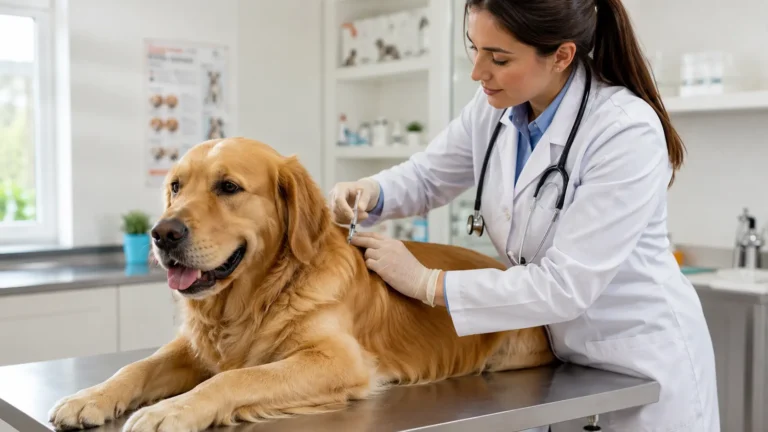
Yes, the vaccine is generally safe for Cavalier King Charles Spaniels. It has been used in dogs for decades and is widely considered effective and safe[citation:2]. The American Veterinary Medical Association published research demonstrating the immunogenicity and safety of the intranasal Bordetella parainfluenza vaccine, with no adverse local or systemic reactions observed in vaccinated dogs[citation:7][citation:19].
That said, Cavaliers do have a breed-specific consideration that makes vaccination particularly important — and makes the timing and type of vaccine worth discussing with your vet. A variant in the CARMIL2 gene causes Primary Immunodeficiency type 2 (PIPS2) in some Cavaliers, Cavapoos, and King Charles Spaniels. Dogs affected by this condition have increased susceptibility to respiratory pathogens, including Bordetella bronchiseptica, and can develop refractory pneumonia[citation:12]. For these dogs, Bordetella vaccination is not just recommended — it may be a critical protective measure.
However, dogs with immunodeficiency may also respond differently to vaccines. They may mount a weaker immune response, or in rare cases, have a more difficult time with live vaccines. This is another reason why discussing your individual Cavalier’s health profile with a veterinarian — including whether genetic testing for PIPS2 is appropriate — matters.
Why This Matters for Cavalier Owners
Cavaliers are a social breed. They love people, other dogs, and new experiences. That sociability is one of their best traits — but it also puts them at higher risk for kennel cough. Every playdate, grooming appointment, training class, or boarding stay is a potential exposure point.
Kennel cough is rarely life-threatening in healthy adult dogs, but it is deeply unpleasant. The honking cough, retching, and general malaise can last for days or even weeks. For Cavaliers with pre-existing health conditions — especially heart disease or the PIPS2 immunodeficiency variant — the risks are higher. A respiratory infection can worsen underlying cardiac issues or progress to pneumonia[citation:12][citation:14].
Vaccination reduces the severity and duration of illness if your Cavalier is exposed. It also protects other dogs in your community. And for Cavaliers traveling, boarding, or attending shows, it is often required by facilities.
What Most Owners Get Wrong About the Bordetella Vaccine
The most common mistake is assuming the vaccine is a one-time shot. It is not. The Bordetella parainfluenza vaccine requires regular boosters — typically every 6 to 12 months, depending on your dog’s lifestyle and risk level[citation:2][citation:3]. Some high-risk dogs, like those who visit dog parks daily or attend frequent shows, may benefit from a booster every 6 months.
Another error is waiting until the day before boarding to get the vaccine. The intranasal vaccine takes about 72 hours to provide protection[citation:2][citation:9]. If you vaccinate the morning of a boarding stay, your dog is not protected. Plan ahead.
Some owners also believe that because their Cavalier never goes to kennels, they do not need the vaccine. But kennel cough spreads easily in any environment where dogs gather — the groomer, the pet store, the neighborhood park, even a walk around the block. The vaccine is not just for boarding dogs. It is for any dog who leaves the house.
Bordetella Parainfluenza Vaccine Schedule for Cavaliers
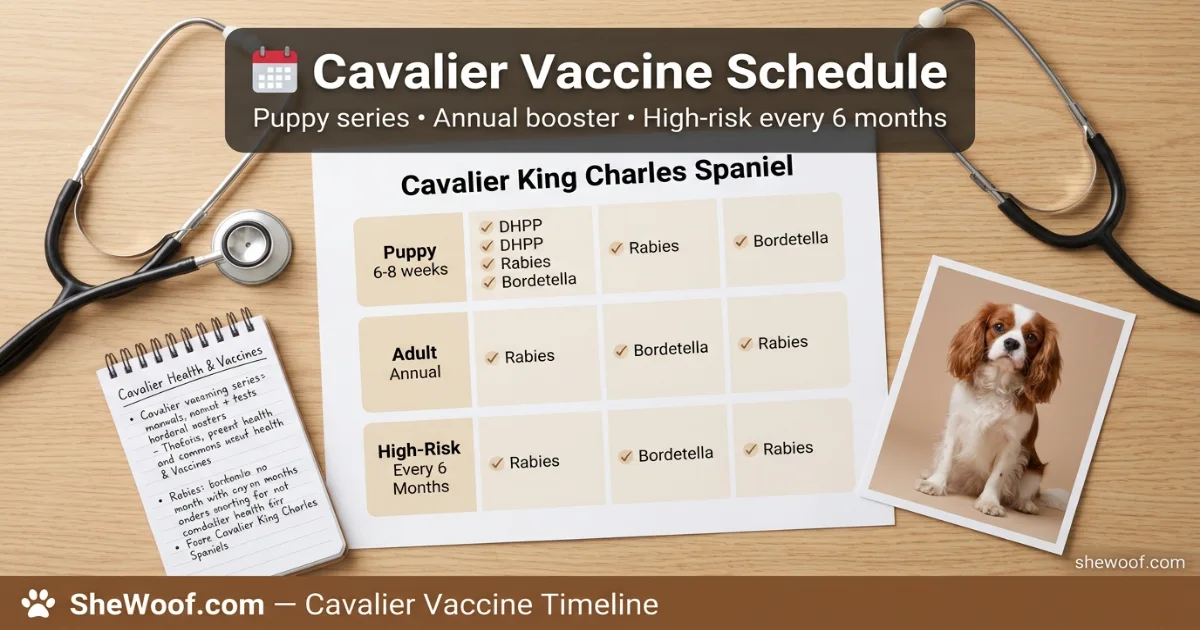
The schedule depends on your Cavalier’s age and lifestyle. Here are the general guidelines:
| Life Stage | Vaccine Timing | Booster Frequency | Notes |
|---|---|---|---|
| Puppy (6-8 weeks+) | Initial dose at 6-8 weeks or older | Every 3-4 weeks until 16 weeks | Intranasal preferred; can be given as early as 3-4 weeks in high-risk settings[citation:2] |
| Adult (low risk) | Annually | Every 12 months | For dogs with occasional social contact |
| Adult (high risk) | Every 6-12 months | Every 6 months | For frequent boarding, shows, dog parks, or multi-dog homes[citation:2][citation:3] |
| Senior Cavalier | Based on health and lifestyle | Discuss with vet | Weigh benefits against immune response and underlying conditions |
For puppies, the intranasal vaccine can be given as early as 3 to 4 weeks of age, though most vets administer it at 6 to 8 weeks[citation:2]. It provides protection within 72 hours and lasts at least 12 months. Injectable forms require two doses several weeks apart and take longer to build immunity[citation:2].
Common Side Effects of the Bordetella Parainfluenza Vaccine
Most Cavaliers have no reaction or only very mild, temporary side effects. The most common reactions are related to the intranasal route of administration — because the vaccine is delivered directly into the nose, it can cause mild cold-like symptoms.
- Sneezing: Common and temporary, usually resolving within a few days[citation:11][citation:17]
- Nasal discharge: Clear discharge from the nose, generally mild and transient[citation:5][citation:17]
- Mild cough: Occasional coughing can occur, especially in young puppies[citation:5]
- Ocular discharge: Some dogs develop mild eye discharge[citation:17]
- Lethargy: Mild tiredness or reduced energy for 24-48 hours[citation:5][citation:11]
- Reduced appetite: Temporary and usually mild[citation:11]
These signs are usually transient and resolve without treatment. However, in very young or susceptible puppies, signs may occasionally persist for up to four weeks[citation:17]. If your Cavalier shows more severe signs — persistent coughing, difficulty breathing, or ongoing lethargy — contact your veterinarian.
Serious Reactions Are Rare
Serious adverse reactions to the Bordetella parainfluenza vaccine are very rare. Anaphylaxis — a severe allergic reaction — is estimated to occur in fewer than 1 in 100,000 vaccinations[citation:11]. Signs include hives, facial swelling, vomiting, diarrhea, breathing difficulty, and collapse. These reactions typically occur within 20-30 minutes of vaccination[citation:11].
If you notice any signs of a serious reaction, call your veterinarian immediately. They can treat it effectively with antihistamines, cortisone, or epinephrine in severe cases[citation:11].
What to Do After Your Cavalier’s Vaccine
- Wait at the clinic for 20-30 minutes. This allows your vet to observe for any immediate reaction. Most serious reactions happen within this window.
- Monitor for mild signs. Sneezing, mild nasal discharge, or a slight cough are normal and usually resolve within a few days.
- Keep the vaccine record. You will need it for boarding, grooming, training, or travel.
- Avoid antibiotics for one week after vaccination. Antibiotics can reduce vaccine effectiveness. If your Cavalier needs antibiotics for another reason, tell your vet about the recent vaccine[citation:5].
- Limit contact with immunocompromised dogs. Vaccinated dogs may temporarily shed vaccine strains. Avoid close contact with very young, unvaccinated, or immunocompromised animals for a few weeks[citation:5].
- Call your vet if anything seems wrong. Persistent coughing, lethargy, or any sign of a serious reaction warrants a phone call.
When to Call Your Veterinarian
Contact your veterinarian if your Cavalier shows any of these signs after vaccination:
- Persistent coughing that does not resolve within a few days.
- Difficulty breathing or labored breathing.
- Facial swelling or hives.
- Vomiting or diarrhea.
- Collapse or weakness.
- Lethargy lasting more than 48 hours.
- Loss of appetite lasting more than 24 hours.
Do not wait to see if symptoms improve. If something seems wrong, call your vet.
Frequently Asked Questions About Bordetella Parainfluenza Vaccine on Cavaliers
Yes, the vaccine is generally safe for Cavaliers. Research shows the intranasal Bordetella parainfluenza vaccine is well-tolerated with no serious adverse reactions observed in vaccinated dogs[citation:7][citation:19]. However, Cavaliers with the rare PIPS2 immunodeficiency variant may need special consideration — discuss with your vet.
Kennel cough spreads anywhere dogs gather — groomers, pet stores, training classes, dog parks, and even neighborhood walks. If your Cavalier has any social contact with other dogs, the vaccine is worth discussing with your vet. Cavaliers’ friendly nature makes them frequent socializers.
It depends on lifestyle. Low-risk dogs typically need it annually. High-risk dogs — those who frequent dog parks, boarding facilities, or shows — may need a booster every 6 months[citation:2][citation:3]. Your vet can recommend the right schedule based on your Cavalier’s exposure.
Common side effects include sneezing, nasal discharge, mild coughing, and occasional eye discharge — these are temporary and usually resolve within a few days[citation:11][citation:17]. Mild lethargy or reduced appetite for 24-48 hours can also occur. Serious reactions are very rare.
The intranasal vaccine can cause mild cold-like symptoms — sneezing, nasal discharge, or a mild cough — because it is delivered directly into the nose. These are not kennel cough, but a mild local reaction. They resolve quickly without treatment in most cases[citation:11][citation:17].
The intranasal vaccine takes about 72 hours to provide protection[citation:2][citation:9]. Schedule the vaccine at least 3-4 days before boarding, a grooming appointment, or any high-exposure event. Do not wait until the day of the event.
The intranasal form is generally preferred because it provides faster protection (72 hours vs weeks for injectable), lasts longer, and stimulates local immunity in the respiratory tract where infection starts[citation:2][citation:9]. Ask your vet which form is best for your Cavalier’s situation.
- The Bordetella parainfluenza vaccine is safe and generally recommended for Cavaliers who have social contact with other dogs — at groomers, parks, training classes, or boarding facilities.
- The intranasal form provides protection within 72 hours and is preferred over the injectable form for faster, longer-lasting immunity.
- Most side effects are mild and temporary — sneezing, nasal discharge, or a mild cough lasting a few days.
- Cavaliers with the rare PIPS2 immunodeficiency variant are more susceptible to respiratory infections, making vaccination especially important — but discuss your dog’s individual health with your vet.
- Schedule the vaccine at least 72 hours before boarding or high-exposure events. Keep vaccine records updated for facilities that require proof.