How Do You Express Dog Anal Glands? Safe Steps & When to See a Vet
Quick Answer: To express a dog’s anal glands, put on disposable gloves, apply a water-based lubricant to a gloved finger, and gently insert it into the rectum. Feel for two small pea-sized glands on either side of the anus (roughly at the 4 o’clock and 8 o’clock positions), then apply gentle upward and outward pressure to release the fluid. Many owners find it easier to express from the outside — using a tissue or gauze to press gently on either side of the anus. If your dog shows signs of pain, swelling, or infection, do not express the glands at home. See a veterinarian.
Your dog is scooting across the carpet again. They are licking their rear end obsessively. There might be a fishy smell lingering in the air. If you have ever wondered how do you express dog anal glands, you are probably dealing with one of these classic signs. Anal gland problems are one of the most common reasons owners bring their dogs to the vet — and one of the most misunderstood at-home care tasks.
Done correctly, expressing anal glands is quick and relatively painless. Done wrong, it can cause pain, infection, and even rupture. This guide covers the anatomy, the safe step-by-step technique, common mistakes, and when to leave it to a professional.
What Are Anal Glands and Why Do They Need Expressing?
Anal glands — also called anal sacs — are two small pouches located on either side of your dog’s anus, roughly at the 4 o’clock and 8 o’clock positions. They produce a foul-smelling, oily secretion that dogs naturally use to mark territory and identify each other. In the wild, this fluid is released every time a dog defecates.
In domesticated dogs, the process does not always happen naturally. Soft stools do not press against the glands enough to empty them. Low-fiber diets, obesity, and certain breeds (especially small breeds like Chihuahuas, Poodles, and Shih Tzus) are prone to anal gland issues. Over time, the glands can become impacted, inflamed, or infected — leading to discomfort, scooting, and that unmistakable fishy odor.
How Do You Express Dog Anal Glands: The External Method
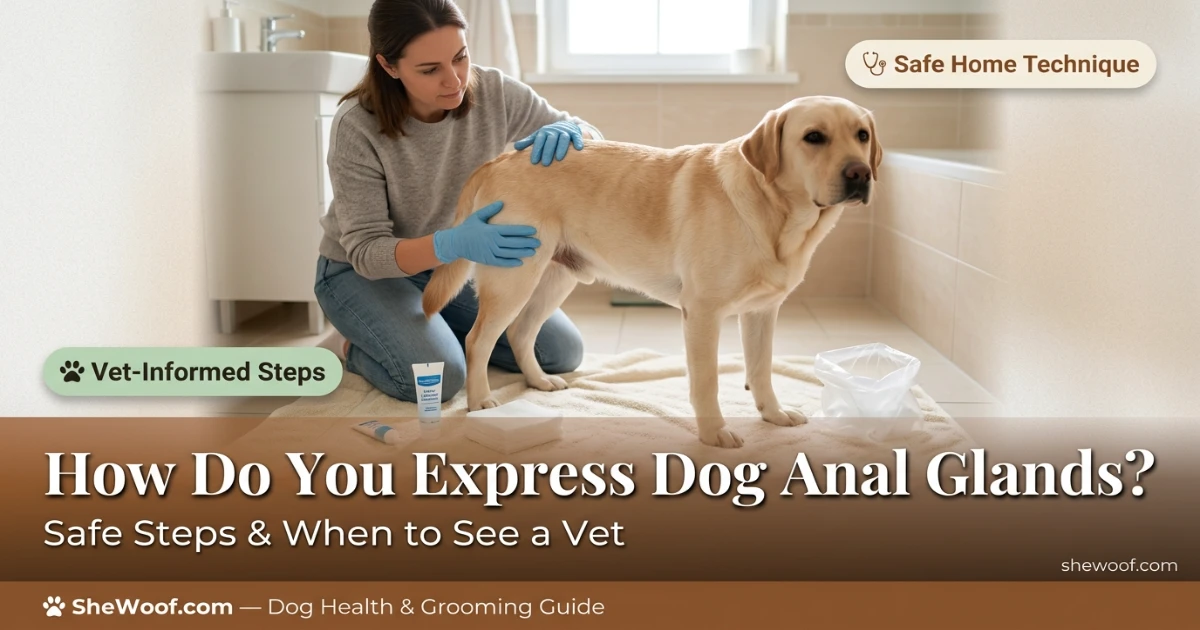
The external method is the safest option for most owners and can be done without inserting a finger. It works best for small to medium dogs and mild impaction.
- Gather supplies. Disposable gloves, water-based lubricant, gauze or paper towels, and a plastic bag for cleanup. Work in a well-ventilated area or outside.
- Get your dog in a comfortable position. Have a helper hold your dog gently — standing or lying on their side works best. Do not restrain forcefully.
- Locate the glands. Feel for two small, pea-sized lumps on either side of the anus, at roughly the 4 o’clock and 8 o’clock positions.
- Apply gentle pressure with gauze or a tissue. Place your thumb and forefinger on either side of the anus, over the glands. Press inward and upward in a slow, steady motion.
- Watch for the fluid. A small amount of brownish, fishy-smelling fluid should be released. If nothing comes out, do not press harder — stop and reassess.
- Clean the area thoroughly. Wipe the area with a warm damp cloth or pet-safe wipe. Dispose of gloves and cleanup materials.
- Reward your dog. Give treats and praise so the experience is as positive as possible.
How Do You Express Dog Anal Glands: The Internal Method
The internal method is more thorough and is the approach most veterinarians use. It is best suited for dogs with thick fur or recurring impaction. If you are not comfortable with it, a vet or groomer can handle it for you.
- Put on disposable gloves and lubricate your index finger. Use a generous amount of water-based lubricant — this is essential for comfort.
- Lift the dog’s tail gently. Position yourself behind the dog with a helper holding them steady.
- Insert the lubricated finger into the rectum. Move slowly and gently. Your dog may tense up — wait a moment and continue when relaxed.
- Feel for the glands. With your index finger inside and your thumb outside, you should be able to feel the pea-sized glands on either side.
- Apply gentle pressure. Press the gland between your thumb and index finger, moving inward and upward. The gland should empty easily with light pressure.
- Repeat on the other side. Empty both glands completely, then withdraw your finger slowly.
- Clean up thoroughly. Wash the area, dispose of gloves, and wash your hands well afterward.
What Are the Signs Your Dog’s Anal Glands Need Expressing?
- Scooting across the floor (dragging their rear end)
- Excessive licking or biting at the anal area
- Fishy or foul odor coming from the rear
- Straining to defecate or visible pain during bowel movements
- Swelling or redness around the anus
- Reluctance to sit or discomfort when sitting
- Blood or pus near the anus
- Behavior changes — irritability, restlessness, or hiding
What Do Most Owners Get Wrong About Anal Glands?
The biggest mistake is expressing the glands too often. Routine expression when there is no problem can actually irritate the glands, cause inflammation, and make impaction more likely over time. Unless your vet recommends it, do not express the glands on a schedule — do it only when symptoms appear.
A second mistake is using too much pressure. Anal glands are delicate. Forcing fluid out when the glands are inflamed or infected can cause a rupture. If your dog shows pain or swelling, do not attempt expression — see a vet.
A third mistake is ignoring recurring problems. If your dog needs their glands expressed every few weeks, something is causing the impaction. Diet, weight, or an underlying condition may be the cause. Frequent anal gland issues should prompt a vet visit, not a longer routine.
How Diet Affects Anal Gland Health
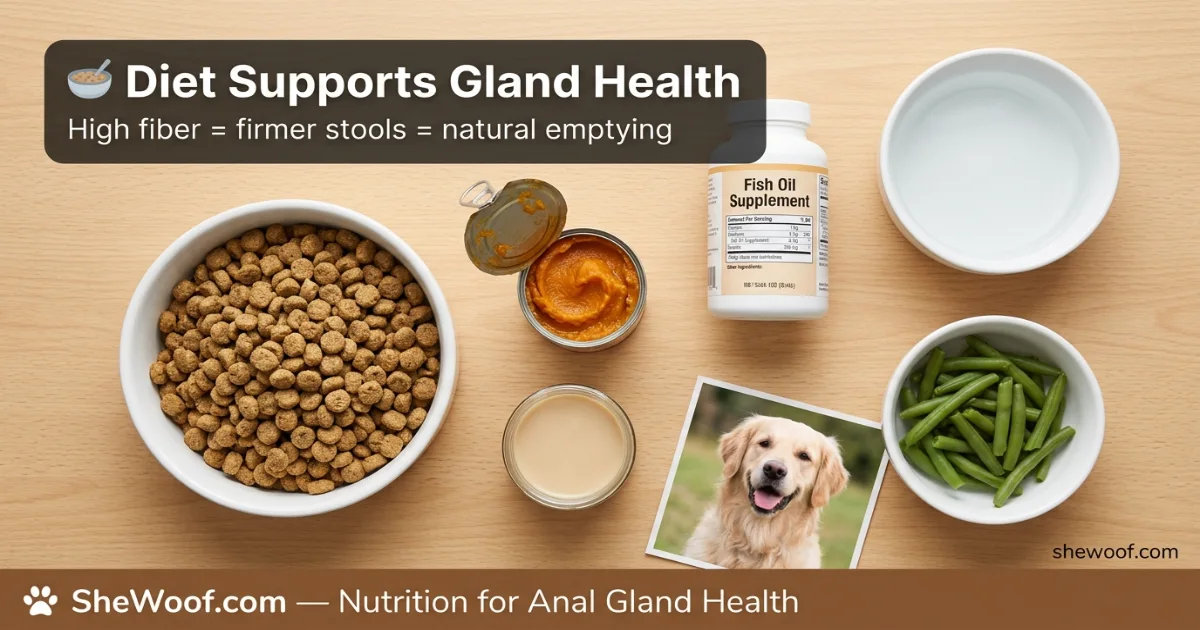
Firm stools naturally press against the anal glands and empty them with every bowel movement. Soft stools do not. That is why diet plays such a big role in anal gland health.
| Factor | Effect on Anal Glands | What to Do |
|---|---|---|
| Low-fiber diet | Soft stools = poor gland emptying | Add fiber or switch to a high-fiber formula |
| Obesity | Reduced muscle tone = poor emptying | Weight management |
| Food allergies | Chronic inflammation and softer stools | Discuss elimination diet with vet |
| Dehydration | Hard stools that do not press properly | Ensure constant access to fresh water |
| Breed/genetics | Some breeds are predisposed to impaction | Regular vet checks and prevention |
When Should You Leave It to a Professional?
Home expression is not appropriate for every situation. Leave it to a groomer or vet if any of these apply:
- Your dog is in pain, yelps, or is aggressive when you try.
- The glands feel hard, hot, or swollen.
- There is blood, pus, or a foul discharge.
- You cannot feel the glands clearly.
- Fluid does not come out with gentle pressure.
- You are not comfortable with the technique.
- Your dog has recurring anal gland issues.
Groomers often include anal gland expression in a grooming appointment for a small fee. Veterinarians are the best choice if there are signs of infection, impaction, or an abscess.
What About Anal Gland Removal Surgery?
For dogs with chronic, severe anal gland problems that do not respond to diet, hygiene, or veterinary treatment, surgical removal of the anal glands (anal sacculectomy) may be considered. This is a specialist procedure, and there are risks — including fecal incontinence and nerve damage. It is usually reserved for dogs with recurrent infections, abscesses, or tumors.
Most dogs never need surgery. Diet management, weight control, and occasional expression keep the glands healthy.
Common Mistakes to Avoid
Using too much pressure is the most common and most dangerous mistake. Anal glands should empty with light, steady pressure — not a hard squeeze.
Forgetting to lubricate is another. Water-based lubricant is essential for the internal method. Without it, the process is painful and can cause injury.
Not cleaning up properly afterward is a mistake. Leftover fluid can irritate the skin, attract bacteria, and leave a lingering odor on furniture and bedding.
Expressing too frequently is the fourth mistake. Routine expression without symptoms can cause inflammation and make impaction more likely. Do not make it a weekly habit.
What Realistic Anal Gland Care Looks Like
Most dogs never need manual expression. Those that do often need it only a few times per year. A small percentage of dogs have chronic issues that require vet attention, dietary changes, or — in rare cases — surgery.
What is unrealistic: expecting that expressing the glands once will solve the problem forever. What is realistic: monitoring for symptoms, addressing the root cause through diet and weight management, and seeking veterinary care when problems arise.
Frequently Asked Questions About Expressing Dog Anal Glands
Put on disposable gloves, apply water-based lubricant, and either press gently on either side of the anus from the outside or insert a lubricated finger into the rectum to feel for the glands. Apply gentle upward and outward pressure to release the fluid. Never force or squeeze hard.
Only if your dog shows symptoms like scooting, licking, or a fishy odor — and only if you are comfortable with the technique. Many dogs never need manual expression. If you are unsure or your dog is in pain, have a vet or groomer do it.
Only when needed. Routine expression without symptoms can irritate the glands and cause problems. If your dog needs glands expressed more than a few times a year, discuss diet, weight, and possible underlying issues with your vet.
If the glands are impacted, they can become infected and form abscesses that may rupture. This is painful and requires veterinary treatment. If your dog shows symptoms of impaction, do not ignore them.
Yes. Applying too much pressure or expressing infected glands can cause rupture, pain, and serious infection. If the glands feel hard or your dog shows signs of pain, stop and contact your vet.
Normal fluid is brownish or yellowish, thin to slightly thick, and has a strong fishy odor. If the fluid is bloody, pus-like, or very thick, that may indicate infection — see your vet.
Yes. A high-fiber diet produces firmer stools, which naturally press against the anal glands and help them empty. Weight management and proper hydration also support healthy anal gland function. Discuss diet changes with your vet.
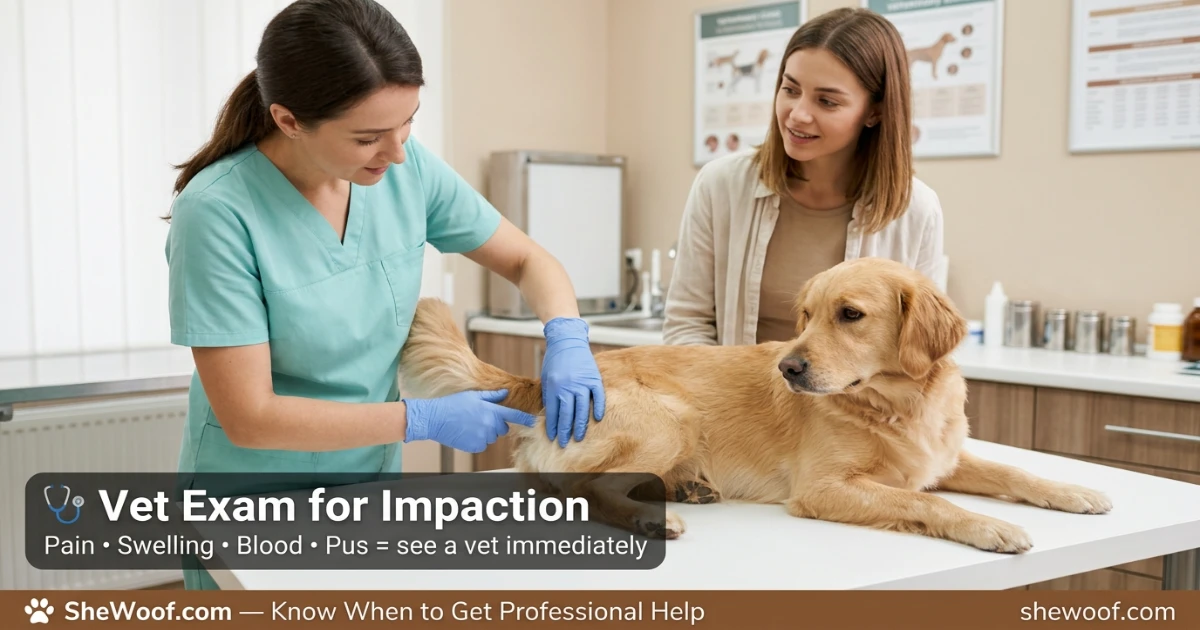
See a vet if your dog is in pain, the glands feel hard or swollen, there is blood or pus, or if your dog has recurring anal gland issues. Infected glands require prescription treatment and sometimes drainage.
- To express anal glands, use gloves and water-based lubricant. Either press gently from the outside or insert a lubricated finger to feel the glands and apply light pressure.
- Never force or squeeze hard. Excessive pressure can rupture the glands and cause serious infection.
- Only express when your dog shows symptoms — scooting, licking, fishy odor, or discomfort. Routine expression without symptoms can irritate the glands.
- A high-fiber diet, healthy weight, and proper hydration help anal glands empty naturally.
- See a vet for pain, swelling, blood, pus, or recurring issues. Infected glands need prescription treatment, not home expression.