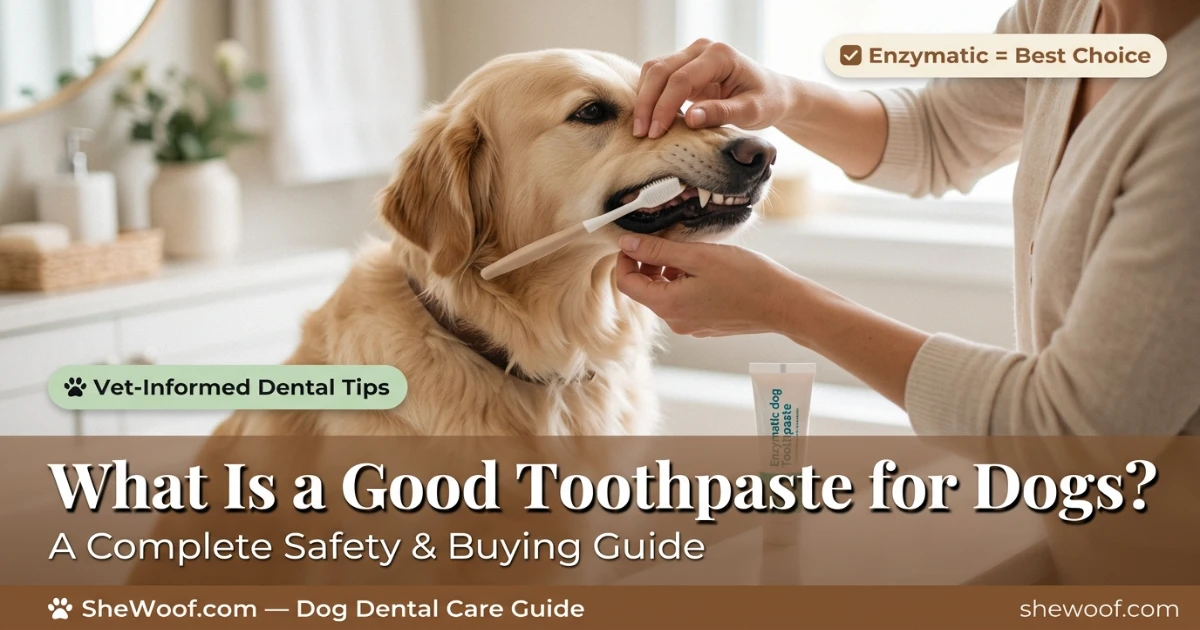
What Is a Good Toothpaste for Dogs? A Complete Safety & Buying Guide
Quick Answer: A good toothpaste for dogs is one formulated specifically for dogs, using pet-safe ingredients like enzymatic agents, mild abrasives, and dog-friendly flavors. It should never contain xylitol, fluoride, or artificial sweeteners, which are toxic to dogs. Enzymatic dog toothpastes are the most effective because they break down plaque without requiring rinsing. Human toothpaste is never safe for dogs. Look for products with the Veterinary Oral Health Council (VOHC) seal when possible, and always choose a flavor your dog actually likes so brushing becomes a positive routine.
You have finally decided to start brushing your dog’s teeth. You buy a toothbrush, sit down with your dog, and then realize you have no idea what to put on the brush. Is human toothpaste okay? Is there a special dog toothpaste? What about the flavors? If you are asking what is a good toothpaste for dogs, you are asking one of the most important questions in dog dental care. The wrong toothpaste can make your dog sick. The right one can prevent dental disease, bad breath, and expensive vet bills down the road.
I have tried every dog toothpaste on the market with my own dogs and fosters. Some they loved. Some they refused to touch. And I have seen firsthand what happens when an owner uses human toothpaste by mistake — a late-night call to the emergency vet, a very sick dog, and a lot of worry. Here is everything you need to know to choose well.
Why Can’t You Use Human Toothpaste on Dogs?
Human toothpaste is designed for humans, and dogs are not humans. Two ingredients in particular make human toothpaste dangerous for dogs: xylitol and fluoride.
Xylitol is a sugar alcohol used as a sweetener in many “healthy” or sugar-free human toothpastes. In dogs, xylitol causes a rapid release of insulin, leading to dangerously low blood sugar, seizures, liver failure, and in severe cases, death. Even a small amount can be toxic. A single tube of xylitol-sweetened toothpaste could seriously harm a small dog.
Fluoride is the second concern. Dogs swallow most of what you put on their toothbrush — they do not spit like humans do. Over time, swallowed fluoride can cause gastrointestinal upset, and in large amounts, fluoride toxicity. Human toothpastes also contain detergents and foaming agents that can irritate a dog’s stomach.
What Makes a Toothpaste Good for Dogs?
A good dog toothpaste shares several key qualities. It should be safe to swallow, effective at reducing plaque and tartar, and appealing enough that your dog accepts the brushing routine without a fight.
- Formulated specifically for dogs
- Enzymatic ingredients (glucose oxidase, lactoperoxidase)
- Safe to swallow
- No xylitol, no fluoride, no artificial sweeteners
- Dog-friendly flavors (poultry, beef, peanut butter, malt)
- VOHC seal when possible
- Mild abrasives that help remove plaque without scratching enamel
- No foaming agents or detergents
Why Enzymatic Toothpaste Is the Best Choice for Dogs
Enzymatic dog toothpastes contain natural enzymes that break down plaque and bacteria in the mouth. Unlike abrasive toothpastes that rely on scrubbing, enzymatic toothpaste works chemically — the enzymes continue to act even after brushing is finished. This is especially useful for dogs because most owners cannot brush every surface of every tooth perfectly.
The most common enzymes used in dog toothpaste are glucose oxidase and lactoperoxidase. These occur naturally in saliva and help maintain a healthy oral environment. When added to toothpaste, they boost the mouth’s natural defenses against plaque buildup and bad breath.
Enzymatic toothpaste is also safe to swallow, which matters because dogs do not rinse and spit. If your dog swallows the toothpaste — and they will — it will not cause harm. That is a fundamental difference between dog toothpaste and human toothpaste.
What Ingredients Should You Avoid in Dog Toothpaste?
Not every product marketed for dogs is safe. Some brands sneak in ingredients that are questionable. Check labels carefully and avoid these.
| Ingredient | Why It’s Risky | Safe Alternative |
|---|---|---|
| Xylitol | Highly toxic — causes hypoglycemia, seizures, liver failure | No sweetener, or pet-safe alternatives |
| Fluoride | Toxic when swallowed in quantity | Enzymatic ingredients |
| Sorbitol | Can cause digestive upset in some dogs | No sweetener needed |
| Artificial sweeteners | Some are toxic to dogs | Avoid entirely |
| Sodium lauryl sulfate (SLS) | Foaming agent — irritates stomach when swallowed | No foaming agent |
| Tea tree oil | Toxic to dogs even in small amounts | Avoid entirely |
| Artificial colors | Unnecessary and potentially irritating | Natural coloring only |
Do You Really Need Special Toothpaste, or Can You Use Something Else?
Yes, you need dog-specific toothpaste. But what about the things people sometimes try instead?
Coconut oil is sometimes recommended as a homemade dog toothpaste alternative. It has some antibacterial properties and is safe for dogs in small amounts. It does not, however, contain enzymes or abrasives that remove plaque. Coconut oil can be used occasionally as a supplement to brushing, but it is not a replacement for dog toothpaste.
Baking soda is a common homemade remedy. It can help neutralize odors and gently scrub the teeth. However, too much baking soda can upset a dog’s stomach, and it does not contain the enzymes that make dog toothpaste effective. Use only in tiny amounts and only occasionally.
Plain water on a toothbrush can help remove some surface debris, but it does not fight plaque or bacteria. It is better than nothing but not a substitute for dog toothpaste.
What About Dog Toothpaste for Puppies vs. Adult Dogs?
Puppies can start using dog toothpaste as soon as they have teeth — typically around 8 weeks old. Puppy toothpaste is often the same as adult enzymatic toothpaste, though some brands offer smaller tubes and gentler flavors. The goal with puppies is to build a positive association with brushing, so flavor choice and gentle handling matter most.
Adult dogs often have established dental habits. If your adult dog has never had their teeth brushed, introduce the toothpaste slowly — let them lick it off your finger first, then progress to brushing over several weeks. Look for a flavor they love, and be patient. Adult dogs with existing tartar may need a professional dental cleaning before home brushing becomes effective.
Senior dogs may have dental issues, missing teeth, or sensitive gums. Soft toothbrushes and enzymatic toothpaste are ideal because they clean without abrasive scrubbing. If your senior dog has significant dental disease, see a vet before starting home brushing.
How Do You Brush a Dog’s Teeth Correctly?
- Start with the toothpaste, not the brush. Let your dog lick a small amount off your finger for a few days. This builds positive association with the taste.
- Introduce the toothbrush. Let them sniff and chew on it briefly. Do not brush yet — just build comfort.
- Apply a small amount of toothpaste to the brush. A pea-sized amount is enough.
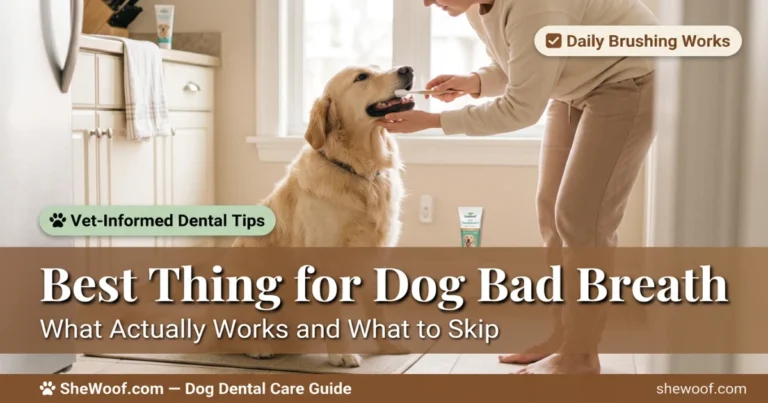
- Lift the lip gently and brush the outer surfaces. Focus on the upper teeth where plaque accumulates. Use small circular motions along the gumline.
- Brush the lower teeth the same way. Aim for 30 to 60 seconds total per session at first.
- Gradually extend the session. Over weeks, work up to a full-mouth brushing that takes about two minutes.
- Reward and stop. Always end on a positive note. Give praise and a treat after brushing.
- Brush daily or at least several times per week. Consistency matters more than session length.
How Much Does Dog Toothpaste Cost?
Enzymatic dog toothpaste: $8 – $20 per tube
VOHC-approved enzymatic toothpaste: $12 – $25 per tube
Puppy toothpaste (smaller tubes): $6 – $15 per tube
Dog toothbrush (finger or standard): $3 – $12
Dental kit (toothpaste + brush): $15 – $30
A single tube of toothpaste typically lasts 2 to 3 months with daily use. Compared to the cost of a professional dental cleaning — which ranges from $200 to $500 or more — home dental care is a very cost-effective investment.
What Do Most Owners Get Wrong About Dog Toothpaste?
Using human toothpaste is the most dangerous mistake. Even a small amount can cause serious illness. Never assume that “natural” human toothpaste is safe — check for xylitol and fluoride every time.
Choosing a flavor the dog hates is the second mistake. Owners buy a toothpaste without checking whether their dog likes it, then wonder why brushing is a struggle. Always start with a small tube or sample before committing to a large one.
Giving up too quickly is the third. Brushing takes weeks to become a routine. Dogs who resist at first often accept it with time, treats, and patience.
Skipping brushing altogether because the dog resists is the fourth. Even if your dog will only tolerate a partial brush, that is better than nothing. Focus on the outer surfaces of the upper teeth — that is where plaque builds fastest.
When Should You See a Vet About Your Dog’s Teeth?
Home brushing is not a substitute for professional veterinary dental care. See your vet if you notice any of these signs:
- Bad breath that does not improve with brushing.
- Yellow or brown tartar buildup along the gumline.
- Red, swollen, or bleeding gums.
- Loose or missing teeth.
- Difficulty eating, dropping food, or chewing on one side.
- Pawing at the mouth or rubbing the face.
- Visible growths or ulcers in the mouth.
Your veterinarian can diagnose dental disease, recommend professional cleaning, and prescribe treatment if needed. Dental disease is one of the most common health issues in dogs, and early intervention prevents more serious problems.
What Realistic Dental Care Looks Like
Not every dog will tolerate a full two-minute brushing. Some will only allow a quick pass over the upper teeth. Others will happily sit through a full routine once they learn it means treats afterward.
What is unrealistic: expecting a dog who has never had their teeth brushed to accept it immediately. What is realistic: gradual progress, small sessions, lots of reward, and a routine that becomes easier with time. A good toothpaste makes the whole process easier — the right flavor can turn a grooming struggle into a positive daily habit.

Frequently Asked Questions About Dog Toothpaste
A good toothpaste for dogs is one formulated specifically for dogs with enzymatic ingredients, safe to swallow, and free from xylitol, fluoride, and artificial sweeteners. Look for VOHC-approved products and choose a flavor your dog likes. Never use human toothpaste.
No. Human toothpaste often contains xylitol and fluoride, both of which are toxic to dogs. Even small amounts can cause serious illness. Always use toothpaste made specifically for dogs.
Avoid xylitol, fluoride, sorbitol, artificial sweeteners, sodium lauryl sulfate (SLS), tea tree oil, and artificial colors. These can be toxic or cause digestive upset in dogs.
Yes. Enzymatic toothpaste contains natural enzymes that break down plaque and bacteria. It continues working after brushing and is safe to swallow, which is important because dogs do not spit. It is the most effective option for home dental care.
Poultry, beef, peanut butter, and malt are the most popular flavors. Some dogs prefer vanilla or mint. Try a small tube before committing to a large one — a flavor your dog loves makes brushing far easier.
Daily is ideal. If daily brushing is not possible, aim for at least three to four times per week. Consistency matters more than session length. Even a quick 30-second brush is better than nothing.
Some owners use coconut oil or baking soda as a homemade alternative, but these do not contain the enzymes that make dog toothpaste effective. Homemade versions may also be less safe if proportions are wrong. Commercially formulated enzymatic toothpaste is the safest, most effective choice.
See a vet if you notice persistent bad breath, heavy tartar, red or bleeding gums, loose teeth, difficulty eating, pawing at the mouth, or visible growths. Dental disease is common and best treated early.
- A good toothpaste for dogs is enzymatic, safe to swallow, and free from xylitol, fluoride, and artificial sweeteners.
- Never use human toothpaste on dogs — xylitol and fluoride are toxic.
- Choose a flavor your dog likes. Poultry, beef, and peanut butter are usually well accepted.
- Brush daily or at least three to four times per week with a soft dog toothbrush and enzymatic toothpaste.
- Home brushing is essential, but professional dental exams are also important for detecting problems below the gumline.