What to Do When My Dog Has a Cold: Symptoms, Home Care, and When to Call the Vet
Estimated reading time: 12 minutes
Quick Answer: When your dog has a cold, the most important things are rest, hydration, and monitoring. Keep them warm and quiet, offer plenty of fresh water, and watch for worsening symptoms. Most mild dog colds resolve within one to two weeks. However, because coughing, sneezing, and nasal discharge can also indicate more serious conditions like kennel cough, canine influenza, or pneumonia, contact your veterinarian if symptoms persist beyond a few days, worsen, or are accompanied by lethargy, fever, or difficulty breathing.
Your dog is sneezing more than usual, has a runny nose, and seems a little less enthusiastic about their morning walk. You wonder if dogs can even get colds — and if so, what to do when my dog has a cold. The answer is nuanced. Dogs do not catch the same cold viruses that humans do, but they can develop similar upper respiratory symptoms from a range of canine-specific viruses and bacteria. Some of these are mild and self-limiting. Others are more serious and require veterinary care.
I have nursed dogs through mild respiratory infections and helped friends recognize when a simple cough was actually kennel cough that needed treatment. The difference between “wait and see” and “call the vet today” is not always obvious. Here is how to tell them apart and what to do in each case.
Can Dogs Actually Get Colds?
Dogs do not get the same rhinoviruses that cause the common cold in humans. But they do get upper respiratory infections caused by a variety of canine-specific pathogens that produce cold-like symptoms. The most common include:
Canine parainfluenza virus — a virus that causes coughing, sneezing, and nasal discharge. It is one of the components of the kennel cough complex.
Canine adenovirus type 2 — another virus involved in kennel cough, causing respiratory symptoms.
Bordetella bronchiseptica — a bacterium that is a primary cause of kennel cough. It is highly contagious between dogs.
Canine influenza virus — a more serious respiratory virus that can cause fever, coughing, and pneumonia in severe cases.
Mycoplasma — bacteria that can cause chronic respiratory infections.
The term “dog cold” is often used loosely to describe any mild upper respiratory infection, but the specific cause matters for treatment and for understanding how serious the condition might become.
What Are the Symptoms of a Dog Cold?
The symptoms of a mild dog cold look a lot like a mild human cold — but there are important differences. Here is what to watch for.
- Sneezing
- Runny nose (clear or slightly cloudy discharge)
- Watery eyes
- Mild coughing
- Congestion or noisy breathing
- Lethargy or reduced energy
- Reduced appetite
- Mild fever
- Occasional reverse sneezing
The symptoms that should worry you more are those that suggest the infection has moved deeper into the respiratory tract or is caused by a more serious pathogen. These include persistent coughing (especially a honking cough), difficulty breathing, thick yellow or green nasal discharge, high fever, and complete refusal to eat or drink.
What Should You Do at Home When Your Dog Has a Cold?
For mild symptoms and a dog who is otherwise behaving normally, home care is often enough. The goal is to support the immune system and keep your dog comfortable while the infection runs its course.
Step-by-Step Home Care for a Dog Cold
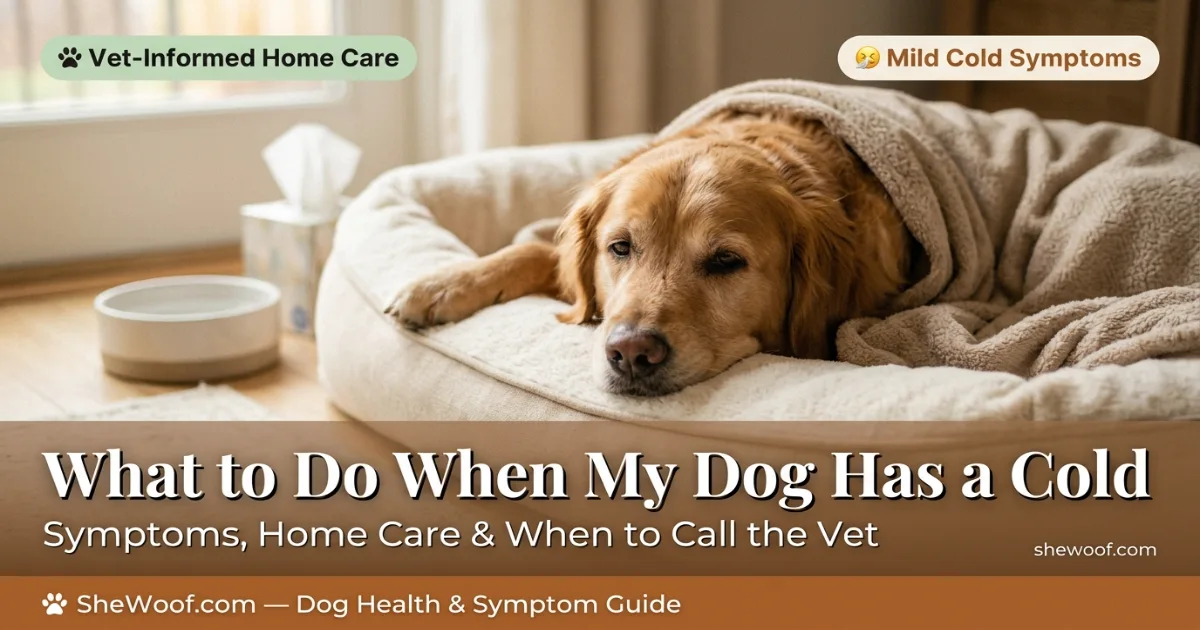
- Provide rest and warmth. Keep your dog indoors in a quiet, comfortable space. Avoid strenuous exercise, long walks, and exposure to cold or damp weather. A warm bed away from drafts helps.
- Ensure plenty of fresh water. Hydration is essential for loosening mucus and supporting immune function. Offer water frequently and consider adding a small amount of low-sodium broth to encourage drinking if your dog is reluctant.
- Offer soft, appealing food. If your dog’s appetite is reduced, try warming their food slightly or adding a small amount of plain cooked chicken or rice. Do not force eating, but monitor intake.
- Gently clean the nose and eyes. Use a soft, damp cloth to wipe away discharge. This keeps your dog comfortable and helps you monitor whether discharge is changing color or consistency.
- Use a humidifier. Dry indoor air can worsen congestion. A cool-mist humidifier in the room where your dog rests can help soothe irritated airways.
- Avoid contact with other dogs. Many respiratory infections are contagious. Keep your dog away from other dogs until symptoms have fully resolved, usually for one to two weeks.
- Monitor symptoms daily. Keep a simple log of symptoms, appetite, energy level, and any changes. This helps you recognize improvement or worsening quickly.
What Should You NOT Do When Your Dog Has a Cold?
Some common instincts are wrong when it comes to caring for a dog with a cold. Avoid these mistakes.
Do not give human medications. This is the most dangerous mistake. Many human cold and flu products contain ingredients that are highly toxic to dogs, including xylitol, acetaminophen, and ibuprofen.
Do not use essential oils. Many essential oils, including eucalyptus, peppermint, and tea tree, are toxic to dogs. Do not diffuse them around your dog or apply them to their skin or bedding.
Do not force exercise. Rest is important. If your dog seems tired, let them sleep. Exercise can worsen symptoms and delay recovery.
Do not take your dog to the dog park or daycare. Respiratory infections spread easily between dogs. Keep your dog isolated until they are fully recovered and your vet confirms they are no longer contagious.
Do not assume it is just a cold. Coughing in dogs can be a sign of kennel cough, canine influenza, heart disease, or tracheal collapse. If symptoms persist more than a few days or worsen, see a vet.
How Long Does a Dog Cold Last?
Mild upper respiratory infections in dogs typically last one to two weeks. Symptoms often peak around day three to five and gradually improve from there. Some cases resolve in just a few days; others linger for two to three weeks.
If symptoms have not improved after a week, or if they are getting worse rather than better, that is a sign to see a veterinarian. Persistent coughing, especially the honking cough characteristic of kennel cough, may require antibiotic treatment if a bacterial infection is involved.
| Symptom | Mild Cold | See a Vet |
|---|---|---|
| Sneezing | Occasional | Constant or severe |
| Nasal discharge | Clear or mild | Thick, yellow, or green |
| Coughing | Mild or occasional | Persistent, honking, or productive |
| Appetite | Slightly reduced | Complete refusal to eat |
| Energy | Mildly reduced | Lethargic or unwilling to move |
| Breathing | Normal | Labored, rapid, or noisy |
| Fever | Mild or none | High or persistent |
When Should You Call a Vet?
Not every cold requires a vet visit, but some situations do. Call your veterinarian if:
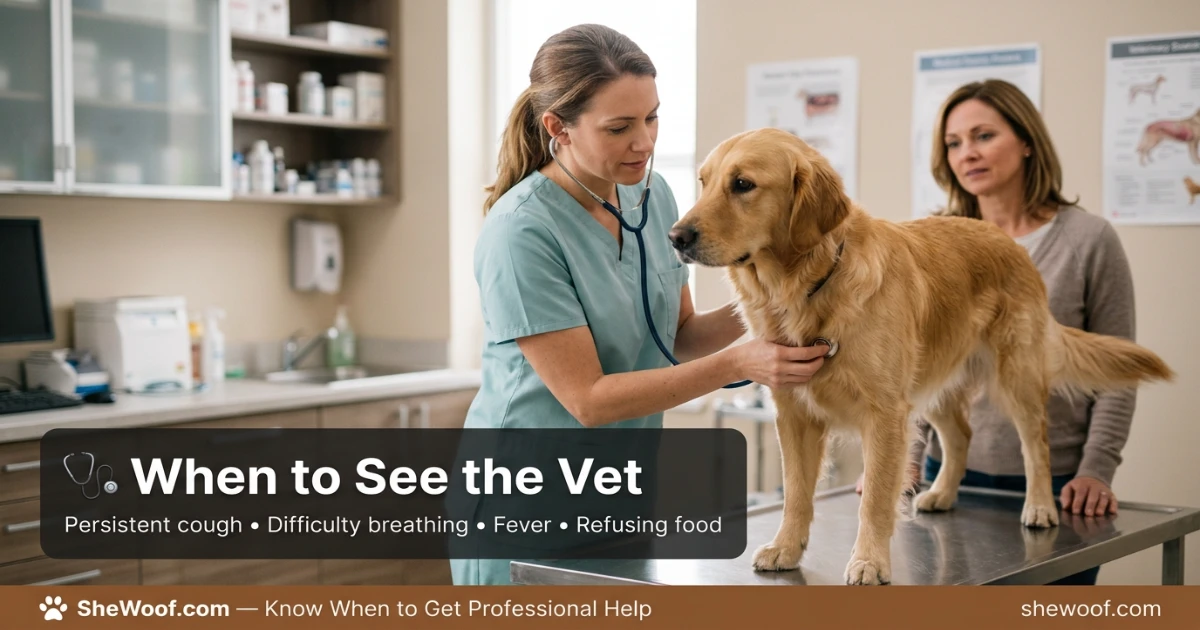
- Symptoms last more than 7 to 10 days
- Symptoms are getting worse rather than better
- Your dog has difficulty breathing or is breathing rapidly
- Your dog is coughing persistently or has a honking cough
- Discharge from the nose or eyes is thick, yellow, or green
- Your dog refuses to eat or drink for more than 24 hours
- Your dog is lethargic, weak, or unresponsive
- Your dog has a high fever or is shivering
- Your puppy, senior dog, or immunocompromised dog shows any symptoms
Puppies and senior dogs are more vulnerable to respiratory infections and can become seriously ill more quickly than healthy adult dogs. If your puppy or senior dog shows cold symptoms, it is best to have them evaluated by a veterinarian rather than waiting to see if they improve on their own.
How Can You Prevent Dog Colds?
Not all respiratory infections are preventable, but you can reduce the risk. Vaccination is one of the most effective tools. Vaccines are available for Bordetella, parainfluenza, and canine influenza — the most common causes of kennel cough and respiratory infections .
Good hygiene and management also help. Avoid taking your dog to high-traffic areas when they are unvaccinated or immunocompromised. If you board your dog, choose facilities that require vaccination and maintain clean environments. Keep your dog away from dogs who are coughing or sneezing.
A healthy lifestyle — good nutrition, regular exercise, and routine veterinary care — supports a strong immune system and helps your dog fight off infections more effectively.
What Realistic Expectations Look Like
Most mild dog colds resolve on their own within one to two weeks with supportive care. Your dog may be a little lethargic and sneezy for a few days, then gradually return to normal. Expect the recovery to be gradual, not overnight.
What is unrealistic is expecting a cold to disappear in a day or two. What is also unrealistic is assuming that every cough or sneeze is just a cold. Some respiratory infections require treatment and can become serious if ignored.
What is realistic is monitoring closely, providing good supportive care, and calling your vet when symptoms persist or worsen. That balance — attentive home care with a low threshold for professional advice — keeps most dogs safe and comfortable.
- Dogs do not catch human colds, but they can develop upper respiratory infections with similar symptoms caused by canine-specific viruses and bacteria.
- Mild colds typically resolve in one to two weeks with rest, hydration, and gentle home care.
- Never give human cold medications — many contain ingredients toxic to dogs.
- Call your vet if symptoms last more than a week, worsen, or include difficulty breathing, persistent coughing, fever, or refusal to eat.
- Puppies and senior dogs with cold symptoms should be evaluated by a vet promptly.
- Vaccination against Bordetella, parainfluenza, and canine influenza helps prevent common respiratory infections.
Frequently Asked Questions
Can dogs get colds from humans?
No. The viruses that cause the common cold in humans are not contagious to dogs. However, dogs can develop similar symptoms from canine-specific respiratory viruses and bacteria. If your dog has cold-like symptoms, the cause is almost certainly a canine pathogen, not something they caught from you.
What should I do when my dog has a cold?
Provide rest, warmth, and plenty of fresh water. Keep your dog indoors and away from other dogs. Monitor symptoms daily. If symptoms are mild and your dog is otherwise behaving normally, home care is often enough. If symptoms persist or worsen, call your vet.
Can I give my dog human cold medicine?
No. Human cold medications often contain acetaminophen, ibuprofen, pseudoephedrine, and other ingredients that are toxic to dogs. Never give human cold medicine, cough syrup, or pain relievers without veterinary guidance.
How long does a dog cold last?
Most mild dog colds resolve within one to two weeks. Symptoms typically peak around day three to five and gradually improve. If symptoms last more than a week or get worse, see your veterinarian.
When should I take my dog to the vet for a cold?
See a vet if symptoms last more than 7 to 10 days, if they are getting worse, or if your dog has difficulty breathing, persistent coughing, thick nasal discharge, fever, or refuses to eat. Puppies and senior dogs should be evaluated promptly.
Is kennel cough the same as a cold?
Kennel cough is a specific respiratory infection, usually caused by Bordetella bronchiseptica and parainfluenza virus. It is more serious than a mild cold and often requires treatment. The hallmark symptom is a persistent, honking cough. See your vet if you suspect kennel cough.
How can I prevent my dog from getting a cold?
Vaccination against Bordetella, parainfluenza, and canine influenza reduces the risk of common respiratory infections. Avoid high-traffic dog areas when your dog is unvaccinated or immunocompromised, and keep them away from dogs who are coughing or sneezing.
Can my dog get a cold from being outside in the cold?
Cold weather itself does not cause colds — viruses and bacteria do. However, cold, damp conditions can stress a dog’s immune system and make them more susceptible to infections. Keep your dog warm and dry, especially in winter.