
Why Do Dogs Lay on Their Back? The Real Reasons Explained
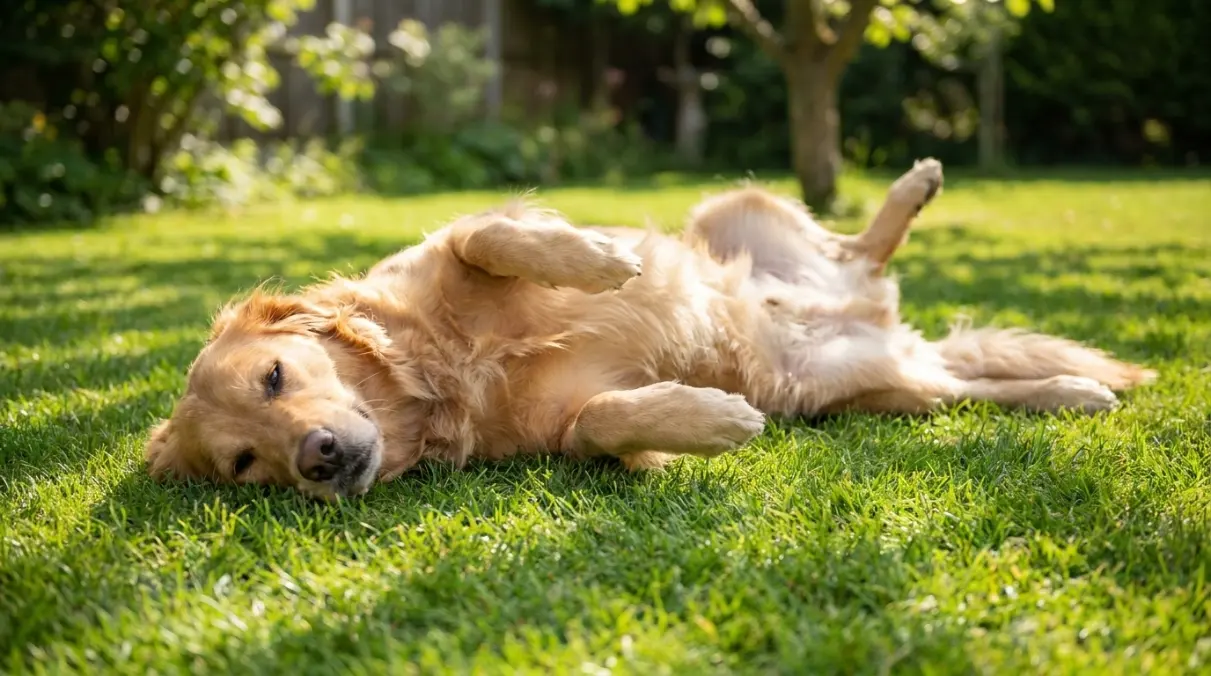
There are few sights more endearing than a dog flopped on their back, paws curled in the air, completely unbothered by the world. Whether your dog does it in a sun patch on the floor or right in the middle of your bed, you’ve probably caught yourself wondering — why do dogs lay on their back? Is it comfort? Trust? A quirky personality thing? Or is it telling you something more?
The answer is genuinely interesting, and it varies more than most people realize. That single position — belly up, legs splayed, sometimes with a goofy expression — can mean several different things depending on the dog, the context, and the moment. Getting familiar with what’s behind it helps you understand your dog on a deeper level.
Dogs lay on their back primarily to cool down, communicate trust or submission, request belly rubs, or simply find a comfortable resting position. It is generally a sign of comfort and safety — a dog at ease in their environment. In some contexts it can also signal appeasement or mild stress, so reading the full body language always matters.
Quick Facts: Why Dogs Lay on Their Back
Comfort and temperature regulation — the belly has less fur and radiates heat efficiently.
A dog rolling onto their back around humans or other dogs often signals trust or deference.
Flat-coated and short-coated breeds may do it more for cooling; anxious breeds may use it appeasingly.
If rolling onto the back seems distressed or is paired with shaking, growling, or stiffness — consult a vet.
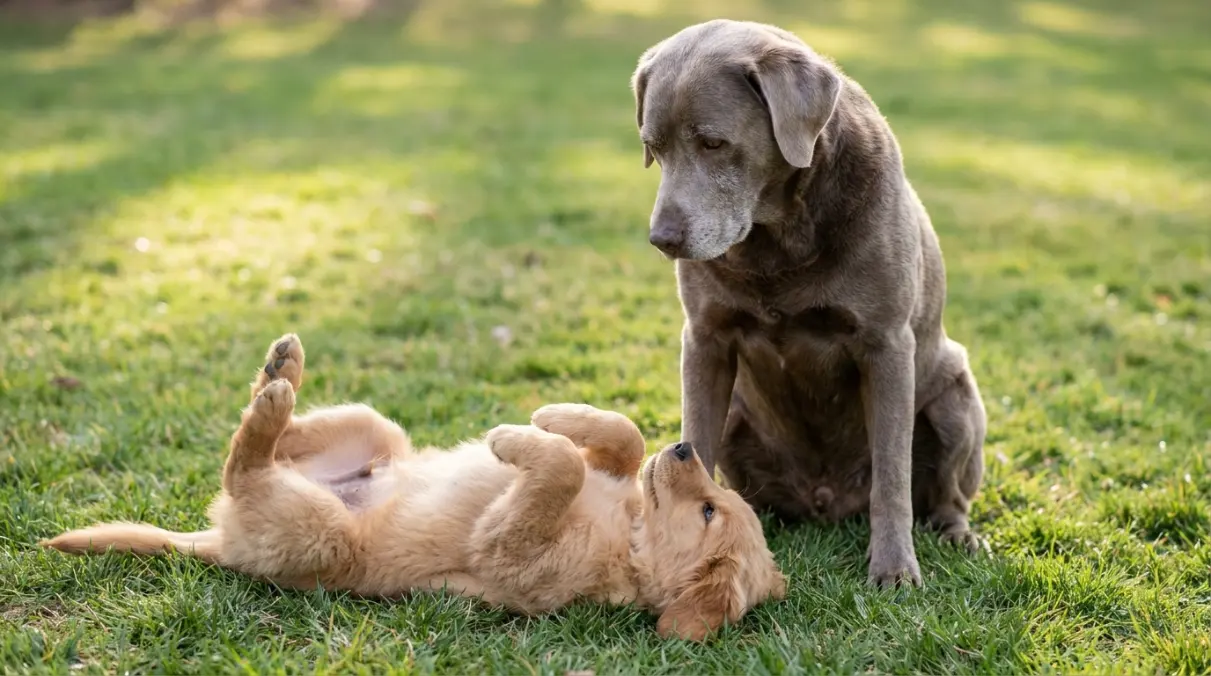
Puppies often roll over instinctively to show submission to littermates and adult dogs.
Many dogs learn quickly that rolling over triggers a belly rub — and they repeat it on purpose.
The Six Real Reasons Dogs Lay on Their Back
This isn’t a one-answer situation. Dogs are expressive, and this particular position can serve several functions — sometimes more than one at the same time. Here are the reasons that actually matter.
1. Temperature Regulation
Dogs don’t sweat the way humans do. Their primary cooling mechanisms are panting and, to a lesser extent, heat release through the paws and belly. The abdominal area has thinner fur and more exposed skin, making it one of the best spots on a dog’s body to lose heat. When your dog flops onto their back on a cool floor or in a breeze, they may simply be trying to lower their body temperature efficiently. This is especially common in thick-coated breeds, in warm weather, or after exercise.
2. Trust and Security
The belly is a vulnerable area — it protects vital organs and has no natural armor. When a dog exposes it freely and relaxes in that position, it’s a meaningful signal. They feel safe. They’re not bracing for anything. They’re comfortable enough in their environment, with you, or with the other animals nearby to let their guard down entirely. In a home setting, a dog who regularly sleeps belly-up is a dog who feels genuinely secure. That matters.
3. Submission and Appeasement
Rolling onto the back is a classic appeasement gesture in dog body language. When a dog encounters a more dominant dog or a person they perceive as higher in status, exposing the belly is a way of communicating “I’m not a threat.” This is instinctive and deeply rooted in canine social behavior. It’s not weakness — it’s communication. In most cases it’s completely healthy, but if your dog does it excessively out of fear or anxiety, that’s worth noting and potentially discussing with a trainer or behaviorist.
4. Requesting Attention or a Belly Rub
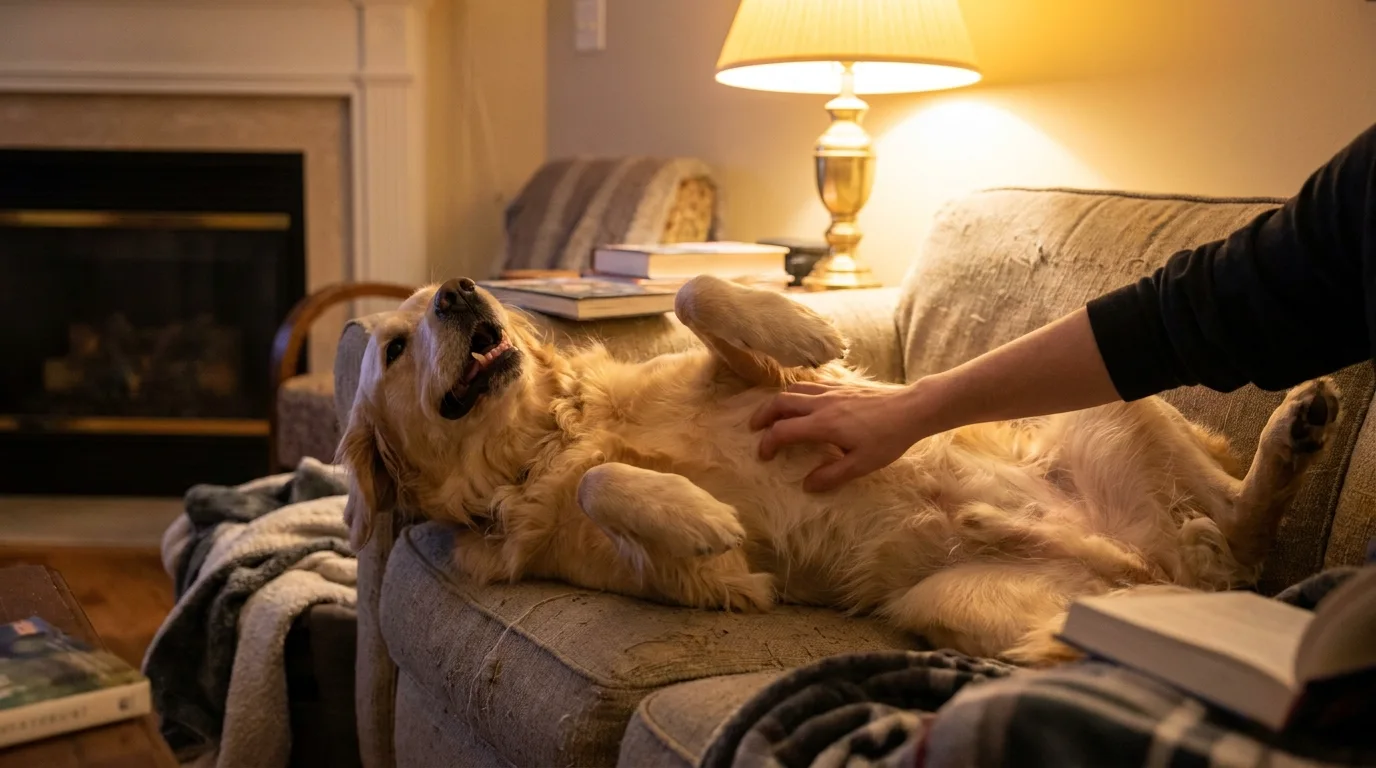
Dogs are remarkably good at training their humans. If your dog has discovered that rolling onto their back results in a belly rub, praise, or affectionate contact, they will repeat it. This is learned behavior through positive reinforcement — and honestly, there’s nothing wrong with it. It’s one of the sweetest feedback loops in pet ownership. The dog rolls over; you rub the belly; everyone is happy.
5. Itch Relief
Sometimes the answer is beautifully simple: something itches. The back is hard to reach, and wiggling belly-up against a carpet, grass, or rough surface can scratch that itch effectively. If your dog rolls onto their back and immediately starts writhing or rubbing back and forth, itch relief is probably the main driver. Occasional scratching behavior is normal. Frequent, intense scratching at the same spots could signal a skin condition or allergy, which warrants a vet conversation.
6. Pure Comfort and Deep Relaxation
Some dogs simply find it comfortable. After a long walk or an energetic play session, certain dogs settle into belly-up sleep and stay there for hours. With spine decompressed, muscles relaxed, and nothing bearing down on their body, it can genuinely be one of the most restful positions a dog can take. If your dog does it consistently during calm moments, it’s most likely just their preferred sleeping position.
Reading the Context: What the Rest of Their Body Is Saying
The position alone doesn’t tell the whole story. Body language in dogs is always a combination of signals, and the belly-up posture is no different. Here’s how to read what’s really going on:
| Body Language Cue | What It Likely Means |
|---|---|
| Loose body, soft eyes, relaxed mouth | Complete relaxation and comfort — no concern needed |
| Tail wagging gently while on back | Happy, seeking interaction or a belly rub |
| Stiff body, tense face, ears back | Appeasement or mild anxiety — observe the context |
| Rolling back and forth, wiggling | Scratching an itch or playing — normal behavior |
| Belly-up with whimpering or reluctance to move | Possible pain or discomfort — consult a vet |
| Sudden rolling onto back in response to another dog | Social submission — typically normal canine communication |
What New Owners Usually Get Wrong
One of the most common misreadings is assuming every belly-up moment is a belly rub invitation. It isn’t always. Some dogs go belly-up as a conflict-avoidance signal, particularly around unfamiliar people or dogs. Reaching in to rub a belly in that context can actually increase the dog’s stress — they’re trying to signal “please don’t confront me,” not “please pet me right now.”
The other common mistake is interpreting the posture as a dominance or submission dynamic between the dog and the owner. Most modern animal behaviorists have moved away from simplistic dominance-hierarchy models. When your dog rolls over around you, it’s more accurately read as comfort, appeasement, or learned affection-seeking — not a strict social ranking statement.

Puppies vs Adult Dogs vs Senior Dogs
Puppies
Puppies roll onto their backs frequently during play and social interactions with littermates. It’s an instinctive communication tool — a way of saying “I’m smaller, I’m playing, don’t be too rough with me.” Young puppies also spend enormous amounts of time sleeping in whatever position feels easiest, and belly-up often qualifies. As they develop and gain social confidence, the submissive roll may decrease while the comfort-based roll continues or increases.
Adult Dogs
Adult dogs tend to have well-established reasons for the behavior. If it’s a habit at home, it’s usually comfort or affection-seeking. In social settings with unfamiliar dogs, it may still be appeasement. Adult dogs who are well-socialized and confident may rarely use the belly-up as a submission signal at all — they’ve found other ways to communicate.
Senior Dogs
Older dogs may find it harder to get into and out of a belly-up position due to arthritis or joint stiffness. If your senior dog suddenly stops resting in a position they used to love, or seems reluctant to roll, it’s worth discussing with your vet. Conversely, if a senior dog rolls onto their back and then struggles or cries when trying to get up, that’s a clear signal to seek veterinary guidance.
How Breed and Build Affect the Behavior
Breed isn’t destiny, but it does shape tendencies. Short-coated breeds — Boxers, Vizslas, Dalmatians, Greyhounds — may go belly-up more frequently for cooling purposes simply because they don’t have thick fur for insulation and feel temperature changes more acutely. Breeds known for expressiveness and social attunement, like Labrador Retrievers, Golden Retrievers, and Cavalier King Charles Spaniels, tend to roll over frequently as a social bonding gesture.
Anxious breeds or individual dogs with nervous temperaments may use the belly-up posture more appeasingly. Breeds with deep chests — Great Danes, Weimaraners — may find the position useful for comfortable rest. And herding breeds, with their high social intelligence, may use it more deliberately as a nuanced communication signal.
How to Respond: A Practical Owner Guide
- Pause first. Read the full body language before reaching in. Is the body loose and relaxed, or tight and stiff?
- If relaxed and tail wagging: Go ahead and offer a gentle belly rub if they seem to want it. Scratch softly around the chest, belly, or groin area — wherever they seem to respond most positively.
- If stiff or tense: Give the dog space. Don’t force interaction. Let them relax or move away naturally.
- If rolling on grass or carpet: They may just be itching. Let it happen unless it’s frequent and intense, which could signal a skin concern.
- If a stranger’s dog rolls over: Crouch down calmly, don’t loom, let the dog approach. Ask the owner first before petting.
- If a puppy rolls over during play: It’s likely play communication. Keep energy calm and avoid overwhelming them.
- If your senior dog rolls and struggles to rise: Help them gently and schedule a vet appointment to rule out joint pain.
When to Contact a Vet
Most belly-up behavior is completely normal and nothing to worry about. But there are a handful of situations where it’s worth picking up the phone and speaking to your veterinarian:
- Your dog rolls onto their back and appears unable or unwilling to get back up
- The rolling is accompanied by crying, whimpering, or signs of pain
- There’s unusual repetitive rolling that seems frantic or disoriented — this can occasionally indicate a neurological or vestibular issue
- Excessive belly scratching on carpet that suggests intense itching or skin irritation
- A sudden change in your dog’s typical resting posture habits for no obvious reason
Frequently Asked Questions
Is it normal for dogs to sleep on their back?
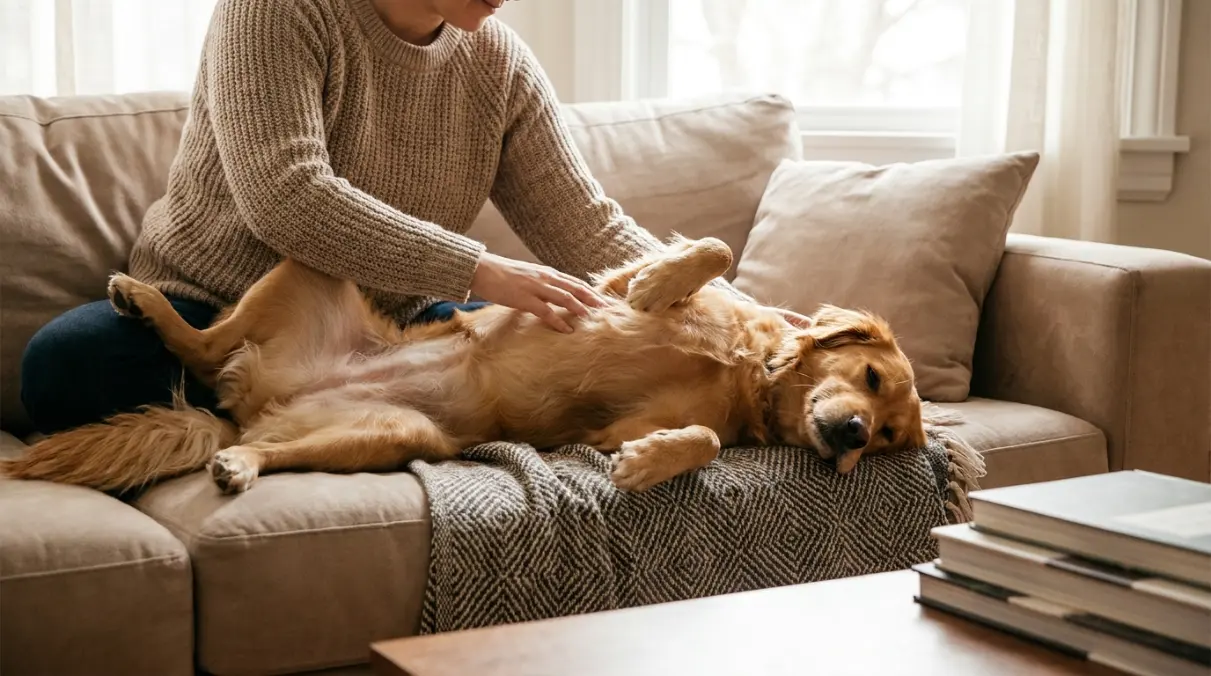
Yes, completely. Many dogs find sleeping belly-up deeply comfortable, especially in warm environments or after physical activity. A dog who regularly sleeps on their back is typically a dog who feels safe and relaxed in their home. It’s one of the more endearing signs that your dog is settled and content.
Why does my dog roll on their back and wiggle?
Wiggling while belly-up usually means one of two things: scratching an itch or playing. The back is hard to reach directly, so rolling and rubbing against a surface is an effective self-scratch. During play, the wiggle-roll is often an invitation to engage or a playful appeasement signal — both are normal behaviors worth enjoying rather than correcting.
Why do dogs roll on their backs outside on the grass?
Outdoor back-rolling serves several purposes: cooling down on damp or cool grass, scratching an itch, and — notably — picking up interesting scents. Dogs have a well-documented behavior of rolling in or on things that smell interesting, which may be an instinctive behavior rooted in scent-masking or scent-gathering. If it’s happening very frequently on one particular patch, check that area for anything your dog could be reacting to.
Does a dog rolling on their back always mean they want a belly rub?
Not always. While many dogs do roll over specifically to solicit a belly rub, the position can also signal appeasement, temperature regulation, or simple comfort. Reading the rest of the body is essential — a loose, wriggly body with a wagging tail usually means yes; a stiff or frozen posture with tense facial muscles often means the dog needs space, not contact.
Why do some dogs never lay on their back?
Some dogs simply don’t find it comfortable, particularly deep-chested breeds or dogs with spinal sensitivity. Others may have learned through past experience that exposing the belly felt unsafe — rescue dogs or those from stressful environments may take time before they feel comfortable enough to use the position. It’s not a problem; every dog has their preferred resting posture.
Should I be worried if my dog rolls onto their back suddenly and won’t get up?
Yes — if your dog goes belly-up and seems unable or unwilling to right themselves, especially if they appear confused, distressed, or in pain, contact your veterinarian. This is distinct from a dog who simply chose to nap in that position. A dog who rolls over and can’t rise, particularly if combined with disorientation, could be experiencing something that needs professional assessment.
Is belly-up rolling a dominance behavior?
No — this is an outdated interpretation. Rolling onto the back is primarily about appeasement, trust, comfort, or thermal regulation. Modern animal behavior science has largely moved away from strict dominance-hierarchy models for dog social behavior. When your dog rolls over around you, it’s much more accurately a sign of trust, affection, or conflict-avoidance than a dominance statement.
The Short Version
When a dog lays on their back, they’re usually doing one of a few things: cooling down, seeking a belly rub, communicating trust or appeasement, scratching an itch, or simply sleeping in the position that feels best. It’s one of the most positive postures a dog can take in a home environment — a visual shorthand for comfort and safety.
The key is always context. A loose, wiggly belly-up dog is typically happy and relaxed. A stiff, frozen posture in the same position reads differently. Learn to look at the whole dog — tail, face, muscles, ears — and you’ll quickly develop the instinct to know what each back-roll really means. And if anything ever seems off, your veterinarian is always the right first call.