What You Need for a Cavalier — Complete Cavalier King Charles Spaniel Checklist
Quick Answer: What you need for a Cavalier includes high-quality dog food, grooming tools (slicker brush, comb, nail clippers), a comfortable bed, crate, collar and leash, food and water bowls, chew toys, and dental care supplies. Cavaliers also need early vet visits, heartworm prevention, and social training. Their long, silky coat requires regular brushing — at least 3 times a week — and they benefit from high-quality dog food formulated for small breeds. Start with the essentials: food, bed, crate, grooming tools, and a vet visit within 48 hours of bringing your Cavalier home.
You are bringing home a Cavalier King Charles Spaniel. You have seen their big, round eyes, their silky ears, and their gentle, loving nature. You are excited. But you also have a question: what you need for a Cavalier to keep them healthy and happy? Cavaliers are wonderful dogs, but they have specific needs. Their long coats require grooming. Their friendly nature needs training. Their health requires vigilance.
This checklist covers everything you need for your Cavalier — from the day they come home to their senior years. Whether you are a first-time owner or adding a Cavalier to your family, this guide helps you prepare.
What Makes Cavaliers Special?
Cavalier King Charles Spaniels are known for their affectionate, gentle nature. They are often called “love sponges” because they crave human attention. They are small — weighing 13 to 18 pounds — and are adaptable to apartment living. They are also intelligent and eager to please, making them trainable. But they do have specific needs.
Their long, silky coat requires regular brushing to prevent mats and tangles. Their floppy ears need cleaning to prevent infections. Their friendly, social nature means they do not do well alone for long periods. They thrive on companionship and can develop separation anxiety if left alone too often.
Cavaliers are also prone to certain health conditions, including mitral valve disease (a heart condition), syringomyelia (a neurological condition), and hip dysplasia. Regular vet visits and early detection are important. Understanding these breed-specific needs helps you prepare and care for your Cavalier properly.
Essential Supplies for Your Cavalier
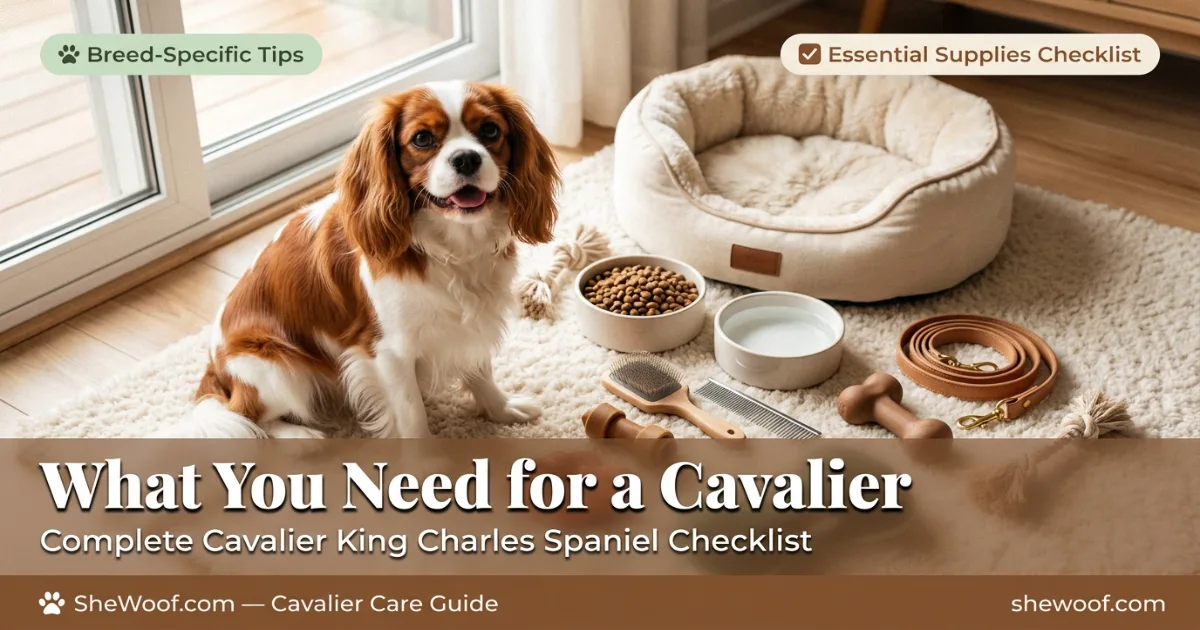
Before your Cavalier comes home, have these supplies ready:
- High-quality dog food: Choose a small-breed formula with named animal protein as the first ingredient.
- Food and water bowls: Stainless steel or ceramic — easy to clean and durable.
- Soft, supportive bed: Cavaliers love comfort. A plush bed with bolsters is ideal.
- Crate: For house-training and safe confinement when you cannot supervise.
- Collar and leash: A lightweight collar and a 4-6 foot leash for walks and training.
- Grooming tools: Slicker brush, metal comb, nail clippers, and ear cleaner.
- Chew toys and puzzle toys: Cavaliers are smart and need mental stimulation.
- Training treats: Small, low-calorie treats for reward-based training.
- Dental care supplies: Dog toothbrush and toothpaste for daily teeth cleaning.
- ID tags: With your contact information and the dog’s name.
Grooming Your Cavalier
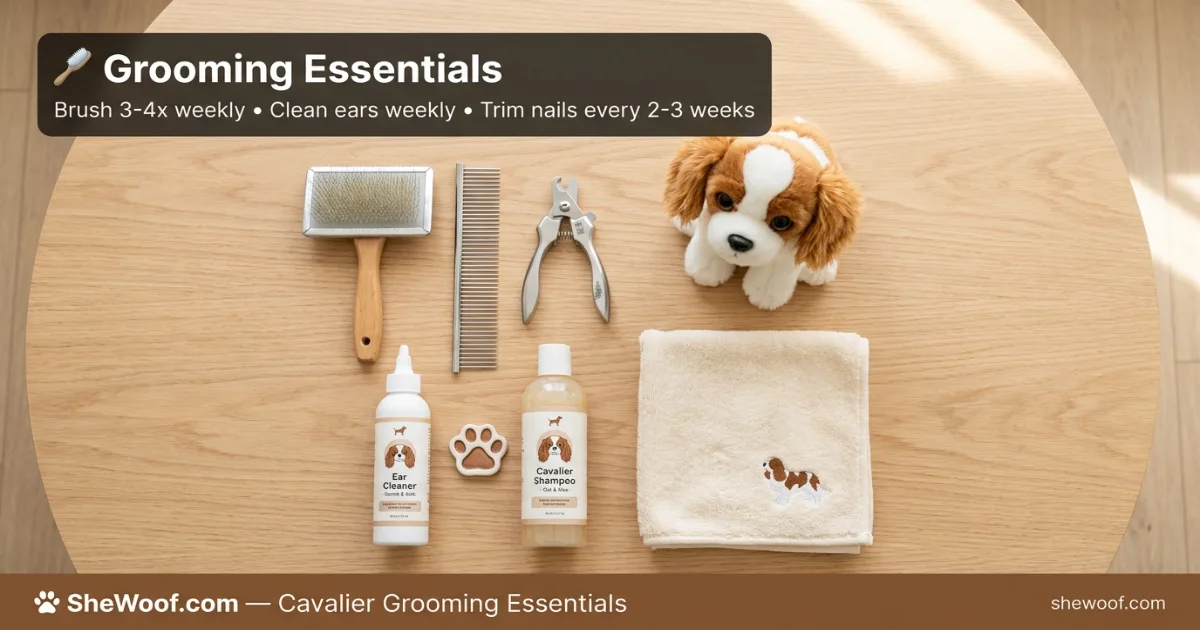
Cavaliers have a long, silky coat that requires regular maintenance. Here is what you need:
- Slicker brush: Use this to brush the coat 3-4 times a week to remove dead hair and prevent mats.
- Metal comb: Follow up with a comb to check for tangles and mats.
- Nail clippers: Trim nails every 2-3 weeks to prevent overgrowth.
- Ear cleaner: Clean ears weekly to prevent infections. Cavaliers are prone to ear infections.
- Dog shampoo: Gentle, dog-specific shampoo for bathing every 4-6 weeks.
Pay special attention to the ears and the feathers (the longer hair on the legs and tail). These areas are prone to mats. Regular brushing makes grooming easier and keeps your Cavalier comfortable.
What Most Owners Get Wrong About Cavaliers
The most common mistake is underestimating their grooming needs. Cavaliers have long, silky coats that matt easily. Owners who do not brush regularly find themselves dealing with painful tangles and expensive grooming bills. A few minutes of brushing a day prevents hours of frustration.
Another error is assuming they are fragile. Cavaliers are small but sturdy. They enjoy walks, play, and activity. They are not as delicate as they look. Regular exercise is important for their physical and mental health.
Some owners also ignore their health risks. Cavaliers are prone to heart disease, which can be detected early with annual vet visits. Waiting until symptoms appear can reduce treatment options. Regular check-ups and heartworm prevention are essential.
Nutrition for Your Cavalier
Cavaliers are small dogs with high energy levels. They need a high-quality diet that supports their active lifestyle and prevents weight gain. Choose a small-breed formula with:
- Named animal protein: Chicken, salmon, turkey, or lamb as the first ingredient.
- Whole grains or grain-free options: Brown rice, oatmeal, or sweet potatoes.
- Omega fatty acids: For skin and coat health.
- No artificial preservatives or fillers: Avoid corn, wheat, and soy.
Feed according to your dog’s age, weight, and activity level. Cavaliers gain weight easily, so monitor portions and treat intake. Treats should make up no more than 10% of daily calories.
| Life Stage | Food Type | Daily Portion (approx.) | Notes |
|---|---|---|---|
| Puppy (under 1 year) | Puppy formula | 1/2 to 1 cup (divided into 3-4 meals) | High protein for growth |
| Adult (1-7 years) | Small breed adult | 3/4 to 1 cup (divided into 2 meals) | Maintain healthy weight |
| Senior (7+ years) | Senior formula | 1/2 to 3/4 cup (divided into 2 meals) | Lower calories, joint support |

Training and Socializing Your Cavalier
Cavaliers are intelligent and eager to please, making them highly trainable. They respond well to positive reinforcement — treats, praise, and play. Here is what you need for training:
- Training treats: Small, low-calorie treats — about 3-5 calories each.
- Clicker: Useful for marking desired behaviors.
- Leash and collar: A lightweight collar and 4-6 foot leash for walks and training.
- Crate: Helps with house-training and provides a safe space.
- Patience and consistency: Training is a process. Short, frequent sessions work best.
Socialization is equally important. Cavaliers are friendly but can be shy if not properly socialized. Expose your Cavalier to new people, places, and experiences in a positive, gradual way.
Health Care for Your Cavalier
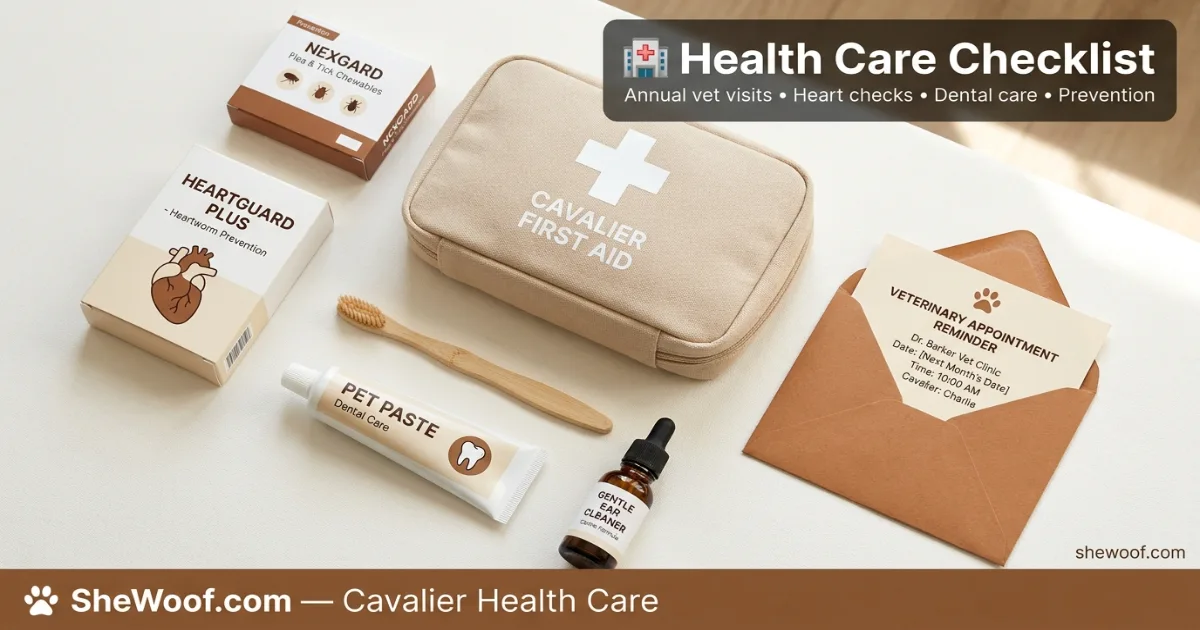
Cavaliers need regular veterinary care to stay healthy. Here is what you need:
- Vet visit within 48 hours of bringing your Cavalier home. For a health check and to establish a relationship.
- Vaccinations: Follow your vet’s recommended schedule for core vaccines.
- Heartworm prevention: Monthly prevention is essential — Cavaliers are susceptible to heartworm.
- Flea and tick prevention: Year-round prevention is recommended.
- Annual wellness exams: Include blood work and heart checks.
- Dental care: Brush teeth daily and schedule professional cleanings as recommended.
Step-by-Step: First Week with Your Cavalier
- Visit the vet within 48 hours. Get a complete health exam.
- Set up a safe, quiet area. Use a crate or puppy-proof room for sleeping and resting.
- Introduce food and water. Offer small meals 3-4 times a day for puppies.
- Start potty training immediately. Take your Cavalier out frequently — every 2-3 hours.
- Begin grooming. Start brushing and handling paws, ears, and mouth for positive associations.
- Start training. Teach basic cues like “sit,” “stay,” and “come” using positive reinforcement.
- Socialize slowly. Introduce your Cavalier to new people, sounds, and experiences carefully.
- Create a routine. Consistent feeding, walking, and sleeping times help your Cavalier settle in.
Initial setup costs for a Cavalier range from $200 to $500 for supplies (bed, crate, bowls, grooming tools, toys, leash, collar). Monthly costs for food, treats, and routine care range from $50 to $150. Annual veterinary costs — including exams, vaccinations, heartworm prevention, flea/tick prevention, and dental care — range from $300 to $800. Cavaliers are a long-term financial commitment — they live 10 to 15 years on average. Factor in potential health costs for heart disease and other conditions.
Frequently Asked Questions About What You Need for a Cavalier
You need high-quality puppy food, food and water bowls, a soft bed, a crate, collar and leash, grooming tools (slicker brush, comb, nail clippers), chew toys, training treats, and ID tags. Also schedule a vet visit within 48 hours of bringing your puppy home.
Brush your Cavalier’s coat 3-4 times a week, or daily if possible, to prevent mats. Clean ears weekly and trim nails every 2-3 weeks. Bathe every 4-6 weeks with a gentle dog shampoo. Regular grooming prevents painful tangles and infections.
Choose a high-quality small-breed dog food with named animal protein as the first ingredient. Avoid foods with corn, wheat, soy, and artificial preservatives. Look for omega fatty acids for coat health. Follow your vet’s recommendations based on your dog’s age and health.
Cavaliers are prone to heart disease, ear infections, and dental issues. They need annual vet exams with heart checks, regular ear cleaning, and daily tooth brushing. Heartworm prevention and flea/tick prevention are essential year-round.
Yes, Cavaliers are excellent for first-time owners. They are friendly, adaptable, and eager to please. However, they require regular grooming, health monitoring, and companionship. If you are prepared for these commitments, a Cavalier is a wonderful choice.
Cavaliers need about 30-45 minutes of exercise daily. This can include walks, playtime, and mental stimulation. They enjoy gentle activities and are not high-energy dogs. Avoid excessive exercise, especially in hot weather, due to their flat faces.
Cavaliers are affectionate, gentle, and sociable. They love attention and are happiest when they are with you. They are good with children, other pets, and strangers. They can be sensitive and do not respond well to harsh training methods.
- What you need for a Cavalier includes quality food, grooming tools, a soft bed, crate, leash, toys, and health care essentials.
- Regular grooming — brushing 3-4 times a week, weekly ear cleaning, and nail trimming — is essential.
- Annual vet visits with heart checks are critical for Cavaliers, who are prone to heart disease.
- Training and socialization are important for this intelligent, people-loving breed.
- Prepare for a long-term commitment — Cavaliers live 10 to 15 years and need companionship, care, and attention throughout their lives.