
When Can Puppy Have First Bath? Safe Timing, Steps, and Expert Tips
Quick Answer: Most puppies can have their first bath around 8 weeks of age — once they are fully weaned and settled into their new home for at least a few days. Before 8 weeks, a mother dog handles all grooming, and a puppy’s ability to regulate body temperature is still developing. If a bath is urgently needed before 8 weeks — for example, if the puppy gets into something messy — spot-clean with a warm, damp cloth and dry thoroughly. Always use a puppy-specific, tear-free shampoo, keep the water lukewarm, and make the experience as calm and brief as possible.
Your new puppy has been home for a few days. They’re adorable, curious, and — if you’re being honest — starting to smell a little like the corner of the whelping box they came from. You want to give them a bath, but you hesitate because you’ve heard conflicting advice. Some people say wait until after the first vaccinations. Others say 8 weeks is fine. A forum post from 2014 told you to wait until 12 weeks. You search “when can puppy have first bath” hoping for a clear, confident answer from someone who actually knows what they’re talking about.
Here is that answer. The timing of a puppy’s first bath matters — not because water is dangerous, but because young puppies have specific physical vulnerabilities that adult dogs do not. Get the timing, the temperature, the products, and the approach right, and bath time becomes a bonding experience that sets the stage for a lifetime of stress-free grooming. Get any of those wrong, and you risk a cold, frightened, slippery puppy who dreads the bathroom for years.
Why a Puppy’s First Bath Timing Actually Matters
Newborn puppies cannot regulate their own body temperature. For the first few weeks of life, they rely entirely on their mother, littermates, and the warmth of their environment to stay at a safe body temperature. A bath during this period — especially if the water is not perfectly warm or the drying is not thorough — can cause dangerous chilling. This is the primary reason reputable breeders do not bathe very young puppies unless medically necessary.
Around 3 to 4 weeks, puppies begin developing the ability to maintain their body temperature, but the system is still immature. By 8 weeks — the age when most puppies go to their new homes — thermoregulation is functional enough that a brief, warm bath is safe for a healthy puppy. Waiting until at least 8 weeks also ensures the puppy is fully weaned, eating solid food independently, and has had some time to adjust to life outside the whelping box before adding the stress of a bath.
There is another practical reason to wait. A puppy’s first week in a new home is already overwhelming. New people, new smells, new sounds, new routines. Adding a bath to that first 48 hours can turn an already stressful transition into a genuinely frightening experience. Let your puppy settle in for at least 3 to 5 days before introducing the first bath — unless there is a genuine hygiene emergency.

What You Need Before the First Bath: A Complete Checklist
Walking into bath time unprepared is the fastest way to create a negative experience for both you and your puppy. Gather everything before you even turn on the water. You will need: a puppy-specific tear-free shampoo — never adult dog shampoo, never human shampoo, never dish soap; a non-slip mat for the bottom of the tub or sink to prevent slipping; several absorbent towels warmed in the dryer if possible; a cup or handheld sprayer for rinsing; cotton balls to gently place in the puppy’s ears to prevent water entry; treats — high-value, soft, smelly treats that your puppy only gets during bath time; and a brush or comb appropriate for your puppy’s coat type.
Set up the bathing area before bringing your puppy in. Fill the tub or sink with just a few inches of lukewarm water. Test the temperature on your inner wrist — it should feel neutral, neither warm nor cool. A baby bath thermometer should read around 100°F or 38°C. Have towels laid out and ready. Close the bathroom door to prevent a wet, soapy escape. The space should be warm, quiet, and free from loud noises or sudden interruptions.

| Item | Why It Matters | Notes |
|---|---|---|
| Puppy-specific shampoo | pH balanced for puppy skin; tear-free | Never use human shampoo or dish soap |
| Non-slip mat | Prevents slipping and fear | A folded towel works in a pinch |
| Warm towels (2-3) | Quick, thorough drying prevents chilling | Warm in dryer for 5 minutes before bath |
| Lukewarm water | Prevents burning or chilling | Test on inner wrist; ~100°F / 38°C |
| High-value treats | Builds positive association with bathing | Use treats reserved only for bath time |
| Cotton balls for ears | Prevents water entering ear canals | Remove immediately after bath |
Step-by-Step: How to Give Your Puppy Their First Bath
Step 1: Brush before you wash. Remove any tangles, loose fur, or debris from your puppy’s coat before water is involved. Wet tangles tighten and become harder to remove. A quick pre-bath brush also gives you a chance to check for any skin issues, fleas, or ticks that need attention before the bath begins.
Step 2: Place cotton balls gently in the ears. Water in the ear canal can lead to infection. A small piece of cotton placed just at the entrance of each ear provides a simple barrier. Remove them immediately after the bath and check that the ears are dry.
Step 3: Wet the coat gradually. Start at the rear and work forward. Use a cup or a handheld sprayer on the gentlest setting. Avoid spraying water directly onto the face — use a damp cloth to clean the face separately. Talk to your puppy in a calm, reassuring voice throughout. The sound of running water can be startling, so keep the faucet noise to a minimum once the tub is filled.
Step 4: Apply shampoo sparingly. Puppy shampoo is concentrated — you need less than you think. Lather from the neck down, avoiding the eyes, ears, and mouth entirely. Massage gently rather than scrubbing vigorously. This is not about deep cleaning — it is about introducing the puppy to the sensation of being bathed.
Step 5: Rinse thoroughly. Shampoo residue left on the skin is a leading cause of post-bath itching and irritation. Rinse until the water runs completely clear and the coat feels clean rather than slippery. Incomplete rinsing is one of the most common first-bath mistakes.
Step 6: Dry completely. Wrap your puppy in a warm towel and blot — do not rub vigorously, which can tangle the coat. For long-haired breeds, a second towel may be needed. Keep the puppy in a warm, draft-free space until completely dry. A blow dryer on the lowest, coolest setting can be used if your puppy tolerates it — but many do not, and forcing it can create fear. Air drying in a warm room with towels is safer for a first bath.

What Most Owners Get Wrong About Puppy Baths
The number one mistake is bathing too frequently. Puppies have delicate skin with natural oils that protect against dryness and irritation. Stripping those oils with weekly baths can cause flaking, itching, and a dull coat. For most puppies, a bath every 3 to 4 weeks is more than sufficient — unless they roll in something truly foul. Between baths, spot-cleaning and regular brushing handle most everyday dirt.
Another common error: using the wrong water temperature. Water that feels pleasantly warm to a human hand may be too hot for a puppy’s thinner, more sensitive skin. Always err on the side of slightly cooler rather than slightly warmer. If you would not put a human baby in it, do not put your puppy in it.
A third mistake involves drying. Owners sometimes finish the bath, towel the puppy off quickly, and let them run around the house still damp. A damp puppy in an air-conditioned room or near a draft can become chilled rapidly. Complete drying — even if it takes an extra five minutes — is non-negotiable, especially for small breeds and short-coated puppies with less natural insulation.
How Breed and Coat Type Change the Bath Routine
A Chihuahua and a Golden Retriever puppy do not have the same bathing needs. Short-coated breeds like Chihuahuas, Pugs, and Boxers typically need less frequent bathing and dry more quickly. Their skin oils distribute easily along the short hair shaft. Long-coated and double-coated breeds like Golden Retrievers, Huskies, and Pomeranians need more thorough brushing before and after baths to prevent matting. Their dense undercoat can trap moisture against the skin, making complete drying especially critical.
Wrinkly breeds — Shar-Peis, English Bulldogs, French Bulldogs — need special attention to the skin folds. Water and shampoo can become trapped in the creases, leading to irritation and infection. After a bath, every skin fold must be dried individually with a soft, absorbent cloth. This is tedious, but skipping it invites dermatitis that is far more trouble than the extra few minutes of drying.
Hairless breeds like the Chinese Crested and Xoloitzcuintli are a unique case. Their exposed skin produces oils that need regular removal, and they may require more frequent bathing — sometimes weekly — with an extra-gentle, moisturizing shampoo. Their first bath timing is the same as other puppies, but their ongoing routine will look different. Consult your breeder or veterinarian for breed-specific guidance.
After the First Bath: What Comes Next
The first bath sets the template for every bath that follows. If the experience was calm, warm, and treat-filled, your puppy will approach the next bath with curiosity rather than fear. If the experience was rushed, cold, or frightening, you will spend the next several baths undoing that first impression. The extra time you invest in making the first bath gentle pays compound interest for the rest of your dog’s life.
In the days after the bath, monitor your puppy’s skin for any signs of irritation — redness, flaking, excessive scratching. These can indicate an allergic reaction to the shampoo, incomplete rinsing, or bathing too frequently. If irritation persists beyond 24 hours, contact your veterinarian for guidance. A different shampoo or a longer rinse routine may solve the problem.
Start introducing a brush or comb between baths. Daily or every-other-day brushing distributes natural oils, removes dead fur, and keeps your puppy accustomed to being handled. A puppy who is comfortable with brushing between baths will be dramatically easier to bathe when bath day arrives. Grooming is a skill — for both the dog and the owner. Build it gradually.

Frequently Asked Questions About Puppy First Baths
Wait at least 3 to 5 days after bringing your puppy home to allow them to settle into their new environment. The puppy should be at least 8 weeks old, fully weaned, and healthy. Bathing during the first 48 hours adds unnecessary stress to an already overwhelming transition. Spot-clean with a damp cloth if needed before the first full bath.
Bathing at home before vaccinations are complete is safe as long as you use warm water, dry the puppy thoroughly, and keep them in a warm environment afterward. The risk is not the water — it is taking a partially vaccinated puppy to a grooming salon, pet store bathing station, or anywhere other dogs frequent. Bathe at home until your veterinarian confirms the full vaccination series is complete.
Use a shampoo specifically labeled for puppies — tear-free, pH-balanced for canine skin, and free from harsh fragrances or dyes. Never use human shampoo, baby shampoo, or dish soap. If your puppy has sensitive skin or a known allergy, ask your veterinarian to recommend a medicated or hypoallergenic puppy shampoo.
For most puppies, a bath every 3 to 4 weeks is sufficient. Bathing too frequently strips natural skin oils and can cause dryness, flaking, and irritation. Spot-clean with a damp cloth between baths for minor dirt. Dogs with skin conditions, hairless breeds, or puppies who roll in something foul may need more frequent baths under veterinary guidance.
Lukewarm water — around 100°F or 38°C — is ideal. Test the water on your inner wrist. It should feel neutral, neither warm nor cool. Water that is too hot can burn sensitive puppy skin. Water that is too cool can cause chilling, especially in small or short-coated breeds.
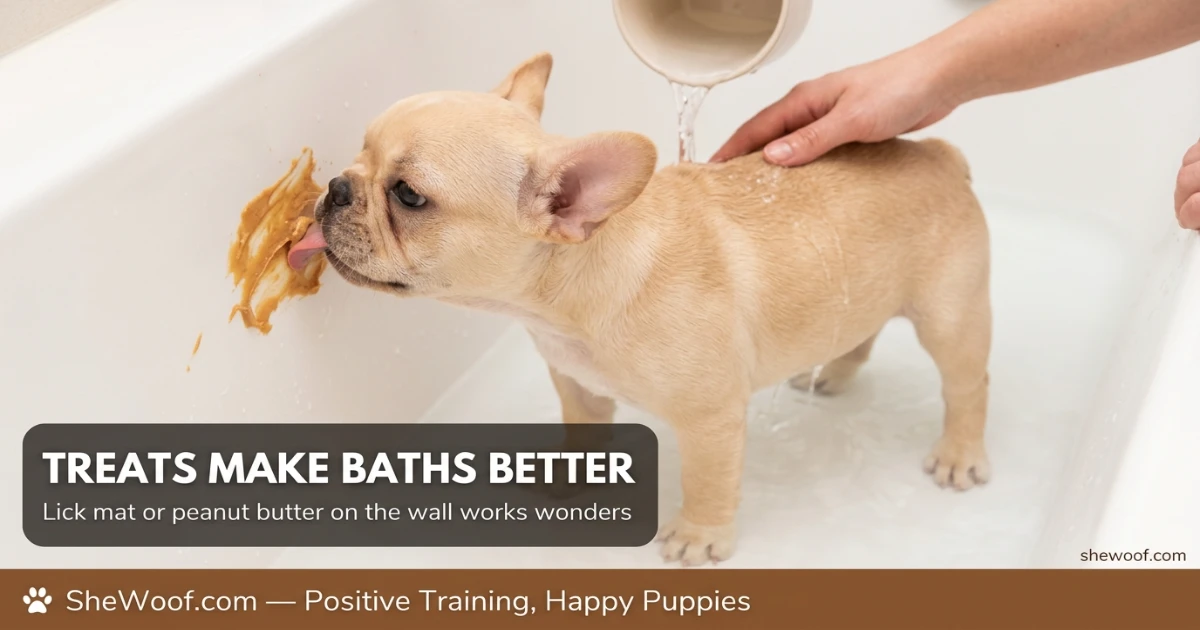
Start by rebuilding trust around water without a full bath. Let your puppy explore an empty tub with treats scattered inside. Use a lick mat with peanut butter stuck to the wall. Keep baths very short — 3 minutes is fine. If fear is severe, consult a certified dog trainer or veterinary behaviorist for a desensitization plan. Never force a terrified puppy through a bath.
It is safer to give the first bath at home. This allows you to control the environment, pace, and products used. A professional grooming salon is a high-stimulation environment that can be overwhelming for a young puppy. Wait until your puppy is comfortable with basic handling and has completed their full vaccination series before visiting a groomer.
- A puppy’s first bath is safe around 8 weeks of age — after they are fully weaned, settled into their new home for a few days, and healthy.
- Use only puppy-specific tear-free shampoo, lukewarm water around 100°F, and a non-slip surface. Gather all supplies before starting.
- Keep the first bath brief — 5 to 10 minutes — and focus on making the experience calm and positive with treats, a warm room, and a reassuring voice.
- Dry your puppy completely with warm towels. A damp puppy can become chilled quickly, especially small breeds and short-coated puppies.
- Spot-clean with a damp cloth for minor messes. Most puppies need a full bath only every 3 to 4 weeks unless they get into something particularly dirty.
- Never use human shampoo, baby shampoo, or dish soap on a puppy. The pH is wrong for canine skin and can cause irritation and infection.




One Comment