How Do I Know If My Dog Has an Obstruction? Recognizing the Warning Signs Before It’s Too Late
Quick Answer: The most common signs of an intestinal obstruction in dogs include repeated vomiting, loss of appetite, lethargy, abdominal pain or bloating, inability to pass stool, and straining to defecate with little or no output. If your dog shows several of these symptoms together — especially vomiting combined with a sudden stop in bowel movements — you need to see a veterinarian immediately. A complete blockage can become fatal within 48 to 72 hours without treatment.
Your dog was fine this morning. By evening, they’re vomiting, refusing food, and pacing uncomfortably. You search “how do i know if my dog has an obstruction” because something feels seriously wrong — but you’re not sure if you’re overreacting or under-reacting. That uncertainty is terrifying, and you’re not alone in feeling it.
Intestinal obstructions are one of the most common canine emergencies seen in veterinary hospitals. They happen when a foreign object or mass physically blocks the passage of food, fluid, and gas through the digestive tract. The blockage can be partial — allowing some material to pass — or complete, which is a surgical emergency. Dogs cannot tell us where it hurts or what they swallowed. The burden falls entirely on owners to recognize the signs and act quickly.
This guide walks you through exactly what to look for, how symptoms progress hour by hour, what the vet will do, what treatment costs look like, and what you should never do while waiting. Every section is built to help you make clear, informed decisions when time matters most.
What Is an Intestinal Obstruction in Dogs?
An intestinal obstruction — sometimes called a bowel blockage or GI obstruction — occurs when something physically prevents the normal movement of material through the stomach or intestines. Think of it like a clogged pipe. Food, water, and digestive gases build up behind the blockage because nothing can move forward. Pressure increases. Blood flow to the affected section of intestine can become compromised. Without treatment, the intestinal tissue begins to die.
Obstructions fall into two broad categories. A partial obstruction allows some liquid and gas to pass around the blockage. Dogs with partial obstructions may still produce small amounts of diarrhea or stool, which can falsely reassure owners that everything is working. A complete obstruction allows nothing through — not even gas — and this is the scenario that progresses most rapidly toward a life-threatening emergency.
The objects that cause obstructions vary enormously. Veterinary surgeons retrieve socks, underwear, children’s toys, corn cobs, peach pits, rocks, bones, string, carpet fibers, and chunks of rawhide from dog intestines every single day. Some objects are swallowed whole. Others are chewed into pieces that lodge in progressively narrower sections of the bowel. String and thread are uniquely dangerous because they can anchor at one point while the intestine continues trying to move, causing the bowel to bunch up like an accordion — a condition called plication that can perforate the intestinal wall.
The Progression: How Obstruction Symptoms Unfold Over Time
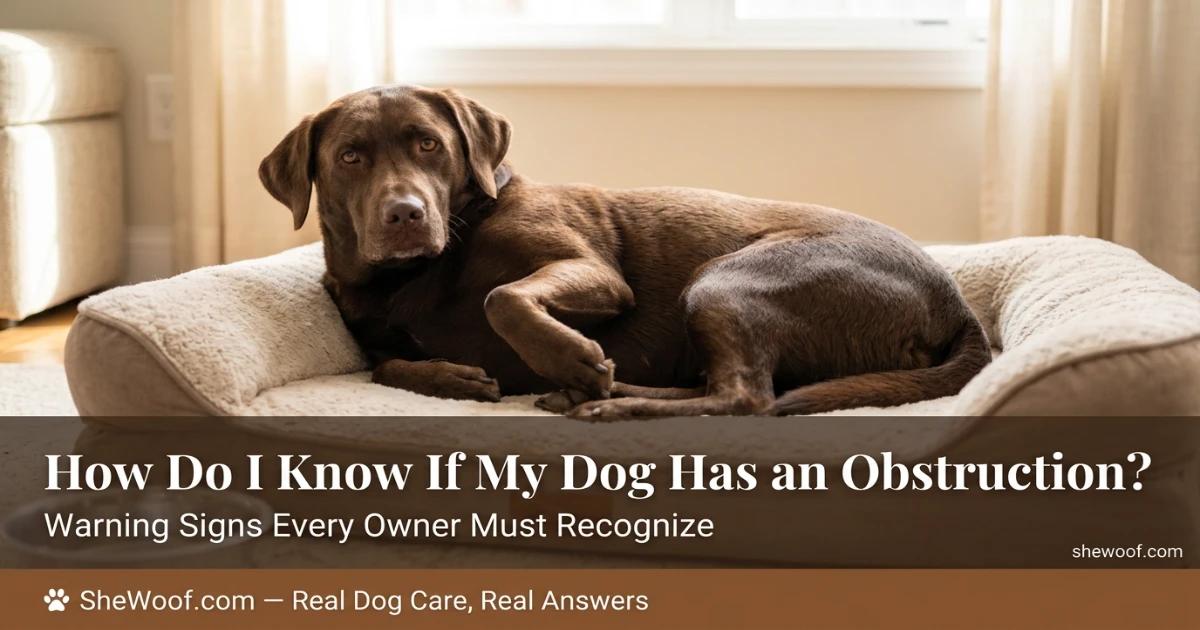
Obstruction symptoms don’t all appear at once. They follow a typical progression that can help you determine how urgent the situation is. Understanding this timeline can help you make better decisions — but never use it to delay care when multiple severe symptoms are already present.
Hours 1 to 6 after obstruction occurs: The dog may vomit once or twice, often shortly after eating or drinking. They might seem slightly restless or uncomfortable, pacing or changing positions frequently. Some dogs become unusually clingy; others withdraw. Appetite may decrease but is often still present at this stage.
Hours 6 to 24: Vomiting becomes more frequent. The dog may drink water and immediately vomit it back up — a telltale sign that nothing is passing through. Lethargy deepens. The abdomen may start to feel firm or bloated. Attempts to defecate produce nothing, or only small amounts of liquid.
Hours 24 to 48: The dog is now clearly ill. They are unlikely to eat or drink. Vomiting may contain bile or have a fecal odor — a sign of advanced obstruction. The abdomen is often visibly distended and painful to touch. Dehydration sets in. Without intervention, intestinal tissue damage becomes increasingly likely.
Beyond 48 hours: This is the critical window. Intestinal tissue deprived of blood flow begins to necrose. Toxins enter the bloodstream. Shock can develop. Survival rates drop significantly once tissue death has occurred. This is why veterinarians treat complete obstructions as time-sensitive surgical emergencies.
Complete vs. Partial Obstruction: Why the Difference Matters
Veterinarians distinguish between complete and partial obstructions because the urgency and treatment approach differ significantly. A dog with a partial obstruction may be managed with fluids, monitoring, and serial X-rays, hoping the object passes on its own. A dog with a complete obstruction almost always requires surgery.
| Symptom | Partial Obstruction | Complete Obstruction |
|---|---|---|
| Vomiting | Intermittent, may keep some water down | Frequent, cannot keep water down |
| Stool | Small amounts of diarrhea possible | No stool, or only mucus |
| Appetite | Reduced but may eat small amounts | Complete refusal of food and water |
| Energy level | Mild lethargy, still responsive | Severe lethargy, may not stand |
| Abdominal pain | Mild to moderate discomfort | Significant pain, tense belly |
| Urgency | Urgent — vet same day | Emergency — vet immediately |
The difficulty for owners is that partial obstructions can become complete obstructions without warning. An object that shifts position can suddenly seal off the intestine entirely. This is why any suspected obstruction warrants a veterinary visit — even if symptoms seem mild.
What Most Owners Get Wrong About Obstructions
The single most dangerous mistake owners make is waiting. A dog vomits twice and the owner assumes it’s an upset stomach. They wait 24 hours. Then 48. By the time they arrive at the vet, the intestine has been damaged beyond repair. This is not a reflection of bad ownership — it reflects how subtle early obstruction signs can be, and how powerfully our brains default to “it’ll pass” when we’re scared.
Another common error: assuming that because the dog passed a small amount of diarrhea, the blockage must have cleared. Partial obstructions can allow liquid stool to pass around the object. Seeing stool in the yard provides false reassurance that delays life-saving care.
A third misunderstanding involves inducing vomiting at home. Some owners attempt to make their dog vomit using hydrogen peroxide after suspecting an obstruction. If the object is sharp, large, or already lodged, vomiting can cause additional damage — including esophageal laceration or aspiration into the lungs. Never induce vomiting without explicit instruction from your veterinarian.
How Age, Breed, and Size Affect Obstruction Risk
Puppies and young dogs are dramatically overrepresented in obstruction cases. Their mouths explore everything. Their jaws are getting stronger. Their judgment hasn’t developed. A six-month-old Labrador will gleefully swallow a sock that a ten-year-old Shih Tzu would ignore entirely. The peak age for foreign body ingestion is between 6 months and 3 years.
Breed plays a role too. Retrievers, Labradors, Beagles, and other mouth-oriented breeds are statistically more likely to swallow non-food objects. Small breeds face higher risk from smaller objects that might pass harmlessly through a Great Dane but lodge in a Chihuahua’s narrower intestine. Deep-chested breeds like Great Danes and Standard Poodles face an additional risk of gastric dilatation-volvulus (GDV), which can mimic some obstruction signs and must be ruled out.
Senior dogs can develop obstructions from causes unrelated to foreign objects. Intestinal tumors, strictures from previous surgeries, and intussusception — where one section of intestine telescopes into another — become more common with age. The symptoms look similar, which is why imaging is essential regardless of your dog’s life stage.
What Happens at the Vet: Diagnosis and Treatment
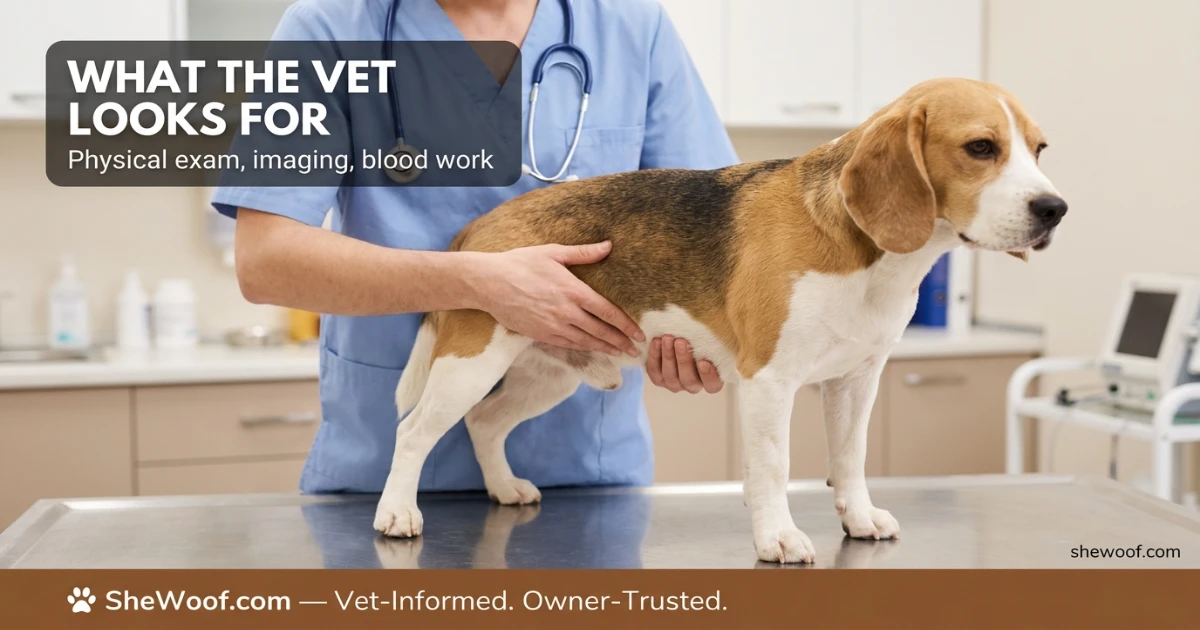
When you arrive with a suspected obstruction, the veterinarian will start with a physical examination — palpating the abdomen for masses, pain, or gas buildup. They’ll ask about your dog’s recent history: what they might have eaten, when symptoms started, and what the vomit looked like.
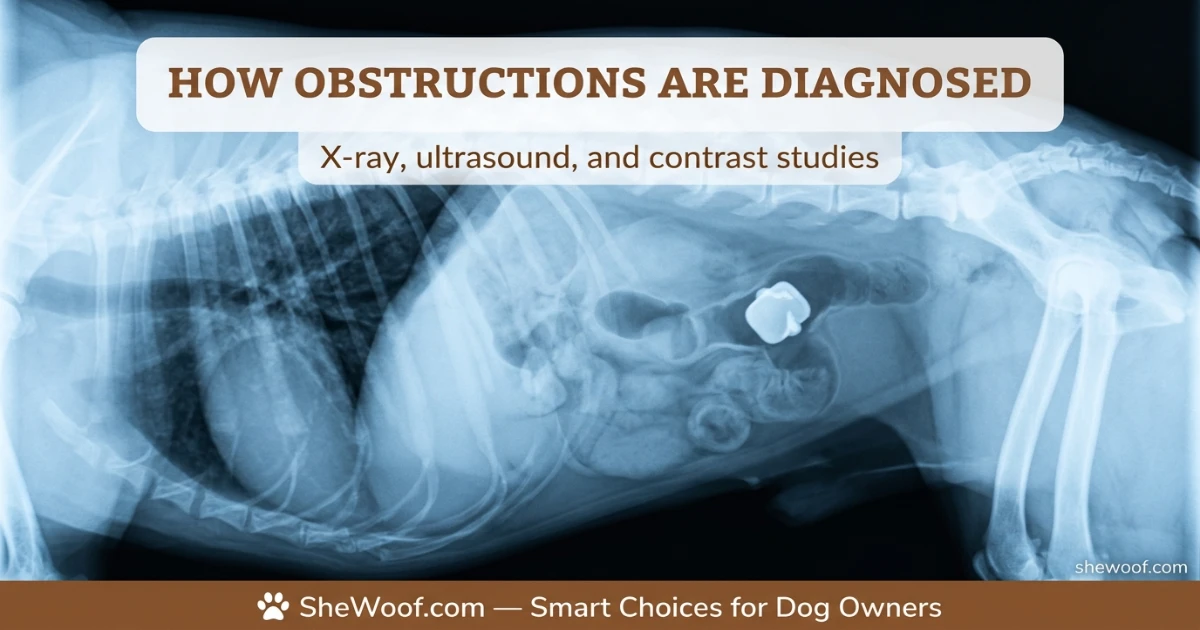
The next step is almost always imaging. X-rays can reveal dense objects like rocks, bones, and metal. They can also show gas patterns that suggest a blockage — trapped gas dilated before the obstruction and absent after it. If X-rays are inconclusive, an ultrasound or contrast study may follow. In a contrast study, the dog swallows a safe liquid that shows up on X-rays, allowing the vet to track whether it moves through the digestive tract or stops at a blockage point.
Blood work assesses dehydration, electrolyte imbalances, and whether infection or organ stress is developing. These results help the veterinary team determine whether the dog is stable enough for surgery or needs stabilization first with IV fluids and medication.
If the obstruction is complete or the object is unlikely to pass safely, surgery becomes the primary treatment. The veterinarian makes an incision into the abdomen, locates the obstruction, and removes the object — sometimes by making a small cut into the intestine itself (enterotomy). If a section of intestine has died, that portion must be removed and the healthy ends reconnected (resection and anastomosis). Recovery typically involves several days of hospitalization followed by weeks of restricted activity and a bland diet.
Intestinal obstruction surgery in the United States typically ranges from $2,000 to $5,000 depending on your location, the complexity of the case, and whether intestinal resection is required. Emergency clinics and specialty hospitals charge at the higher end. The cost includes examination, imaging, anesthesia, surgery, hospitalization, medications, and follow-up care. Pet insurance with surgical coverage can reimburse 70-90% of these costs. Without insurance, many veterinary hospitals offer third-party financing options like CareCredit or Scratchpay.
Recovery: What to Expect After Obstruction Treatment
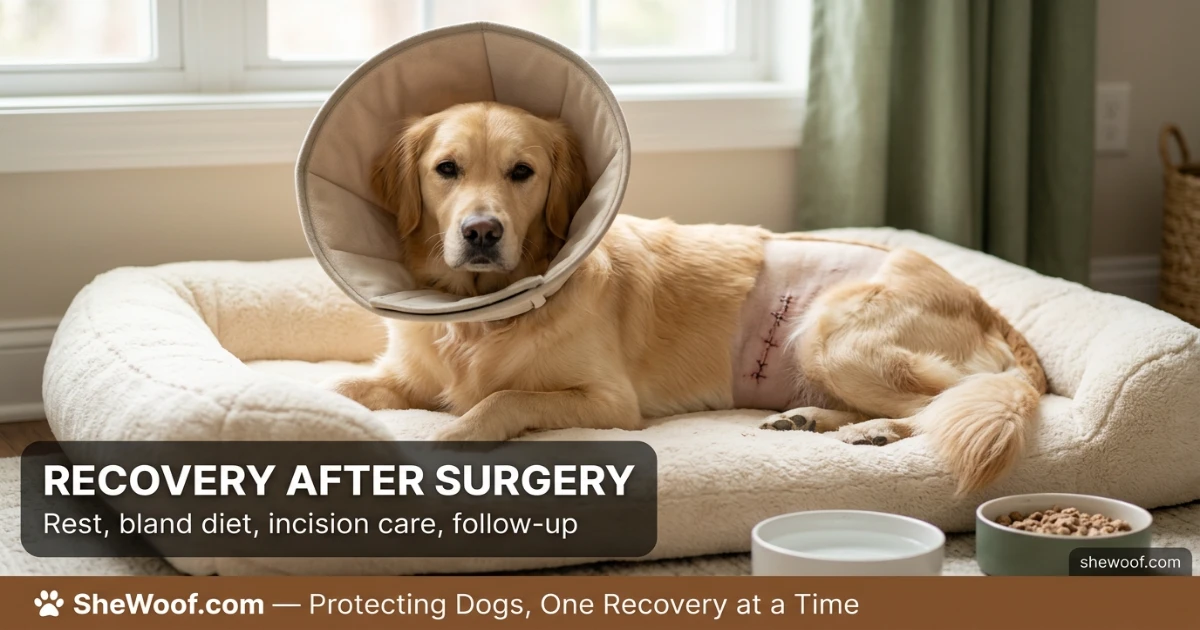
Dogs who undergo obstruction surgery typically remain hospitalized for 1 to 3 days. The veterinary team monitors vital signs, manages pain, and ensures the dog can keep down small amounts of water and food before discharge. An e-collar or recovery suit prevents the dog from licking or chewing the incision.
At home, recovery means strict rest for 10 to 14 days. No running. No jumping. No rough play. Short leash walks for bathroom breaks only. The incision must stay clean and dry. Owners should check it twice daily for redness, swelling, discharge, or gaping. Stitches or staples are removed at a follow-up appointment, usually 10 to 14 days after surgery.
Diet during recovery is critical. The veterinarian will prescribe a bland, easily digestible food — often a prescription gastrointestinal formula — fed in small, frequent meals. This gives the healing intestine time to recover without being overloaded. Most dogs return to their regular diet gradually over one to two weeks.
The long-term prognosis after successful obstruction surgery is generally excellent, provided the intestine was healthy at the time of surgery and no complications developed. Dogs who have had one foreign body surgery are at higher risk for future obstructions — partly because whatever behavioral tendency led to the first incident may still be present. Preventing recurrence through environmental management and training becomes an ongoing priority.
Frequently Asked Questions About Dog Obstructions
An upset stomach typically resolves within 12 to 24 hours with supportive care. An obstruction tends to worsen steadily — vomiting becomes more frequent, the dog stops passing stool entirely, and lethargy deepens. If your dog cannot keep water down, has a tense or painful belly, or hasn’t passed stool in 24 hours, these point toward obstruction rather than simple gastroenteritis. See a vet for any vomiting that persists beyond 24 hours.
Some small, smooth objects may pass through the digestive tract naturally, especially in larger dogs. However, there is no reliable way to know at home whether an object will pass or become lodged. Objects with sharp edges, those that are too large to exit the stomach, and anything made of material that swells when wet should never be left to pass on their own. Veterinary imaging and guidance are essential.
With a complete obstruction, survival time without treatment is typically 3 to 7 days — but the window for a good outcome is much shorter. Intestinal tissue damage can begin within 24 to 48 hours. Once the intestine perforates or necroses, the dog faces peritonitis, sepsis, and a dramatically lower chance of survival. This is not a condition to monitor at home.
In select cases — typically partial obstructions with small, smooth objects — veterinarians may attempt medical management. This involves IV fluids, medications to promote intestinal movement, and serial X-rays to monitor whether the object advances. If the object does not progress or the dog deteriorates, surgery becomes necessary. Medical management is a decision made by the veterinarian, not something to attempt at home.
Call your veterinarian or the nearest emergency animal hospital immediately. Tell them what your dog ate, approximately when, your dog’s size and breed, and any symptoms you’ve observed. Do not induce vomiting unless specifically instructed by a veterinary professional. They will guide you on whether to come in, monitor at home, or take other steps based on the specific object and your dog’s condition.
Bone obstructions are particularly dangerous because cooked bones can splinter and raw bones are dense enough to cause complete blockages. Symptoms are the same as other obstructions — vomiting, loss of appetite, constipation, and abdominal pain — but bone fragments can also cause perforation. If your dog consumed cooked bones or is showing any symptoms after eating any type of bone, seek veterinary care immediately.
Most comprehensive pet insurance policies cover foreign body obstruction surgery, provided the condition occurred after any applicable waiting period. Coverage typically ranges from 70% to 90% of eligible costs after your deductible. Always confirm your specific policy details before assuming coverage. If you don’t have insurance, ask your veterinary hospital about third-party financing options.
- Repeated vomiting combined with inability to pass stool is the hallmark sign of intestinal obstruction — do not wait to see if it resolves on its own.
- Partial obstructions can look deceptively mild; a dog passing small amounts of diarrhea may still have a serious blockage that needs veterinary care.
- The window for successful treatment narrows significantly after 48 hours — complete obstructions are surgical emergencies, not wait-and-see situations.
- Puppies, retrievers, Labradors, Beagles, and mouth-oriented breeds face the highest risk, but any dog of any age can suffer an obstruction.
- Surgery costs $2,000 to $5,000 on average; pet insurance, if held before the incident, can cover the majority of this expense.
- Never induce vomiting at home without veterinary instruction — you can cause esophageal injury, aspiration, or worsen an existing blockage.
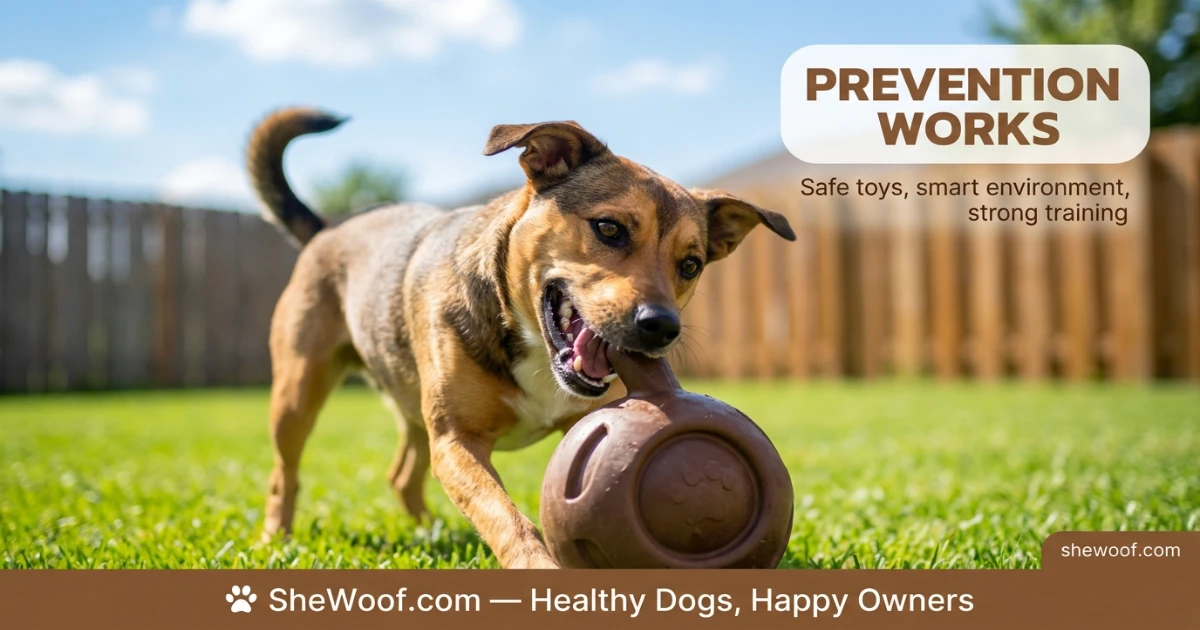
- Prevention through environmental management, appropriate chew toy selection, and solid “leave it” training is the most effective long-term strategy.