Why Does My Dog Keep Sniffing Everything? What Your Dog Is Really Telling You
Estimated reading time: 12 minutes
Quick Answer: Dogs keep sniffing everything because scent is their primary way of understanding the world. A dog’s nose has up to 300 million scent receptors — roughly 40 times more than a human’s — so every walk, room, and object is packed with information. Constant sniffing is usually normal, enriching, and mentally tiring in a good way. If sniffing becomes frantic, obsessive, or accompanied by other symptoms, a vet check is worth considering.
You stop on a walk, and your dog buries their nose in a patch of grass like it contains the secrets of the universe. Ten seconds pass. Thirty. A minute. If you have ever asked “why does my dog keep sniffing everything,” you are not alone. Every dog owner has stood at the end of a leash wondering what could possibly be so interesting about that particular square foot of sidewalk. The answer is more fascinating than most people expect.
Dogs do not just smell better than humans. They experience the world through smell in a way that is difficult for us to imagine. Where we see a walk, they smell a newspaper — full of headlines, editorials, and messages left by every dog who has passed through before them. Understanding this changes how you walk your dog, how you train them, and how you interpret behavior that might otherwise seem strange or excessive.
How Powerful Is a Dog’s Sense of Smell?
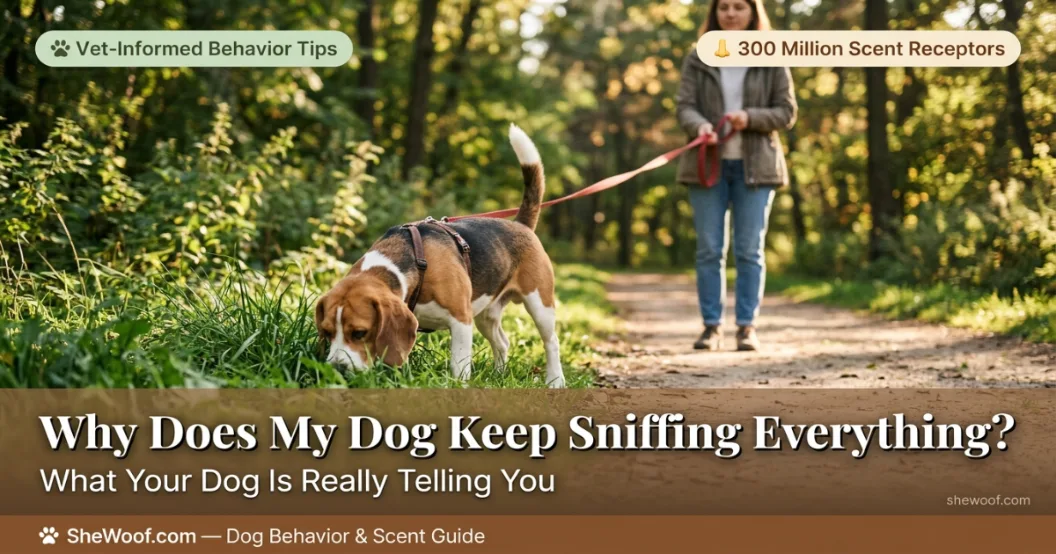
The numbers are almost unbelievable. Dogs have between 125 million and 300 million scent receptors in their noses, compared to about 5 million in humans . Their olfactory bulb — the part of the brain that processes smell — is roughly 40 times larger than ours relative to body size . While humans rely primarily on sight, dogs experience the world as a rich landscape of scent.
But the difference is not just about quantity. Dogs can detect specific odors at concentrations as low as a few parts per trillion. That is the equivalent of smelling one drop of a substance in an Olympic-sized swimming pool. It is why trained dogs can detect cancers, COVID-19, drugs, explosives, and even the scent of a person who walked through an area hours earlier.
Dogs also have a second olfactory system — the vomeronasal organ, or Jacobson’s organ — located in the roof of the mouth. This structure detects pheromones and provides information about other animals’ emotional states, reproductive status, and identity. When your dog pauses to lick or sniff a spot with unusual intensity, they may be using this organ to gather information you cannot see.
What Is Your Dog Actually Sniffing For?
Every sniff has a purpose, even if the purpose is not obvious to us. Here is what dogs are typically looking for when they investigate the world with their nose.
- Other dogs: Who has been here? What is their sex, health, and emotional state?
- Food: Potential snacks, dropped crumbs, or the scent trail of something edible.
- People: Familiar or unfamiliar humans, their moods, and what they have touched.
- Danger: Predators, chemicals, or other threats we cannot perceive.
- Territory markers: Urine and glandular secretions left by other animals.
- Changes in environment: New objects, new people, or new animals in familiar spaces.
- Reproductive signals: Pheromones left by females in heat or males marking territory.
This is why your dog sniffs the same tree every day. The tree is not the point. The tree is a message board, and the messages change constantly. Yesterday a healthy adult male marked it. Today a female in heat passed by. Tomorrow a sick animal may have left something behind. Your dog is keeping up with the local news.
Why Do Some Dogs Sniff More Than Others?
Sniffing behavior varies dramatically by breed, age, and individual personality. Some dogs are naturally nose-driven; others are more visually or socially focused.
Breed is one of the biggest factors. Scent hounds like Beagles, Basset Hounds, Bloodhounds, and Coonhounds were developed over centuries to follow scent trails. They have been selectively bred for enhanced olfactory ability and for the drive to use it. For these breeds, sniffing is not just a habit — it is a deeply ingrained instinct. A Beagle on a scent trail may ignore everything else, including you, if you do not train focus early.
Age matters too. Puppies sniff everything because everything is new. They are building their internal map of the world. Adult dogs sniff to monitor changes in a familiar environment. Senior dogs may sniff more if their vision or hearing declines and they rely more on smell to compensate.
Individual temperament also plays a role. Some dogs are just more curious than others. A confident, exploratory dog will investigate every new smell they encounter. A more cautious dog may be slower to investigate but more thorough when they do.
| Factor | Effect on Sniffing | What It Means |
|---|---|---|
| Scent hound breed | Very high | Bred for scent work; needs outlets and training |
| Puppy (under 1 year) | High | Exploring and mapping the world |
| Senior dog | Variable | May increase if vision/hearing decline |
| Anxious dog | Can be high or low | May sniff as displacement or scan for threats |
| Working scent dog | Extremely high | Needs structured scent work to stay fulfilled |
| Brachycephalic breeds | May be lower | Flat-faced dogs have reduced airflow and scent capacity |
Is Constant Sniffing Normal or a Problem?
Most of the time, sniffing is completely normal. It is how dogs gather information, relieve stress, and engage with their environment. In fact, allowing your dog to sniff on walks has been shown to reduce stress and improve their overall well-being. Sniffing is a form of enrichment, similar to how reading or exploring is enriching for humans.
That said, some patterns of sniffing can signal an underlying issue. The difference is usually in the quality of the behavior.
- Sniffing that is frantic, obsessive, or impossible to interrupt
- Sniffing combined with pacing, panting, or other signs of anxiety
- Sniffing the air constantly with a tense body posture
- Sudden increase in sniffing in an adult dog with no environmental change
- Sniffing accompanied by head shaking, scratching at the nose, or discharge
- Loss of interest in food, play, or social interaction alongside increased sniffing
In these cases, the sniffing may be a symptom of anxiety, pain, nasal irritation, or a neurological issue. It is worth a veterinary visit to rule out medical causes before assuming it is purely behavioral.
How Does Sniffing Affect Your Dog’s Mental Health?
Sniffing is not just information-gathering. It is also a form of emotional regulation. When dogs are stressed, they often sniff more as a way to soothe themselves. The repetitive, focused action of investigating scents can lower heart rate and reduce anxiety, similar to how a person might pace or tidy up when nervous.
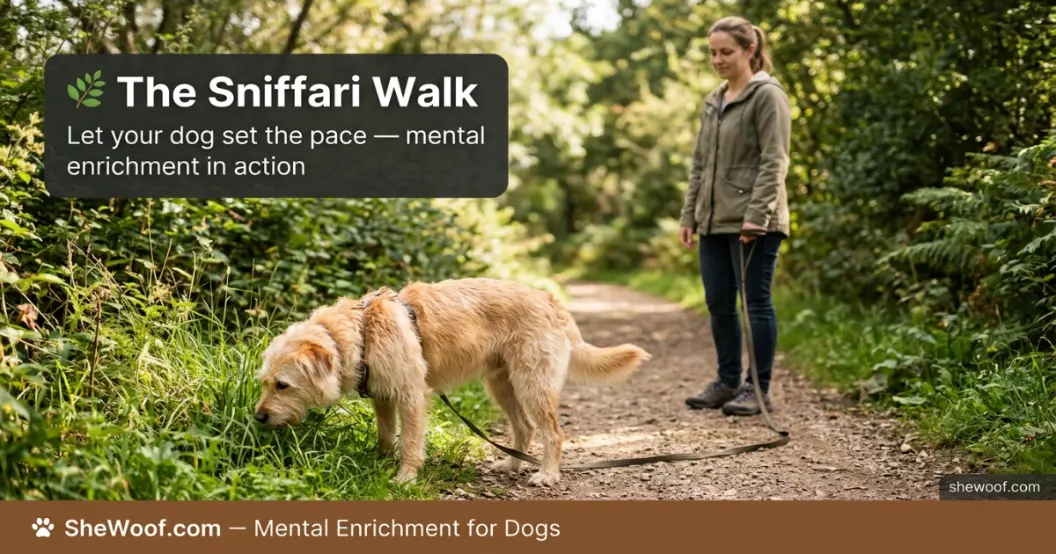
Allowing sniffing on walks has measurable benefits. Studies on dog welfare suggest that dogs walked with the freedom to sniff show lower stress markers and greater signs of satisfaction than dogs walked at a brisk pace with no sniffing allowed . A “sniffari” — a walk where the dog leads and sets the pace — is not lazy or unproductive. It is meeting a fundamental need.
For high-energy dogs who cannot settle, adding sniffing to their daily routine can be more effective than adding more physical exercise. A dog who has had 20 minutes of quality sniffing is often calmer than one who has had an hour of running but no mental engagement.
What Are Common Mistakes Owners Make About Sniffing?
The most common mistake is treating sniffing as disobedience. Owners often pull their dogs away from interesting smells, hurry them along, or correct them for stopping. This can create frustration, leash reactivity, and a dog who never learns to walk calmly because they are constantly being dragged away from what matters to them.
Another mistake is assuming sniffing means the dog is “being stubborn.” In reality, sniffing is often a sign that the dog is engaged, curious, and doing exactly what their brain is built to do. The problem is usually a mismatch of expectations, not a behavioral flaw.
A third mistake is ignoring obsessive sniffing. If your dog is sniffing frantically, unable to focus on anything else, or showing signs of distress, that is not normal exploratory behavior. It is worth investigating.
How Can You Incorporate More Sniffing Into Your Dog’s Day?
Sniffing is easy to add to any routine. It does not require special equipment, training, or extra time — it just requires letting your dog use their nose.
Ways to Add Sniffing Enrichment
- Do a sniffari walk. Pick a route with lots of grass, trees, and interesting smells. Let your dog set the pace. Bring a longer leash so they can explore comfortably. Do not worry about distance — this walk is about quality, not quantity.
- Scatter treats in the grass. Toss a handful of kibble or treats into a patch of grass and let your dog hunt for them. This taps into their natural foraging instinct.
- Use puzzle feeders and snuffle mats. These encourage dogs to use their noses to find food, providing mental stimulation and slowing down fast eaters.
- Try nose work games. Hide treats around the house and let your dog find them. Start easy and increase difficulty as they improve.
- Let them sniff on regular walks. Even 5 to 10 minutes of sniff time during a walk can make a big difference in how satisfied your dog feels.
- Rotate toys and environments. New smells are the most interesting smells. Bring home a new cardboard box or rotate outdoor locations to keep scent variety high.
- Use a longer leash (5–10 feet) for sniff-heavy walks so your dog can explore without pulling.
- Set expectations: one walk can be a training walk, another can be a sniff walk.
- Teach a “let’s go” cue for when you need to move on, and reward it well.
- Let your dog choose the direction when safe — it gives them a sense of agency.
- Watch for signs of over-arousal and take breaks if sniffing becomes frantic.
- Do not yank the leash to interrupt sniffing — use a cheerful cue and reward instead.
When Should You See a Vet About Excessive Sniffing?
Most sniffing is normal. But some patterns warrant a veterinary check.
If you notice your dog sniffing the air constantly with no apparent target, or if sniffing is accompanied by head pressing, circling, or disorientation, seek veterinary care promptly. These can be signs of serious conditions that need urgent attention.
What Realistic Expectations Look Like
Your dog will never stop sniffing. It is not a behavior to eliminate — it is a need to accommodate. The goal is not to suppress sniffing but to understand it and channel it in ways that work for both of you.
What is realistic is a dog who sniffs on walks, gets excited about new scents, and comes home satisfied. What is not realistic is expecting a dog to ignore their most powerful sense while walking through a world full of information. Once you accept that, walks become easier, your dog becomes calmer, and you stop fighting a behavior that is fundamental to who they are.
- Dogs sniff constantly because scent is their primary way of understanding the world, with up to 300 million scent receptors.
- Sniffing is normal, enriching, and mentally tiring in a beneficial way — a sniff walk can be more satisfying than a brisk walk.
- Scent hounds like Beagles and Bloodhounds sniff more due to centuries of selective breeding for scent work.
- Frantic, obsessive, or sudden-onset sniffing may indicate anxiety, pain, or a medical issue and warrants a vet visit.
- Adding sniffing enrichment — sniffaris, scatter feeding, nose work games — improves your dog’s mental health and reduces boredom.
Frequently Asked Questions
Why does my dog keep sniffing everything?
Dogs sniff everything because scent is their primary sense. With up to 300 million scent receptors, they gather information about other animals, people, food, and their environment through smell. Sniffing is normal, enriching, and mentally tiring in a positive way.
Is it normal for my dog to sniff the air constantly?
Occasional air-sniffing is normal, especially outdoors or when something interesting is nearby. Constant air-sniffing with a tense body or unable to settle could indicate anxiety, pain, or a nasal issue. If the behavior is new or seems distressing, contact your vet.
How long should I let my dog sniff on walks?
There is no fixed rule, but 15 to 30 minutes of sniffing per day is a good target for most dogs. Some owners alternate between training walks and sniff walks. Even 5 to 10 minutes of sniff time during a regular walk provides meaningful enrichment.
Do certain breeds sniff more than others?
Yes. Scent hounds like Beagles, Basset Hounds, Bloodhounds, and Coonhounds were bred specifically for scent work and have both enhanced olfactory ability and a strong drive to use it. They typically sniff more intensely and for longer than other breeds.
Can sniffing make my dog tired?
Yes. Sniffing is cognitively demanding. A 20-minute sniff walk can tire a dog more than a 45-minute brisk walk because processing scent information uses significant mental energy. This is one reason sniffing is so valuable for high-energy dogs.
Why does my dog sniff the same spot every day?
That spot is a message board. Other dogs, animals, and people leave scent markers there, and the information changes constantly. Your dog is checking for updates on who has been there, their health, emotional state, and reproductive status.
Should I stop my dog from sniffing everything?
No. Sniffing is a fundamental need, not a bad habit. Suppressing it can cause frustration and behavioral problems. Instead, structure your walks so your dog gets dedicated sniff time and teach a cue for when you need to move on.
When should I see a vet about my dog’s sniffing?
See a vet if sniffing is frantic, obsessive, or suddenly increased, or if it is accompanied by nasal discharge, sneezing, bleeding, difficulty breathing, or signs of distress. Sudden behavior changes in an adult or senior dog always warrant a veterinary check.