
Flying With My Dog for the First Time: What Every Owner Needs to Know
Flying with your dog for the first time requires researching airline pet policies, booking early, getting a health certificate from your vet (usually within 10 days of departure), and choosing the right carrier. Small dogs under roughly 20 lbs can often fly in-cabin; larger dogs travel as checked cargo or with a pet-shipping service. Most dogs handle it well when properly prepared — calm routines, familiar bedding, and a pre-flight vet check go a long way.
If you’ve found yourself searching “flying with my dog for the first time,” you’re probably equal parts excited and overwhelmed — and that makes complete sense. Air travel with a dog involves more moving parts than most people expect: airline rules that vary wildly, paperwork that has a hard expiration date, size restrictions that may determine whether your dog flies with you or below the cabin, and a dog who has no idea what a TSA checkpoint is.
The good news? Thousands of dogs fly every week. With the right preparation — done in the right order — your first flight together can go smoothly. This guide covers everything from booking to boarding gate, written for real owners navigating this for the first time.

Start Here: What Flying With a Dog Actually Involves
Most first-time flying dog owners don’t realize that air travel with a pet is essentially two separate processes happening at once: the logistical process (airline rules, carrier requirements, fees, health documentation) and the wellbeing process (preparing your dog physically and emotionally for an experience that is completely outside their normal world).
Getting the logistics wrong can mean your dog is turned away at the gate. Getting the wellbeing piece wrong can mean your dog spends three hours in significant distress. Both matter equally. The owners who have the smoothest first flights are the ones who start planning at least four to six weeks in advance — not four to six days.
In-Cabin vs. Cargo: Which Option Applies to Your Dog
This is often the first real decision point — and for many owners, the dog’s size makes it for them. Most airlines allow small dogs to ride in the cabin inside an approved carrier that fits under the seat in front of you. The combined weight of the dog and carrier typically needs to stay under 20 pounds, though this varies by airline. Your dog must remain in the carrier for the entire flight.
Larger dogs are typically booked as checked baggage or as cargo, traveling in a pressurized, temperature-controlled section of the aircraft hold. This is a different experience, and it requires more planning — a rigid airline-approved crate, specific labeling, and in many cases, restrictions based on weather at origin and destination.
A third option exists for larger dogs: specialty pet travel services that ship dogs as “manifest cargo” with more oversight and care than standard baggage handling. If your dog must fly cargo and you have any anxiety about it, researching these services is worth your time.
| Travel Option | Dog Size | Dog Location | Key Requirements |
|---|---|---|---|
| In-Cabin | Under ~20 lbs (dog + carrier) | Under the seat with you | Airline-approved soft carrier, cabin booking, health cert |
| Checked Baggage | Medium to large | Pressurized cargo hold | IATA-approved rigid crate, temperature restrictions, health cert |
| Manifest Cargo | Any size | Cargo hold, dedicated handling | Specialist service, typically more expensive, higher oversight |
| Service/ESA Dog | Any size (if qualified) | Cabin, seat area | Documentation requirements vary by airline; rules tightened in 2021 |
The Vet Visit: Your Most Important Pre-Flight Step
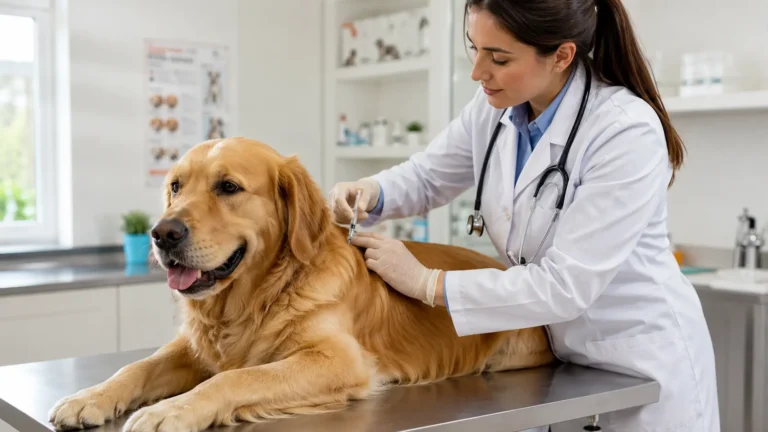
Before you book anything else, call your veterinarian. This isn’t just about paperwork — though the health certificate is non-negotiable — it’s about making sure your individual dog is actually a good candidate for this trip.
A health certificate (sometimes called a Certificate of Veterinary Inspection or CVI) confirms that your dog is healthy, up to date on vaccinations, and fit for travel. Most airlines and states require one dated within 10 days of travel, though some international routes have much stricter documentation requirements that can involve official government endorsement, additional testing, or extended waiting periods.
At this vet visit, bring your travel details — destination, date, airline, and whether your dog is flying in-cabin or cargo. Your vet can flag any concerns specific to your dog’s age, breed, size, and current health. This is also the moment to discuss anxiety: some dogs genuinely find flying distressing, and your vet may recommend behavioral strategies, calming supplements, or in certain cases, medication.

Choosing and Conditioning Your Dog’s Carrier
If your dog is flying in-cabin, the carrier is the single most important piece of equipment you’ll buy. Airlines are specific: the carrier must fit under the seat in front of you (dimensions vary by airline and even by aircraft type), must have adequate ventilation, and must be escape-proof. Soft-sided carriers are almost universally accepted for in-cabin travel. Hard-sided carriers are generally required for cargo.
Here’s the part most first-time owners skip entirely: introducing the carrier well before the flight. Dogs who have never been inside a carrier don’t need to encounter one for the first time at an airport. Start four to six weeks out by placing the carrier in a familiar room with the door open. Put a worn t-shirt or familiar blanket inside. Feed your dog near it, then inside it. Gradually build up to closing the door for short periods, and then practice in the car.
By the time your travel day arrives, the carrier should feel like a safe, familiar space — not a foreign object being forced onto a stressed dog.
Step-by-Step: How to Prepare for Your First Flight With a Dog
- Choose your airline and read their pet policy in full. Policies differ between carriers on weight limits, breed restrictions, accepted carrier dimensions, fees, and routes. Call to confirm if anything is unclear — don’t rely on third-party summaries alone.
- Book your dog’s spot when you book your flight. Airlines cap the number of in-cabin pets per flight. Call immediately after booking your ticket to add your dog, or book simultaneously. Spots run out.
- Schedule a vet appointment 2–3 weeks before departure. Allow time to receive the health certificate, review any vaccination updates, and discuss anxiety or breed-specific concerns.
- Purchase an airline-approved carrier and begin conditioning your dog to it. Start the introduction process four to six weeks out, using positive reinforcement — treats, praise, and patience.
- Check destination requirements. Domestic travel within the US has different rules than international travel. If crossing borders, research import requirements for your destination country — some have quarantine requirements, microchip mandates, or specific vaccination documentation.
- On travel day: exercise your dog before the airport. A well-exercised dog is a calmer dog. A long walk or play session before heading to the airport can make a meaningful difference in how settled your dog feels during the flight.
- Skip the meal before the flight. Feed your dog a light meal three to four hours before departure rather than right before travel. A full stomach and motion don’t pair well — this is especially true for anxious dogs who may experience nausea.
- At the airport: stay calm yourself. Dogs are exceptionally good at reading owner stress. Move through security smoothly — you’ll need to remove your dog from the carrier when going through the scanner — and keep interactions low-key and reassuring.
What Owners Usually Get Wrong on the First Flight
The most common mistake is underestimating the paperwork timeline. Health certificates have expiration dates. International travel may require documents that take weeks to process. Owners who start this process a week before the flight often find themselves unable to travel as planned.
The second most common error is sedation — specifically, asking a vet for sedatives without understanding the risks. Sedating a dog for air travel is not generally recommended by veterinary organizations because sedation can suppress respiratory function, which is particularly dangerous in the pressurized, lower-oxygen environment of an aircraft cabin. If your dog has significant travel anxiety, discuss it with your vet early — there are safer options including anti-nausea medications, behavioral interventions, and anxiety-specific medications that don’t carry the same risks as heavy sedation.
Third: choosing the wrong carrier size. Too small and it’s inhumane; too large and it won’t fit under the seat. Measure carefully before purchasing, and verify the dimensions against your specific airline’s requirements for the aircraft type you’ll be flying.
Puppy vs. Adult Dog: Does Age Change the Advice?
Young puppies can fly, but there are age minimums — usually 8 weeks at the absolute youngest, and many airlines and states require 12 weeks or older. Very young puppies are more vulnerable to stress, temperature fluctuations, and unfamiliar environments. If you’re collecting a puppy from a breeder who lives far away, ask your vet whether flying is the right option at that age, or whether ground transport might be less stressful.
Adult dogs who have never flown before can actually be easier to prepare than puppies because they have fully developed nervous systems and can handle carrier conditioning more methodically. Senior dogs need a thorough vet evaluation before travel — existing health conditions, joint pain, or cardiac issues can be aggravated by the stress of air travel. The vet will advise you on whether the trip is appropriate.

Keeping Your Dog Calm During the Flight
Once you’re in the air, your job shifts from logistics to comfort. For in-cabin dogs, keep the carrier under the seat and resist the urge to take your dog out — most airlines prohibit this and it can genuinely startle other passengers. A calm, steady presence from you is more reassuring than anything else you could do.
Some dogs sleep through flights entirely, especially if the carrier holds familiar bedding and something with your scent. Others remain alert. A few will vocalize briefly before settling. Covering the carrier mesh with a light breathable cloth can help reduce visual stimulation and encourage rest — make sure ventilation is never blocked.
Keep water available if the flight is over three hours. Collapsible silicone bowls work well. Don’t expect your dog to drink enthusiastically on the flight — many won’t — but having it available matters.
What to Expect at the Airport
TSA security is often the most stressful part for first-time flying dog owners. You’ll need to remove your dog from the carrier completely and carry them through the metal detector while the empty carrier goes through the X-ray machine. Practice this at home — hold your dog calmly with their legs supported, walk forward calmly, and don’t rush.
If your dog is flying cargo, you’ll check them in at the oversized baggage area. Confirm with the airline exactly where and when you need to arrive — cargo check-in often has an earlier cutoff than standard check-in. Attach a clear ID tag to the crate with your name, phone number, destination, and the dog’s name. Include a small bag of food taped to the top of the crate with feeding instructions in case of delays.

Pre-Flight Packing Checklist
- Airline-approved carrier with ID tag attached
- Health certificate dated within 10 days of travel (verify exact requirement with your airline)
- Vaccination records (rabies certificate at minimum)
- Microchip registration confirmation (recommended; required for some international routes)
- Collar with current ID tag and your travel phone number
- Leash (for airport walking before security)
- Familiar blanket or worn t-shirt placed inside the carrier
- Small travel water bowl + bottled water
- Dog’s regular treats
- Poop bags and a few pet wipes for accidents
- Photo of your dog on your phone in case of emergency separation
- Contact info for a vet at your destination (worth looking up in advance)
When to Reconsider Flying and Explore Alternatives
Flying isn’t always the right choice, and it’s worth saying honestly. If your dog is a large brachycephalic breed, has significant anxiety, is recovering from surgery or illness, or is very elderly, your vet may advise against it. In those cases, ground transport options — professional pet transport services, driving, or even train travel — may be far more appropriate.
Some dogs genuinely do not handle air travel well, and forcing the experience repeatedly doesn’t necessarily make it easier. If your dog showed extreme distress on a first flight, talk to your vet and a certified animal behaviorist before planning a second one. There are often better solutions than repeating a traumatic experience.
The Cost of Flying With a Dog in 2026
Airline pet fees have increased over recent years. For in-cabin travel, most US carriers charge $95–$200 each way per pet. This is on top of your own ticket price. International flights often carry higher fees. Cargo travel costs more and varies based on the dog’s size and the crate weight — budget $200–$500+ each way for larger dogs, depending on the airline and route.
Health certificate fees vary by veterinary practice, but typically run $50–$150. If you need international health documentation with government endorsement (USDA accreditation and apostille for some countries), factor in additional fees and several weeks of processing time.
An airline-approved carrier costs $40–$150 for soft-sided in-cabin options. IATA-compliant hard crates for cargo travel range from $60–$250 depending on size. These are one-time costs but not negligible for a first-time setup.
Final Summary: Flying With Your Dog for the First Time
The key to a smooth first flight is simple: start early, get the vet involved first, and prepare your dog for the carrier before you ever get to the airport. Most dogs manage air travel well when owners do the groundwork properly.
- Book your dog’s spot with the airline immediately after booking your own ticket
- Schedule the vet visit 2–3 weeks before departure for the health certificate and a fitness-to-fly check
- Choose an airline-approved carrier and introduce it at home weeks in advance using positive reinforcement
- Exercise your dog before the airport and feed lightly a few hours before departure
- Understand that brachycephalic and senior dogs need extra veterinary guidance before any air travel
- Stay calm at the airport — your dog is reading you the entire time
Flying with your dog for the first time takes planning. But once you’ve done it once, you’ll know exactly what to expect — and so will your dog.





One Comment