Can Dog Food Make Your Dog Smell? Causes, Fixes & Diet Tips
Quick Answer: Yes, dog food can make your dog smell. Low-quality foods with fillers, artificial ingredients, and poor-quality proteins can cause body odor, bad breath, and even smelly gas. Your dog’s skin, coat, and digestive system reflect what they eat. Switching to a high-quality, digestible food with named animal proteins and limited fillers often reduces odor within a few weeks. However, persistent odor can also indicate dental disease, skin infections, or other health issues — so rule out medical causes first.
You love your dog. But sometimes, your dog smells. Not the normal “doggy” smell — something stronger. Something that makes you wonder: can dog food make your dog smell? The answer is yes. What your dog eats directly affects their skin, coat, breath, and even their gas. A poor diet can turn a pleasant pet into a smelly one. The good news is that fixing the problem is often as simple as changing the food.
Dogs process food differently than humans. Their digestive system is shorter, and they absorb nutrients quickly. When they eat low-quality food — loaded with fillers, artificial preservatives, and unnamed meat sources — their body struggles to break it down. The result? Odor. This guide explains exactly how food affects your dog’s smell, what to look for, and how to choose a diet that keeps your dog fresh and healthy.
How Does Dog Food Affect Your Dog’s Smell?
The connection between food and odor starts in the digestive system. When your dog eats low-quality food, the body cannot fully break down certain ingredients. Undigested food ferments in the gut, producing gas and byproducts that are released through breath, skin, and gas. The result is a dog that smells from the inside out.
The skin is the largest organ, and it reflects what is happening inside the body. A diet lacking essential fatty acids — like omega-3 and omega-6 — leads to dry, flaky, or oily skin. That skin produces more oil, which bacteria break down into odorous compounds. A healthy diet supports a healthy skin barrier, reducing odor naturally.
Similarly, the coat is a window into your dog’s nutrition. A dull, brittle coat that sheds excessively often points to poor diet quality. A shiny, soft coat indicates good nutrition. When a dog’s coat smells bad even after a bath, the problem may be coming from within.

Why This Matters for Dog Owners
Dog odor is more than a nuisance. It can be a sign that your dog is not getting the nutrition they need. Chronic odor may mean your dog is struggling to digest their food, which can lead to other issues like diarrhea, vomiting, or malnutrition. Addressing the root cause — the food — improves not just smell but overall health.
There is also the social factor. A smelly dog is less pleasant to cuddle with, and visitors may notice the odor. This can make you feel self-conscious about your dog. Fixing the problem at the source — the diet — creates a better living environment for everyone.
Cost is another consideration. Owners who buy cheap dog food often spend more on grooming products, deodorizers, and vet visits for skin or digestive issues. Investing in quality food upfront saves money in the long run and keeps your dog healthier.
What Most Owners Get Wrong About Dog Odor
The most common mistake is trying to mask the smell instead of fixing the cause. Owners buy scented shampoos, sprays, and powders. These provide temporary relief at best. The odor returns because the root cause — the diet — has not changed. Masking a problem does not solve it.
Another error is assuming that all dog food is the same. There is a vast difference between cheap, filler-heavy foods and high-quality, protein-rich options. Many owners look at the price tag and assume higher price means better quality. That is not always true. You need to read the ingredient list and understand what you are feeding.
Some owners also confuse food-related odor with normal dog scent. Dogs naturally have a mild, earthy smell. That is normal. A strong, foul, or unusual odor is not. If your dog smells significantly different from their usual scent, there is likely a dietary or medical cause.
How to Choose Dog Food That Reduces Odor
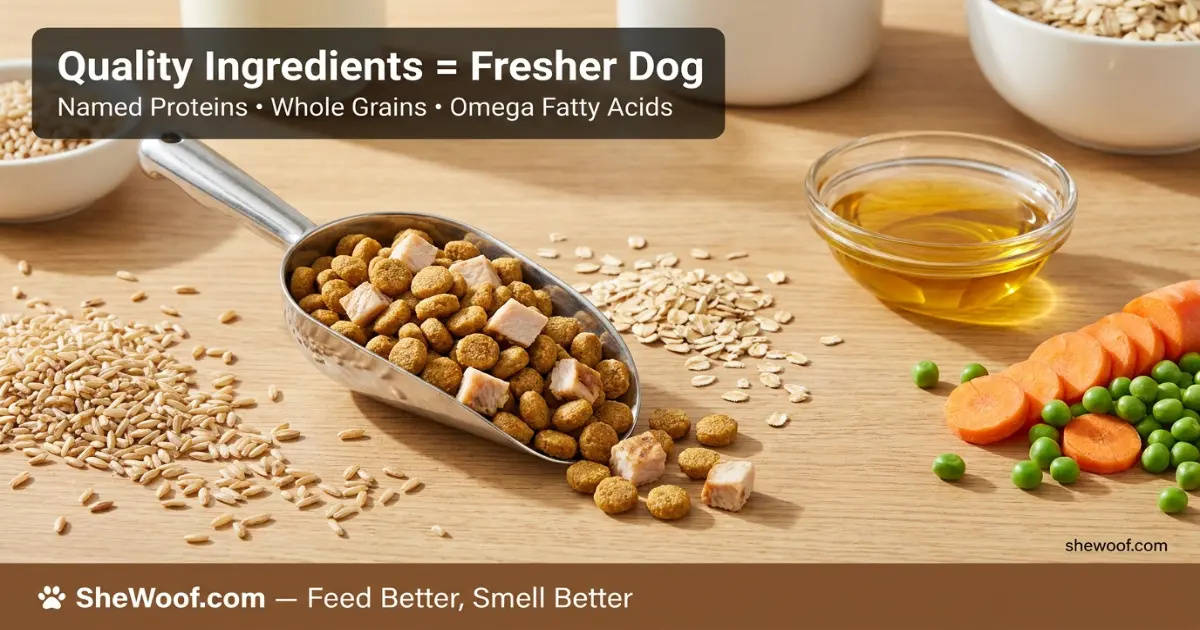
Choosing the right food is the most effective way to reduce dog odor. Look for these qualities in a dog food:
- Named animal protein: Chicken, salmon, lamb, or turkey as the first ingredient. Avoid “meat meal” or “poultry meal” — these are vague and often low-quality.
- Whole grains or grain-free options: Brown rice, oatmeal, or barley are good sources of digestible fiber. Some dogs do better on grain-free diets, but consult your vet before switching.
- Omega fatty acids: Fish oil, flaxseed, or chia seeds support skin and coat health, reducing oiliness and odor.
- Probiotics and prebiotics: These support healthy digestion and reduce gas and stool odor.
- Limited fillers: Avoid corn, wheat, soy, and artificial preservatives like BHA, BHT, and ethoxyquin.
Transition to a new food slowly over 7 to 10 days. Start with 25% new food and 75% old food, then gradually increase the new food ratio. This prevents digestive upset and gives your dog’s system time to adjust.
| Ingredient Type | Good for Odor? | Why | Examples |
|---|---|---|---|
| Named Protein | ✅ Yes | Easy to digest, supports muscle and skin health | Chicken, salmon, turkey, lamb |
| Whole Grains | ✅ Yes | Provides digestible fiber, reduces gas | Brown rice, oatmeal, barley |
| Omega Fatty Acids | ✅ Yes | Supports healthy skin and coat, reduces oiliness | Fish oil, flaxseed, chia seeds |
| Probiotics | ✅ Yes | Supports digestion, reduces stool odor and gas | Fermented foods, added probiotics |
| Fillers (corn, wheat, soy) | ❌ No | Hard to digest, ferments in gut, causes gas and odor | Corn meal, wheat flour, soybean meal |
| Artificial Preservatives | ❌ No | Can irritate skin and digestive system | BHA, BHT, ethoxyquin |
Puppies, Adults, and Seniors — Does Age Matter?
Puppies have sensitive digestive systems and high energy needs. A quality puppy food supports growth and reduces the risk of digestive upset. Puppies are also more likely to have gas from food changes, so transition slowly. Smell issues in puppies are often temporary and related to food transitions.
Adult dogs have stable digestive systems and can handle a wider range of foods. If your adult dog has chronic odor, the food is likely the culprit. Look for a food formulated for their size and activity level. Active dogs need more protein and fat; less active dogs need fewer calories to avoid weight gain, which can also affect odor.
Senior dogs have slower metabolisms and may have dental issues or digestive changes. Soft foods or wet foods may be easier to eat and digest. Senior dogs also need more omega fatty acids to support aging skin and joints. Odor in seniors can be a combination of diet, age-related health issues, and dental disease.
When to Contact a Veterinarian
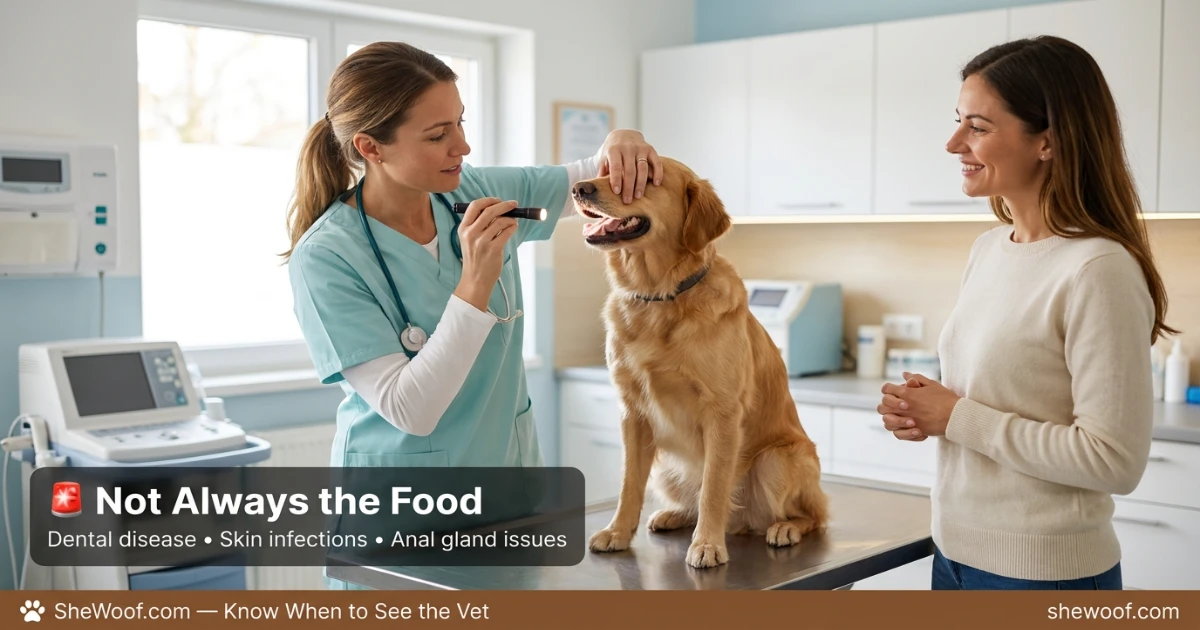
If your dog smells bad despite eating a high-quality diet, see your veterinarian. Persistent odor can indicate:
- Dental disease: Bad breath, red gums, and tooth decay
- Skin infections: Bacterial or fungal infections that cause odor
- Ear infections: Smelly, waxy, or inflamed ears
- Anal gland issues: Impacted or infected anal glands produce a foul, fishy odor
- Digestive disorders: Conditions like inflammatory bowel disease or food allergies
- Kidney or liver disease: Can cause a distinctive, ammonia-like smell on the breath
Do not assume it is always the food. Medical issues need professional treatment. A veterinarian can diagnose the cause and recommend the right treatment.
Dog Food and Smell — What to Do Next
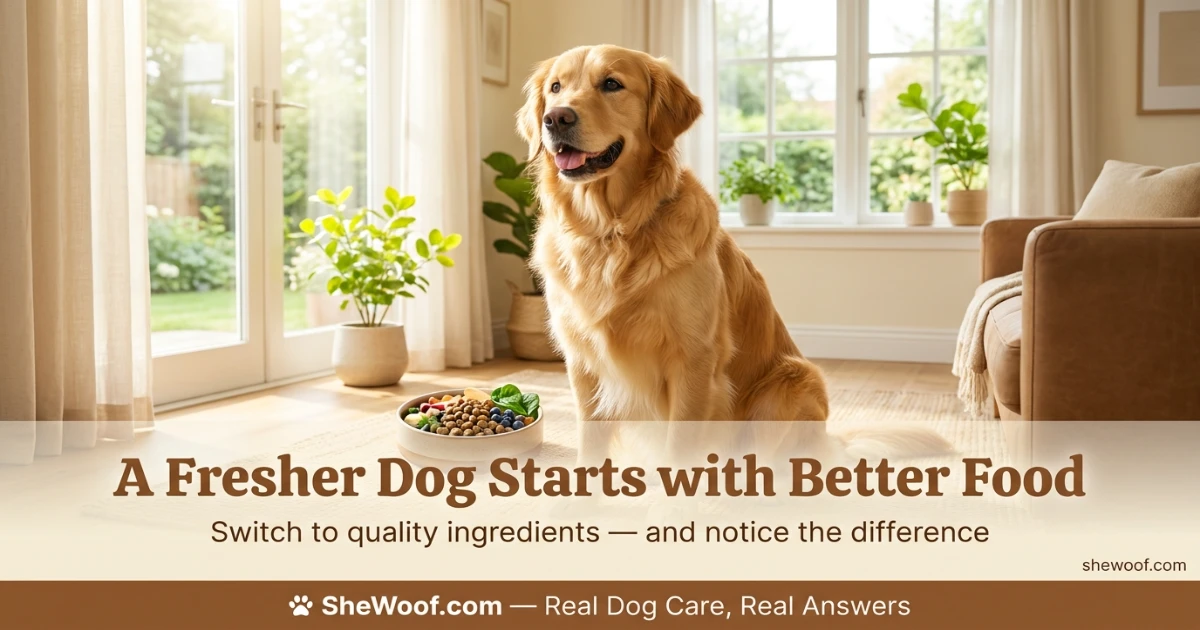
If you suspect your dog’s diet is causing odor, take these steps:
- Check the ingredient list. Look for named proteins, whole grains, and omega fatty acids. Avoid fillers, artificial preservatives, and unnamed meats.
- Transition to a higher-quality food. Switch gradually over 7–10 days to avoid digestive upset.
- Add a probiotic supplement. Supports digestion and reduces gas and stool odor.
- Add omega fatty acids. Fish oil or flaxseed supports healthy skin and coat.
- Rule out medical causes. If odor persists, see your veterinarian.
- Monitor and adjust. It can take 2–4 weeks to see improvement in odor.
High-quality dog food ranges from $1.50 to $4.00 per pound depending on the brand and ingredients. A 30-pound bag costs roughly $45 to $90 and lasts a medium-sized dog about 1–2 months. Cheap, low-quality food costs $0.50 to $1.00 per pound but often leads to higher vet bills, grooming costs, and deodorizing products. Investing in better food saves money in the long run and keeps your dog healthier and less smelly.
Frequently Asked Questions About Dog Food and Odor
Yes, dog food can make your dog smell bad. Low-quality foods with fillers, artificial ingredients, and unnamed proteins can cause body odor, bad breath, and smelly gas. Switching to a high-quality, digestible diet often reduces odor within 2–4 weeks.
Ingredients like corn, wheat, soy, artificial preservatives (BHA, BHT), and unnamed meat meals can be hard to digest. Undigested food ferments in the gut, producing gas and odorous byproducts released through breath, skin, and gas.
Most owners notice a reduction in odor within 2 to 4 weeks after switching to a high-quality food. The full benefits — including skin and coat health — may take up to 8 weeks. Be patient and give your dog’s system time to adjust.
Yes, probiotics support healthy digestion and can reduce gas, stool odor, and overall body odor. Many high-quality dog foods include probiotics, or you can add a supplement to your dog’s diet. Always choose a probiotic formulated for dogs.
A fishy odor often points to anal gland issues. Impacted or infected anal glands release a foul, fishy smell. It can also be caused by a fish-based diet or fish oil supplements. If the smell is persistent or accompanied by scooting, see your veterinarian.
Grain-free food may help some dogs with allergies or sensitivities. However, grain-free is not automatically better for odor. Focus on named proteins, digestible ingredients, and proper nutrition. Consult your veterinarian before switching to grain-free.
Yes, poor nutrition can cause dry, oily, or flaky skin, which bacteria break down into odorous compounds. A diet with omega fatty acids and quality proteins supports healthy skin and reduces skin odor.
- Dog food can definitely make your dog smell. Low-quality ingredients lead to body odor, bad breath, and smelly gas.
- Choose food with named proteins, whole grains, omega fatty acids, and probiotics. Avoid fillers and artificial preservatives.
- Transition to a new food gradually over 7–10 days and allow 2–4 weeks to see improvement in odor.
- If odor persists despite a good diet, see your veterinarian — it could be dental disease, skin infection, or another medical issue.
- A high-quality diet costs more upfront but saves money on grooming products, deodorizers, and vet visits in the long run.