Can Dogs Have Apple Cinnamon Oatmeal? Safety, Benefits, and What to Avoid
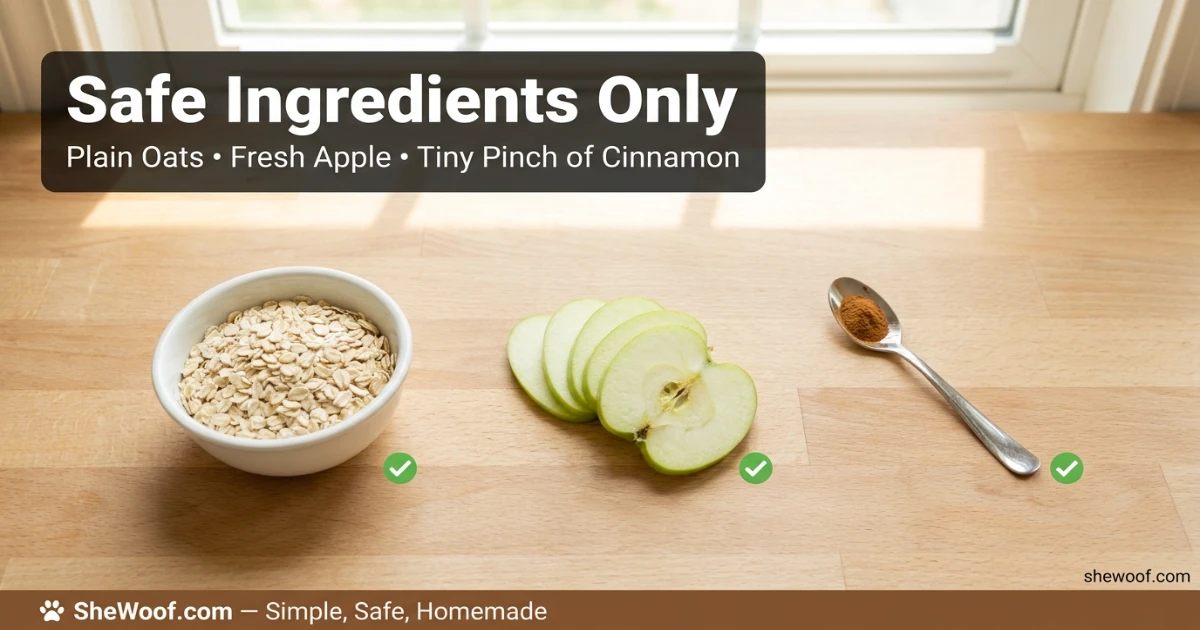
Quick Answer: Yes, dogs can have apple cinnamon oatmeal — but only if it is made with plain, unsweetened oats, fresh apple (no seeds or core), and a tiny pinch of cinnamon. Avoid instant oatmeal packets, which contain added sugar, artificial sweeteners like xylitol, and excessive cinnamon. Serve plain, cooked oatmeal in small portions as an occasional treat, not a meal replacement. Always introduce slowly to watch for digestive upset.
You are eating a warm bowl of apple cinnamon oatmeal on a cool morning. Your dog looks up at you with those hopeful eyes. You wonder: can dogs have apple cinnamon oatmeal? It seems like a healthy, comforting food. Oats are good for humans. Apples are nutritious. Cinnamon smells amazing. But dogs are not small humans. Their digestive systems process foods differently, and some ingredients that are safe for us can be harmful to them.
The good news is that plain oatmeal, fresh apples, and a small amount of cinnamon are generally safe for dogs. The bad news is that most apple cinnamon oatmeal — especially the instant or pre-packaged kind — contains ingredients that are not safe. This guide breaks down exactly what is safe, what is not, and how to serve this breakfast treat to your dog without risking their health.
What Is Apple Cinnamon Oatmeal — and Is It Safe for Dogs?
Apple cinnamon oatmeal is a breakfast dish made from cooked oats, chopped or sliced apples, and ground cinnamon. It is often sweetened with sugar, honey, or maple syrup in human recipes. The base ingredients — oats, apples, and cinnamon — are all individually safe for dogs in the right forms and amounts. The problem is the extras.
Plain cooked oatmeal is a good source of soluble fiber, which can help with digestion and regulate blood sugar. Apples provide vitamin C, vitamin A, and dietary fiber. Cinnamon has antioxidant properties and may help with inflammation. But these benefits only apply when the ingredients are plain, unprocessed, and served in moderation.
The instant oatmeal packets you find in grocery stores are a different story. They are loaded with sugar, artificial flavors, and sometimes artificial sweeteners like xylitol — which is highly toxic to dogs. Even “natural” instant oatmeal packets often contain more sugar than your dog should have in a week. Homemade apple cinnamon oatmeal is the only safe option if you want to share this food with your dog.

Why This Matters for Dog Owners
Many dog owners assume that if a food is healthy for humans, it is healthy for dogs. That is not always true. Even safe ingredients can become dangerous when prepared with additives, sweeteners, or excessive portions. Understanding what is safe and what is not protects your dog from preventable health issues.
Oatmeal is often recommended for dogs with digestive issues because it is bland and easy to digest. Apples are a healthy snack. Cinnamon has health benefits. But the combination — especially with added sugar — can cause weight gain, blood sugar spikes, and digestive upset. For dogs with diabetes, pancreatitis, or food sensitivities, even a small amount of sweetened oatmeal can be problematic.
There is also the issue of cinnamon toxicity. Cinnamon is not toxic to dogs in small amounts, but large amounts can cause liver damage, low blood sugar, and vomiting. A sprinkle of cinnamon is fine. A tablespoon is not. The “apple cinnamon” flavor in many products comes from cinnamon extract or artificial flavoring, which can be more concentrated and potentially harmful.
What Most Owners Get Wrong About Apple Cinnamon Oatmeal
The most common mistake is using instant oatmeal packets. These contain sugar, artificial flavors, and sometimes xylitol. Xylitol is an artificial sweetener that causes a rapid insulin release in dogs, leading to dangerously low blood sugar, seizures, liver failure, and even death. Always check the ingredient list. If xylitol is listed, the product is deadly to dogs.
Another error is adding too much cinnamon. A sprinkle of cinnamon is fine. But a teaspoon or more can cause cinnamon toxicity. Symptoms include vomiting, diarrhea, low blood sugar, and liver damage. Cinnamon is also a respiratory irritant — if your dog inhales cinnamon powder, it can cause coughing, wheezing, and breathing difficulty.
Some owners also forget about the apple seeds. Apple seeds contain amygdalin, which releases cyanide when digested. The amount of cyanide in a few apple seeds is small, but it can accumulate. Always remove the seeds and core before feeding apple to your dog. The flesh of the apple is safe and nutritious. The seeds are not.
Health Benefits of Apple Cinnamon Oatmeal for Dogs
When made safely, apple cinnamon oatmeal offers several health benefits for dogs. Oats are a good source of soluble fiber, which supports healthy digestion and can help regulate blood sugar levels. The fiber in oats also promotes a feeling of fullness, which can help with weight management.
Apples provide vitamins A and C, as well as dietary fiber. The skin of the apple contains antioxidants that support immune health. Apples are also low in calories, making them a good treat option for dogs who need to watch their weight — as long as the seeds and core are removed.
Cinnamon has antioxidant and anti-inflammatory properties. It may help with blood sugar regulation and has been studied for its potential benefits in managing diabetes. However, the amount needed to see these benefits is much higher than what is safe for a dog. The health benefits of cinnamon for dogs are theoretical — not a reason to overfeed it.
| Ingredient | Health Benefits | Risks | Safe Amount for Dogs |
|---|---|---|---|
| Plain Oats | Fiber, digestion, blood sugar regulation | Weight gain if overfed, gluten sensitivity in some dogs | 1–2 tbsp (small), ¼ cup (large) |
| Apple (flesh only) | Vitamins A & C, fiber, antioxidants | Seeds contain cyanide, core is choking hazard | 1–2 small slices, no seeds or core |
| Cinnamon | Antioxidant, anti-inflammatory, blood sugar support | Liver damage, low blood sugar, vomiting if overfed | ⅛ tsp per serving max |
| Added Sugar | None | Weight gain, diabetes, dental issues | Zero — never add sugar |
| Xylitol | None — artificial sweetener | Seizures, liver failure, death | Zero — never feed anything with xylitol |
How Puppies, Adults, and Senior Dogs Differ
Puppies have sensitive digestive systems. Introducing new foods — even safe ones — should be done slowly. A small amount of plain oatmeal with a tiny piece of apple is fine for most puppies, but watch for diarrhea or vomiting. Some puppies are sensitive to grains, even oats. Start with a tiny amount and wait 24 hours before giving more.
Adult dogs with no health issues can handle small portions of apple cinnamon oatmeal as an occasional treat. If your dog has diabetes, pancreatitis, or a history of digestive issues, check with your veterinarian before offering oatmeal. The carbohydrates in oats can affect blood sugar, and the fiber can cause gas or bloating in sensitive dogs.
Senior dogs may have dental issues that make chewing apples difficult. Cook the apple until soft, or puree it into the oatmeal. Senior dogs are also more prone to weight gain, so portion control is even more important. A tablespoon of oatmeal as a special treat is usually safe, but it should not become a daily habit.
Step-by-Step: How to Make Dog-Safe Apple Cinnamon Oatmeal
- Use plain rolled oats or steel-cut oats. Avoid instant oats — they often contain added sugar and artificial ingredients.
- Cook the oats in water. Do not use milk — many dogs are lactose intolerant. Cook until soft and fully hydrated.
- Prepare the apple. Wash the apple thoroughly. Remove the core, seeds, and stem. Cut the flesh into small, bite-sized pieces.
- Cook the apple pieces until soft. You can microwave them for 30 seconds or simmer them in a small pan with a little water until tender.
- Add a tiny pinch of cinnamon. Use ⅛ teaspoon or less per serving. Do not exceed this amount.
- Let it cool completely. Hot oatmeal can burn your dog’s mouth. Always test the temperature before serving.
- Serve a small portion. For small dogs, start with 1–2 tablespoons. For larger dogs, up to ¼ cup.
- Store leftovers in the fridge. Dog-safe oatmeal can be kept in an airtight container for up to 3 days.

When to Avoid Apple Cinnamon Oatmeal Completely
Apple cinnamon oatmeal is not suitable for every dog. Avoid it entirely if your dog has diabetes — the carbohydrates in oats can cause blood sugar spikes. Dogs with pancreatitis should not eat oatmeal because the fat content (even from a small amount) can trigger an episode. Dogs with known grain allergies should also avoid oatmeal.
If your dog is overweight or obese, oatmeal is an unnecessary calorie addition. Even plain oatmeal has calories. A quarter cup of cooked oatmeal has about 30–40 calories. That might not sound like much, but for a small dog, it is a significant portion of their daily calorie budget.
If your dog has a sensitive stomach or a history of digestive issues, introduce oatmeal slowly. Start with a tiny taste — half a teaspoon — and wait 24 hours. Watch for signs of gas, bloating, diarrhea, or vomiting. If any of these occur, oatmeal may not agree with your dog.
What to Do If Your Dog Eats Unsafe Apple Cinnamon Oatmeal
If your dog eats instant oatmeal containing xylitol, call your veterinarian or an animal poison control center immediately. Xylitol poisoning can cause symptoms within 30 minutes, including vomiting, lethargy, weakness, seizures, and loss of coordination. This is a medical emergency.
If your dog eats oatmeal with a large amount of cinnamon — a teaspoon or more — watch for vomiting, diarrhea, low blood sugar, and signs of liver distress. Contact your veterinarian if symptoms appear.
If your dog eats oatmeal with raisins, call your vet immediately. Raisins are toxic to dogs and can cause acute kidney failure. Even a small handful of raisins can be dangerous. Do not wait for symptoms to appear.
If your dog eats oatmeal with excessive sugar or butter, monitor for digestive upset. A large amount of sugar can cause vomiting and diarrhea. Butter can trigger pancreatitis in sensitive dogs.

Frequently Asked Questions About Dogs and Apple Cinnamon Oatmeal
No. Instant oatmeal packets often contain added sugar, artificial sweeteners like xylitol, and excessive cinnamon. Xylitol is highly toxic to dogs. Always make homemade oatmeal using plain oats, fresh apple, and a tiny pinch of cinnamon.
Yes, cinnamon is safe for dogs in small amounts — about ⅛ teaspoon per serving. Larger amounts can cause vomiting, diarrhea, low blood sugar, and liver damage. Always use a tiny pinch and avoid cinnamon essential oils.
Yes, apple seeds contain amygdalin, which releases cyanide when digested. The amount is small, but it can accumulate. Always remove the core and seeds before feeding apple to your dog. The flesh is safe and nutritious.
Portion depends on your dog’s size. Small dogs can have 1–2 tablespoons. Medium dogs can have 2–3 tablespoons. Large dogs can have up to ¼ cup. Treats should never exceed 10% of daily calories. Oatmeal should be an occasional treat, not a meal.
No. Many dogs are lactose intolerant and milk can cause digestive upset. Always cook oatmeal in water, not milk. Use plain rolled oats and water for the safest preparation.
Plain cooked oatmeal can help firm up stool in some dogs because it is high in soluble fiber. However, if diarrhea persists for more than 24 hours, or if your dog shows other symptoms like vomiting or lethargy, contact your veterinarian immediately.
Puppies can eat plain oatmeal with apple in tiny amounts. Their digestive systems are sensitive, so introduce slowly and watch for any reaction. Avoid cinnamon for very young puppies and start with just a teaspoon of plain oatmeal.
- Dogs can have apple cinnamon oatmeal — but only when made from plain oats, fresh apple (no seeds), and a tiny pinch of cinnamon.
- Never use instant oatmeal packets. They contain sugar, artificial ingredients, and sometimes xylitol — which is toxic to dogs.
- Portion control is essential. Treats should not exceed 10% of your dog’s daily calories. For most dogs, that means 1–2 tablespoons of oatmeal.
- Avoid oatmeal if your dog has diabetes, pancreatitis, grain allergies, or is overweight.
- If your dog eats something unsafe — xylitol, raisins, or excessive cinnamon — call your veterinarian immediately.