Why Is My Dog Hacking Up Foam? Causes, What to Do & When to Worry
Quick Answer: If your dog is hacking up foam, the most common causes are kennel cough, reverse sneezing, acid reflux, or mild stomach irritation. White foam is usually saliva and stomach acid; yellow foam may indicate bile. A single episode is often harmless. But if your dog is retching unproductively, has a bloated abdomen, or shows labored breathing, this could be bloat (GDV) — a life-threatening emergency. Call your vet immediately if symptoms are severe or repeated.
You hear a noise from across the room — a harsh, throaty hack, followed by a wet splat. You rush over and see a puddle of white, frothy foam on the floor. Your dog looks up at you, seemingly fine — or maybe still gagging. If you are asking yourself why is my dog hacking up foam, you are not alone. It is one of the most common reasons dog owners call the vet.
The good news is that most cases of foamy hacking are not emergencies. The foam is usually a mix of saliva, mucus, and stomach acid. But the cause matters. Some causes are mild and self-limiting. Others, like bloat, are life-threatening and require immediate veterinary care. This guide helps you tell the difference.
Why Is My Dog Hacking Up Foam? The Most Common Causes
Foamy hacking can have many causes. Some originate in the throat or airways. Others come from the stomach. The color and consistency of the foam, plus the timing, give you clues about which system is involved.
Kennel cough is one of the most common causes. It is a highly contagious respiratory infection that produces a harsh, honking cough. The cough often ends with a gag and a small amount of white foam. Dogs with kennel cough are usually otherwise bright and eating well.
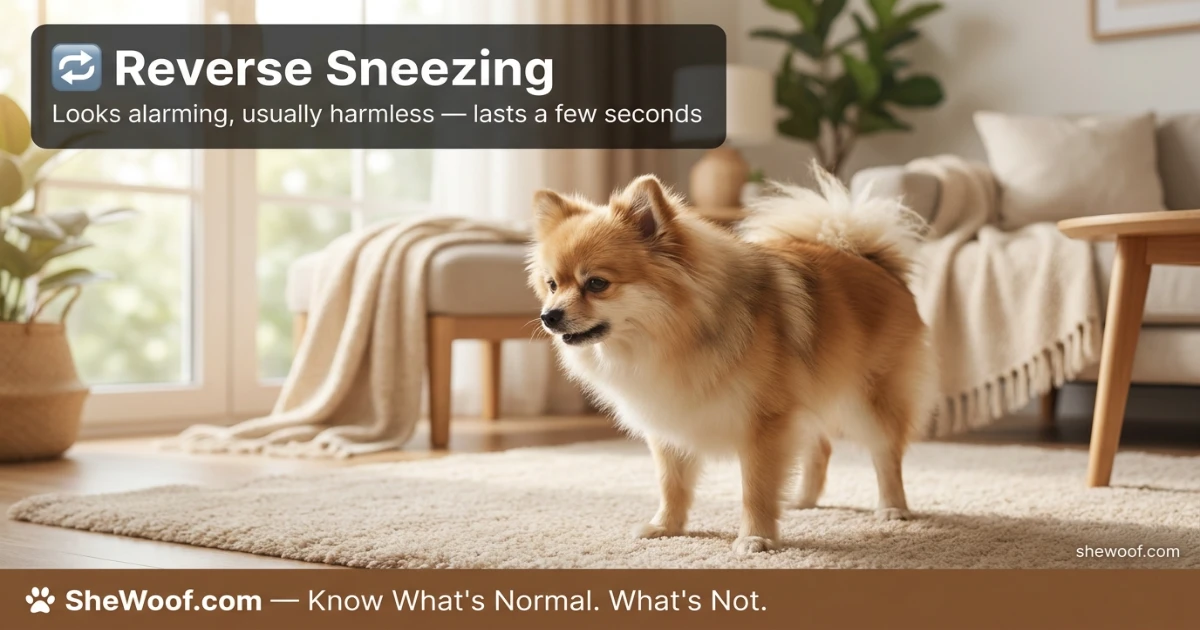
Reverse sneezing is another frequent culprit. It looks and sounds alarming — the dog stands still, extends their neck, and makes a snorting, hacking sound. But it is usually harmless. It happens when the soft palate spasms. Most episodes last a few seconds to a minute and resolve on their own.
Acid reflux or bilious vomiting syndrome can cause foamy hacking, especially in the morning. The stomach is empty, acid builds up, and the dog produces white or yellow foam. This is usually harmless but can be managed with smaller, more frequent meals.
More serious causes include foreign objects stuck in the throat, tracheal collapse (common in small breeds like Yorkies and Pomeranians), pneumonia, and bloat (gastric dilatation-volvulus or GDV). Bloat is a true emergency — the stomach twists, trapping gas, and the dog retches unproductively without bringing anything up.

Why This Matters for Dog Owners
Understanding the cause of foamy hacking prevents panic — and prevents missed emergencies. Owners who know the difference between reverse sneezing and bloat make faster, better decisions. Owners who do not may either rush to the vet for harmless issues or wait too long for a life-threatening one.
There is also the treatment angle. Kennel cough needs rest, isolation from other dogs, and sometimes medication. Acid reflux is managed with diet changes. Bloat requires emergency surgery. Each cause has a different path forward. Knowing the cause helps you get the right help.
Finally, there is the quality-of-life factor. A dog that hacks up foam regularly is uncomfortable. Addressing the underlying cause improves their comfort and your peace of mind.
What Most Owners Get Wrong About Foamy Hacking
The biggest mistake is assuming all foamy hacking is the same. It is not. A dog with kennel cough needs different care than a dog with acid reflux, which is different from a dog with bloat. Treating every episode the same way misses the nuance.
Another error is assuming that because the dog looks fine afterward, it is not serious. Dogs with early bloat may look uncomfortable but not yet critical. By the time they collapse, it may be too late. Unproductive retching with a distended abdomen is always an emergency, even if the dog seems otherwise alert.
Some owners also try to treat foamy hacking at home with over-the-counter cough suppressants. This is dangerous. Human cough medications are not formulated for dogs and can cause serious harm. Never give your dog any medication without veterinary guidance.
How Puppies, Adults, and Seniors Differ
Puppies are more prone to foreign objects stuck in the throat because they explore with their mouths. They are also more vulnerable to dehydration if hacking persists. Any puppy with persistent foamy hacking should be seen by a vet.
Adult dogs are most likely to develop kennel cough (especially if they visit dog parks, groomers, or boarding facilities) or acid reflux. Adult dogs with no other symptoms and a single episode of foamy hacking can often be monitored at home.
Senior dogs are at higher risk for tracheal collapse, heart disease, and laryngeal paralysis — all of which can cause foamy hacking. Senior dogs should be evaluated more readily, especially if the hacking is new or getting worse.
| Life Stage | Common Causes | What to Watch For |
|---|---|---|
| Puppy (under 1 year) | Foreign objects, kennel cough, reverse sneezing | Persistent hacking, difficulty breathing, refusal to eat |
| Adult (1-7 years) | Kennel cough, acid reflux, foreign bodies | Honking cough, morning foam, changes in appetite |
| Senior (7+ years) | Tracheal collapse, heart disease, laryngeal paralysis | New or worsening hacking, exercise intolerance, fainting |
| Small breeds (Yorkies, Poms) | Tracheal collapse | Honking cough triggered by excitement or pressure on neck |
Step-by-Step: What to Do When Your Dog Hacks Up Foam
- Stay calm and observe. Note the color of the foam, whether the hacking is productive or unproductive, and how long it lasts.
- Check the abdomen. If it is swollen, hard, or painful to touch, this is bloat — go to the emergency vet immediately.
- Check the gums. Pink gums are normal. Pale, blue, or white gums indicate poor circulation — an emergency.
- If the dog is otherwise normal and the episode is brief: offer water and keep them calm. Monitor for recurrence.
- If it happens after eating or in the morning: consider acid reflux. Try feeding smaller, more frequent meals.
- If it is a honking cough: suspect kennel cough. Keep the dog isolated from other dogs and call your vet.
- If it happens repeatedly or with other symptoms: call your veterinarian. Do not try to treat at home.
When to See the Vet Immediately
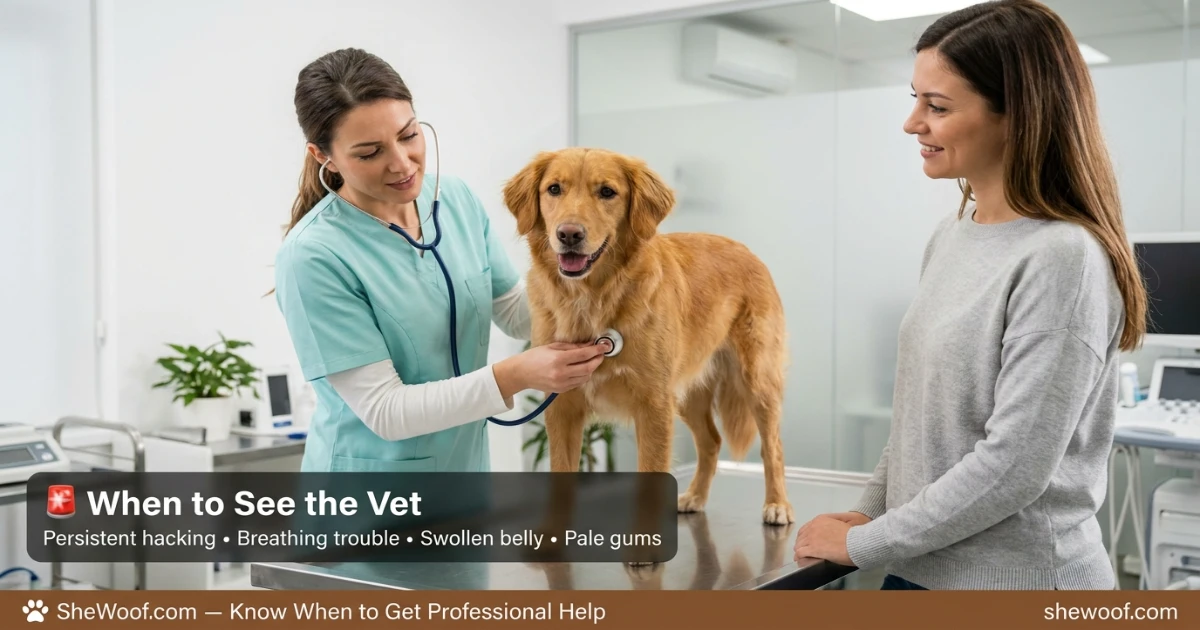
Some signs mean you should not wait. Call your vet or go to an emergency clinic if your dog shows any of these:
- Unproductive retching with a swollen or hard belly. This is bloat — a life-threatening emergency.
- Labored or rapid breathing.
- Pale, blue, or white gums.
- Collapse or weakness.
- Hacking that persists for more than a few minutes.
- Foam with blood (red or brown).
- Vomiting and diarrhea together.
- Refusal to eat or drink for more than 12 hours.
- Known or suspected ingestion of a foreign object or toxin.
When in doubt, call your veterinarian. It is always better to ask than to wait.
Common Causes of Foamy Hacking — Quick Reference
Here is a breakdown of what different types of foamy hacking may indicate:
- White foam, single episode, dog acts fine: Likely harmless — possibly reverse sneezing or mild irritation.
- White foam, especially in the morning: Acid reflux or bilious vomiting syndrome.
- Honking cough ending with foam: Kennel cough or tracheal collapse.
- Unproductive retching with swollen belly: Bloat (GDV) — emergency.
- Foam with blood: Severe irritation, ulcer, or foreign body — emergency.
- Foam with difficulty breathing: Possible pneumonia, heart failure, or foreign object — emergency.
A basic exam for hacking typically costs $50 to $100. If diagnostics are needed — chest x-rays, blood work, or a tracheal wash — the cost ranges from $150 to $500+. Treatment for kennel cough may cost $50 to $150 for medications. Emergency treatment for bloat, including surgery, can cost $1,500 to $5,000+. Pet insurance is highly recommended for large or at-risk breeds.
Frequently Asked Questions About Dogs Hacking Up Foam
The most common causes are kennel cough, reverse sneezing, acid reflux, or mild stomach irritation. White foam is usually saliva and stomach acid; yellow foam may indicate bile. A single episode is often harmless, but persistent hacking or other symptoms require a vet visit.
Unproductive retching — where the dog tries to vomit but nothing comes up — combined with a swollen, hard, or painful abdomen is a classic sign of bloat (GDV). This is a life-threatening emergency. Go to the nearest emergency vet immediately.
White foam is usually a mix of saliva, mucus, and stomach acid. It often indicates an empty stomach or mild irritation. If it happens in the morning, it may be bilious vomiting syndrome. If it accompanies a honking cough, it may be kennel cough.
Yes. Kennel cough produces a harsh, honking cough that often ends with a gag and a small amount of white foam. Dogs with kennel cough are usually otherwise bright and eating well. Keep them isolated from other dogs and call your vet.
If it is a single episode and your dog acts normal afterward, you can monitor at home. If the hacking is persistent, recurrent, or accompanied by labored breathing, a swollen abdomen, lethargy, or refusal to eat, see your vet immediately.
Do not give any human cough medications — they can be toxic to dogs. If the cause is acid reflux, smaller, more frequent meals may help. If it is kennel cough, rest and isolation are important. For any persistent hacking, contact your veterinarian for appropriate treatment.
Reverse sneezing can look like hacking, but it does not usually produce foam. It is a spasm of the soft palate that causes a snorting, honking sound. It is usually harmless and resolves on its own. If your dog produces foam, the cause is more likely stomach or airway related.
- Why is my dog hacking up foam? The most common causes are kennel cough, reverse sneezing, acid reflux, or mild stomach irritation.
- White foam is usually saliva and stomach acid. Yellow foam may indicate bile. A single episode is often harmless.
- Unproductive retching with a swollen abdomen is a sign of bloat (GDV) — a life-threatening emergency. Go to the vet immediately.
- Never give human cough medications to dogs — they can be toxic.
- If hacking is persistent, recurrent, or accompanied by other symptoms, see your veterinarian for diagnosis and treatment.