
Will a Fox Attack a Small Dog? Risks, Prevention & Safety Tips
Quick Answer: Yes, a fox can attack a small dog, especially if the dog weighs under 10 to 15 pounds. Foxes are opportunistic predators and a tiny dog can look like prey — especially at dawn or dusk when foxes are most active. That said, actual attacks are rare. Foxes usually avoid dogs and prefer to flee. The risk is highest for toy breeds, puppies, and senior dogs left unsupervised outdoors. To protect your small dog, never leave them alone in the yard, keep them leashed on walks, secure your fencing, and remove food sources that attract foxes.
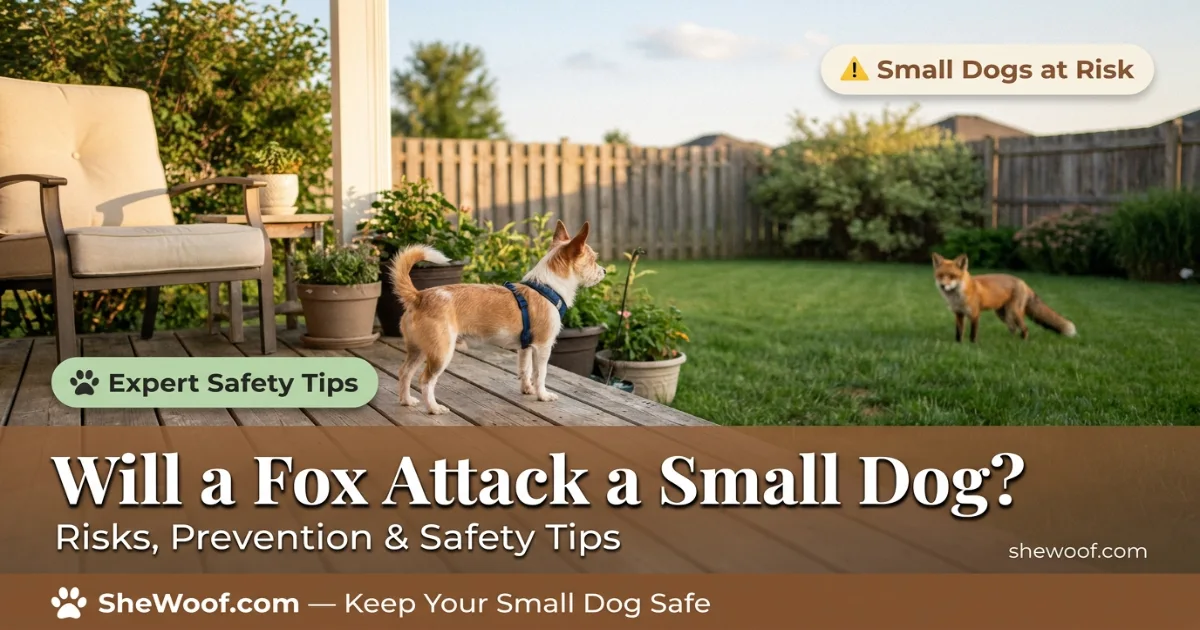
You spot a fox at the edge of your yard. Your 8-pound Chihuahua is barking at it from the porch. Your heart races. You wonder: will a fox attack a small dog? It is a fair question, and one that thousands of dog owners ask every year. Foxes are common in both rural and urban areas. They are beautiful, intelligent animals — and they are also wild predators with sharp teeth and strong jaws.
The good news is that fox attacks on dogs are rare. Foxes usually avoid dogs and prefer to run away. But “rare” is not “never.” Understanding fox behavior, knowing which dogs are most at risk, and taking simple precautions can keep your small dog safe.
Will a Fox Attack a Small Dog? The Real Answer
Foxes are opportunistic predators. They are not typically aggressive toward dogs, and they prefer to avoid confrontation. But a very small dog — especially one that is alone, running, or squealing — can trigger a fox’s predatory instincts. This is especially true in spring when foxes are raising kits and need to find more food.
The size of the dog matters most. Foxes typically weigh 8 to 15 pounds. A dog that weighs less than 10 pounds can look like prey. Breeds like Chihuahuas, Yorkshire Terriers, Pomeranians, and even Pugs are at higher risk. Puppies and senior dogs are also more vulnerable because they are smaller, slower, or less able to defend themselves.
That said, the odds of a fox attacking a dog are low. Most foxes will flee when they see a dog, even a small one. They are shy animals that avoid humans and domestic pets. An attack usually only happens when a fox feels cornered, is protecting its young, or is desperate for food.
Why This Matters for Dog Owners
Fox attacks on small dogs are rare, but they do happen. And when they happen, they can be serious. A fox bite can cause deep puncture wounds, infections, and — if the fox is rabid — exposure to a fatal disease. Knowing the risks helps you protect your dog and yourself.
Foxes are also becoming more common in urban and suburban areas. They adapt easily to human environments. They raid garbage, eat pet food left outside, and den under sheds and decks. This means more dog owners are encountering foxes than ever before. Even if an attack is unlikely, the encounter itself can be stressful for both you and your dog.
Finally, foxes can carry diseases and parasites that affect dogs. Even if your dog is not bitten, contact with fox feces or urine can expose them to worms, mange, and other issues. This is another reason to keep your dog away from foxes and their habitats.
What Most Owners Get Wrong About Foxes and Dogs
The most common mistake is assuming that because foxes are small, they are not dangerous. Foxes are wild predators with sharp teeth and strong jaws. They can inflict serious injuries on a small dog. And a cornered fox will fight to defend itself.
Another error is assuming that foxes only come out at night. Foxes are crepuscular — most active at dawn and dusk — but they can also be seen during the day, especially in urban areas or when they are raising kits. Do not assume your dog is safe just because it is daytime.
Some owners also leave food outside, which attracts foxes. Pet food, bird feeders, garbage, and fallen fruit all bring foxes closer to your home. Removing these food sources is one of the simplest ways to reduce fox encounters.
How Puppies, Adults, and Seniors Differ
Puppies are the most vulnerable. They are small, curious, and often do not recognize danger. A puppy left unsupervised in a yard with a fox is at serious risk. Even a playful nip from a fox can cause injury or infection.
Adult dogs have a wider range of outcomes. A large adult dog can usually scare off a fox. A small adult dog — especially a toy breed — is still at risk. If your dog is aggressive toward foxes, they might start a fight they cannot win.
Senior dogs are also at higher risk. They may be slower, less agile, and have weaker immune systems. A fox encounter can be more stressful and injuries more serious for a senior dog.
| Dog Type | Risk Level | What to Watch For |
|---|---|---|
| Puppy (under 1 year) | Very High | Small, curious, no fear of predators |
| Toy breeds (under 10 lbs) | High | Can be mistaken for prey |
| Small breeds (10-25 lbs) | Moderate | May be targeted if alone or cornered |
| Medium/large dogs (25+ lbs) | Low | Usually too large for a fox to target |
| Senior dogs | Moderate to High | Slower, less able to defend themselves |

Step-by-Step: How to Protect Your Small Dog from Foxes
- Supervise outdoor time. Never leave a small dog alone in the yard. Go outside with them, even for quick bathroom breaks.
- Keep your dog leashed on walks. Do not let your dog roam free in areas where foxes are common. A leash gives you control.
- Secure your yard. Install a fence at least 6 feet high and bury the bottom 2 feet underground to prevent digging. Repair holes immediately.
- Remove food sources. Do not leave pet food, garbage, or fallen fruit outside. These attract foxes.
- Use motion-activated lights. Foxes are startled by sudden bright lights. Install them around your yard.
- Make noise if you see a fox. Shout, clap your hands, or use an air horn to scare it away.
- Report aggressive foxes. If a fox does not flee or appears sick, contact local animal control.
What to Do If a Fox Attacks Your Dog
If a fox attacks your dog, act quickly and calmly. Do not try to grab the fox with your bare hands. Use a stick, a bag, or a jacket to create a barrier. Shout loudly to startle the fox. Once your dog is free, check for injuries immediately.
Even if the wound looks minor, call your veterinarian. Fox bites can cause deep puncture wounds that are not obvious on the surface. Your dog may need antibiotics, a rabies booster, or other treatment. If the fox was rabid, immediate medical attention is critical.
Also report the incident to local animal control. They can track fox activity in your area and take action if the fox is a threat to public safety.

When to Contact a Vet After a Fox Encounter
Call your veterinarian if your dog has any contact with a fox, even if you do not see a wound. Some signs of injury may not be immediately visible. Watch for:
- Puncture wounds or scratches.
- Bleeding or swelling.
- Limping or reluctance to move.
- Lethargy or changes in behavior.
- Loss of appetite.
- Signs of infection — redness, heat, discharge.
If your dog was bitten, your vet may recommend a rabies booster even if your dog is vaccinated. If the fox was not captured, your dog may need to be quarantined or monitored. Follow your vet’s advice carefully.
Frequently Asked Questions About Foxes and Small Dogs
Yes, a fox can attack a small dog, especially if the dog weighs under 10 to 15 pounds. Foxes are opportunistic predators and a tiny dog can look like prey. However, actual attacks are rare — foxes usually avoid dogs and prefer to flee.
Foxes are most likely to target dogs under 15 pounds. Toy breeds like Chihuahuas, Yorkshire Terriers, and Pomeranians are at the highest risk. Larger dogs are usually too big for a fox to consider as prey, though a fox may still defend itself if cornered.
Yes, puppies are at high risk. They are small, curious, and may not recognize danger. Never leave a puppy unsupervised outdoors in an area where foxes are common. Even a playful nip from a fox can cause injury or infection.
Stay calm. Keep your dog close or pick them up if they are small. Make yourself look big by raising your arms. Shout loudly and clap your hands to scare the fox away. Do not run — this can trigger the fox’s predatory instincts. Back away slowly.
In rare cases, yes. A fox is capable of killing a very small dog, especially a puppy or toy breed. However, this is uncommon. Most foxes avoid dogs entirely. The risk is highest when a small dog is left unsupervised outdoors.
Foxes can carry rabies, though it is rare in many areas. If your dog is bitten by a fox, contact your veterinarian and local animal control immediately. Even if rabies is not a concern, fox bites can cause serious infections. Keep your dog’s rabies vaccination up to date.
Install a fence at least 6 feet high with an underground barrier. Remove food sources like pet food, garbage, and fallen fruit. Use motion-activated lights and noise deterrents. Never leave small dogs unattended outdoors, especially at dawn and dusk.
- Yes, a fox can attack a small dog — especially dogs under 10-15 pounds, puppies, and seniors. But actual attacks are rare.
- Foxes are opportunistic predators. They usually avoid dogs but may target a tiny dog if it looks like prey, especially at dawn or dusk.
- Supervision is the best protection. Never leave a small dog unattended outdoors.
- Secure your yard with a 6-foot fence, remove food sources, and use motion-activated lights to deter foxes.
- If a fox bites your dog, see a veterinarian immediately. Fox bites can cause deep infections and rabies exposure.