Can Dogs Eat Cooked Pork Bone? The Dangerous Truth Every Owner Must Know
Estimated reading time: 12 minutes
Quick Answer: No, dogs should never eat cooked pork bones. Cooking makes pork bones brittle, causing them to splinter into sharp shards that can choke your dog, puncture their mouth or intestines, or cause a life-threatening blockage. The risks apply to all cooked bones, including pork, and even small pieces can cause serious internal damage. If your dog has already eaten a cooked pork bone, contact your veterinarian immediately.
You finish a pork chop, and your dog is sitting there with those eyes — the ones that say “I’ve been good, I deserve a treat.” The bone looks like a natural reward. But if you have ever wondered “can dogs eat cooked pork bone,” the answer is a hard no, and the reasons are more serious than most owners realize. This is not about being overly cautious. Cooked pork bones are one of the most common causes of emergency vet visits for dogs, and the damage they cause can happen in minutes.
I have seen the aftermath of a dog who got into the trash after a pork dinner. The owners thought it was no big deal. Twelve hours later, they were at an emergency clinic with a dog vomiting blood. That is the reality of cooked bones. Here is what makes them so dangerous, what to do if your dog already ate one, and what to give them instead.
Why Are Cooked Pork Bones So Dangerous for Dogs?
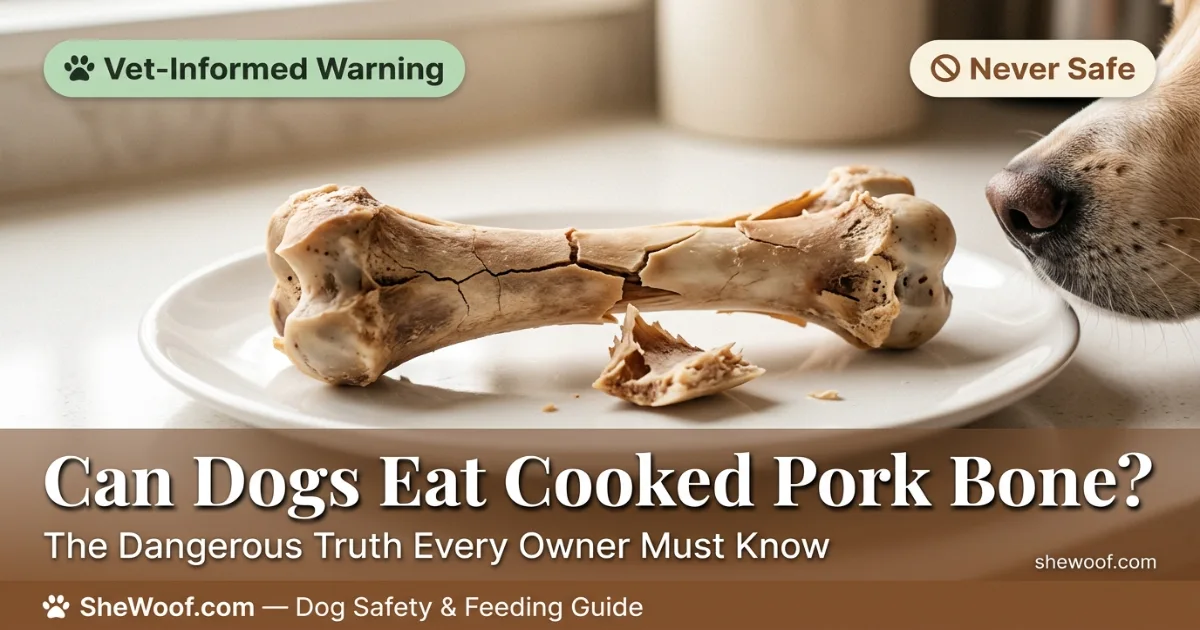
The answer comes down to chemistry. When bones are cooked — whether baked, boiled, fried, or smoked — the collagen and moisture inside them break down. What was once a somewhat flexible, resilient structure becomes dry, brittle, and prone to shattering. Think of the difference between a fresh twig and a dried-out branch. The dried branch snaps and splinters. So does a cooked bone.
When your dog chews a cooked pork bone, it does not break into soft, digestible pieces. It cracks into sharp, jagged fragments. Those fragments can cause damage at every stage of the digestive process. They can lodge in the throat and cause choking. They can slice the gums, tongue, and esophagus on the way down. They can puncture the stomach or intestinal walls, leaking bacteria into the abdomen — a condition called peritonitis that is life-threatening . Or they can simply get stuck, creating a blockage that prevents food and waste from moving through the system .
Pork bones have an additional risk factor: fat. Pork, especially when cooked with sauces, seasonings, and fat, is high in saturated fat. For dogs, a sudden high-fat meal can trigger pancreatitis — inflammation of the pancreas that can range from mild to fatal . The combination of splintering bone and high fat content makes cooked pork bones a uniquely dangerous item.
What Are the Specific Risks of Cooked Pork Bones?
Veterinarians and animal welfare organizations consistently warn against feeding any cooked bones. The risks are not theoretical. They are documented in emergency clinics every week.
- Choking: Bone fragments can lodge in the throat or windpipe, blocking airflow .
- Mouth and tongue injuries: Sharp shards can cut the gums, tongue, and soft palate .
- Broken teeth: Hard cooked bones can fracture teeth, requiring extraction or root canals .
- Esophageal damage: Fragments can scratch or puncture the esophagus .
- Intestinal perforation: Sharp pieces can pierce the stomach or intestine, causing internal bleeding and infection .
- Intestinal blockage: Even small pieces can become stuck, creating an obstruction that requires surgery .
- Pancreatitis: The high fat content in pork bones can trigger this painful, potentially fatal condition .
- Rectal trauma: Sharp fragments can cause bleeding and pain when passing through the colon .
What About Raw Pork Bones — Are They Safer?
Raw pork bones do not splinter the way cooked ones do, but that does not make them safe. Raw pork can carry harmful bacteria including Salmonella, E. coli, and Listeria . Dogs can get sick from these pathogens, and they can also spread them to humans in the household. Additionally, raw pork bones are still hard enough to fracture teeth, and they can cause blockages if swallowed .
Some advocates of raw feeding argue that raw bones are natural for dogs. But the RSPCA and other major animal welfare organizations do not recommend feeding bones to dogs at all — raw or cooked — because the risks of broken teeth, choking, and internal blockages remain significant .
| Bone Type | Splinter Risk | Bacteria Risk | Overall Verdict |
|---|---|---|---|
| Cooked pork bone | Very High | Low (cooking kills bacteria) | Never feed |
| Raw pork bone | Low | High (Salmonella, E. coli) | Not recommended |
| Cooked poultry bone | Very High | Low | Never feed |
| Raw poultry bone | Moderate | High | Not recommended |
| Large raw beef bone | Low | Moderate | Some vets allow with supervision |

What Should You Do If Your Dog Ate a Cooked Pork Bone?
Do not panic, but do act quickly. The outcome depends on the size of the bone, whether it splintered, and how much was swallowed. Here is the step-by-step response.
Step-by-Step: If Your Dog Ate a Cooked Pork Bone
- Remove any remaining bone immediately. If your dog is still chewing on it, take it away. Do not reach into their mouth if they are guarding it — you could get bitten. Use a treat to trade.
- Do not induce vomiting. Never try to make your dog throw up a bone. A bone fragment coming back up can cause just as much damage to the esophagus as it did going down.
- Call your veterinarian or an emergency clinic. Tell them what happened, how much you think your dog swallowed, and whether the bone was large or small. They will advise you on whether to come in immediately or monitor at home.
- Monitor closely for the next 48 to 72 hours. Some dogs pass small bone fragments without problems. Others develop symptoms hours or days later. Watch for the warning signs below.
- Feed small, soft meals. If your vet advises monitoring at home, offer small amounts of soft food to help any fragments move through. Do not feed large meals that could push a blockage tighter.
- Check stool for blood or bone fragments. Any blood in the stool is a reason to call the vet immediately.
What Are the Warning Signs of a Problem?
Some dogs pass cooked bone fragments without issue. But if a fragment causes damage or a blockage, symptoms usually appear within 12 to 72 hours. The signs can be subtle at first, then escalate quickly.
- Vomiting, especially repeated vomiting or vomiting blood
- Gagging or coughing persistently
- Drooling excessively
- Lethargy or weakness
- Loss of appetite
- Straining to defecate or inability to pass stool
- Abdominal swelling or pain (whining when touched)
- Blood in the stool
- Pacing, restlessness, or inability to get comfortable
- Labored breathing
Any of these signs warrants immediate veterinary attention. Do not wait to see if it gets better on its own. Intestinal blockages and perforations can become fatal within hours if untreated .
What Should You Give Your Dog Instead?
Dogs have a natural urge to chew, and that urge does not go away just because bones are dangerous. The good news is that there are plenty of safe alternatives that satisfy the need to gnaw without the risks.
VOHC-approved dental chews are the gold standard. The Veterinary Oral Health Council seal means the product has been tested and shown to reduce plaque or tartar. They are designed to be safe, digestible, and effective .
Rubber chew toys — like Kongs or similar durable rubber toys — provide mental stimulation and can be stuffed with treats or frozen for longer engagement. They do not splinter, and they last a long time.
Dental diets formulated for oral health are another option. These kibbles have a specific texture designed to scrape plaque from teeth as the dog chews.
Raw carrots, cucumber slices, or apple slices (without seeds) can satisfy a dog’s urge to crunch without any risk of splintering. They are low-calorie and safe for most dogs.
What About Store-Bought Bone Treats?
You might see smoked or baked bone treats at pet stores and assume they are safe because they are sold for dogs. They are not. The FDA has received reports of illness and death linked to commercially available bone treats, including ham bones, pork femur bones, and rib bones . The cooking and smoking processes that make these products shelf-stable also make them brittle and prone to splintering, just like the bones from your dinner plate.
If you are unsure whether a chew product is safe, look for the VOHC seal or ask your veterinarian. Do not assume that “sold in a pet store” means “safe for your dog.”
How Much Does It Cost If Something Goes Wrong?
- Emergency exam: $100–$200
- X-rays: $150–$400
- Endoscopy (to retrieve bone fragment): $800–$2,000
- Surgery for blockage or perforation: $1,500–$5,000+
- Hospitalization and supportive care: $500–$2,000+
These costs are why prevention matters so much. A $5 dental chew or a $15 rubber toy is a fraction of the cost of emergency surgery. If your dog has pet insurance, check whether foreign body ingestion is covered. Many policies exclude or limit coverage for bones, so read the fine print.
- Dogs should never eat cooked pork bones — cooking makes them brittle and prone to splintering into sharp shards.
- Splintered bone fragments can cause choking, broken teeth, mouth injuries, intestinal perforation, or life-threatening blockages.
- Raw pork bones are not a safe alternative — they carry bacteria like Salmonella and E. coli and can still cause blockages.
- If your dog ate a cooked pork bone, call your vet immediately. Do not induce vomiting. Monitor for vomiting, lethargy, abdominal pain, or blood in stool.
- Safe alternatives include VOHC-approved dental chews, rubber chew toys, and dog-safe crunchy fruits and vegetables.
Frequently Asked Questions
Can dogs eat cooked pork bone?
No. Cooked pork bones are dangerous for dogs because they become brittle and splinter into sharp shards. These fragments can cause choking, break teeth, puncture the digestive tract, or create life-threatening blockages. Never give your dog a cooked pork bone, and keep them out of reach of trash cans and tables.
What happens if my dog eats a cooked pork bone?
Your dog may pass small fragments without problems, but there is a serious risk of choking, internal injury, or blockage. Symptoms can appear within hours or days and include vomiting, lethargy, loss of appetite, abdominal pain, and blood in stool. Contact your veterinarian immediately if your dog ate a cooked pork bone.
Are raw pork bones safe for dogs?
Raw pork bones do not splinter as easily as cooked ones, but they are still not recommended. They can carry harmful bacteria like Salmonella and E. coli, and they can still cause broken teeth or intestinal blockages. The RSPCA and many veterinarians advise against feeding any bones to dogs.
What should I do if my dog is choking on a bone?
If your dog is choking and cannot breathe, this is an emergency. Do not try to pull the bone out with your fingers unless you can clearly see it and it is within easy reach — you could push it further down. Go to an emergency veterinary clinic immediately. If your dog is coughing but still breathing, keep them calm and call your vet for guidance.
Can dogs eat pork chop bones?
No. Pork chop bones are cooked bones, which means they splinter easily and can cause serious internal damage. They are also often coated in seasonings, sauces, and salt that can upset your dog’s stomach or cause pancreatitis. Never feed pork chop bones to your dog.
Are store-bought bone treats safe for dogs?
Not necessarily. The FDA has received reports of illness and death from commercially available bone treats, including smoked and baked pork bones. These products are processed in ways that make them brittle. Choose VOHC-approved dental chews or rubber toys instead, and always supervise your dog while they chew.
What can I give my dog to chew instead of bones?
Safe alternatives include VOHC-approved dental chews, durable rubber toys like Kongs, dental diets, and crunchy fruits and vegetables like carrots or apple slices (without seeds). These satisfy your dog’s urge to chew without the risks of splintering bones.
How long after eating a cooked bone would a dog show symptoms?
Symptoms of a blockage or internal injury can appear anywhere from a few hours to 72 hours after ingestion. Some dogs pass fragments without issues, but watch closely for vomiting, lethargy, loss of appetite, abdominal pain, or blood in stool. If any of these occur, seek veterinary care immediately.