Is It OK for Dogs to Eat Leaves? What Every Owner Should Know
Quick Answer: Occasional leaf nibbling is usually harmless for dogs — many dogs eat leaves out of curiosity, boredom, or ancestral scavenging instinct. The real danger comes from which leaves your dog is eating. Some common garden and wild plants — including azaleas, oleander, sago palms, and certain oaks — are toxic and can cause vomiting, organ failure, or death. Even non-toxic leaves can cause stomach upset, vomiting, or intestinal blockages if eaten in large quantities. Know the plants in your yard and on your walking routes. If your dog eats leaves obsessively, vomits afterward, or shows signs of illness, see a veterinarian.
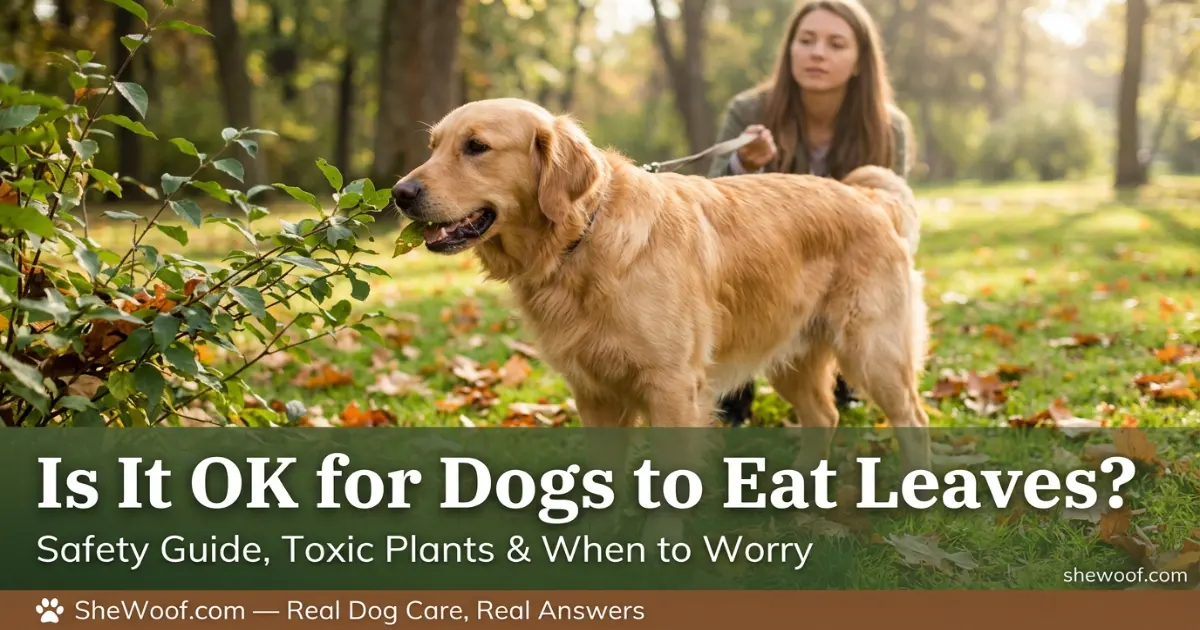
You are on a walk. Your dog stops, sniffs a bush, and casually starts munching leaves like they are at a salad bar. You tug the leash gently. They grab one more mouthful before trotting away. You search “is it ok for dogs to eat leaves” because this is the third walk this week where your dog has grazed on greenery, and you are starting to wonder whether you should be stopping it — or whether this is just one of those weird but harmless dog behaviors.
The answer sits on a spectrum. Most leaf eating is benign. Some is dangerous. A small amount of the wrong leaf can cause organ failure. A large amount of the right leaf can cause an intestinal blockage. Context — what plant, how much, and how your dog responds afterward — determines whether leaf eating is a harmless quirk, a dietary signal, or a veterinary emergency. This guide gives you the framework to tell the difference.
Why Do Dogs Eat Leaves in the First Place?
Dogs are not herbivores. But they are also not strict carnivores. Their wild ancestors — wolves, coyotes, and other canids — consumed plant matter regularly, often from the stomach contents of prey animals. Leaves, grass, berries, and roots provided fiber, phytonutrients, and trace minerals that were absent from a purely meat-based diet. That ancestral programming has not been bred out of domestic dogs. Your Labrador who eats gourmet kibble from a stainless steel bowl still carries the genetic blueprint of a scavenger who occasionally samples the greenery.
Some researchers believe dogs eat leaves — especially grass — to induce vomiting when they feel nauseous. The theory is that the indigestible plant fiber irritates the stomach lining and triggers the vomiting reflex. Not every leaf-eating episode ends in vomiting, but when it does, the dog may have been self-medicating for mild digestive discomfort. Other dogs simply like the texture and taste. Leaves are novel, they crinkle, they have interesting smells — and for a dog, that is often reason enough.
Boredom and anxiety are behavioral drivers. A dog left alone in a yard with limited stimulation may eat leaves simply because it is something to do. The behavior becomes self-reinforcing: chewing provides sensory input, the leaves have an interesting texture, and the act fills time. Dogs with separation anxiety or generalized anxiety may develop repetitive leaf eating as a coping mechanism — similar to paw licking or tail chasing. If leaf eating is obsessive, context-specific, or difficult to interrupt, the underlying cause is more likely behavioral than dietary.
Which Leaves Are Toxic to Dogs?
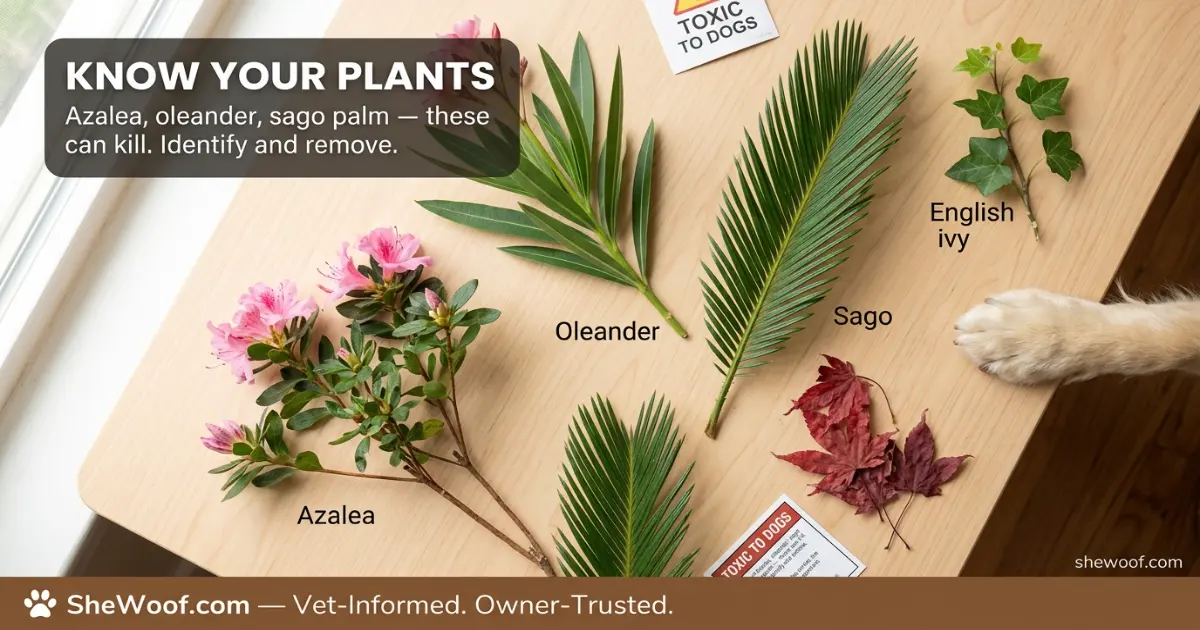
The most important question is not whether your dog is eating leaves — it is which leaves they are eating. Many common garden, landscaping, and wild plants contain compounds that are toxic to dogs. Some cause mild gastrointestinal upset. Others cause organ failure, seizures, or death — even in small amounts. The table below covers the most dangerous species that dog owners should know.
| Plant / Tree | Toxic Part | Symptoms in Dogs | Severity |
|---|---|---|---|
| Azalea / Rhododendron | Leaves, flowers | Vomiting, drooling, weakness, heart arrhythmia | High — can be fatal |
| Oleander | All parts, especially leaves | Vomiting, slow heart rate, collapse, death | Extremely high |
| Sago Palm | All parts, especially seeds and leaves | Vomiting, liver failure, seizures, death | Extremely high |
| Yew | Leaves, berries | Tremors, difficulty breathing, cardiac arrest | Extremely high |
| Black Walnut | Fallen leaves, nuts, hulls | Vomiting, tremors, seizures | Moderate-High |
| Red Maple (wilted leaves) | Wilted or dried leaves only | Red blood cell damage, anemia, weakness | Moderate-High (especially horses; dogs less sensitive but still at risk) |
| English Ivy | Leaves, berries | Vomiting, diarrhea, abdominal pain, drooling | Moderate |
| Tomato / Potato (green parts) | Leaves, stems, green skin | Vomiting, diarrhea, weakness, confusion | Mild-Moderate |
What Most Owners Get Wrong About Dogs and Leaves
The most common mistake is assuming that because a dog has eaten leaves without incident before, all leaves are safe. Dogs can graze on non-toxic grass and weeds for years and then one day eat a single sago palm frond that causes irreversible liver failure. Safety is plant-specific — not behavior-specific. A history of harmless leaf eating does not predict future outcomes when the plant is different.
Another frequent error: dismissing leaf eating as “just a habit” without considering why it is happening. If your dog eats leaves obsessively — especially if this is a new behavior — there may be an underlying cause that needs attention. Nausea from acid reflux, inflammatory bowel disease, intestinal parasites, or food intolerance can all trigger leaf eating as a self-soothing behavior. A sudden increase in leaf eating in a dog who previously ignored plants warrants a veterinary check-up — not just a shrug.
A third mistake involves the leaves themselves — specifically, leaves that have been treated with pesticides, herbicides, or chemical fertilizers. A leaf that is botanically non-toxic can still cause illness if it is coated in chemicals. Dogs who graze on treated lawns, golf courses, or recently sprayed gardens are at risk for chemical toxicity. The symptoms — vomiting, diarrhea, excessive drooling — mimic plant toxicity but require different treatment. If you use lawn chemicals, keep your dog off the treated area for the full recommended period — and consider whether the convenience is worth the risk.
How Puppies, Adults, and Seniors Differ
Puppies explore the world with their mouths. A leaf is a novel object — interesting in texture, movement, and taste. Most puppies sample leaves as part of normal development. Most outgrow the behavior. Puppies who eat large quantities of leaves or vomit frequently afterward should be supervised more closely and redirected to appropriate chew items. A puppy’s small body size also means that a toxic dose of a plant is reached more quickly than in an adult dog.
Adult dogs who suddenly start eating leaves after years of ignoring them may be signaling a new health issue — gastrointestinal discomfort, a change in diet that has reduced fiber intake, or the onset of an anxiety disorder. A sudden behavioral change always deserves investigation. Do not dismiss it as “weird but harmless” without considering what else has changed in the dog’s health or environment.
Senior dogs may turn to leaf eating as a symptom of cognitive decline — similar to how some senior dogs develop repetitive oral behaviors — or as a response to chronic nausea from organ dysfunction, dental pain, or medication side effects. Any new or escalating leaf eating in an older dog warrants a veterinary check-up with blood work to rule out underlying medical causes.

When Leaf Eating Becomes a Medical Concern
Occasional leaf nibbling that produces no symptoms is not a medical problem. Leaf eating that causes repeated vomiting, diarrhea, loss of appetite, lethargy, or abdominal pain is — regardless of whether the plant itself is toxic. A dog who cannot pass the fibrous leaf material may develop a partial or complete intestinal blockage. Symptoms include straining to defecate, vomiting, a painful or distended belly, and lethargy. This is an emergency.
The amount matters. A single leaf of a non-toxic plant is unlikely to cause harm. A dog who consumes an entire pile of fallen leaves — especially dry, fibrous leaves like oak or magnolia — is at risk for mechanical obstruction even if the leaves themselves are chemically harmless. The indigestible fiber can form a mass that lodges in the intestines. Large volumes of leaves plus vomiting or constipation equals a veterinary visit.

Frequently Asked Questions About Dogs Eating Leaves
Occasional leaf nibbling from non-toxic plants is usually harmless. The key variables are which plant, how much, and how your dog responds. A few leaves of untreated grass or a non-toxic shrub typically causes no problems. A few leaves of azalea or oleander can be fatal. Know your plants. Monitor your dog.
Leaf fiber is indigestible and can irritate the stomach lining, triggering vomiting. Some dogs appear to eat leaves intentionally when they feel nauseous — the leaves help them vomit and may provide temporary relief. If vomiting is frequent, contains blood, or is accompanied by lethargy or diarrhea, see your veterinarian.
Azalea, rhododendron, oleander, sago palm, yew, black walnut, English ivy, and tomato/potato leaves are among the most dangerous. This is not a complete list. If you are unsure about a plant in your yard, take a photo and ask your veterinarian or use a reputable plant identification app. Remove any confirmed toxic species or fence them off.
Yes. Large volumes of fibrous, indigestible leaves — especially dry leaves from oak, magnolia, or similar trees — can form a mass that obstructs the intestines. Symptoms include vomiting, constipation, abdominal pain, and lethargy. This is a surgical emergency if the blockage is complete. Seek veterinary care if your dog consumed a large amount of leaves and shows these signs.
Teach a strong “leave it” cue using positive reinforcement. Carry a high-value toy or treat and redirect your dog when they start grazing. Increase exercise and mental stimulation before walks — a tired, engaged dog is less likely to browse. If leaf eating is compulsive or anxiety-driven, consult a certified dog trainer or veterinary behaviorist.
Yes. Pesticides, herbicides, and chemical fertilizers on leaves can cause vomiting, diarrhea, excessive drooling, tremors, and in severe cases, neurological symptoms. The plant itself may be non-toxic, but the chemicals on it are not. Keep dogs off treated lawns and gardens for the full recommended withholding period. Rinse your dog’s paws and belly after walks in areas that may be chemically treated.
Most puppies sample leaves out of curiosity and outgrow the behavior. Supervise outdoor time, redirect to appropriate chew toys, and ensure toxic plants are not accessible. If your puppy eats large quantities of leaves, vomits frequently, or seems unwell afterward, see your veterinarian. Puppies dehydrate faster than adults and reach toxic doses of plant compounds more quickly due to their smaller body size.
- Occasional leaf eating from non-toxic plants is usually harmless — many dogs do it out of curiosity, boredom, or ancestral scavenging instinct. The risk depends on which plant, how much, and how your dog responds.
- The most dangerous leaves for dogs come from azalea, oleander, sago palm, yew, black walnut, and English ivy. Know the plants in your yard and on your walking routes. Remove or fence off toxic species.
- Even non-toxic leaves can cause vomiting, diarrhea, or intestinal blockages if eaten in large quantities. Dry, fibrous leaves pose a higher obstruction risk than fresh, soft leaves.
- Pesticides, herbicides, and chemical fertilizers on leaves can cause toxicity regardless of whether the plant itself is safe. Keep dogs off treated lawns and rinse paws after walks in potentially treated areas.
- Sudden or obsessive leaf eating — especially in adult or senior dogs — may signal an underlying medical issue like nausea, dietary deficiency, anxiety, or gastrointestinal disease. See your veterinarian if the behavior is new or escalating.
- Redirect leaf-eating behavior with toys, treats, and the “leave it” cue. Address boredom with increased exercise and mental enrichment. Supervise outdoor time and remove fallen leaves regularly.