
Is German Shepherd a Good Dog? An Honest Look at the Breed
Quick Answer: Yes, a German Shepherd is a good dog — for the right owner. They are intelligent, loyal, trainable, and protective, which makes them excellent family dogs, working dogs, and service dogs. But they are also high-energy, strong-willed, and prone to shedding, hip dysplasia, and anxiety if under-exercised or under-stimulated. They are not a good fit for first-time owners who want a low-maintenance dog. If you can commit to daily exercise, training, and grooming, a German Shepherd can be one of the best dogs you will ever own.
You have seen them at work — guiding the blind, sniffing out explosives, patrolling with police officers, and lying quietly at the feet of a family in the park. The German Shepherd is one of the most versatile and admired dog breeds in the world. But when someone asks is German Shepherd a good dog, the honest answer is: it depends. On you, on your lifestyle, and on what you are prepared to give. This guide covers the real strengths, the real challenges, and what daily life with a German Shepherd actually looks like.
I have lived alongside German Shepherds and fostered several. I have seen them at their best — patient, brave, gentle, and unbelievably devoted. I have also seen them at their worst — anxious, destructive, and overwhelmed — when placed with owners who did not understand what they were signing up for. This breed rewards commitment. It punishes shortcuts.
What Makes a German Shepherd a Good Dog?
The German Shepherd’s strengths come from its history. The breed was developed in late 19th-century Germany to herd sheep and later became a favorite of police and military forces for its intelligence, courage, and unwavering loyalty. That working heritage shapes everything about the breed today.
The first quality that makes a German Shepherd “good” is their intelligence. They are among the most trainable breeds in the world, capable of learning complex commands, tasks, and routines. That intelligence is why they excel as guide dogs, search-and-rescue dogs, police K9s, and service dogs for people with disabilities.
The second is loyalty. A German Shepherd bonds deeply with their family and takes their role as protector seriously. They are naturally alert, watchful, and defensive of their people — qualities that make them excellent guard dogs and reassuring companions for people living alone or in rural areas.
The third is versatility. German Shepherds can adapt to almost any role if properly trained: family pet, jogging partner, hiking companion, protection dog, or working dog. Few breeds offer the same combination of physical capability and mental sharpness.

Why This Matters for Prospective Owners
German Shepherds are one of the most popular breeds in the world, and that popularity has consequences. They are frequently surrendered to shelters by owners who did not anticipate their needs. The most common reasons: too much energy, too much shedding, too much training required, or behavior problems that escalated because the dog was under-exercised and under-stimulated.
Choosing a German Shepherd is not like choosing a smaller, lower-drive companion breed. It is closer to adopting a working partner. Their mental and physical needs are real, and ignoring them leads to problems that affect the whole household. Getting the decision right the first time prevents a heartbreaking surrender later.
The breed also carries significant health risks. Hip and elbow dysplasia, degenerative myelopathy, and certain cancers are common in German Shepherds. Understanding these risks and budgeting for them matters before you bring a puppy home.
What Most People Get Wrong About German Shepherds
The biggest mistake is assuming that because German Shepherds are popular, they are easy. They are not. This is a high-drive, high-energy breed that needs a job — or at least a purpose — to be happy. An under-exercised German Shepherd is a destructive, anxious, and sometimes dangerous dog. A well-exercised one is calm, confident, and a joy to live with.
Another mistake is choosing a German Shepherd for protection without investing in training. An untrained protective dog is a liability, not an asset. They may bark at everything, become reactive to strangers, or worse — bite out of fear or confusion. Protection work requires professional guidance and structured training.
A third mistake is underestimating the grooming. German Shepherds have a dense double coat that sheds year-round and “blows” twice a year. If you cannot tolerate dog hair on your furniture and clothing, this breed will test your patience daily.
What Are the Pros of Owning a German Shepherd?
- Extremely trainable. They learn quickly, retain commands well, and enjoy working with their people.
- Deeply loyal. They bond strongly and will protect their family without hesitation.
- Versatile. They can be family pets, working dogs, service dogs, or sport dogs.
- Confident and alert. They naturally watch over their home and people.
- Great with children (with training). A well-socialized German Shepherd is patient and protective with kids.
- Capable of intense physical activity. They make excellent running, hiking, and outdoor companions.
What Are the Cons of Owning a German Shepherd?
- High exercise needs. One to two hours daily, minimum — not a quick walk around the block.
- Heavy shedding. Their double coat sheds constantly and blows twice a year.
- Strong-willed. Without consistent training, they can become pushy, reactive, or hard to control.
- Prone to separation anxiety. They are social and do not do well left alone for long hours.
- Health issues. Hip and elbow dysplasia, degenerative myelopathy, bloat, and certain cancers are common.
- Size and strength. A poorly trained adult can be difficult to manage, especially for smaller owners.
- Not ideal for first-time owners. The breed requires experience, patience, and commitment.
How Does a German Shepherd Fit Into Family Life?
A German Shepherd can be an outstanding family dog. They are naturally protective of children and often form close bonds with the entire household. But the fit depends on training and socialization. A German Shepherd raised with kids, exposed to visitors from puppyhood, and taught appropriate behavior around the home is a patient, gentle, and devoted companion.
The key is early, consistent socialization. Puppy classes, positive exposure to different people, and structured introductions to new environments build a German Shepherd who can be trusted in any situation. Without that, they may become overly protective, shy, or reactive — traits that are difficult to unwind in adulthood.
Family fit also depends on time. German Shepherds need daily companionship. They are not dogs who do well in the backyard alone. They want to be part of the family’s routine — walking, playing, training, and resting near their people.

How Much Exercise Does a German Shepherd Really Need?
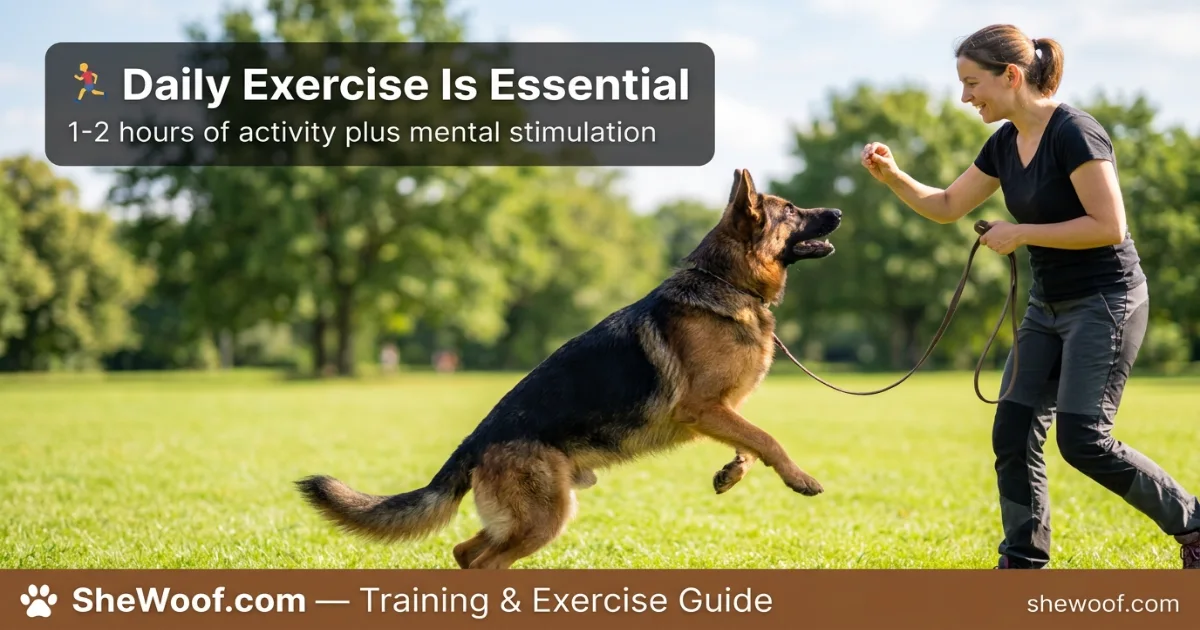
A healthy adult German Shepherd needs one to two hours of vigorous daily activity. That means more than a slow walk — they need running, hiking, fetch, swimming, or structured training sessions. Mental exercise matters just as much: puzzle toys, obedience training, scent work, and interactive games all help satisfy their brain.
Puppies have different needs. Growth plates in large breeds close slowly, so over-exercise can cause long-term damage. The general guideline is five minutes of structured exercise per month of age, once or twice a day, until they reach physical maturity. Free play in a safe yard is fine because puppies self-regulate.
Senior German Shepherds need gentler activity but should still move daily. Walks, sniffing games, and gentle swimming help maintain mobility and mental engagement.
| Life Stage | Daily Exercise | Best Activities |
|---|---|---|
| Puppy (8 weeks–6 months) | 5 min per month of age, 1–2× daily | Free play, short walks, puppy training |
| Adolescent (6–18 months) | 45–90 minutes, split into sessions | Fetch, structured training, swimming |
| Adult (1–7 years) | 1–2 hours | Running, hiking, obedience, scent work |
| Senior (7+ years) | 30–60 minutes, gentler pace | Walks, sniffing games, gentle swimming |
What Health Problems Should German Shepherd Owners Watch For?
German Shepherds are generally healthy but prone to several well-documented conditions. Hip and elbow dysplasia are the most common orthopedic issues; they range from mild to severe and may require lifelong management or surgery. Degenerative myelopathy, a progressive spinal cord disease, affects many German Shepherds as they age. Certain cancers occur at higher rates in the breed. Bloat (gastric dilatation-volvulus) is also a serious risk, especially in deep-chested dogs.
Skin allergies, ear infections, and digestive sensitivities are also common. Regular veterinary visits, keeping your dog at a healthy weight, and choosing a breeder who health-tests both parents are the most effective ways to reduce risk.
How Much Does German Shepherd Ownership Cost?
Puppy from a reputable breeder: $1,500 – $3,500
Show or working lines: $3,000 – $6,000+
Adoption fee (rescue/shelter): $100 – $500
First-year vet care (vaccines, spay/neuter, etc.): $500 – $1,000
Food (adult German Shepherd, quality kibble): $70 – $120 per month
Routine annual vet care: $300 – $600
Pet insurance: $40 – $90 per month
Training classes: $150 – $400 per course
Grooming (occasional, mostly at home): $50 – $100 per session
Boarding (per night): $40 – $80
Total first-year cost typically runs $2,500 to $5,000, with ongoing annual costs of $1,500 to $3,000. German Shepherds are a significant financial commitment, and their health risks make pet insurance especially worthwhile.
What Most Owners Get Wrong About German Shepherds
Assuming the dog will train itself. German Shepherds are intelligent, but intelligence without guidance produces chaos, not obedience. Structured, consistent training from puppyhood is essential.
Underestimating the exercise requirement. A quick walk morning and evening is not enough. This breed needs real physical activity, daily.
Choosing the breed for looks rather than lifestyle. German Shepherds are chosen by many owners for their striking appearance. But they are working dogs, not decorative ones. If your lifestyle does not include regular activity, training, and companionship, a German Shepherd is the wrong choice.
Skipping health testing. Buying a puppy from a breeder who does not test for hip and elbow dysplasia is a gamble that often ends in heartbreak and expensive vet bills.
What Realistic Ownership Looks Like
Owning a German Shepherd is a daily commitment. Your routine will revolve around their exercise needs, training sessions, and companionship. They will follow you from room to room, want to be part of everything, and notice immediately if you are stressed or unwell. In return, they will be the most loyal, protective, and devoted dog you have ever lived with.
What is unrealistic: expecting a German Shepherd to be calm, obedient, and low-maintenance without effort. That version of the breed does not exist. What is realistic: a partnership that rewards structure, consistency, and love with an extraordinary dog.
Frequently Asked Questions About German Shepherds
Yes, a German Shepherd is a good dog for the right owner. They are intelligent, loyal, trainable, and protective. But they need one to two hours of daily exercise, consistent training, and significant companionship. They are not a good fit for low-maintenance or first-time owners.
Yes, when properly trained and socialized. German Shepherds are naturally protective of children and bond closely with their families. Early socialization, consistent training, and supervision with young children are essential. An untrained German Shepherd can be too strong and reactive for a family setting.
Yes. German Shepherds have a double coat that sheds year-round and blows heavily twice a year, usually in spring and fall. Regular brushing several times a week and deshedding treatments help manage the hair, but owners should be prepared for dog fur on furniture and clothing.
Adult German Shepherds need one to two hours of vigorous physical activity daily, plus mental stimulation from training and puzzle toys. Puppies need five minutes of structured exercise per month of age. Under-exercised German Shepherds commonly develop destructive behavior and anxiety.
Generally, no. German Shepherds are strong-willed, high-energy, and need experienced handling. First-time owners who are willing to work closely with a trainer and commit to daily exercise can succeed, but the breed is not beginner-friendly in most cases.
Common issues include hip and elbow dysplasia, degenerative myelopathy, bloat, and certain cancers. Skin allergies and ear infections are also frequent. Choosing a breeder who health-tests and keeping your dog at a healthy weight reduce the risk significantly.
Ongoing annual costs typically range from $1,500 to $3,000. First-year costs, including purchase and initial vet care, can run $2,500 to $5,000. Food, routine vet care, pet insurance, and training make up the largest ongoing expenses.
German Shepherds are not naturally aggressive, but they are protective and territorial. Without proper training and socialization, they can become reactive or overly defensive. A well-bred, well-socialized German Shepherd is confident, calm, and appropriate with people when properly introduced.
- Yes, a German Shepherd is a good dog — for owners prepared to meet their needs. They are intelligent, loyal, trainable, and protective.
- German Shepherds need one to two hours of daily exercise, structured training from puppyhood, and significant companionship.
- They shed heavily year-round, are prone to hip and elbow dysplasia, and are not ideal for first-time owners.
- Early socialization, health testing, and keeping your dog lean reduce the risk of behavioral and health problems.
- Total first-year costs typically run $2,500 to $5,000, with ongoing annual costs of $1,500 to $3,000. Pet insurance is strongly recommended.