
How Much Salt Does a Dog Need? Daily Sodium Requirements Explained
Estimated reading time: 12 minutes
Quick Answer: Dogs need a small amount of sodium in their diet — roughly 25 to 50 mg per kilogram of body weight per day, or about 0.8 to 1.7 grams of salt (sodium chloride) daily for a medium-sized dog. Most complete commercial dog foods already contain sufficient sodium, so you should never add salt to your dog’s food. The toxic dose of salt for dogs is approximately 1.5 grams per pound of body weight (about 3.3 grams per kilogram), and ingesting too much can cause serious illness or death.
The question of how much salt does a dog need is one that confuses many owners because the answer is both “some” and “very little, and it’s probably already covered.” Sodium is an essential nutrient — dogs cannot survive without it. It maintains fluid balance, supports nerve function, and helps muscles contract. But the amount a dog requires is tiny compared to what most human diets contain, and the margin between “enough” and “too much” is narrower than most people realize.
I have watched owners sprinkle salt on their dog’s food thinking it will make it more appealing, and I have seen dogs end up in emergency clinics after drinking seawater at the beach. Both situations stem from the same misunderstanding: salt is not a flavor enhancer for dogs, and it is not something you need to add. Here is what the research says about sodium requirements, safe limits, and how to spot a problem.
How Much Sodium Does a Dog Actually Need?
Dogs have a genuine physiological requirement for sodium. The National Research Council (NRC), which sets the most authoritative nutrient standards for dogs and cats, recommends a minimum of about 0.2 grams of sodium per 1,000 kilocalories of food . For a typical medium-sized dog eating around 1,000 calories per day, that works out to roughly 200 milligrams of sodium — or about half a gram of salt (sodium chloride).
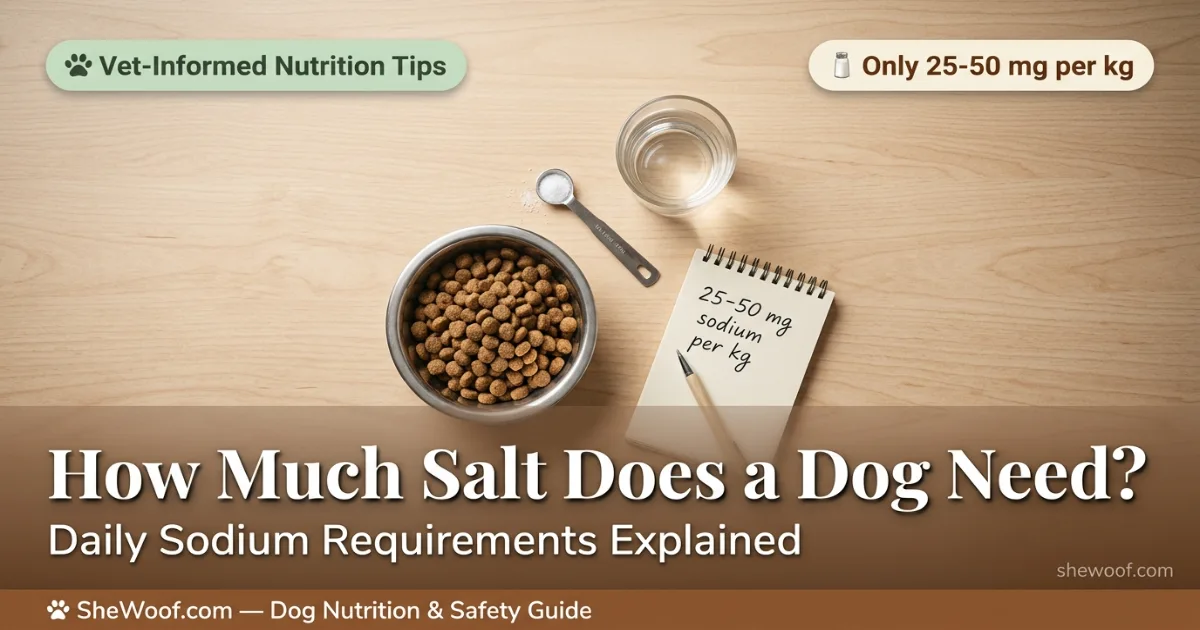
Practical guidelines used by veterinarians and nutritionists suggest a daily intake of 25 to 50 milligrams of sodium per kilogram of body weight . For a 15-kilogram dog (about 33 pounds), that is 375 to 750 milligrams of sodium per day, which converts to roughly 0.9 to 1.9 grams of salt. For a tiny Chihuahua weighing 3 kilograms, the requirement drops to about 75 to 150 milligrams of sodium — around 0.18 grams of salt. A giant breed like a Saint Bernard at 80 kilograms might need around 2 to 4 grams of sodium, or 5 to 10 grams of salt .
The key takeaway is that the requirement scales with body weight, but it remains small in absolute terms. A single teaspoon of table salt contains roughly 2,300 milligrams of sodium — more than three times what a medium-sized dog needs in a full day.
Why You Should Never Add Salt to Your Dog’s Food
Complete and balanced commercial dog foods are formulated to meet all of a dog’s nutritional needs, including sodium. Most dry dog foods contain around 0.3% salt by weight , which is sufficient for healthy adult dogs. Adding table salt to your dog’s food is not just unnecessary — it can be harmful.
The reason is that the margin between “adequate” and “toxic” is much narrower for dogs than for humans. A 70-kilogram human consumes about 3.5 grams of sodium per day, which is 50 milligrams per kilogram of body weight. A 15-kilogram dog consuming between 30 and 200 milligrams per kilogram is already at the higher end of the safe range on a typical diet . Adding salt pushes dogs toward toxicity quickly.
Some owners believe salt makes food more palatable. Dogs do not need salt for flavor, and their taste preferences are driven more by fat and meat than by saltiness. If your dog is refusing food, the solution is not salt — it is a veterinary check to rule out illness and a conversation about appropriate food toppers.
What Happens If a Dog Gets Too Much Salt?
Excess sodium in a dog’s system causes a condition called hypernatremia — elevated sodium levels in the blood. This happens when a dog consumes more salt than their body can process, usually because they do not have access to enough fresh water to dilute it. The body tries to compensate by drawing water out of cells, which can lead to dehydration of brain cells and serious neurological symptoms .
The toxic dose of salt for dogs is generally cited as 1.5 grams per pound of body weight, or about 3.3 grams per kilogram . For a 15-kilogram dog, that is roughly 50 grams of salt — about three tablespoons. But smaller amounts can cause problems if the dog is dehydrated or does not have access to water.
Symptoms of salt poisoning typically appear within hours of ingestion and can worsen quickly. They include vomiting, diarrhea, loss of appetite, excessive thirst or urination, lethargy, incoordination, tremors, seizures, and in severe cases, coma or death .
- Vomiting and diarrhea
- Loss of appetite
- Excessive thirst or urination
- Lethargy or weakness
- Incoordination or stumbling
- Tremors or shivering
- Seizures
- Swollen abdomen
- Disorientation
- Coma (in severe cases)
If you suspect your dog has consumed too much salt, do not wait for symptoms to develop. Call your veterinarian or a pet poison control hotline immediately. Treatment typically involves IV fluids to slowly bring sodium levels back to normal — correcting sodium too quickly can cause brain swelling, so this must be done under veterinary supervision .
Can a Dog Have Too Little Salt?
Hyponatremia — low blood sodium — is less common than salt toxicity but can occur. It is usually the result of an underlying medical condition, certain medications (especially diuretics), or excessive water intake rather than a dietary deficiency. On a complete and balanced diet, dietary sodium deficiency is extremely rare in dogs.
However, dogs with certain health conditions — particularly heart disease, kidney disease, or liver disease — may require sodium-restricted diets. These diets are formulated to be lower in sodium but still meet the dog’s minimum requirements. If your veterinarian has prescribed a low-sodium diet for your dog, do not add salt or feed high-sodium treats. Follow the veterinary diet strictly .
How Do Puppies’ Salt Needs Differ from Adults?
Puppies have higher sodium requirements relative to their body weight than adult dogs. The NRC recommends 0.484 grams of salt per kilogram of body weight per day for puppies, which is double the adult recommendation . This reflects the demands of growth and development.
Despite this higher relative need, you still should not add salt to a puppy’s food. Complete puppy foods are formulated to meet these requirements. A high-quality puppy diet provides all the sodium a growing dog needs without the risks of over-supplementation. The same caution applies to puppies as to adults: the margin for error is small, and commercial diets are balanced for safety.
What About Salt in Treats and Human Foods?
Many human foods that dogs love are dangerously high in sodium. Deli meats, cheese, bread, pizza, pickled foods, condiments, and most commercial snacks are all on the “avoid” list for dogs because of their sodium content . Even foods that seem healthy, like rotisserie chicken or canned vegetables, often contain added salt that pushes them into unsafe territory for dogs.
When choosing treats, look for products specifically formulated for dogs, which are designed to be low in sodium. If you want to give your dog human food as an occasional treat, stick to fresh, unseasoned options like plain cooked chicken, carrots, green beans, or apple slices. Even then, keep portions small.
| Food | Sodium Risk | Safe Alternative |
|---|---|---|
| Bacon, ham, deli meat | Very high | Plain cooked chicken or turkey |
| Cheese | High | Small piece of low-sodium cheese or none |
| Bread, crackers | Moderate to high | Plain rice cakes or none |
| Canned vegetables | High (unless no-salt-added) | Fresh or frozen vegetables |
| Commercial dog treats | Variable | VOHC-approved dental chews, fresh veggies |
| Fast food, chips, pretzels | Extremely high | Never feed |
What About Rock Salt and Sea Salt?
Rock salt — the kind used to melt ice on roads and driveways — is sodium chloride, the same chemical compound as table salt. It is not meant for consumption and can cause salt poisoning if a dog licks it off their paws or eats it directly . During winter months, rinse your dog’s paws after walks in areas where rock salt has been used, and keep bags of de-icer out of reach.
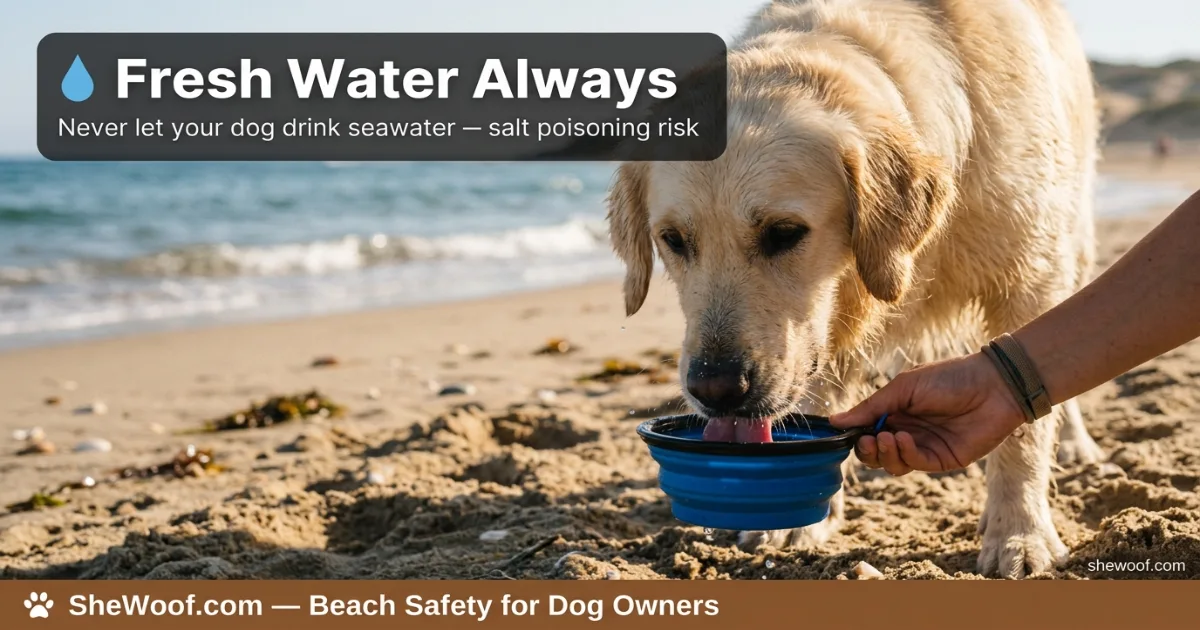
Sea salt is also sodium chloride and carries the same risks as table salt. Dogs can be poisoned by drinking seawater at the beach or by eating food seasoned with sea salt. Always provide fresh water at the beach, discourage your dog from drinking saltwater, and limit salty human foods .
When Should You See a Vet About Salt?
What Realistic Expectations Look Like
If you feed your dog a complete and balanced commercial diet and avoid salty human foods, their sodium needs are almost certainly being met. You do not need to measure salt, add supplements, or worry about deficiency. The more common problem is the opposite — accidental ingestion of too much salt from human food, rock salt, or seawater.
What is realistic is a simple approach: feed a quality dog food, keep treats low-sodium and dog-specific, and be vigilant about what your dog picks up outdoors. What is unrealistic is thinking that salt is a flavor enhancer dogs need or that adding a pinch of salt to food is harmless. For dogs, the safe window is narrow, and the risks of excess are far more common than the risks of deficiency.
- Dogs need only 25 to 50 mg of sodium per kilogram of body weight daily — about 0.8 to 1.7 grams of salt for a medium-sized dog.
- Complete commercial dog foods already contain sufficient sodium; never add salt to your dog’s food.
- The toxic dose of salt is approximately 1.5 grams per pound of body weight (3.3 g/kg), and symptoms can appear within hours.
- Symptoms of salt poisoning include vomiting, diarrhea, lethargy, tremors, seizures, and disorientation — seek emergency veterinary care immediately.
- Puppies need double the adult sodium requirement per kilogram, but this is met by puppy-formulated diets without supplementation.
- Avoid feeding salty human foods, keep rock salt out of reach, and provide fresh water at the beach.
Frequently Asked Questions
How much salt does a dog need per day?
Dogs need roughly 25 to 50 milligrams of sodium per kilogram of body weight daily, which is about 0.8 to 1.7 grams of salt for a medium-sized dog. The NRC’s minimum recommendation is about 0.242 grams of salt per kilogram for adult dogs, double that for puppies.
Can I add salt to my dog’s food?
No. Complete commercial dog foods already contain sufficient sodium to meet your dog’s needs. Adding salt is unnecessary and can push your dog toward sodium toxicity. If your dog is refusing food, consult your veterinarian rather than trying to make it more appealing with salt.
What is the toxic dose of salt for dogs?
The toxic dose is approximately 1.5 grams of salt per pound of body weight (about 3.3 grams per kilogram). For a 15-kilogram dog, that is roughly 50 grams of salt. However, smaller amounts can cause problems if the dog is dehydrated or lacks access to water.
What are the symptoms of salt poisoning in dogs?
Symptoms include vomiting, diarrhea, loss of appetite, excessive thirst or urination, lethargy, incoordination, tremors, seizures, and disorientation. Severe cases can lead to coma or death. Contact your veterinarian or a pet poison control hotline immediately if you suspect salt poisoning.
Do puppies need more salt than adult dogs?
Yes, puppies need about double the sodium per kilogram of body weight compared to adults — 0.484 grams of salt per kilogram versus 0.242 grams. However, this is met by complete puppy foods. Do not add salt to a puppy’s diet.
Can dogs drink salt water at the beach?
No. Drinking seawater can cause salt poisoning in dogs. Always bring fresh water to the beach, discourage your dog from drinking saltwater, and monitor them closely. Symptoms of saltwater ingestion include vomiting, diarrhea, and lethargy.
Is sea salt safer for dogs than table salt?
No. Sea salt and table salt are both sodium chloride and carry the same risks for dogs. Neither should be added to your dog’s food, and both can cause poisoning if consumed in large amounts.
What should I do if my dog ate too much salt?
Call your veterinarian or a pet poison control hotline immediately. Do not try to treat salt poisoning at home by forcing your dog to drink water. Veterinary treatment typically involves IV fluids to slowly correct sodium levels under supervision to avoid complications like brain swelling.