
Should I Let My Puppy Chew on Sticks? What Every New Dog Owner Needs to Know
Quick Answer: No, you should not let your puppy chew on sticks. Sticks can splinter, break teeth, puncture gums, lodge in the throat, or cause dangerous intestinal blockages. Many puppies end up in emergency veterinary care each year from stick-related injuries that owners assumed were harmless. The short-term fun is never worth the potential risk. Offer safe, puppy-appropriate chew alternatives instead.
You’re sitting in the backyard on a sunny afternoon. Your puppy picks up a stick, tail wagging, and starts gnawing on it with pure joy. It looks innocent — even adorable. Every puppy does it. Your neighbor’s dog chewed sticks for years without a problem. So when you Google “should i let my puppy chew on sticks,” you’re half expecting the answer to be “sure, as long as you supervise.”
The real answer is more serious than most new owners realize. Stick chewing is one of those deceptively common puppy behaviors that can go from zero to emergency room faster than you’d think. Veterinarians see the aftermath regularly: splintered mouths, perforated esophagi, and intestinal surgeries that started with an ordinary stick in an ordinary backyard.
That doesn’t mean you need to panic every time your puppy sniffs a twig. It means you need accurate, practical information so you can make the right call — and know exactly what to offer instead. This guide covers the real risks, the myths, the puppy-safe alternatives, and the moments when you truly need to call your vet.
What Actually Happens When a Puppy Chews on a Stick
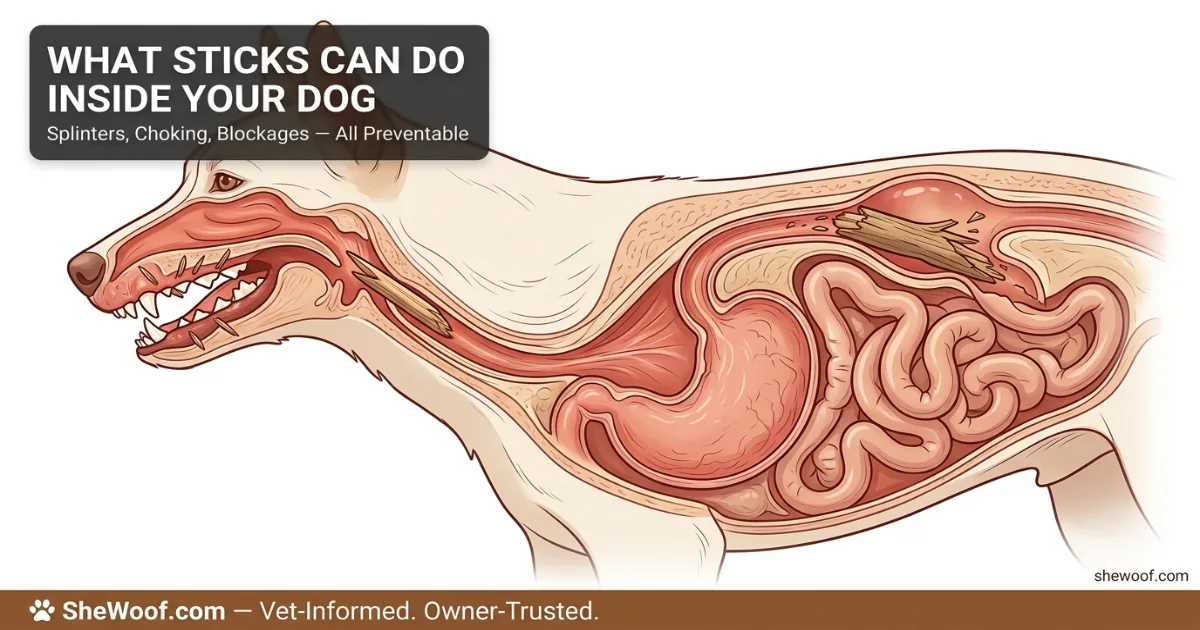
Sticks are not designed by nature to be dog chews. They’re brittle, fibrous, and unpredictable. When a puppy bites down, the wood doesn’t compress like a rubber toy. It splinters. Those splinters can embed in the tongue, gums, or roof of the mouth — sometimes too small to see but painful enough to cause a puppy to stop eating or drinking.
Beyond the mouth, the risks escalate quickly. A swallowed splinter can scratch the esophagus on the way down. A larger piece can lodge in the throat and cause choking. And if a chunk of stick makes it to the intestines, it can create a partial or complete blockage — a surgical emergency that often requires abdominal surgery to resolve.

Veterinary dental specialists report that stick-related tooth fractures are among the most preventable injuries they treat. Puppy teeth are softer than adult dog teeth, making them more vulnerable to cracking when bitten against a hard, irregular surface like bark-covered wood. A slab fracture — where a chunk of the tooth breaks off — can expose the sensitive pulp inside, leading to infection and requiring extraction or a root canal.
Why Most Owners Get This Wrong
The biggest reason stick chewing persists as a “normal” puppy behavior is that many dogs do it without immediate consequences. Owners see their neighbor’s Labrador happily carrying a branch for years and assume it must be safe. What they don’t see are the dogs who weren’t so lucky — the ones who needed emergency surgery or lost teeth — because those stories don’t make it into casual backyard conversation.
Social media compounds the problem. Videos of puppies playing with sticks get millions of views with zero context about the risks. The algorithm rewards cuteness, not caution. And when a new owner searches for guidance, they often find forum posts from other owners who say “my dog chewed sticks his whole life and was fine.” Survivorship bias doesn’t make good safety advice.
Another common mistake: assuming that supervision eliminates the danger. You can watch your puppy closely, but you cannot control what happens inside their mouth in the split second a stick splinters. The damage often occurs before you can react. Supervision reduces risk — it does not eliminate it.
How Puppy Age and Breed Affect the Risk
Puppies between 3 and 8 months old are at the highest risk for stick-related problems. This is peak teething season — when the urge to chew is relentless and the puppy doesn’t yet have the judgment to distinguish safe objects from dangerous ones. Their baby teeth are falling out and adult teeth are erupting, which can make the gums sore and increase the drive to gnaw on anything within reach.
Breed matters, too. Retrievers and other mouth-oriented breeds are naturally drawn to carrying objects and may be more likely to pick up sticks during walks or play. Small breeds with delicate jaws can still suffer serious damage, but large-breed puppies with powerful bite force can splinter a stick more easily and swallow larger pieces. Neither category is safe; the risk simply manifests differently.
Safe Alternatives to Stick Chewing
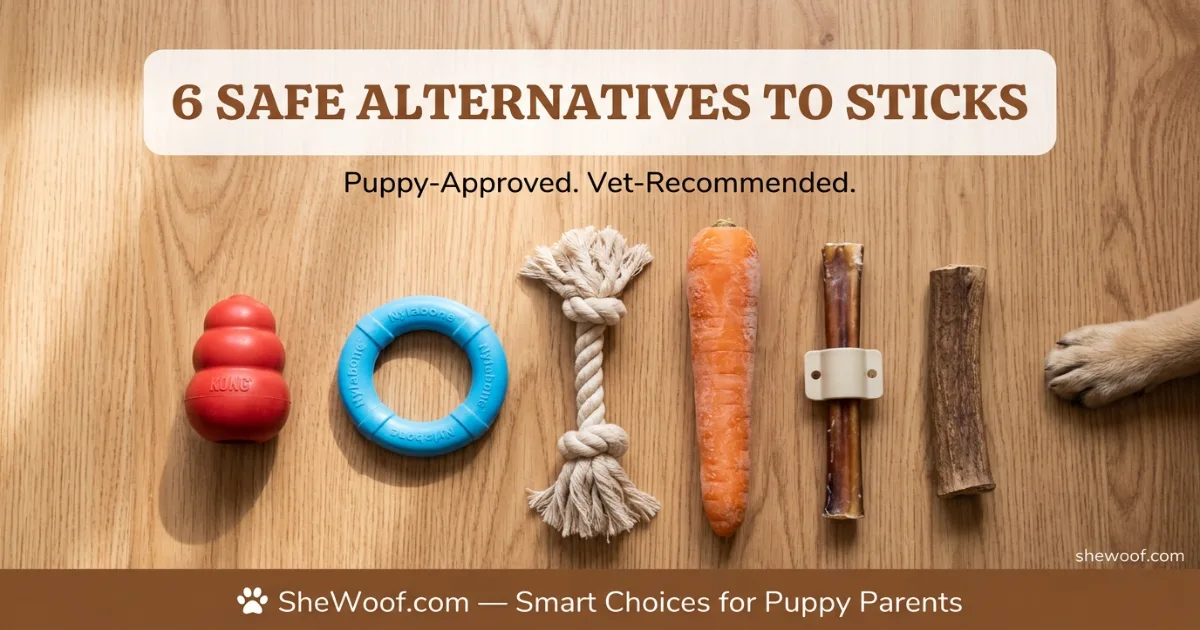
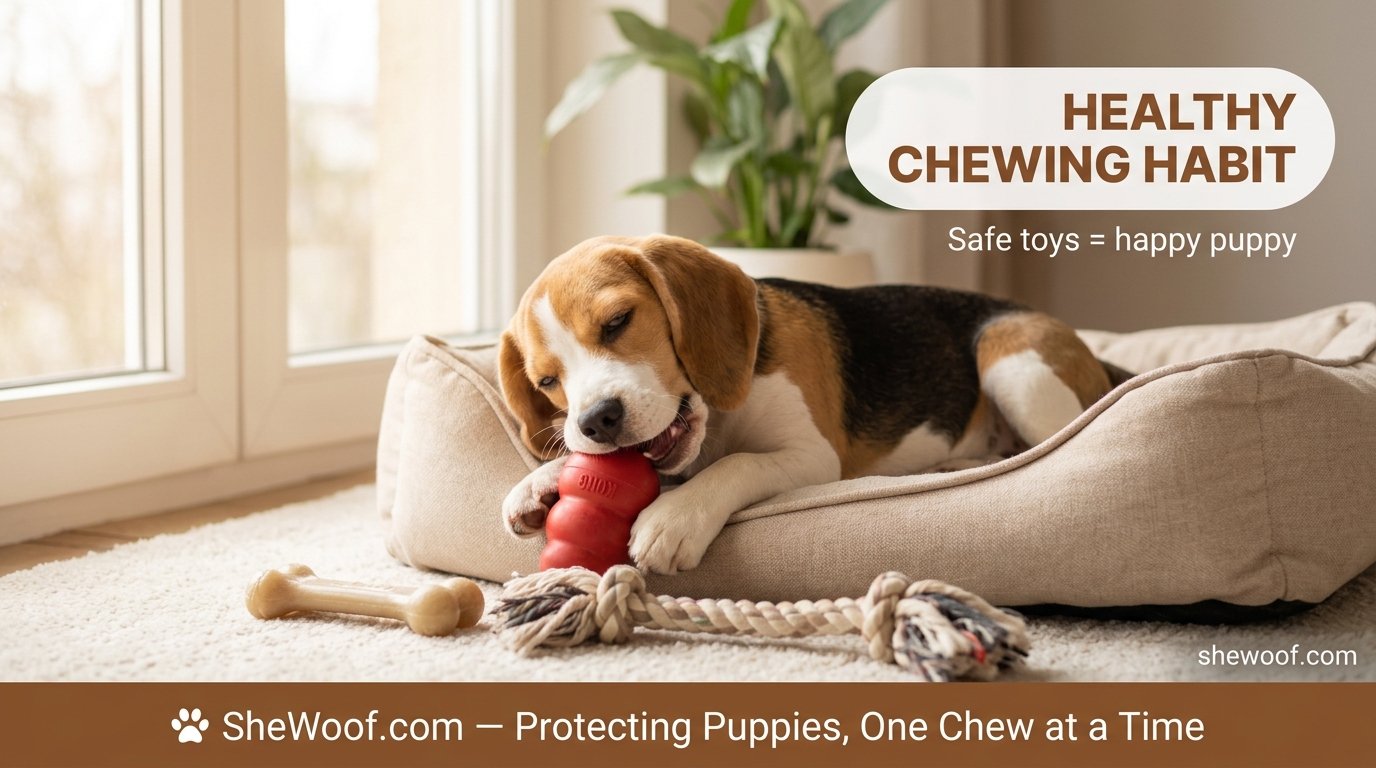
The good news: puppies don’t need sticks to satisfy their chewing instinct. There are many safer, vet-approved alternatives that provide similar satisfaction without the splinter risk. The key is offering alternatives that match your puppy’s chewing style and intensity.
| Alternative | Best For | Safety Notes |
|---|---|---|
| Rubber chew toys (Kong, Nylabone) | All puppies | Choose puppy-specific sizes and strengths |
| Frozen carrots (large, whole) | Teething puppies | Supervise; remove when small enough to swallow |
| Benebone or similar flavored chews | Aggressive chewers | Replace when worn down; not for weak teeth |
| Rope toys (cotton, supervised) | Interactive play | Discard if strands come loose; do not leave with puppy alone |
| Bully sticks (dehydrated beef) | Moderate chewers | High in calories; use a holder to prevent swallowing the end |
| Coffee wood or olive wood chews | Natural chew lovers | Softer than sticks; splinter less; still supervise |
What About Sticks in the Park or on Walks?
You cannot remove every stick from the world. On walks and in public parks, your puppy will encounter sticks constantly. The goal is not to create a sterile environment — it’s to train your puppy to choose better options.
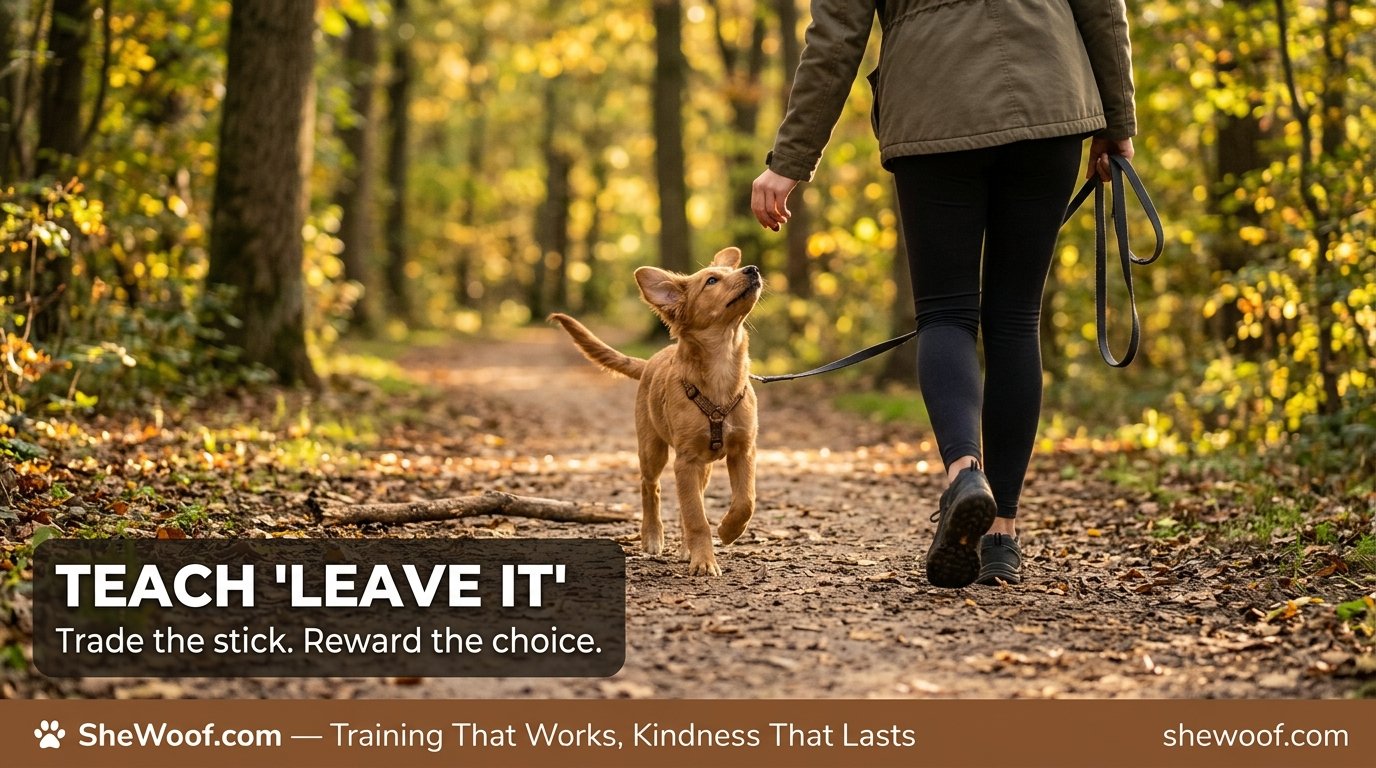
Start with a strong “leave it” cue. Practice at home with low-value items first, then gradually introduce more tempting objects. When your puppy successfully ignores a stick, reward generously with a high-value treat or their favorite chew toy. The message: leaving the stick alone leads to something better.
Carry a small tug toy or portable chew on walks. If your puppy picks up a stick, trade it for the toy rather than simply prying the stick out of their mouth. This teaches cooperation and prevents resource guarding while keeping the walk enjoyable for both of you.
The Truth About Wood-Based Dog Chews
Pet stores now sell “wood chew” products made from coffee wood, olive wood, or specially processed softwoods. These are fundamentally different from the random sticks in your backyard. They’re harvested, dried, and processed to reduce splintering risk. Many veterinarians consider them a reasonable natural option for supervised chewing.
That said, “natural wood chew” and “stick from the oak tree” are not the same category. The commercially prepared versions are designed to crumble rather than splinter. They still require supervision, and you should discard them when they become small enough to swallow whole. But they represent a thoughtful middle ground for owners whose puppies seem genuinely drawn to the texture of wood.
When Stick Chewing Becomes a Behavioral Issue
For some puppies, stick chewing moves beyond casual backyard curiosity into a compulsive behavior. If your puppy obsessively seeks out sticks, ignores other toys in favor of wood, or becomes agitated when prevented from chewing sticks, it’s worth examining the underlying cause.
Compulsive chewing often signals unmet needs: insufficient physical exercise, mental under-stimulation, or anxiety. A puppy who spends hours alone in a yard with nothing to do will create their own entertainment — and sticks are readily available. Increasing structured playtime, adding puzzle feeders, and ensuring adequate socialization can reduce the intensity of the behavior.
If the behavior persists despite environmental enrichment, consult a certified dog trainer or veterinary behaviorist. They can help you identify triggers and create a targeted behavior modification plan. This is not about willpower or dominance — it’s about understanding what your puppy needs and providing it in a safer way.
Frequently Asked Questions About Puppies and Stick Chewing
Supervision reduces the risk but doesn’t eliminate it. A stick can splinter and cause injury in a split second — faster than any owner can react. The safest approach is to remove sticks from your puppy’s environment and offer vet-approved chew alternatives instead.
Call your veterinarian immediately. Describe the size of the piece, when it happened, and any symptoms you’ve observed. Do not induce vomiting unless specifically instructed by your vet — sharp stick fragments can cause additional damage on the way back up. Your vet may recommend monitoring at home or an immediate examination depending on the situation.
No naturally occurring stick is guaranteed safe for puppy chewing. Even softwoods can splinter unpredictably. If your puppy genuinely seems drawn to the texture of wood, consider a commercially prepared coffee wood or olive wood chew designed specifically for dogs. These are processed to crumble rather than splinter and are far safer — though still not risk-free without supervision.
Puppies chew for several reasons: teething pain relief, exploration of textures, boredom, and instinct. Sticks happen to satisfy many of these drives at once — they’re textured, they smell interesting, they have some give when bitten, and they’re readily available. The behavior is natural, but natural doesn’t always mean safe. Redirecting the instinct to appropriate chew toys is the responsible approach.
Yes. Chronic stick chewers often develop worn, fractured, or infected teeth over time. Slab fractures — where a portion of the tooth shears off — are common and can expose the tooth pulp, leading to painful infections that require extraction or root canal treatment. These are preventable injuries that accumulate gradually across months or years of unsupervised stick access.
There is no guaranteed age when puppies naturally stop chewing sticks. Some dogs reduce the behavior as they exit the teething phase around 6 to 8 months. Others carry the habit into adulthood, especially breeds with strong mouthing instincts like retrievers and shepherds. Active training and consistent redirection are more effective than waiting for the behavior to disappear on its own.
Carrying sticks is lower risk than chewing them, but it’s not risk-free. Puppies can trip and injure themselves on carried sticks, especially longer branches. They may also start chewing the stick without warning. If your puppy enjoys carrying objects, offer a soft retrieval toy or a puppy-safe dummy instead. It satisfies the carrying instinct without the danger.
- Stick chewing poses real medical risks including dental fractures, mouth injuries, choking, and intestinal blockages — these are not rare, theoretical dangers.
- Puppies between 3 and 8 months are at the highest risk due to teething and lack of impulse control, but adult dogs are not immune to stick injuries.
- Supervision alone does not make stick chewing safe; the damage from a splintering stick can happen faster than any owner can intervene.
- Safe alternatives — rubber chew toys, frozen carrots, bully sticks, commercial wood chews — satisfy your puppy’s chewing drive without the splinter risk.
- Training a reliable “leave it” cue and carrying a trade toy on walks gives you practical, daily tools to manage the behavior without confrontation.
- Any sign of distress after stick chewing — drooling, vomiting, refusing food, lethargy — warrants an immediate call to your veterinarian.






One Comment