My Dog Has a Cold — What to Do: Symptoms, Home Care, and When to See the Vet
Quick Answer: If your dog has a cold, the most important things to do are: keep them warm and comfortable, encourage rest, ensure they stay hydrated, use a humidifier to ease congestion, and monitor symptoms closely. Most mild canine colds resolve within 5 to 10 days with supportive home care. Do not give your dog human cold medications — many are toxic. If symptoms worsen, your dog stops eating or drinking, develops a fever over 103°F, has thick yellow or green nasal discharge, or shows signs of breathing difficulty, see a veterinarian promptly.
Your dog is sneezing more than usual. Their nose is running. They seem tired, maybe a little less interested in their food bowl. You search “dog has a cold what to do” because you want to help — but you’re not sure whether this is a stay-home-and-rest situation or a pack-up-and-go-to-the-vet situation. That uncertainty is completely normal. Dogs share our homes, our routines, and sometimes — our sniffles. But their colds are different from ours, and what works for a human can be dangerous for a dog.
Canine respiratory infections are common, especially in dogs who spend time around other dogs at parks, daycares, or boarding facilities. Most are mild and self-limiting, meaning they resolve with time and supportive care. Some, however, can progress to pneumonia or signal a more serious underlying condition. Knowing how to tell the difference — and exactly what to do in the first 24 to 48 hours — gives your dog the best chance at a quick, comfortable recovery.
Can Dogs Actually Catch a Cold?
Dogs do not catch the same rhinovirus that causes the human common cold. But they absolutely get their own versions of upper respiratory infections — commonly referred to as “canine colds” — caused by a variety of viruses and bacteria including canine adenovirus, canine parainfluenza virus, Bordetella bronchiseptica, and canine respiratory coronavirus. These pathogens cause symptoms that look remarkably similar to what we experience: sneezing, nasal discharge, coughing, watery eyes, and lethargy.
These infections spread through respiratory droplets — a sneeze, a shared water bowl, a nose-to-nose greeting at the dog park. Dogs in close-contact environments are at higher risk, which is why outbreaks often occur in kennels, shelters, and daycare facilities. The incubation period — the time between exposure and the first symptoms — is typically 2 to 10 days, depending on the specific pathogen.
A key distinction: the term “kennel cough” is often used interchangeably with canine colds, but kennel cough specifically refers to a complex of infections where a persistent, honking cough is the primary symptom. A canine cold may involve coughing, but it’s often accompanied by more nasal and systemic symptoms. Both fall under the umbrella of canine infectious respiratory disease complex, or CIRDC.
Symptoms: What a Dog Cold Looks Like vs. Something More Serious
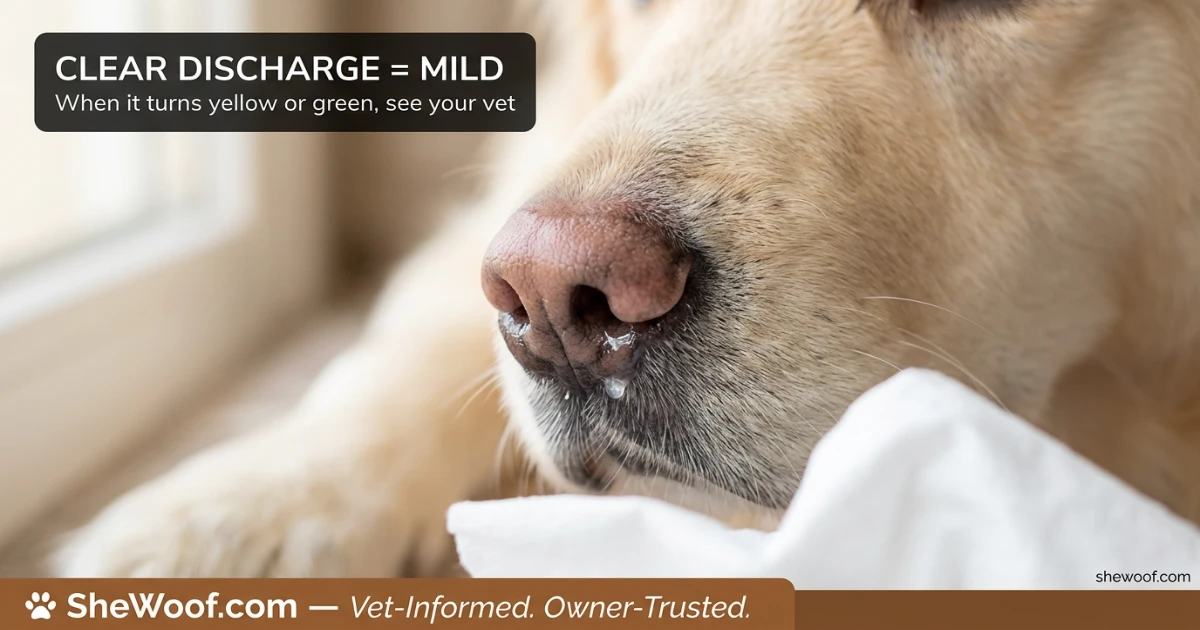
Recognizing the normal progression of a mild canine cold helps you spot when something is veering off course. The typical timeline starts with sneezing and a clear, watery nasal discharge. Your dog may seem slightly subdued — still eating, still responding to you, but with less enthusiasm than usual. Over the next few days, the discharge may thicken slightly. A mild cough may develop. Appetite may dip but should not disappear entirely.
Symptoms that suggest this is more than a simple cold include: a fever above 103°F, thick yellow or green nasal discharge, a deep or productive cough, labored or rapid breathing, complete refusal of food or water for more than 24 hours, significant lethargy where the dog is difficult to rouse, or any sign of pain. These symptoms can indicate pneumonia, a secondary bacterial infection, or an entirely different condition such as canine influenza. They warrant a veterinary visit — not a wait-and-see approach.
| Symptom | Typical Mild Cold | Concerning — See Vet |
|---|---|---|
| Nasal discharge | Clear, watery | Thick yellow/green, bloody |
| Cough | Occasional, mild | Frequent, deep, or productive |
| Appetite | Slightly reduced | Refusing food for 24+ hours |
| Energy level | Subdued but responsive | Lethargic, difficult to rouse |
| Breathing | Normal rate and effort | Labored, rapid, or noisy |
| Temperature | Normal to slightly elevated | Above 103°F (fever) |
| Eyes | Slightly watery | Thick discharge, squinting, redness |
Step-by-Step: What to Do When Your Dog Has a Cold
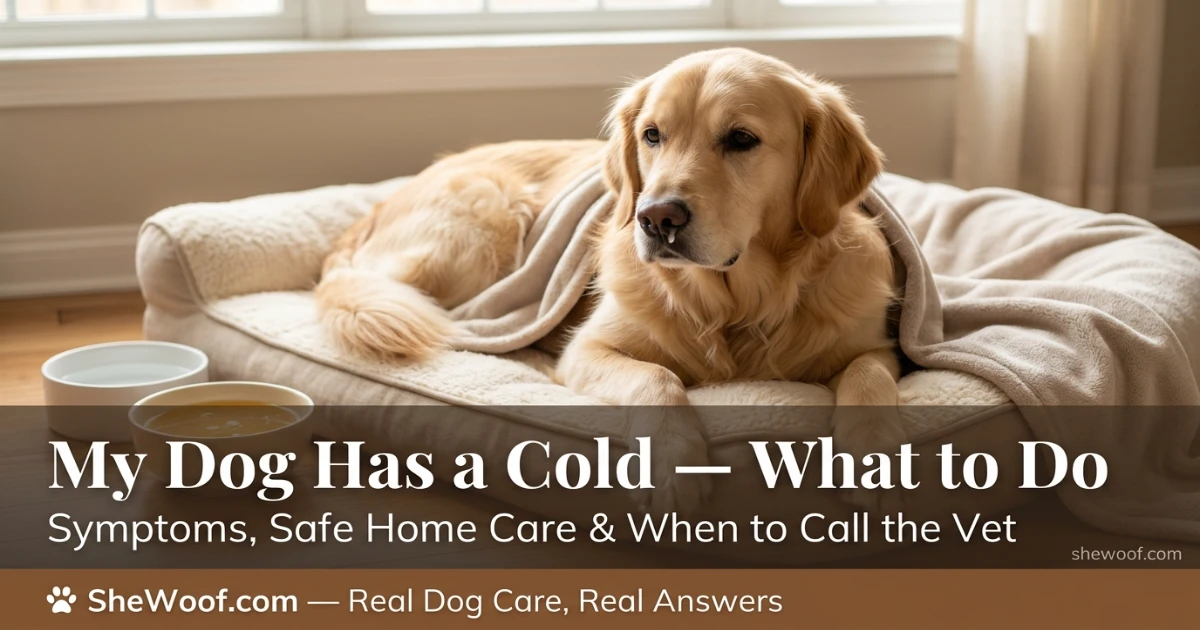
Step 1: Create a calm, warm recovery space. Set up your dog’s bed in a quiet area away from drafts, foot traffic, and other pets. Add an extra blanket. Keep the room at a comfortable, consistent temperature. Dogs regulate body temperature partly through their environment, and a cold dog burns energy that should be going toward immune function.
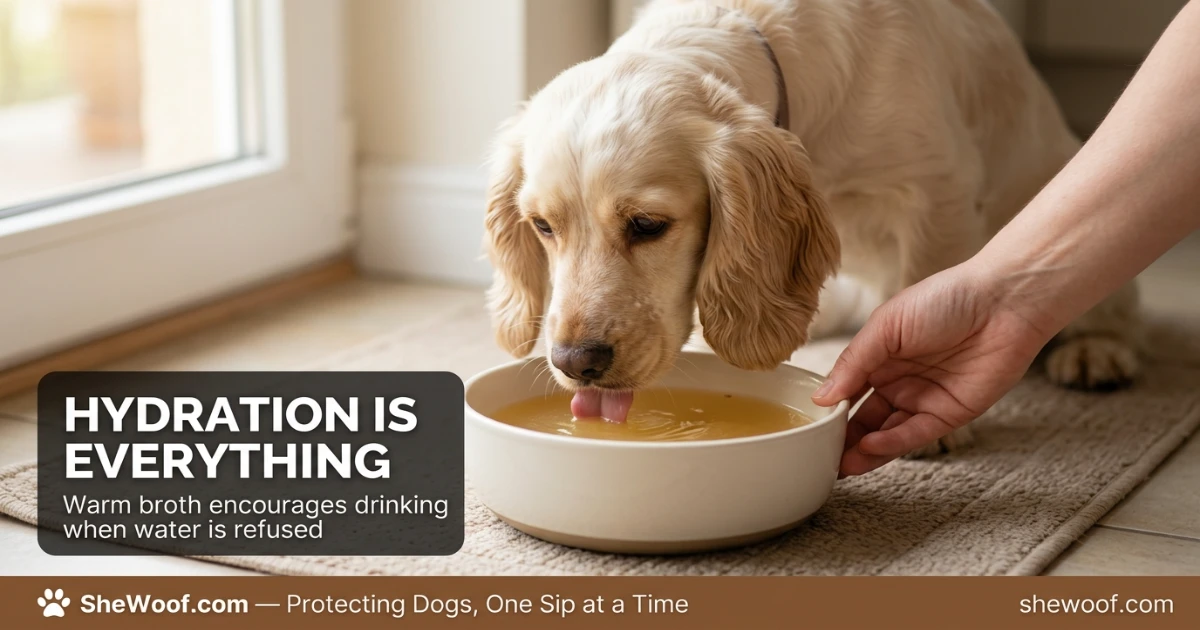
Step 2: Encourage hydration. Water is the single most important supportive therapy for a dog with a respiratory infection. Dehydration thickens mucus, making congestion worse, and slows every healing process in the body. If your dog is reluctant to drink plain water, offer low-sodium, unseasoned chicken or bone broth — warm, not hot. The warmth is soothing, the smell encourages interest, and the fluids do exactly what your dog needs most.
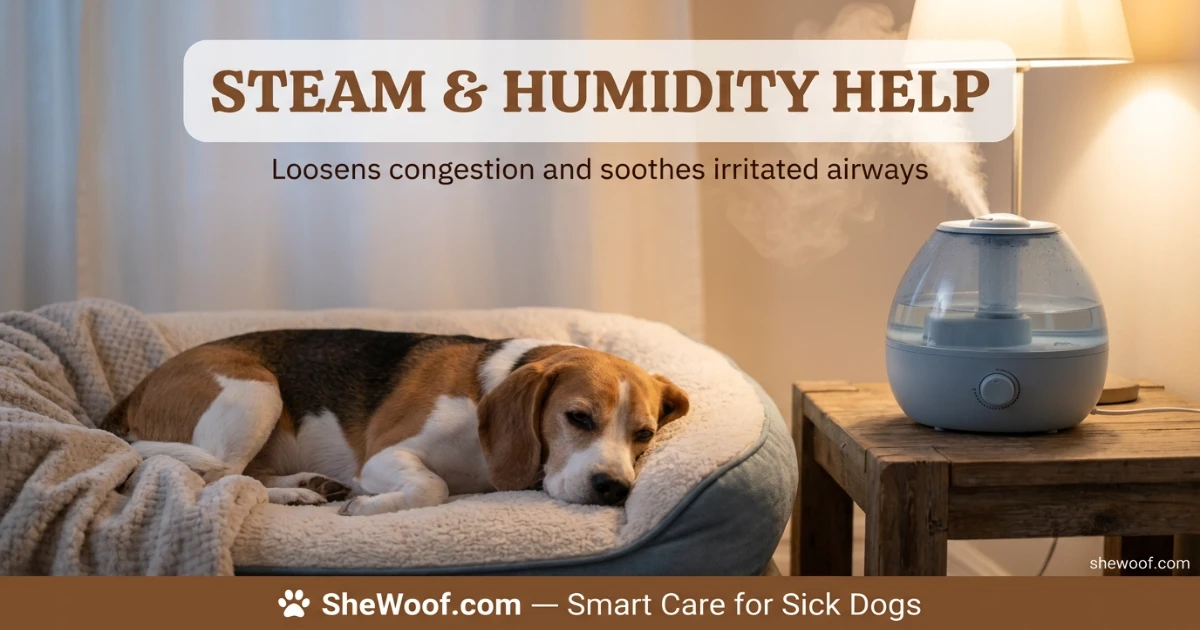
Step 3: Use humidity to ease congestion. A cool-mist humidifier in the room where your dog rests can loosen nasal congestion and soothe irritated airways. If you don’t have a humidifier, bring your dog into the bathroom while you run a hot shower for 10 to 15 minutes. The steam has the same effect. Do this two to three times daily while symptoms are present.
Step 4: Support nutrition with warm, aromatic food. A dog with nasal congestion cannot smell their food well — and dogs rely heavily on smell to stimulate appetite. Warming their regular food slightly or adding a small amount of warm broth can make it more aromatic and appealing. If they refuse kibble entirely, a bland diet of plain boiled chicken and white rice is gentle on the stomach and easy to eat.
Step 5: Limit exercise and exposure. Keep walks short and gentle. No running, no dog park, no daycare. Exercise stresses the respiratory system and increases the risk of spreading the infection to other dogs. Your dog should rest more than usual for at least a week after symptoms appear.
What Most Owners Get Wrong About Dog Colds
The most dangerous mistake is reaching for human cold medicine. Decongestants containing pseudoephedrine, pain relievers like acetaminophen and ibuprofen, and multi-symptom cold formulas are toxic to dogs — sometimes fatally so. Even a single dose can cause liver damage, kidney failure, seizures, or death. There is no safe human cold medicine for dogs. None. The risk is never worth it.
A second common error: assuming a vaccinated dog cannot get sick. Vaccines for Bordetella, parainfluenza, and adenovirus reduce the severity and likelihood of infection, but they do not provide complete immunity. Vaccinated dogs can and do develop respiratory infections. The difference is that they typically have milder symptoms and recover faster than unvaccinated dogs. Vaccination is protective — it is not a force field.
A third misunderstanding involves antibiotics. Many owners expect their vet to prescribe antibiotics for a cold, but most canine colds are viral. Antibiotics treat bacteria, not viruses, and are ineffective against the primary infection. They are only indicated when a secondary bacterial infection develops — which is why your veterinarian may hold off on prescribing them unless symptoms suggest that complication has occurred.
How Puppies, Seniors, and Flat-Faced Breeds Differ
Puppies have immature immune systems. A respiratory infection that an adult dog shrugs off in a week can hit a puppy harder and progress faster. Puppies under 6 months who show cold symptoms should see a veterinarian sooner rather than later — especially if their energy level drops significantly or they stop nursing or eating. Dehydration can become serious very quickly in a small body.
Senior dogs often have less respiratory reserve. Their immune function may be slower, and they are more likely to have underlying conditions — heart disease, chronic bronchitis, collapsing trachea — that complicate a simple cold. What looks like a mild cough in a 12-year-old dog could be the early sign of congestive heart failure, not a cold at all. Senior dogs with cold symptoms should always be evaluated by a veterinarian, even if the symptoms seem mild.
Brachycephalic breeds — Pugs, French Bulldogs, English Bulldogs, Boston Terriers — have anatomically compromised airways even when healthy. A respiratory infection that causes mild congestion in a Labrador can cause significant breathing difficulty in a flat-faced breed. These dogs warrant closer monitoring and a lower threshold for veterinary intervention.
Preventing Future Respiratory Infections
You cannot prevent every cold, but you can meaningfully reduce your dog’s risk. Keep core vaccinations current — including Bordetella if your dog goes to daycare, boarding, grooming, or dog parks. Many facilities require it, and the protection is worth it even when it is not perfect. Avoid shared water bowls in public spaces. Wash your hands after interacting with unfamiliar dogs. If you hear that a respiratory illness is circulating in your local dog community, skip the dog park for a week or two.
Nutrition matters. A dog with a strong baseline immune system will fight off infections faster and with less severity than a dog whose diet is marginal. High-quality protein, omega-3 fatty acids for inflammation control, and adequate hydration all contribute to respiratory resilience. A dog who is chronically stressed — from separation anxiety, a chaotic household, or inadequate exercise — is more vulnerable to infections. Stress suppresses immune function in dogs just as it does in humans.
Frequently Asked Questions About Dog Colds
Start with rest, hydration, and warmth. Set up a quiet recovery space, offer fresh water or warm low-sodium broth frequently, and use a humidifier or steam to ease congestion. Monitor symptoms closely. If your dog is still eating, drinking, and responsive, supportive home care is appropriate for the first 24 to 48 hours.
Never give human cold medications — they can be toxic or fatal to dogs. Safe home remedies include a cool-mist humidifier, steam therapy, warm low-sodium broth for hydration, and extra rest. Your veterinarian may prescribe dog-safe medications if symptoms warrant them, but only after an examination.
Most mild canine colds resolve within 5 to 10 days. Symptoms typically peak around day 3 or 4 and then gradually improve. If symptoms persist beyond 10 days, worsen after day 4, or new symptoms develop, see your veterinarian to rule out secondary infections or other underlying conditions.
No, the viruses that cause human colds are species-specific and do not infect dogs. Likewise, most canine respiratory viruses do not infect humans. Your dog’s cold was likely picked up from another dog or a contaminated surface, not from you or your family members.
Short, gentle walks for bathroom breaks are fine. Avoid long walks, running, and any strenuous activity while your dog is symptomatic. Exercise stresses the respiratory system and diverts energy from immune function. Rest is more important than exercise during the acute phase of a cold.
See your vet if your dog has a fever over 103°F, thick yellow or green nasal discharge, labored breathing, refuses food for more than 24 hours, is significantly lethargic, or if symptoms worsen after 3 to 4 days. Puppies, seniors, and flat-faced breeds should be seen sooner.
Yes. If a respiratory infection moves deeper into the lungs, pneumonia can develop. Warning signs include a deep, productive cough, labored or rapid breathing, extreme lethargy, and loss of appetite. Pneumonia is serious and requires immediate veterinary care — often including antibiotics, fluids, and sometimes hospitalization.
- Most canine colds are mild, viral upper respiratory infections that resolve in 5 to 10 days with rest, hydration, humidity, and time.
- Never give human cold medications to dogs — acetaminophen, ibuprofen, and decongestants are toxic and can be fatal even in small doses.
- Use a cool-mist humidifier, offer warm low-sodium broth, clean nasal discharge gently, and prioritize rest over exercise while symptoms are present.
- Watch for warning signs that require veterinary attention: fever over 103°F, thick yellow or green discharge, labored breathing, refusal to eat or drink, and symptoms that worsen rather than improve after day 3 or 4.
- Puppies under 6 months, senior dogs, and brachycephalic breeds like Pugs and French Bulldogs are at higher risk for complications and should be evaluated by a veterinarian sooner than healthy adult dogs.