Best Deshedding Brush for German Shepherd: Grooming Guide
Quick Answer: The best deshedding brush for a German Shepherd is a combination of two tools used together: an undercoat rake with rotating teeth to pull dead undercoat without damaging the top coat, and a slicker brush to remove loose surface fur and smooth the outer guard hairs. The Furminator is popular but controversial among GSD owners — it can cut the guard coat if used too aggressively. Most experienced German Shepherd owners and professional groomers recommend an undercoat rake (like the Andis or Paws & Pals models) as the primary deshedding tool, supplemented by a high-quality slicker brush and a greyhound comb for finishing. No single brush handles everything a German Shepherd’s double coat demands.
German Shepherds shed. Not a little. Not seasonally. They shed constantly — and twice a year during coat-blowing season, they shed with an intensity that has to be experienced to be believed. If you are searching for the “best deshedding brush for german shepherd,” you are probably standing in a drift of black and tan fur, wondering whether any tool on the market can actually make a dent in what your dog produces every single day.
The answer is yes — but not with a single miracle brush. German Shepherds have a dense double coat: a coarse, weather-resistant outer coat and a thick, soft undercoat. The undercoat is what sheds. The outer coat protects the dog. A brush that pulls undercoat effectively without damaging the guard hairs or irritating the skin is the goal. Most products on the market do one well and the other poorly. This guide sorts the genuinely effective tools from the overhyped ones and gives you a practical grooming routine that works for the breed.
Understanding the German Shepherd Double Coat
A German Shepherd’s coat is a biological marvel — and a housekeeping nightmare. The outer layer consists of medium-length, coarse guard hairs that repel water, block UV radiation, and protect the skin from scratches and debris. The undercoat is a dense, woolly layer of shorter, softer hairs that insulate against both cold and heat. This undercoat is what sheds. It grows in thick during autumn, sheds heavily in spring, and cycles continuously throughout the year at a lower level.
The challenge with deshedding a German Shepherd is that the undercoat and guard hairs are mixed together. A tool that is too aggressive pulls or cuts the guard hairs along with the undercoat, leaving the coat looking patchy and disrupting its natural protective function. A tool that is too gentle removes only the surface fur and leaves the compacted undercoat behind, which can lead to matting, reduced insulation, and skin irritation. The right tool applies enough reach and grip to pull loose undercoat without grabbing and damaging the healthy guard hairs on top.
The Best Brush Types for German Shepherd Deshedding
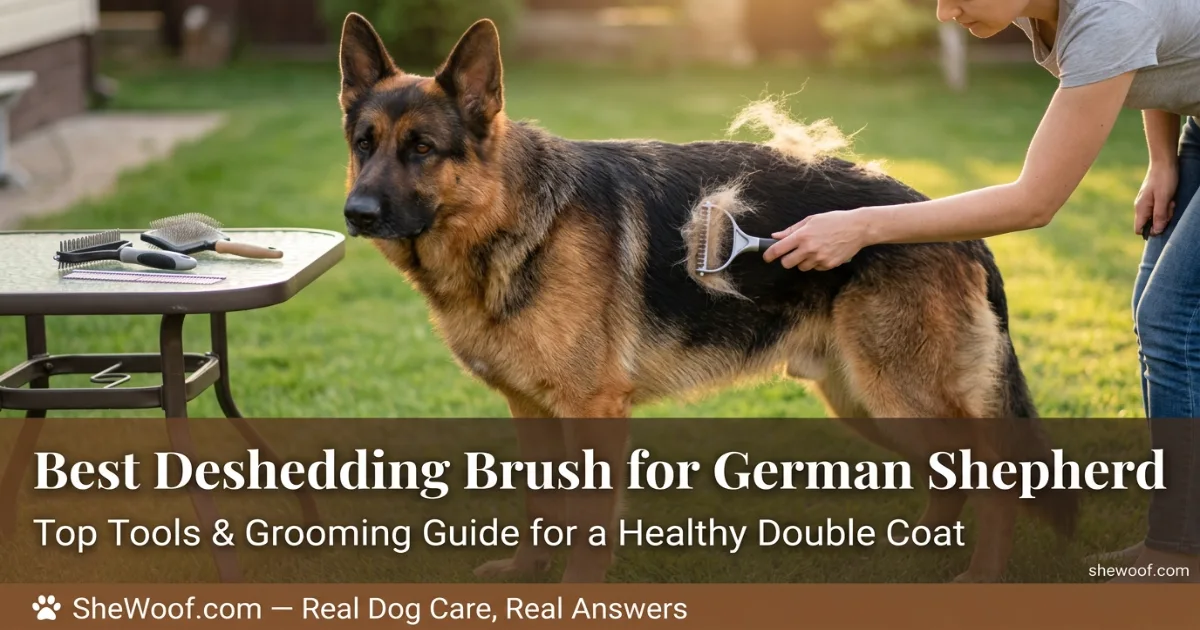
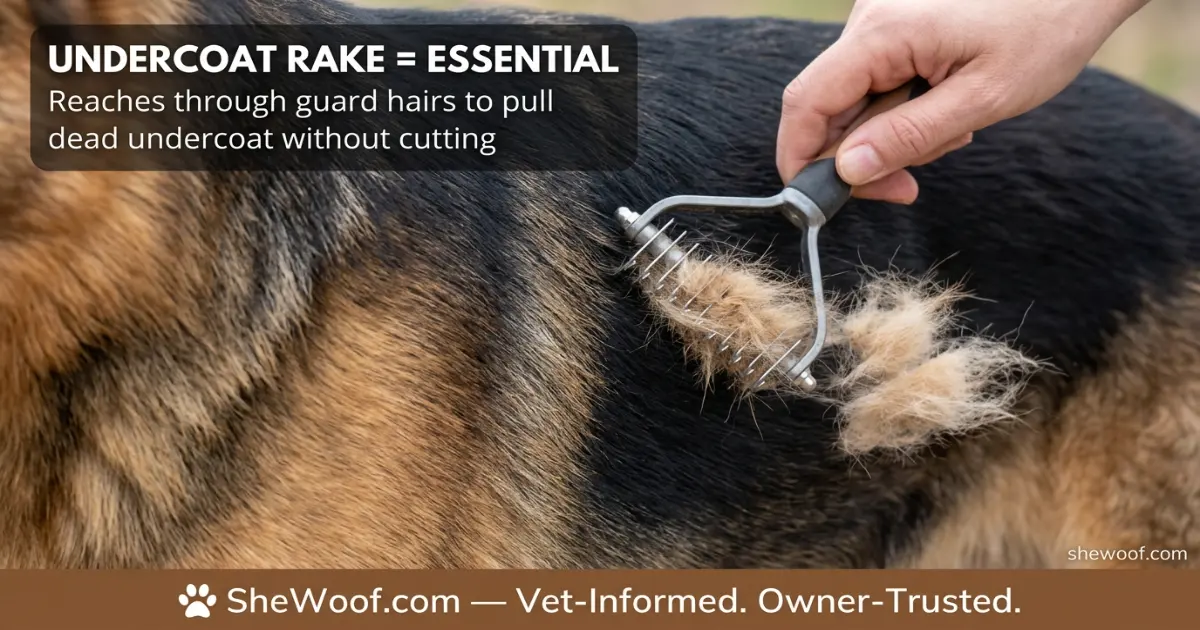
Undercoat Rake: This is the workhorse tool for German Shepherd grooming. An undercoat rake has a row of rounded or rotating metal teeth set in a handle. The teeth reach through the guard hairs into the undercoat, where they catch loose, dead fur and pull it out without cutting or damaging the healthy top coat. Models with rotating teeth are gentler on the skin because the teeth spin as they pass through the coat rather than dragging. The Andis Premium Undercoat Rake and the Paws & Pals Undercoat Rake are consistently top-rated by GSD owners.
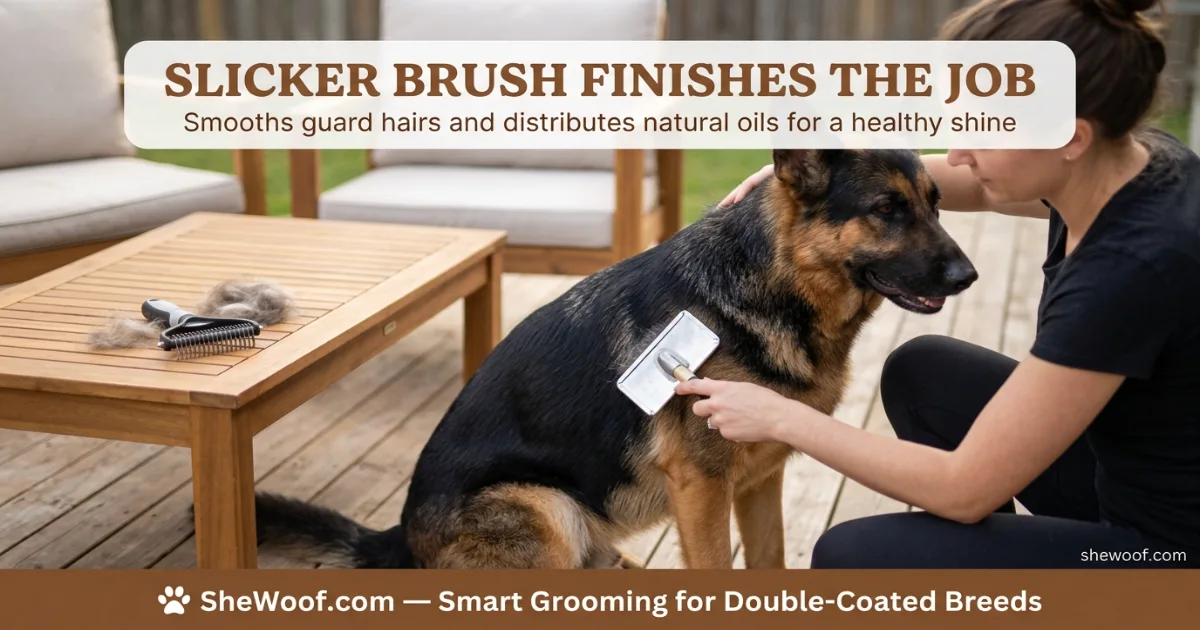
Slicker Brush: A slicker brush has fine, closely spaced wire pins set in a rectangular or oval head. It is used after the undercoat rake to remove loose surface fur, smooth the guard hairs, and distribute natural oils through the coat. For German Shepherds, a large slicker with firm but flexible pins works best. The Hertzko Self-Cleaning Slicker and the Chris Christensen Big G are excellent choices — the latter being more expensive but built to last for years of heavy use.
Greyhound Comb: A metal comb with two tooth widths — wide on one end, fine on the other — is the finishing tool. The wide teeth check for any remaining tangles. The fine teeth smooth the top coat and confirm that no undercoat clumps were missed. A greyhound comb also helps you check your work: if the comb cannot pass smoothly through the coat down to the skin, you need to spend more time with the rake and slicker.
How Often to Brush a German Shepherd
During normal shedding periods — which, for a GSD, is most of the year — brushing two to three times per week is a reasonable baseline. Each session should be thorough: 15 to 20 minutes covering the entire body, paying special attention to the hindquarters, the ruff around the neck, and the tail, where undercoat tends to be thickest. A quick five-minute pass will not reach the undercoat where the shedding problem actually lives.
During coat-blowing season — typically spring and fall — daily brushing is recommended. The undercoat is releasing in clumps, and a single skipped day can result in mats forming where the loose fur compacts against the skin. Daily brushing during these periods dramatically reduces the amount of fur that ends up on your floors, furniture, and clothing. It also keeps your dog comfortable — a compacted undercoat is itchy and can trap heat against the skin.
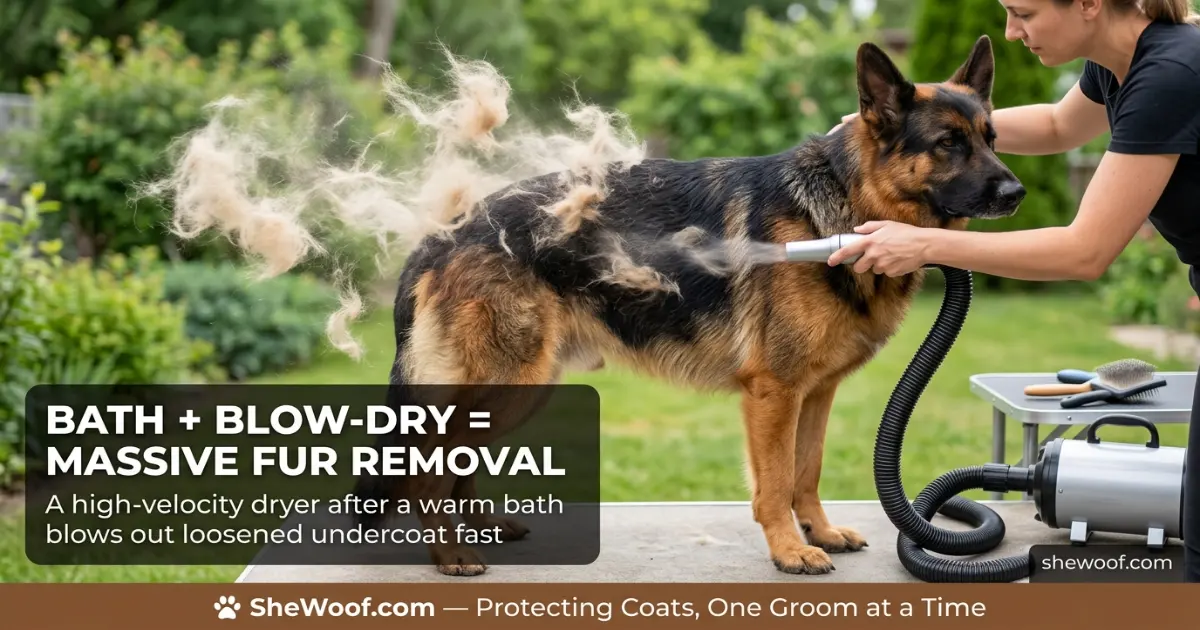
Bathing supports deshedding but should not replace brushing. A warm bath loosens the undercoat. Following the bath with a high-velocity pet dryer — the kind professional groomers use — blows massive amounts of loose fur out of the coat in minutes. If you bathe your GSD at home, investing in even a basic forced-air dryer will pay for itself in reduced brushing time and a cleaner house.
| Brush Type | Best For | How Often | Key Product Examples |
|---|---|---|---|
| Undercoat Rake (rotating teeth) | Primary deshedding — reaches undercoat | Every brushing session | Andis Premium, Paws & Pals, SleekEZ |
| Slicker Brush (firm pins) | Smoothing guard hairs, removing surface fur | Every brushing session (after rake) | Hertzko Self-Cleaning, Chris Christensen Big G |
| Greyhound Comb | Finishing, detangling, checking work | Weekly or as needed | Andis Steel Comb, Master Grooming Tools |
| Furminator (use sparingly) | Heavy seasonal deshedding only | Every 2-4 weeks during coat blow only | Furminator Long Hair (Large) |
| High-Velocity Dryer | Blowing loose undercoat after baths | With every bath | Flying Pig, Shelandy, K-9 III |
What Most Owners Get Wrong About German Shepherd Grooming
The most common mistake is brushing too lightly. A German Shepherd’s undercoat is dense, and a superficial brushing that skims the top of the guard hairs removes almost nothing. You need to brush down to the skin — parting the coat in sections and working the undercoat rake through each section until the fur stops releasing. This takes time. A proper deshedding session on a GSD should produce a pile of fur roughly the size of a small dog. If you are not collecting significant fur, you are not reaching the undercoat.
Another frequent error: using only one tool. No single brush does everything a German Shepherd’s coat requires. An undercoat rake without a slicker leaves the guard hairs rough and the surface fur loose. A slicker without a rake never reaches the undercoat where the real shedding happens. The Furminator used alone can damage the coat over time. The combination of rake, slicker, and comb — used in that order — is what actually works.
A third mistake involves bathing without brushing first. A wet German Shepherd whose undercoat is already loose or matted will develop tighter mats as the fur dries. Always brush thoroughly before a bath to remove as much loose undercoat as possible. After the bath, use a high-velocity dryer to blow out additional fur, then brush again once the coat is completely dry. This pre-bath brush, bath, blow-dry, and post-bath brush routine produces dramatically better results than simply washing and towel-drying.
Grooming German Shepherd Puppies vs. Adults
German Shepherd puppies do not have the full adult double coat. Their puppy coat is softer, fluffier, and has less defined guard hairs and undercoat layers. Deshedding tools designed for adult coats can be too harsh on puppy skin and fur. For puppies under 6 months, a soft slicker brush and a gentle pin brush are sufficient. The goal at this age is not deshedding — it is desensitization. Get your puppy comfortable with being handled, brushed, and touched all over their body. The heavy-duty deshedding tools can wait until the adult coat starts coming in around 6 to 12 months.
As the adult coat develops — typically between 6 and 18 months — gradually introduce the undercoat rake. Start with short sessions and light pressure. The puppy’s skin is still more sensitive than an adult’s, and the coat is not yet at full density. By 18 to 24 months, the full double coat is established, and the adult grooming routine described in this guide becomes appropriate.
Senior German Shepherds may have thinner skin, less tolerance for long grooming sessions, and possibly arthritis that makes standing for extended periods uncomfortable. Keep sessions shorter but more frequent. Use a lighter touch with the rake. Monitor the skin closely for any signs of irritation, thinning, or injury. A senior GSD still needs regular deshedding, but the approach should be gentler and more patient than with a healthy young adult.
A quality undercoat rake costs $12 to $25. A good slicker brush ranges from $15 to $40, with premium options like the Chris Christensen Big G at the higher end. A greyhound comb costs $8 to $15. A Furminator, if you choose to use one, runs $20 to $35. A basic high-velocity pet dryer for home use starts around $60 to $120 — an investment that pays for itself quickly in reduced brushing time and professional grooming costs. A professional deshedding groom for a German Shepherd at a salon typically costs $60 to $100 per session. With the right tools and routine at home, many owners can reduce professional grooming visits to once or twice per year.
Frequently Asked Questions About German Shepherd Deshedding
The best approach is a combination of an undercoat rake with rotating teeth as the primary deshedding tool, followed by a firm slicker brush to smooth guard hairs, and a greyhound comb to finish. No single brush handles a GSD’s double coat effectively. Recommended models include the Andis Premium Undercoat Rake and the Hertzko Self-Cleaning Slicker.
The Furminator can be effective for removing undercoat but is controversial because it can cut and damage guard hairs with repeated or aggressive use. Many experienced GSD owners limit Furminator use to once every few weeks during heavy shedding season only, and pair it with a slicker brush. Some owners avoid it entirely in favor of rotating-tooth undercoat rakes, which pull undercoat without cutting guard hairs.
Two to three times per week is a good baseline for normal shedding periods. During coat-blowing season in spring and fall, daily brushing is recommended. Each session should be 15 to 20 minutes and reach down to the skin through the undercoat. A quick surface brushing does very little for this breed.
For puppies under 6 months with their soft puppy coat, use a soft slicker brush and a gentle pin brush rather than heavy deshedding tools. The goal at this age is desensitization — getting the puppy comfortable with handling and brushing. Introduce the undercoat rake gradually as the adult coat starts coming in around 6 to 12 months.
Yes — when done correctly. A warm bath loosens the undercoat. Following the bath with a high-velocity pet dryer blows out massive amounts of loose fur. Always brush thoroughly before the bath to remove loose undercoat and prevent matting. After the coat is completely dry, brush again with the undercoat rake and slicker for best results.
Heavy shedding is normal and healthy for a double-coated breed. If you are brushing regularly with the right tools and still seeing excessive shedding, check that you are brushing down to the skin rather than skimming the surface. Also consider whether your dog’s diet provides adequate omega-3 fatty acids, which support coat health. If shedding seems sudden, patchy, or accompanied by skin irritation, consult your veterinarian.
No. Never shave a double-coated breed. The undercoat and guard hairs work together to regulate body temperature — cooling in summer and insulating in winter. Shaving disrupts this system, can cause the coat to grow back patchy or not at all, and increases the risk of sunburn, overheating, and skin damage. Regular deshedding with appropriate tools manages shedding without damaging the coat’s natural function.
- The best deshedding approach for a German Shepherd combines an undercoat rake with rotating teeth, a firm slicker brush, and a greyhound comb — used in that order. No single brush handles the breed’s double coat alone.
- Brush two to three times per week during normal periods and daily during coat-blowing season. Each session should be thorough, reaching down through the guard hairs to the undercoat.
- The Furminator is effective but controversial — it can damage guard hairs with overuse. Many experienced GSD owners prefer rotating-tooth undercoat rakes that pull undercoat without cutting.
- Bathe and blow-dry with a high-velocity dryer to dramatically increase undercoat removal. Always brush before and after bathing.
- GSD puppies under 6 months need gentle desensitization with soft brushes, not heavy deshedding. Introduce adult tools gradually as the adult coat develops between 6 and 18 months.
- Never shave a German Shepherd. The double coat regulates body temperature and protects the skin. Proper deshedding manages shedding without compromising this essential function.