
What Do Flea Bites on a Dog Look Like? Identification, Signs, and Treatment
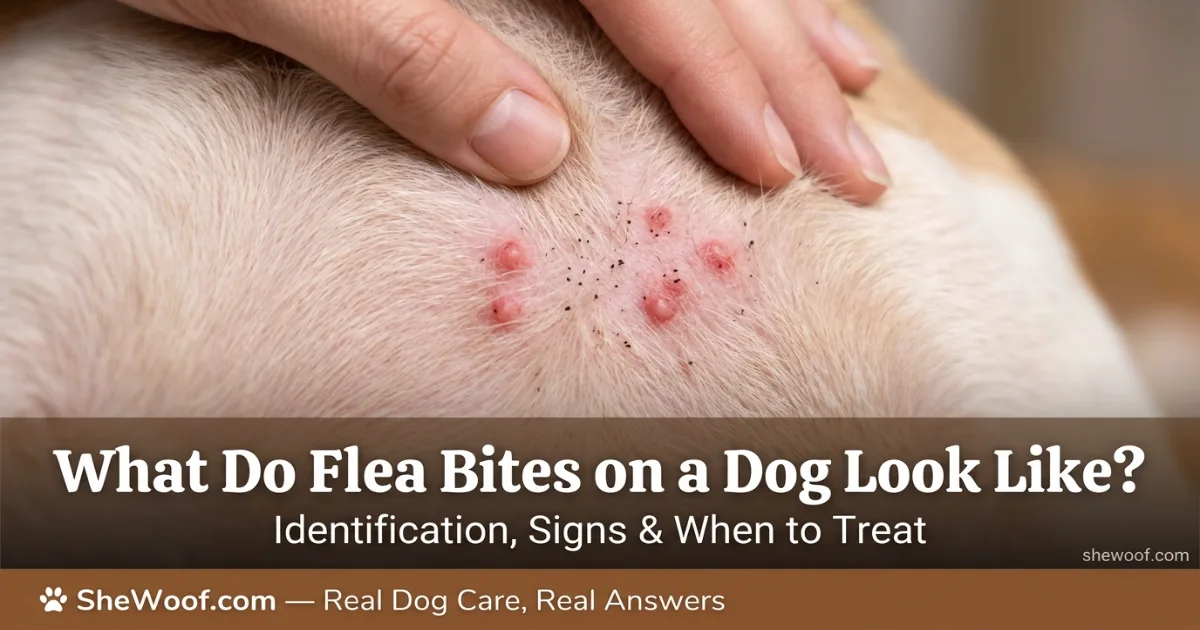
Quick Answer: Flea bites on a dog typically appear as small, raised red bumps — often clustered in groups of two or three — surrounded by a faint pink halo. They are most commonly found on the lower back near the tail base, the inner thighs, the belly, and the groin area. Unlike tick bites, which are usually solitary and larger, flea bites are multiple, tiny, and intensely itchy. You may also see “flea dirt” — small black specks that look like ground pepper — which is actually flea feces composed of digested blood. Confirming flea dirt is one of the most reliable ways to diagnose a flea problem, even when live fleas are not visible.
Your dog has been scratching more than usual. You part their fur and find small red bumps, maybe some dark specks you can’t quite identify. You search “what do flea bites on a dog look like” because you need to know — is this fleas, an allergy, dry skin, or something else entirely? Getting the identification right matters. Flea bites, flea allergy dermatitis, hot spots, and skin infections can all look similar at first glance, but the treatment paths are different. Misidentifying the cause means your dog keeps suffering while you treat the wrong problem.
This guide gives you a clear, visual, and practical understanding of flea bites on dogs — where they appear, what they look like at each stage, how to distinguish them from lookalike conditions, and what to do once you have confirmed fleas are the culprit.
What Do Flea Bites on a Dog Look Like? A Detailed Visual Guide
Flea bites on dogs are small — typically 1 to 3 millimeters across — raised, and red or bright pink. They often appear in clusters or lines of two to three bites close together, reflecting the feeding pattern of a flea moving across the skin. Each bite may be surrounded by a faint pink or reddish halo of irritated skin. The bites themselves look similar to small mosquito bites but are usually more numerous and concentrated in specific areas of the body.
Fresh flea bites are bright pink or red and slightly swollen. Within a few hours to a day, they may darken slightly and form a tiny scab or crust as the dog scratches the area. In dogs with lighter skin and thinner coats, the bites are easy to see. In dogs with thick, dark, or double coats, the bites themselves may be hidden, and you may only see the secondary signs: excessive scratching, chewing, licking, hair loss, or reddened skin.
The hallmark of flea bites — the detail that most reliably distinguishes them from other skin conditions — is their location pattern. Fleas favor warm, protected areas where the dog cannot easily reach to groom. The base of the tail, the lower back just above the tail, the inner thighs, the belly, and the groin are classic flea bite zones. If you see red bumps concentrated in these areas, fleas should be your top suspect even before you find a single live flea.
Flea Bites vs. Other Common Dog Skin Conditions
Flea bites are frequently mistaken for other skin issues, and vice versa. Knowing the differences helps you pursue the right treatment — instead of spending weeks on the wrong one. The table below compares flea bites to the conditions they are most commonly confused with.
| Condition | Appearance | Typical Locations | Key Distinction |
|---|---|---|---|
| Flea bites | Small red bumps, often clustered; flea dirt present | Lower back, tail base, belly, groin, inner thighs | Flea dirt turns red when wet |
| Flea allergy dermatitis | Intense redness, hair loss, oozing, scabbing | Same as flea bites but more widespread | Severe reaction to even a single bite |
| Contact dermatitis | Red rash, sometimes blistering | Where skin touched irritant — belly, paws, chin | No flea dirt; linked to new product or surface |
| Hot spots | Moist, red, raw, oozing, rapidly spreading | Cheek, neck, hip, flank | Acute, wet, painful; often starts from scratching |
| Mange (demodectic) | Hair loss, scaling, redness; not always itchy | Face, around eyes, forelegs (localized) | Skin scraping by vet confirms mites |
| Ringworm | Circular patches of hair loss with red ring | Anywhere; often face, ears, paws | Fungal culture or UV light confirms |
Flea Allergy Dermatitis: When One Bite Is Too Many
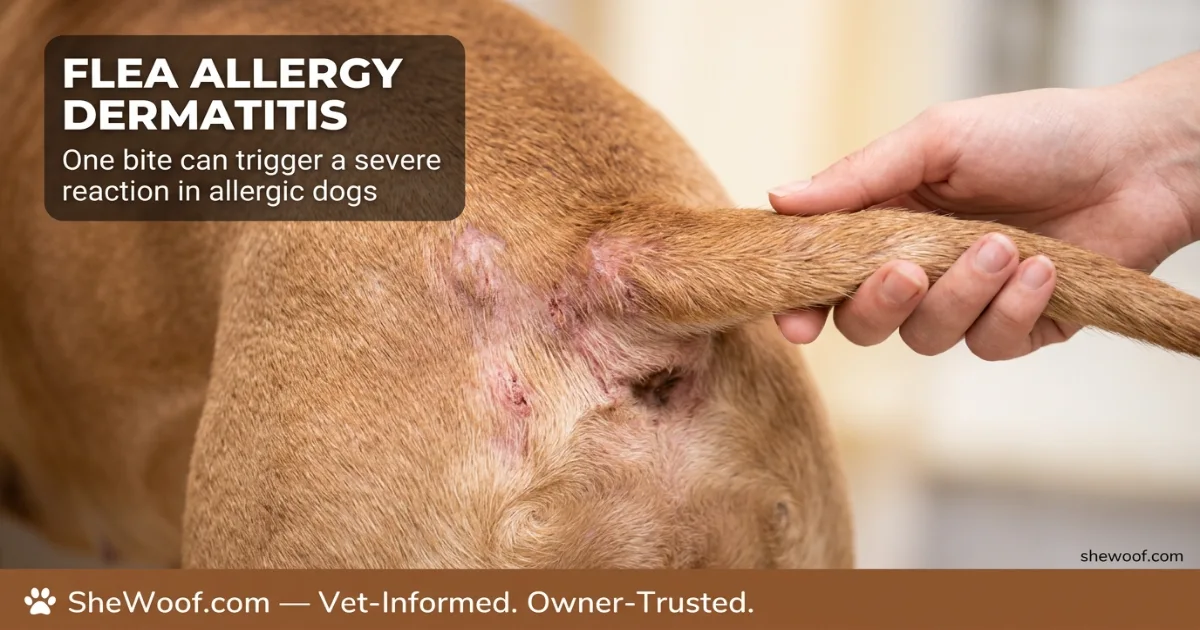
Some dogs are not merely irritated by flea bites — they are allergic to flea saliva. This condition, called flea allergy dermatitis or FAD, is the most common allergic skin disease in dogs. For a dog with FAD, a single flea bite can trigger an intense, widespread inflammatory reaction that lasts for days or weeks. The dog does not need to be infested with fleas. One flea, one bite, is enough.
A dog with flea allergy dermatitis looks dramatically different from a dog with simple flea bites. The skin becomes intensely red, inflamed, and may ooze or crust over. Hair loss is common — not from the fleas themselves but from the dog’s own scratching and chewing in response to the relentless itch. The area around the tail base, lower back, and hind legs is often the most severely affected, but the reaction can spread across the body. Secondary bacterial or yeast infections frequently develop in the broken skin and require their own treatment alongside flea control.
Treatment for FAD has two non-negotiable components: strict year-round flea prevention to eliminate exposure, and medical management of the allergic reaction and any secondary infections. One without the other fails. The dog stays on effective flea prevention every month without gaps. Corticosteroids, Apoquel, Cytopoint, or medicated shampoos may be prescribed to calm the immune response. But none of these replace flea control. The flea prevention is the foundation.
Where Flea Bites Appear and Why Location Matters
Fleas are strategic feeders. They target areas where the skin is thinner, warmer, and harder for the dog to reach with their mouth or hind legs. This is why the lower back just above the tail, the base of the tail itself, the inner thighs, the belly, and the groin are the most common flea bite zones. These areas offer easy access to blood vessels close to the skin surface and relative protection from grooming.
In heavy infestations, flea bites may spread beyond these classic locations — to the flanks, the armpits, the neck, and even around the ears. Puppies and small breed dogs can carry a surprising number of fleas on a small body surface area, and bites may appear more densely concentrated. Large breed dogs with thick coats may show bites only on the sparsely furred belly while the rest of the body appears normal.
The distribution pattern matters for diagnosis. If you see red bumps exclusively on the belly and inner thighs but nowhere else, fleas are a strong possibility — but contact dermatitis from grass or cleaning products should also be on your list. If you see red bumps concentrated at the tail base and lower back, with or without belly involvement, fleas move to the top of the differential. Location plus the presence or absence of flea dirt usually tells the story.

What Most Owners Get Wrong About Flea Bites
The most common mistake is assuming that no visible fleas means no flea problem. Fleas spend the majority of their life cycle off the dog — in carpets, bedding, cracks in flooring, and outdoor environments. By the time you see a live flea on your dog, an established infestation has likely been developing for weeks. Flea dirt, flea bites, and your dog’s scratching are earlier and more reliable indicators than actually spotting a flea.
Another frequent error: treating only the dog and not the environment. A single female flea can lay 40 to 50 eggs per day. Those eggs fall off the dog into the home environment, where they develop into larvae, pupae, and eventually new adult fleas. If you treat your dog with a flea preventative but do nothing to address the eggs and larvae in your home, you are fighting a losing battle. Vacuum thoroughly — including under furniture, along baseboards, and in crevices — and wash all pet bedding in hot water. In significant infestations, professional pest control or an insect growth regulator may be necessary.
A third mistake involves using flea products incorrectly or dangerously. Dog owners sometimes apply cat flea products to dogs, or vice versa, with potentially severe consequences. Never use a flea product labeled for another species. Never apply more than the recommended dose. Never use multiple flea products simultaneously without veterinary guidance. Flea preventatives are generally safe when used as directed, but misuse can cause neurological toxicity, especially in small breeds, puppies, and senior dogs.

How Puppies, Adult Dogs, and Seniors Differ
Puppies are especially vulnerable to fleas — not just from the bites themselves but from the blood loss a heavy infestation can cause. Flea anemia is a real and potentially life-threatening condition in young puppies. Signs include pale gums, weakness, lethargy, and failure to thrive. Puppies under 12 weeks also have fewer safe flea treatment options. Many topical and oral preventatives are not approved for very young puppies. A veterinarian must guide flea treatment in any puppy under 12 weeks of age. Do not guess.
Adult dogs with healthy immune systems typically handle a mild flea burden without systemic illness, though the itching and skin damage can still significantly reduce quality of life. The primary concern in adult dogs is often flea allergy dermatitis in sensitized individuals, which escalates quickly and requires medical management beyond simple flea control.
Senior dogs may have thinner skin, weaker immune responses, and pre-existing health conditions that complicate flea infestations. Healing from skin damage takes longer. Secondary infections are more common. Senior dogs may also be on medications that interact with certain flea preventatives. A veterinary consultation is always appropriate when treating an older dog for fleas, even if the infestation seems mild.

Frequently Asked Questions About Flea Bites on Dogs
Flea bites are smaller, more numerous, and appear in clusters — often on the lower back, belly, and inner thighs. Mosquito bites are larger, more isolated, and can appear anywhere on the body. Flea bites typically come with flea dirt — small black specks that turn red when wet. Mosquito bites do not produce flea dirt.
Yes. When flea bites are numerous or the dog has a flea allergy, the affected area can look like a diffuse red rash rather than individual bumps. This is especially common with flea allergy dermatitis, where the skin becomes broadly inflamed, red, and may ooze or crust over. Flea dirt in the area helps confirm the diagnosis.
Food allergy bumps can appear anywhere on the body and are not concentrated in classic flea zones like the tail base and groin. Food allergies also often involve the ears and paws. Flea bites have a predictable location pattern and are accompanied by flea dirt. If you are unsure, your veterinarian can help distinguish between the two.
Flea dirt looks like tiny black or dark brown specks — similar to finely ground black pepper — scattered on the skin, especially at the base of the tail, on the belly, and in the groin area. When placed on a damp white paper towel, flea dirt dissolves into a reddish-brown stain because it is composed of digested blood.
Yes. Heavy flea infestations can cause anemia from blood loss, especially in puppies and small dogs. Flea allergy dermatitis causes severe skin inflammation and secondary infections. Fleas also transmit tapeworms — if your dog swallows an infected flea while grooming, they can develop a tapeworm infestation. Year-round flea prevention protects against all of these.
Once fleas are eliminated and your dog stops scratching, individual flea bites typically heal within a few days to a week. If the skin was significantly damaged — from scratching, secondary infection, or flea allergy dermatitis — healing can take several weeks and may require veterinary treatment including medicated shampoos, topical therapies, or oral medications.
If the bites are mild and you have confirmed fleas with a flea dirt test, starting a veterinarian-approved flea preventative and treating the environment may be sufficient. See your vet if the skin is severely inflamed, oozing, crusted, or has a foul odor; if your dog seems painful or lethargic; if you have a puppy under 12 weeks; or if home treatment has not improved the condition within a week.
- Flea bites on dogs appear as small, raised red bumps — often in clusters of two or three — on the lower back near the tail, belly, inner thighs, and groin. Flea dirt (black specks that turn red when wet) confirms the diagnosis.
- Flea allergy dermatitis can develop from a single bite in sensitive dogs, causing widespread redness, hair loss, oozing, and intense itching that requires both strict flea control and medical management.
- Distinguish flea bites from other skin conditions by their location pattern, the presence of flea dirt, and the absence of characteristics unique to mange, ringworm, hot spots, or contact dermatitis.
- Treat the dog and the environment together. Vacuum thoroughly, wash bedding in hot water, and use veterinarian-recommended flea preventatives year-round without gaps.
- Never use flea products off-label — species-specific, weight-appropriate, and age-appropriate products only. Puppies under 12 weeks require veterinary guidance for safe flea treatment.
- Seek veterinary care for severe skin reactions, signs of infection, anemia symptoms in puppies, or if the condition does not improve within a week of starting appropriate treatment.