What to Use for Dog Eye Infection: Safe Care and When to See a Vet
Estimated read time: 12 minutes
Quick Answer: For a dog eye infection, the safest at-home option is flushing the eye with preservative-free sterile saline to remove discharge and irritants. Do not use human antibiotic drops, steroid eye drops, or leftover pet medications without veterinary guidance. Most bacterial eye infections require prescription antibiotic drops or ointment from a vet, and improper treatment can worsen the condition or mask serious problems like corneal ulcers.
Your dog wakes up with one eye half-closed, a thick yellow-green crust along the lid, and a look that says something is wrong. The instinct is to reach for something — anything — to help. But when it comes to what to use for dog eye infection, the wrong product can do more harm than the infection itself. Eyes are delicate, and some over-the-counter drops meant for humans can actually delay healing or cause permanent damage.
I have been through eye infections with my own dogs and with fosters — the squinting, the discharge, the frantic search for answers at midnight. Here is what actually helps, what to avoid, and how to know when home care is not enough.
What Is Safe to Use at Home for a Dog Eye Infection?
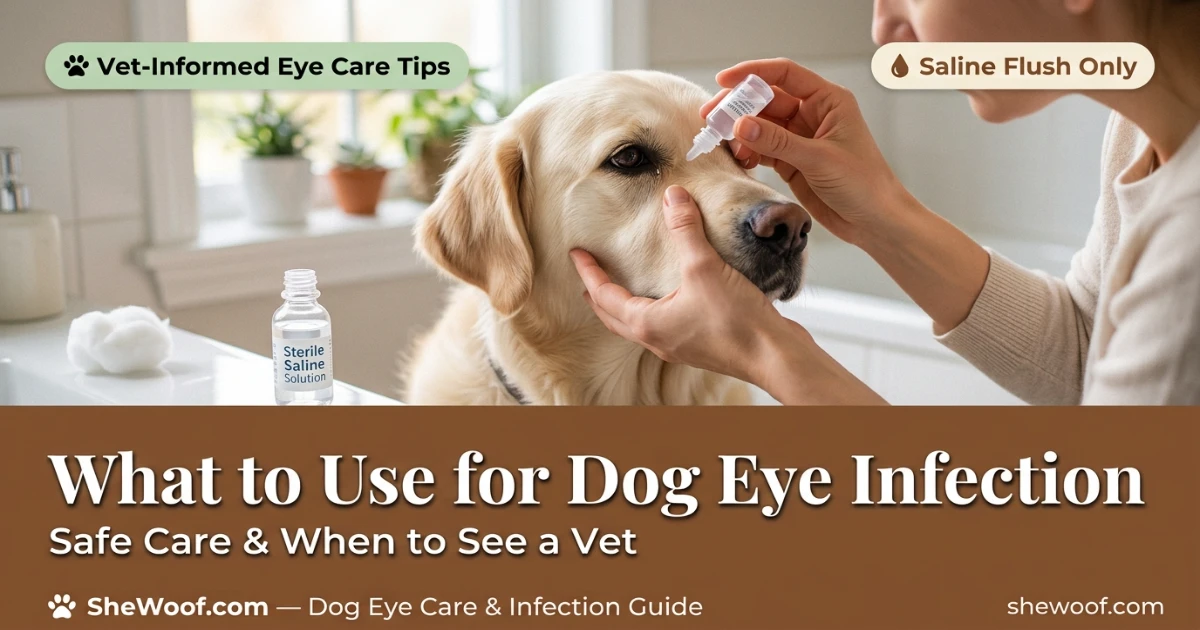
The only products generally considered safe for at-home use without veterinary guidance are preservative-free sterile saline and preservative-free artificial tears . These do not contain antibiotics or steroids, so they will not mask symptoms or interfere with diagnosis. Their job is simple: flush away discharge, allergens, and small irritants, and provide temporary lubrication.
Sterile saline is the first choice. You can find single-use vials or bottles at most pharmacies. Contact lens solution is not the same thing — it often contains preservatives or cleaning agents that can irritate a dog’s eye. Homemade saltwater mixtures are also risky because they are not sterile and the concentration is difficult to control.
Preservative-free artificial tears can help if the eye seems dry or gritty, but they are a comfort measure, not a treatment for infection. They will not kill bacteria or resolve a viral infection .
What Should You Never Use on a Dog’s Eye?
Several products commonly found in human medicine cabinets can cause serious harm to a dog’s eye. The most dangerous are steroid-containing eye drops .
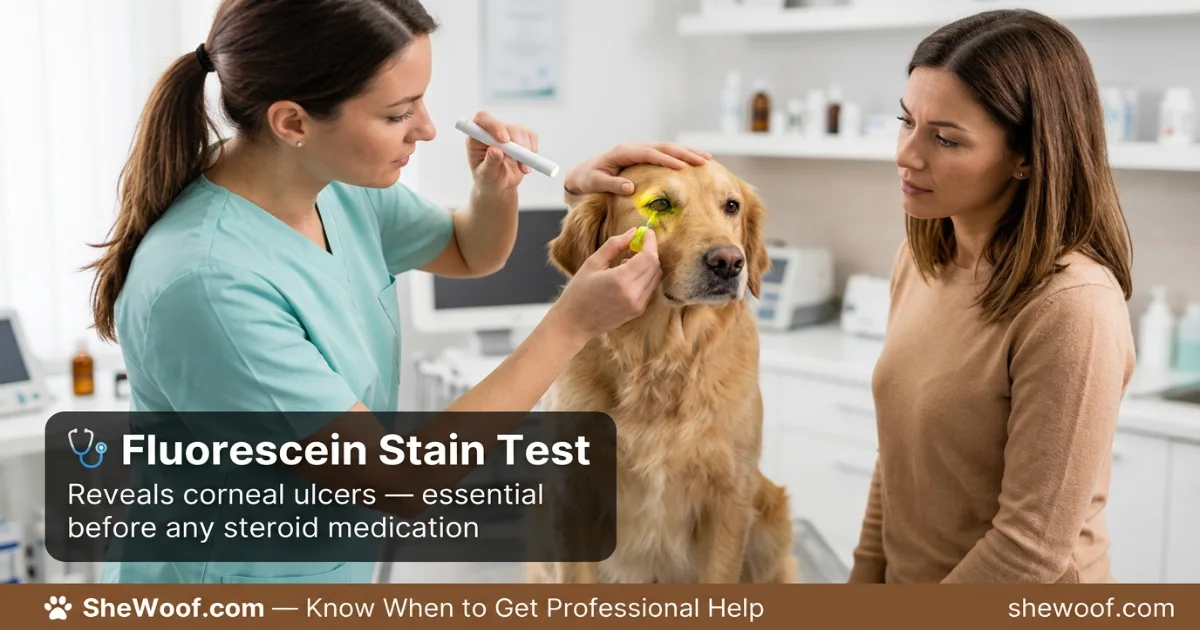
Steroids reduce inflammation, which sounds helpful — but if the eye has a corneal ulcer (a scratch or defect in the clear surface), steroids can prevent healing and allow the ulcer to worsen, potentially leading to corneal perforation and vision loss . A veterinarian needs to stain the eye with fluorescein dye to check for ulcers before any steroid is considered.
Vasoconstrictor drops — the ones marketed to “get the red out” — are also unsafe. They shrink blood vessels temporarily, which can make the eye look better while the underlying problem gets worse .
Human antibiotic ointments and drops are another common mistake. The concentration and formulation are designed for human eyes, not dogs. Some ingredients may irritate or damage canine eye tissue. Even if the antibiotic itself is one a vet might prescribe, the vehicle (the liquid or ointment base) may not be appropriate for dogs .
What Does a Vet Typically Prescribe for Dog Eye Infections?
The treatment a veterinarian chooses depends entirely on what is causing the infection. Not all eye discharge is bacterial, and treating a viral or allergic problem with antibiotics will not help .
Bacterial conjunctivitis is one of the most common eye infections in dogs . It is typically treated with topical antibiotic drops or ointments. Common veterinary ophthalmic antibiotics include those in the fluoroquinolone class (like ciprofloxacin or ofloxacin) and aminoglycosides . A product like Opticlox, which contains a penicillin-type antibiotic, may be prescribed for certain bacterial infections . The vet will choose based on the suspected organism and whether the cornea is intact.
Viral conjunctivitis — which can be caused by canine herpesvirus or canine adenovirus — does not respond to antibiotics . Treatment focuses on supportive care: keeping the eye clean, using artificial tears for comfort, and sometimes antiviral medication in severe cases. Viral infections often resolve on their own with time.
Allergic conjunctivitis is triggered by pollen, dust, or other environmental allergens. The eyes may be red and watery, often affecting both eyes. Treatment may include flushing with saline to remove allergens, antihistamines, or anti-inflammatory medications prescribed by a vet .
Keratoconjunctivitis sicca (KCS) — also called dry eye — occurs when the tear glands do not produce enough tears. It can cause chronic irritation and secondary infections. Treatment involves tear stimulants like cyclosporine or tacrolimus, and artificial tear supplements .
| Type of Infection | Common Cause | Typical Treatment |
|---|---|---|
| Bacterial conjunctivitis | Staphylococcus, Streptococcus, Pseudomonas | Prescription antibiotic drops or ointment |
| Viral conjunctivitis | Canine herpesvirus, adenovirus | Supportive care, artificial tears, sometimes antivirals |
| Allergic conjunctivitis | Pollen, dust, environmental allergens | Saline flush, antihistamines, anti-inflammatories |
| Dry eye (KCS) | Immune-mediated tear gland dysfunction | Tear stimulants, artificial tears, sometimes antibiotics |
| Corneal ulcer | Trauma, foreign body, infection | Antibiotics, pain relief, sometimes surgery |
How Do You Safely Clean a Dog’s Eye at Home?
Gentle cleaning can make your dog more comfortable and help you see the eye clearly. The technique matters as much as the product.
Step-by-Step Eye Cleaning
- Wash your hands. Clean hands prevent introducing new bacteria to the eye.
- Gather supplies. You need sterile saline, clean cotton balls or gauze pads, and a towel. Have a helper if your dog is wiggly.
- Restrain gently. Hold your dog’s head steady with one hand under the chin. Do not squeeze or apply pressure to the neck.
- Flush from the inside out. Squirt saline gently from the inner corner (near the nose) toward the outer corner. This pushes debris away from the tear duct rather than into it.
- Wipe with a fresh cotton ball. Use a new cotton ball for each wipe. Never wipe back and forth with the same piece — that spreads bacteria.
- Do not touch the eyeball. Keep the saline bottle or syringe slightly away from the eye surface to avoid accidentally poking it.
- Pat dry. Gently pat the fur around the eye with a clean towel. Do not rub.
Repeat this once or twice daily while the infection is active, or as directed by your vet. If your dog resists strongly, stop and try again later. Forcing the issue can cause injury and make your dog fearful of future handling.
What Are the Signs You Need a Vet Immediately?
Some eye problems are emergencies. Prompt treatment can mean the difference between a quick recovery and permanent vision loss.
- Squinting or holding the eye closed for more than 24 hours
- Thick yellow or green discharge that persists or worsens
- Cloudiness or a blue tint to the cornea
- Severe redness or swelling of the eye or eyelids
- Pawing at the eye or rubbing the face against furniture
- Visible injury to the eye, or a known foreign body
- Sudden vision loss or a pupil that does not respond to light
- Blood in the eye or around the eye
A corneal ulcer is particularly dangerous because it is painful and can worsen quickly. If your dog is squinting and the eye looks red or cloudy, do not wait to see if it improves on its own. A vet can perform a fluorescein stain to check for ulcers and prescribe appropriate treatment .
How Much Does Treating a Dog Eye Infection Cost?
- Office visit/exam: $50–$80
- Fluorescein stain: $15–$40
- Antibiotic eye drops or ointment: $20–$50
- Oral antibiotics (if needed): $20–$60
- Follow-up visit (if needed): $30–$60
Total cost for a straightforward bacterial eye infection typically runs $100 to $200, including the exam and medication. Complex cases involving corneal ulcers, dry eye, or underlying conditions can cost more.
If a price seems unusually low for a vet visit, ask what is included. Some low-cost clinics may charge separately for every test and medication, which can add up. Emergency clinics charge significantly more than general practice vets.
What About Puppies and Senior Dogs?
Puppies are more prone to certain eye infections, particularly those caused by viruses like canine herpesvirus, which can cause severe conjunctivitis in young dogs . Their immune systems are still developing, and they may have less natural resistance. Puppy eye infections should always be evaluated by a vet rather than treated at home.
Senior dogs may have age-related changes like lenticular sclerosis (a normal cloudiness of the lens) that can be mistaken for infection . They are also more likely to have underlying conditions like dry eye or immune-mediated diseases that cause chronic eye irritation. Any new eye symptoms in an older dog warrant a vet visit.
What Most Owners Get Wrong About Dog Eye Infections
The biggest mistake is assuming all eye discharge means infection. Discharge can be caused by allergies, foreign bodies, dry eye, or even blocked tear ducts. Treating an allergic reaction with antibiotics does nothing helpful and may delay proper care .
Another common error is stopping treatment too early. If a vet prescribes antibiotic drops for 10 days and the eye looks better on day 4, owners often stop. This allows surviving bacteria to regrow, potentially creating a more resistant infection. Always complete the full course as prescribed.
Finally, many owners do not use an E-collar (cone) when recommended. If your dog keeps pawing at the eye, the infection can worsen or spread, and the cornea can be scratched by dirty claws. The cone is temporary and protects the eye while it heals .
- Preservative-free sterile saline is the only at-home product generally safe for flushing a dog’s eye. Do not use human antibiotic, steroid, or “redness relief” drops.
- Bacterial eye infections require prescription antibiotic drops from a vet. Viral and allergic conjunctivitis need different treatments.
- Seek veterinary care if your dog is squinting for more than 24 hours, has thick colored discharge, a cloudy eye, or visible pain.
- Most simple eye infections resolve within 7 to 10 days with appropriate treatment. Complete the full course of medication even if symptoms improve.
- Puppies and senior dogs with eye symptoms should be evaluated by a vet rather than treated at home.
Frequently Asked Questions
What can I use for my dog’s eye infection at home?
The only safe at-home option is preservative-free sterile saline to flush the eye. Do not use human eye drops, antibiotic ointments, or leftover medications from previous prescriptions. These can worsen the infection or mask serious problems like corneal ulcers.
Can I use human antibiotic eye drops on my dog?
No. Human antibiotic eye drops are formulated for human eyes and may contain ingredients or concentrations that irritate or damage canine eye tissue. Even if the antibiotic is one a vet might use, the formulation is not designed for dogs. Always get prescription eye medication from a veterinarian.
How do I know if my dog’s eye infection is bacterial or viral?
You cannot tell just by looking. Bacterial infections often produce thick yellow or green discharge, while viral infections may cause watery discharge and redness. However, these signs overlap, and only a veterinarian can diagnose the cause accurately. Treatment differs significantly based on the underlying cause.
What happens if I don’t treat my dog’s eye infection?
Untreated eye infections can worsen and potentially lead to corneal ulcers, scarring, or vision loss. Some infections resolve on their own, but it is impossible to know which will without a veterinary exam. Prompt treatment is always safer and usually less expensive than waiting for complications to develop.
Are dog eye infections contagious to other pets?
Some bacterial and viral eye infections can spread to other dogs, especially in close-contact environments like shelters or multi-dog homes. Practicing good hygiene — washing hands after handling the affected dog and not sharing towels or bedding — reduces the risk. Your vet can advise on whether isolation is needed.
How long does it take for a dog eye infection to clear up?
Most simple eye infections clear within 7 to 10 days with appropriate treatment. Some cases take a few weeks. If symptoms are not improving after a few days of treatment, or if they worsen, contact your vet for a follow-up.
Should I use an E-collar for my dog’s eye infection?
Yes, if your dog is pawing at the eye or rubbing it against furniture. An E-collar (cone) prevents self-trauma that can worsen the infection or scratch the cornea. Most dogs adjust to the cone within a day, and it is a temporary measure while the eye heals.
When should I see a vet for my dog’s eye infection?
See a vet if your dog is squinting or holding the eye closed for more than 24 hours, has thick yellow or green discharge, a cloudy or blue-tinged eye, visible swelling, or is clearly in pain. Any eye problem that does not improve with saline flushing within a day or two warrants a veterinary visit.