
Dog Tooth Fell Out No Blood: What It Means and When to See a Vet
Estimated reading time: 12 minutes
Quick Answer: A dog tooth falling out without blood is common in puppies losing baby teeth, but in adult dogs it almost always signals advanced dental disease. The absence of blood does not mean the problem is minor — it often means the tooth root and surrounding tissue have already deteriorated. An adult dog that loses a tooth needs a veterinary dental exam to assess the remaining teeth and prevent further loss.
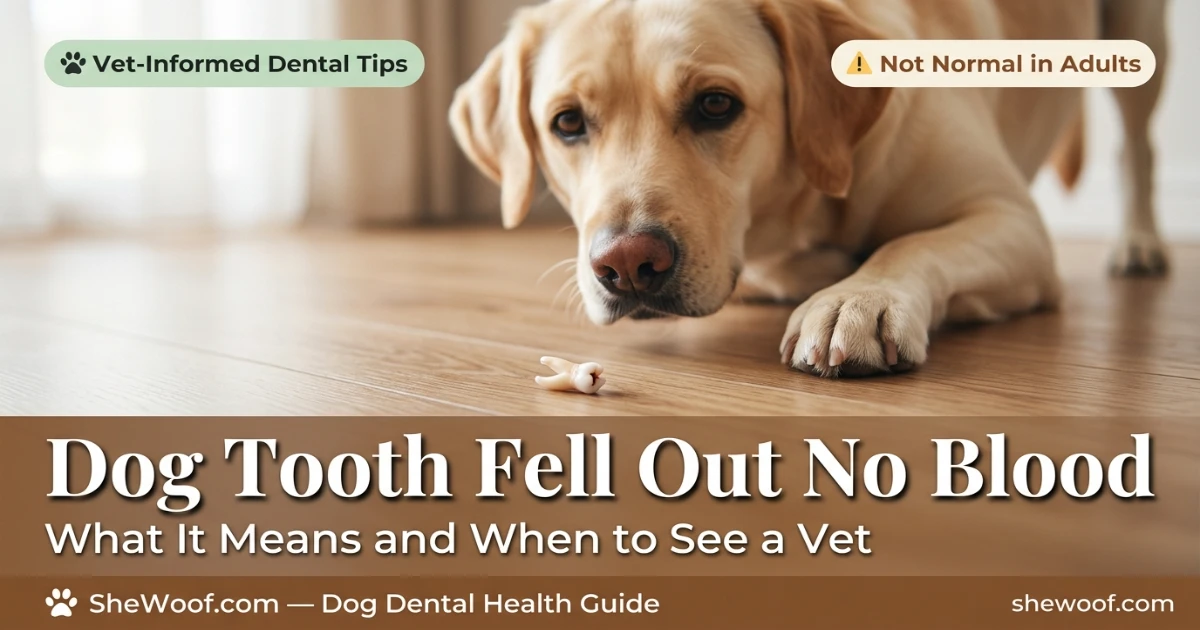
Finding a tooth on the floor — or noticing a gap in your dog’s mouth — is one of those moments that stops you cold. You check for blood, and there is none. That absence of bleeding can be misleading. In puppies, it is completely normal. In adult dogs, a dog tooth that fell out no blood is often a quieter, more serious sign: the tooth was so compromised by disease that it detached without trauma. The lack of blood does not make it a minor event. It makes it a signal that something has been wrong for a long time.
I have fostered dogs who arrived with mouths full of loose, discolored teeth and owners who had no idea anything was wrong. Dogs are remarkably stoic about dental pain. They eat, they wag, they act normal — right up until a tooth gives way. Understanding why teeth fall out without blood, and what it means at different life stages, helps you respond appropriately instead of hoping it will not happen again.
Why Would a Dog Tooth Fall Out Without Any Blood?
When a tooth falls out without bleeding, it usually means the tissues holding it in place were already gone. Blood comes from fresh trauma — a broken tooth, a torn gum, a sudden injury. A tooth that detaches cleanly and quietly has often been held by nothing more than habit for weeks or months.
Periodontal disease is the most common reason. It starts with plaque, which hardens into tartar along the gumline. Bacteria in the plaque cause inflammation of the gums, then of the deeper tissues. Over time, the bone and ligament that anchor the tooth erode. Once enough support is gone, the tooth simply falls out . The gums may look pale or receded rather than bleeding, because the disease has been chronic, not sudden.
In older dogs, this process is common. One study of dental disorders in dogs found that tooth loss increased steadily with age, with the first premolar most frequently lost, followed by other premolars and molars . The teeth most likely to go are the ones that accumulate tartar fastest and are hardest to brush.
Trauma can also cause a tooth to fall out without blood, especially if the impact happened days earlier and the tooth died in the meantime. Chewing on hard objects — antlers, bones, rocks — can fracture a tooth below the gumline, and the damaged tooth may loosen and drop out later.
Puppy Teeth vs. Adult Teeth: Two Very Different Situations
If your puppy is between four and seven months old, a tooth falling out without blood is almost certainly a normal part of teething. Puppies have 28 baby teeth that begin erupting around three weeks of age. By six months, all 28 should have fallen out and been replaced by 42 adult teeth .
You might notice a small tooth on the floor, or see a tiny gap in your puppy’s mouth. Some puppies bleed a little when they lose teeth, and some do not. Both are normal. The absence of blood simply means the tooth was ready to come out and the root had already dissolved naturally.
Adult dogs are a different story entirely. Once a dog has their permanent teeth — typically by six to eight months of age — losing a tooth is never normal. It is always a sign that something has gone wrong, and it almost always means dental disease has been progressing for a long time .
| Life Stage | Tooth Loss Normal? | What It Means | Action Needed |
|---|---|---|---|
| Puppy (4–7 months) | Yes | Baby teeth shedding to make way for adult teeth | Monitor; no vet visit needed unless retained teeth or pain |
| Young adult (8 months–3 years) | No | Dental disease, injury, or congenital issue | Vet dental exam |
| Adult (3–7 years) | No | Periodontal disease almost always present | Vet dental exam, cleaning, possible extractions |
| Senior (7+ years) | No | Advanced dental disease, possibly systemic effects | Vet dental exam; assess overall health |

What Signs Should You Look For After a Tooth Falls Out?
A missing tooth is the obvious sign. But there are usually other indicators that dental disease has been developing. Dogs hide oral pain well, so owners often miss the subtle changes.
- Bad breath that has gotten worse over time
- Red, swollen, or receding gums
- Yellow-brown tartar along the gumline
- Drooling more than usual
- Dropping food while eating or chewing on one side
- Reluctance to eat hard kibble or chew toys
- Pawing at the mouth or rubbing the face
- Loose or wiggly teeth remaining in the mouth
- Facial swelling, especially under the eye (can indicate abscess)
- Nasal discharge from one nostril (can indicate a tooth root abscess)
If your dog has lost a tooth and shows any of these signs, the remaining teeth are likely in poor condition too. A dog that has lost one tooth from periodontal disease is at high risk of losing more without intervention .
What Should You Do When a Dog Tooth Falls Out?
First, do not panic. A single tooth falling out is not an emergency, but it is a signal that needs attention. Here is the practical response.
Step-by-Step Response to Tooth Loss
- Check your dog’s mouth gently. Look for remaining loose teeth, red or swollen gums, and any signs of pain. Do not pull on teeth that look wiggly — you could cause damage and bleeding.
- Assess their eating and behavior. Are they eating normally? Chewing on one side? Dropping food? Any change in eating habits is relevant.
- Call your veterinarian. Schedule a dental exam. Tell them a tooth has fallen out and describe any other symptoms you have noticed.
- Do not attempt to pull remaining loose teeth. A vet needs to assess the root and surrounding bone before extraction. Pulling a tooth at home can cause fracture, infection, and unnecessary pain.
- Switch to softer food temporarily if needed. If your dog seems uncomfortable eating kibble, moisten it with warm water or offer wet food until the vet visit.
- Be prepared for dental cleaning and possible extractions. Most dogs who have lost a tooth from dental disease need a full cleaning under anesthesia and removal of other diseased teeth .
What Happens at the Vet Visit?
A dental exam for a dog who has lost a tooth is more involved than a routine checkup. The vet needs to see what is happening below the gumline, which requires anesthesia.
During the visit, the vet will likely perform a full oral exam, take dental X-rays to assess tooth roots and bone loss, and then clean and scale the remaining teeth. Diseased teeth that are loose or have exposed roots will probably need to be extracted. A dog who has lost one tooth often has several others in similar condition .
Dental X-rays are essential because much of the damage happens below the gumline where you cannot see it. A tooth that looks intact on the surface may have severely diseased roots.
Why Dental Disease Matters Beyond the Mouth
The consequences of untreated dental disease go beyond losing teeth. Chronic inflammation and infection in the mouth can affect the whole body. Bacteria from diseased gums can enter the bloodstream and potentially contribute to problems in the heart, kidneys, and liver.
Dogs with severe periodontal disease may also be living with chronic pain. They cannot tell us their mouth hurts, but studies and veterinary experience suggest that dental pain is often underestimated by owners. Dogs adapt by chewing differently, avoiding hard food, and swallowing without proper breakdown — all signs of discomfort.
How to Prevent Further Tooth Loss
Once a tooth is gone, it cannot grow back. But you can protect the remaining teeth with consistent home care and professional cleanings.
- Brush your dog’s teeth daily or at least several times per week with enzymatic dog toothpaste .
- Use VOHC-approved dental chews between brushings.
- Schedule professional veterinary dental cleanings as recommended — usually once a year for most adult dogs.
- Avoid hard chew objects like antlers, bones, and rocks that can fracture teeth.
- Check your dog’s mouth regularly for tartar, redness, or loose teeth.
- Address bad breath early — it is usually the first sign of dental disease.
If your dog has already lost a tooth, the goal shifts to protecting what remains. A thorough veterinary cleaning and extraction of any other diseased teeth gives the healthy teeth the best chance of lasting.
What About Retained Puppy Teeth?
Sometimes a puppy tooth does not fall out when the adult tooth comes in. This is called a retained deciduous tooth, and it can cause problems. The retained tooth crowds the adult tooth, traps food and bacteria, and can lead to early periodontal disease.
If your puppy is older than seven or eight months and still has baby teeth that have not fallen out, mention it to your vet. Retained teeth often need to be extracted to prevent future dental issues.
- A dog tooth falling out without blood is normal in puppies losing baby teeth but abnormal in adult dogs.
- In adult dogs, tooth loss almost always indicates advanced periodontal disease or trauma. The lack of blood does not mean the problem is minor.
- Signs of dental disease include bad breath, tartar, red gums, dropping food, and reluctance to chew hard items.
- See a veterinarian for a dental exam, X-rays, and cleaning. Diseased teeth often need extraction.
- Daily brushing and professional cleanings are the best ways to prevent further tooth loss.
Frequently Asked Questions
Is it normal for a dog tooth to fall out without blood?
In puppies between four and seven months old, yes — this is normal teething. In adult dogs, no. A tooth falling out without blood in an adult usually means advanced dental disease has destroyed the tissues holding the tooth. The lack of blood does not make it less serious.
Why did my dog’s tooth fall out with no bleeding?
The tooth was likely already loose from periodontal disease, and the tissues anchoring it had eroded over time. Without fresh trauma, there is nothing to cause bleeding. The tooth simply detached when the remaining support gave way.
Should I be worried if my adult dog lost a tooth?
Yes. Tooth loss in adult dogs is a sign of significant dental disease or injury. Your dog needs a veterinary dental exam to assess the remaining teeth and prevent further loss. Dental disease is progressive and will not resolve on its own.
What should I do with the tooth that fell out?
You can show it to your vet or describe it. There is no need to preserve it unless your vet asks. Do not try to put it back or pull other loose teeth yourself. Let a veterinarian handle any remaining extractions.
Can a dog’s tooth grow back after falling out?
No. Adult dog teeth do not regrow. Once a permanent tooth is lost, it is gone. The focus shifts to protecting the remaining teeth through brushing, professional cleanings, and addressing any other diseased teeth.
How much does it cost to treat dental disease in dogs?
A professional dental cleaning with X-rays typically costs $200 to $500 or more, depending on your location and the extent of work needed. Extractions add to the cost. Treating dental disease early is usually less expensive than waiting for advanced problems.
Will my dog be okay after losing a tooth?
Most dogs adapt well to missing teeth, especially if it is a single tooth or a few in the back. They can still eat and play normally. The bigger concern is why the tooth was lost — if dental disease caused it, other teeth are at risk without treatment.
How can I prevent my dog from losing more teeth?
Brush your dog’s teeth daily with enzymatic dog toothpaste, use VOHC-approved dental chews, avoid hard chews that can fracture teeth, and schedule professional veterinary cleanings as recommended. Consistent home care is the most effective prevention.