
Can You Put Neosporin on a Dog’s Wound? Safety, Risks, and Better Options
Quick Answer: Plain Neosporin — the original triple antibiotic ointment without pain relief — can be used on a dog’s minor cut or scrape in a small amount. The bigger risk is not the ointment itself. It is the licking. Dogs instinctively lick wounds, and ingesting Neosporin can cause stomach upset, vomiting, or diarrhea. For most minor wounds, the safest approach is gentle cleaning with warm water or saline, followed by a thin layer of plain antibiotic ointment if the wound is superficial — and then preventing licking with an e-collar, bandage, or supervision. Deeper wounds, puncture wounds, bites, and anything showing signs of infection need a veterinarian, not an over-the-counter ointment.
Your dog scraped their leg on a rock, or got a small cut from a branch, or came home from the dog park with a minor raw spot. You open the medicine cabinet, see the Neosporin, and wonder: can you put neosporin on a dog’s wound? It is a reasonable question. Neosporin is a staple in human first aid. It seems like it should work the same way for a dog.
The answer is not a simple yes or no. Plain Neosporin can be used on a dog’s minor wound in specific circumstances. But it is not the best tool in your dog first aid kit, and it comes with a specific risk that human medicine cabinets do not prepare you for: your dog will try to lick it off. This guide covers when Neosporin is appropriate, when it is not, what to use instead, and the signs that mean a wound needs professional veterinary care.
Is Neosporin Safe for Dogs?
The original Neosporin formula contains three antibiotics: bacitracin, neomycin, and polymyxin B. These ingredients work together to prevent bacterial infection in minor cuts and scrapes. In small amounts applied to a superficial wound, plain Neosporin is generally considered safe for dogs by most veterinarians — with one major caveat. The dog must not lick it off.
The danger is not primarily the ointment touching the wound. The danger is the dog eating it. Neomycin — one of the three antibiotics — can cause gastrointestinal upset when ingested. A dog who licks a freshly applied layer of Neosporin may vomit, develop diarrhea, or lose their appetite. Repeated licking keeps the wound moist, introduces mouth bacteria, and delays healing. The very behavior that makes Neosporin convenient for humans makes it problematic for dogs.
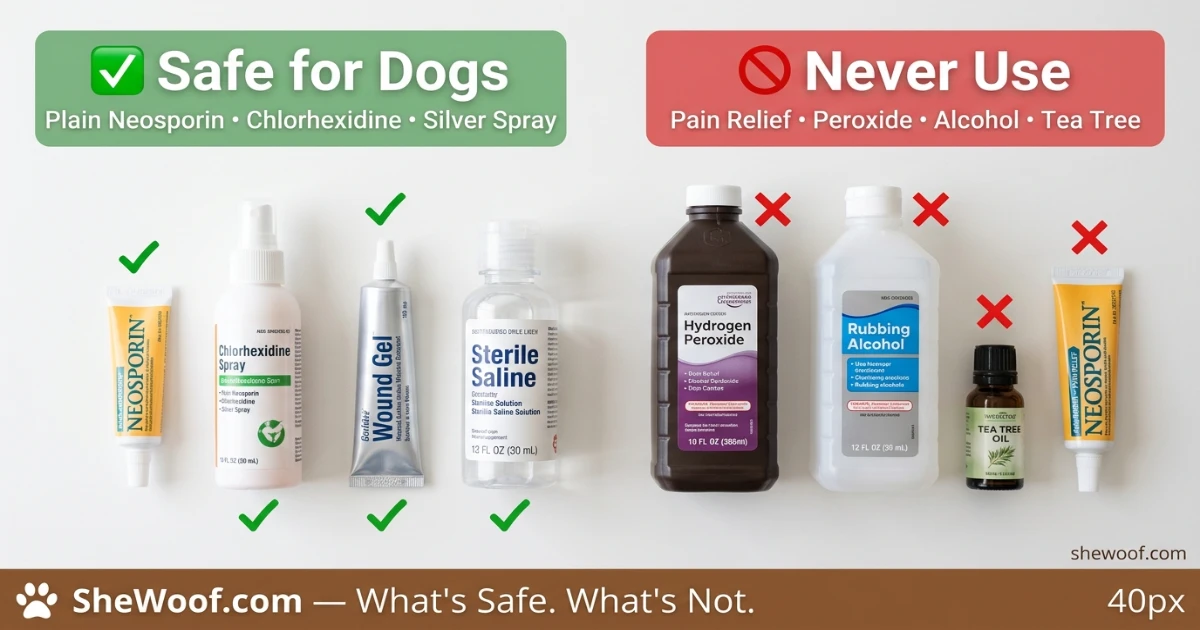
The “Neosporin + Pain Relief” formula is different and should never be used on dogs. It contains pramoxine, a topical anesthetic that is not safe for canine use. Always check the label carefully. “Pain relief,” “maximum strength,” or any added ingredient beyond the basic three antibiotics means the product is off-limits for your dog.

When Neosporin Is Appropriate — and When It Is Not
Neosporin is only appropriate for very minor, superficial wounds. Think small scrapes, shallow abrasions, or tiny cuts that have clean edges, are not actively bleeding, and show no sign of infection. These are the kinds of wounds that would heal on their own with basic hygiene. Neosporin adds a small layer of antibiotic protection and keeps the area slightly moist, which can support healing.
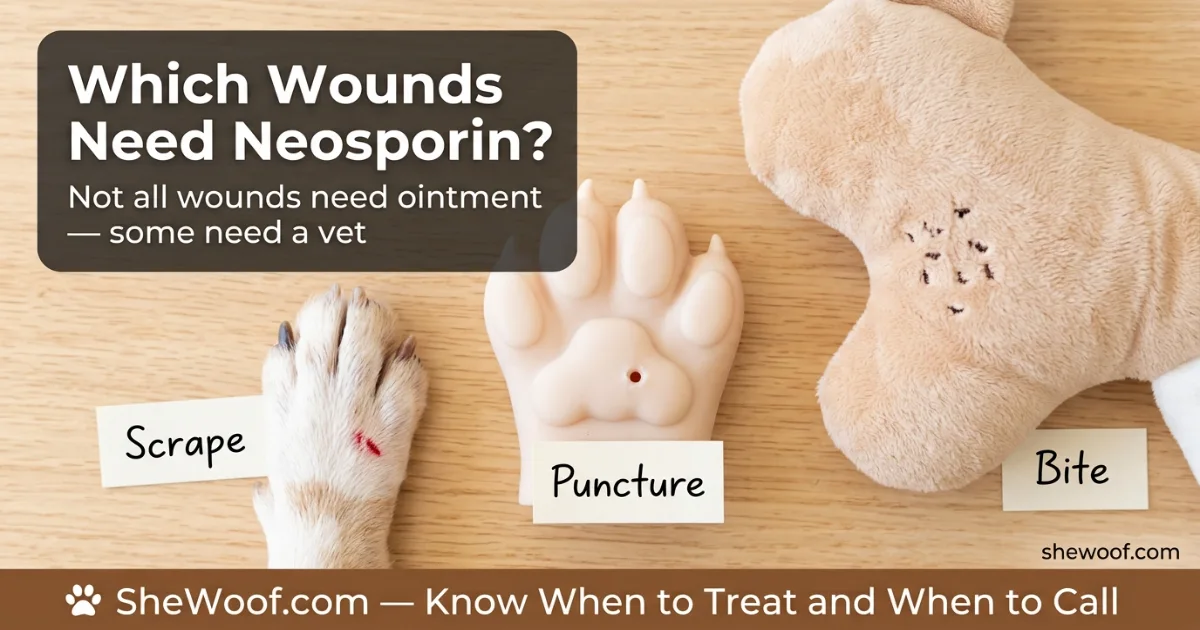
Neosporin is not appropriate for deep wounds, puncture wounds, bite wounds, burns, wounds with significant bleeding, or wounds that are already showing signs of infection — redness, swelling, heat, pus, or a foul odor. These wounds need veterinary care. A puncture wound from a bite or a sharp object is especially dangerous because the surface may look small while the tissue underneath is damaged and bacteria are trapped deep inside. Applying ointment to a puncture wound can seal bacteria in and make things worse.
Wounds that require stitches, staples, or professional cleaning should not be treated at home. If the wound is gaping open, deep enough to show fat or muscle, or bleeding steadily, skip the Neosporin and go to the vet. Your dog may also need antibiotics by mouth, not just on the surface.
| Wound Type | Neosporin Appropriate? | What to Do Instead |
|---|---|---|
| Small superficial scrape | Yes — thin layer OK | Clean first, apply sparingly, prevent licking |
| Shallow clean cut | Yes — if edges close naturally | Clean, apply thin layer, monitor |
| Puncture wound | No — bacteria trapped deep | Vet visit — may need antibiotics |
| Bite wound | No — high infection risk | Vet visit — professional cleaning needed |
| Gaping or deep wound | No — needs closure | Vet visit — stitches or staples |
| Infected wound | No — infection established | Vet visit — prescription treatment |
Step-by-Step: How to Care for a Minor Dog Wound at Home
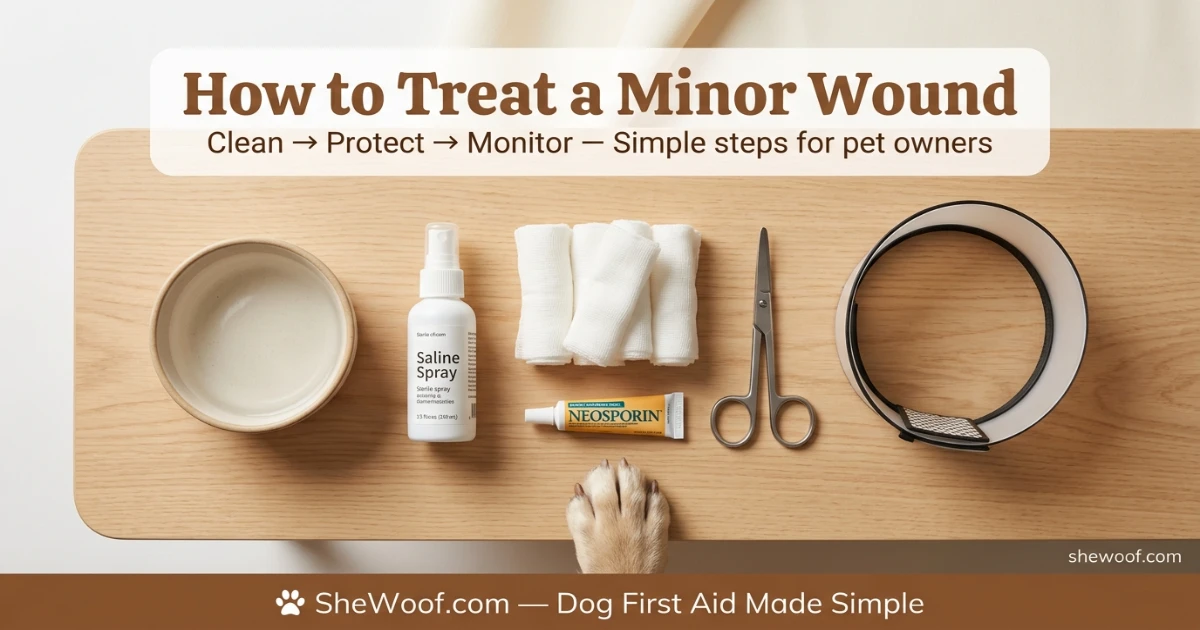
- Stop any bleeding. Apply gentle pressure with a clean cloth or gauze for a few minutes until bleeding stops.
- Clean the wound. Flush with warm water or sterile saline. Gently remove dirt and debris. Do not use hydrogen peroxide — it damages healing tissue.
- Trim hair if needed. For small wounds, clipping the surrounding fur can keep the area clean and prevent hair from sticking to the wound.
- Apply a thin layer of plain Neosporin if appropriate. A very small amount is enough. Do not glob it on.
- Prevent licking. Use an e-collar, a protective bandage, or close supervision. This is the most important step.
- Monitor daily. Watch for redness, swelling, heat, discharge, odor, or increasing pain. These are signs of infection.
What Most Owners Get Wrong About Neosporin and Dog Wounds
The most common mistake is assuming that because Neosporin is safe for humans, it is safe for dogs in the same way. Dogs are not small humans. They lick. They chew. They roll in dirt. A human can apply Neosporin and leave it alone. A dog will often have the ointment in their mouth within minutes. The safety profile changes completely when ingestion is a near-certainty.
Another frequent error: using the wrong Neosporin formula. Owners grab whatever is in the cabinet — often the pain-relief version — and apply it without reading the label. Pramoxine is not safe for dogs. The difference between a safe application and a harmful one comes down to one ingredient on a label that almost no one reads in the moment.
A third mistake is applying ointment to a wound that needed stitches or professional cleaning. By the time some owners reach for Neosporin, the wound has already become infected, is deeper than they realized, or requires drainage. Treating it with an over-the-counter ointment delays the real treatment and gives the infection time to spread.
Better Alternatives to Neosporin for Dog Wound Care
If you want a dog-specific product for minor wound care, there are better options than Neosporin. Veterinarian-approved chlorhexidine sprays and wipes are safe, effective, and formulated for canine skin. Silver-based sprays and gels provide antimicrobial protection without the ingestion risk of human triple antibiotic ointments. Manuka honey wound products designed for veterinary use support healing while being safer if licked.
Saline solution is the simplest and safest wound flush. You can make sterile saline at home by boiling one cup of water with half a teaspoon of salt, then cooling it completely. Use it to rinse minor wounds before applying any product. For anything beyond a minor scrape, ask your veterinarian to recommend a specific product for your dog’s situation — rather than guessing from the pet store shelf.
Hydrogen peroxide, rubbing alcohol, tea tree oil, and witch hazel should not be used on dog wounds. Hydrogen peroxide damages healthy tissue. Alcohol causes pain and further tissue irritation. Tea tree oil is toxic to dogs in significant amounts. These common human first aid items do not belong in a dog wound care routine.
A basic dog first aid setup — sterile saline, vet-approved antiseptic spray, gauze pads, self-adhesive bandage, and an e-collar — costs roughly $30 to $60. A veterinary visit for a minor wound typically costs $75 to $150 including examination and basic treatment. A wound requiring sedation, stitches, or surgical repair ranges from $200 to $1,500+ depending on severity. The first aid kit is cheaper than one avoidable veterinary bill.
Frequently Asked Questions About Neosporin and Dog Wounds
Plain Neosporin can be used on a minor superficial wound in a small amount. The bigger risk is licking — dogs often ingest the ointment, which can cause stomach upset. Prevent licking with an e-collar or bandage. Never use the pain-relief formula, which contains ingredients unsafe for dogs.
Licking off a small amount of plain Neosporin may cause mild stomach upset, vomiting, or diarrhea. Repeated licking keeps the wound wet and introduces bacteria. If your dog ingests a significant amount or shows persistent vomiting or lethargy, contact your veterinarian.
No. Neosporin with pain relief contains pramoxine, a topical anesthetic that is not safe for dogs. Only plain Neosporin — containing bacitracin, neomycin, and polymyxin B — should ever be considered, and only for minor superficial wounds.
Veterinarian-approved chlorhexidine sprays or wipes, silver-based wound products, and sterile saline are safer dog-specific alternatives. A basic dog first aid kit with saline, antiseptic, gauze, bandage material, and an e-collar covers most minor wound care needs.
Flush the wound with warm water or sterile saline to remove dirt and debris. Trim hair around the wound if needed. Apply a thin layer of plain antibiotic ointment if the wound is superficial. Prevent licking and monitor daily for signs of infection.
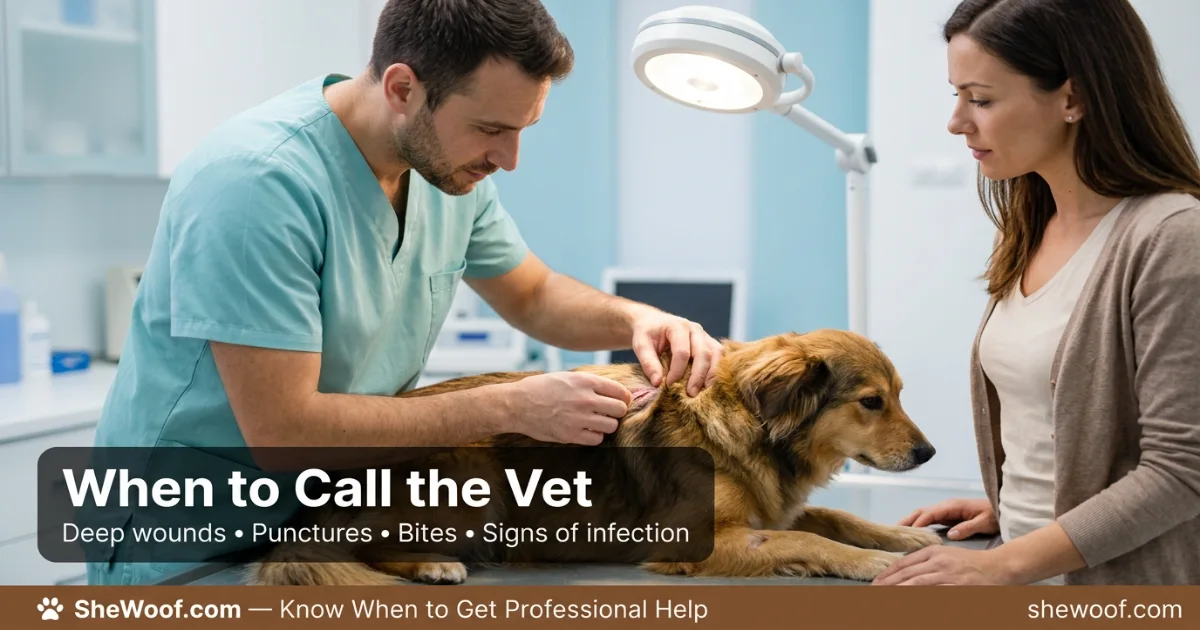
Go to the vet for deep wounds, puncture wounds, bite wounds, wounds that are gaping or bleeding steadily, or any wound near the eye, genitals, or joints. Also see a vet if a minor wound shows redness, swelling, pus, odor, or does not improve within 2 to 3 days.
No. Hydrogen peroxide damages healthy tissue and delays healing. Use warm water or sterile saline to clean minor wounds. Alcohol, witch hazel, and tea tree oil are also inappropriate for dog wound care and can cause harm.
- Plain Neosporin can be used on a dog’s minor superficial wound in a thin layer — but the licking risk is significant, and ingestion can cause stomach upset.
- Never use Neosporin with pain relief. The pramoxine it contains is not safe for dogs.
- The most important first aid step is cleaning with warm water or sterile saline, not applying ointment.
- Deep wounds, puncture wounds, bite wounds, and any sign of infection require veterinary care — not over-the-counter treatment.
- Dog-specific alternatives like chlorhexidine sprays, silver wound products, and sterile saline are safer and more effective for canine first aid.
- Prevent licking with an e-collar or bandage, and monitor any wound daily for redness, swelling, heat, pus, or odor.