What Time of Year Are Fleas the Worst? A Seasonal Guide for Dog Owners
Quick Answer: Fleas are typically worst during late summer and fall — roughly August through November in most parts of the United States. Warm temperatures between 70°F and 85°F combined with moderate humidity create ideal breeding conditions. However, fleas can survive year-round indoors in heated homes, and in warm climates like the southern United States, flea season never truly ends. Many veterinarians now recommend year-round flea prevention for every dog regardless of geography, because the “flea season” has become less predictable and more prolonged than it was even a decade ago.
You might assume fleas die off when summer ends. The truth is more frustrating. Late summer and fall — not the peak heat of July — are actually when flea populations explode. If you have ever been caught off guard by a sudden infestation in September or October, you were not unlucky. You were experiencing the predictable peak of the flea life cycle, and no one warned you it was coming. Understanding “what time of year are fleas the worst” is not just trivia — it is the difference between staying ahead of an infestation and scrambling to catch up after your dog has already been scratching for weeks.
This guide covers the seasonal biology of fleas, how climate and region change the risk, why indoor dogs are not safe, and the single most important strategy that makes everything else work: year-round prevention with no gaps.
The Flea Life Cycle: Why Late Summer and Fall Are Peak Season
To understand when fleas are worst, you have to understand how they reproduce. A single female flea can lay 40 to 50 eggs per day. Those eggs fall off your dog and into the environment — carpets, bedding, cracks in hardwood floors, the soil in your backyard. Within days, the eggs hatch into larvae, which burrow deep into fibers or soil, avoiding light. The larvae spin cocoons and become pupae, and this is where the real problem lies. Pupae can remain dormant for weeks or even months, waiting for the right conditions to emerge as adult fleas.
The trigger for emergence is a combination of warmth, humidity, and the presence of a host — vibrations from footsteps, changes in carbon dioxide levels, and body heat all signal to the pupa that a potential blood meal is nearby. This is why families returning from a late-summer vacation sometimes walk into an empty house and are suddenly swarmed by fleas. The house was quiet, the fleas were waiting, and the return of warm bodies triggered a mass emergence.
The population math is brutal. By the time you see one adult flea on your dog, there are likely dozens or hundreds more in the environment — eggs, larvae, and pupae that have not yet reached the biting stage. Only about 5 percent of a flea infestation is adult fleas. The other 95 percent is the invisible reservoir waiting to mature. This is why flea problems feel like they appear overnight. They did not. They were building for weeks, and the visible adults are just the tip of the iceberg.
Late summer and fall provide the perfect environmental conditions for this life cycle to accelerate. Warm soil temperatures speed up egg development. Moderate humidity prevents eggs and larvae from drying out. The result is a population boom that peaks in September, October, and often into November — right when many owners have already stopped thinking about fleas for the year.

How Geography Changes Flea Season
Flea season is not the same everywhere. In the southern United States — Florida, Texas, Louisiana, Georgia, and across the Gulf Coast — fleas are active year-round. Mild winters rarely produce the sustained freezing temperatures needed to kill fleas outdoors, and indoor environments remain warm and humid enough for continuous reproduction. In these regions, the question “what time of year are fleas the worst” has a different answer: fleas are worst whenever you stop prevention.
In the Northeast, Midwest, and Mid-Atlantic, flea season typically runs from April through November, with the peak concentrated in September and October. Hard freezes in December through February suppress outdoor flea populations, but indoor infestations can continue unchecked in heated homes. A single warm spell in January can trigger a small emergence indoors.
The West presents a varied picture. Coastal areas with moderate humidity — the Pacific Northwest, Northern California — support fleas for much of the year. Arid regions like Arizona and inland Southern California see lower flea pressure overall, but irrigated lawns and gardens create micro-environments where fleas can thrive even in the desert. Mountain regions with long, cold winters have the shortest natural flea seasons, but indoor fleas remain a risk anywhere with central heating.

| Region | Typical Flea Season | Peak Months | Year-Round Risk |
|---|---|---|---|
| Southeast / Gulf Coast | Year-round | Aug–Nov peak, but never zero | High — continuous prevention essential |
| Northeast / Midwest | April–November | September–October | Moderate — indoor risk continues in winter |
| Pacific Northwest | March–December | August–October | Moderate-High — humidity supports fleas |
| Southwest / Arid | April–October (irrigated areas) | September–October | Lower overall; localized around lawns |
| Mountain West | May–October | August–September | Lower; indoor risk remains |
Why Indoor Dogs Are Not Safe From Fleas
One of the most persistent myths in dog ownership is that indoor dogs do not need flea prevention. The logic sounds reasonable: the dog never goes outside except for bathroom breaks, so how could they get fleas? The answer is that fleas are extraordinary hitchhikers. They come inside on your shoes, your pant legs, your other pets, visiting animals, and even through window screens. A single flea carried indoors can lay 50 eggs a day, and within weeks, you have an established indoor infestation.
Apartment buildings and multi-unit housing present a particular risk. Fleas travel between units through shared walls, plumbing chases, hallways, and even on the clothing of neighbors. If one unit in a building has a flea problem, adjacent units are at risk regardless of whether those dogs ever go outside. Indoor-only dogs in apartments need the same consistent prevention as dogs with large backyards.
The indoor environment is also ideal for flea reproduction. Central heating maintains temperatures in the 68°F to 72°F range year-round — exactly the zone where fleas thrive. Carpet, upholstery, and pet bedding provide the dark, protected spaces larvae need. Vacuuming helps but does not eliminate the problem alone. The eggs are sticky and cling to carpet fibers. The pupae are resistant to most household sprays. Once fleas are established indoors, professional pest control or rigorous, repeated treatment is often required to break the cycle.

What Most Owners Get Wrong About Flea Season
The most expensive mistake is stopping flea prevention during the winter. Owners see snow on the ground and assume fleas must be dead. Outdoors, many are — but indoors, the thermostat is set to 70°F, and the fleas living in the carpet fibers have no idea it is January. They continue reproducing, and by the time the owner restarts prevention in April or May, a low-level infestation has been quietly building for months. The dog may not even show obvious signs until the population reaches a tipping point.
Another common error: treating only the dog and not the environment. If your dog has fleas, your home has fleas — or at least flea eggs and larvae. The dog is the mobile blood-meal delivery system. The infestation lives in the environment. Effective flea control addresses both simultaneously: a veterinarian-recommended flea preventative for the dog, plus thorough vacuuming, washing bedding in hot water, and potentially household treatment with an insect growth regulator. One without the other is a losing battle.
A third mistake involves using flea preventatives inconsistently. A monthly oral or topical flea treatment works by maintaining a consistent level of protection in the dog’s system. Skipping a month — or applying it a week late — creates a window where fleas can bite, survive, and lay eggs. Those eggs then develop into the next generation. Consistency is not a suggestion. It is the mechanism by which flea prevention actually works.

Climate Change and the Expanding Flea Season
Veterinary parasitologists have documented a clear trend over the past two decades: flea season is getting longer. Warmer average temperatures, milder winters, and earlier springs extend the window during which fleas can reproduce outdoors. Regions that historically saw a hard flea die-off in November now see activity persisting into December or even January. Spring emergence is starting earlier — March instead of April in many areas.
This shift changes the prevention calculus for dog owners. A generation ago, a veterinarian might have reasonably recommended flea prevention from April through October for a dog in the Midwest. Today, the same veterinarian is likely to recommend year-round prevention for the same dog in the same location. The climate has changed. The flea life cycle has expanded. The advice has to expand with it.
Year-round prevention is not about being overly cautious. It is about acknowledging that the old seasonal boundaries no longer reliably contain flea populations. The cost of year-round prevention — roughly $15 to $30 per month for most dogs — is far less than the cost of treating a full-blown infestation, which can involve veterinary visits, prescription medications for secondary skin infections, professional pest control, and weeks of intensive cleaning.

Frequently Asked Questions About Flea Season
Fleas are typically worst from late summer through fall — August to November in most regions. Warm temperatures between 70°F and 85°F with moderate humidity create ideal breeding conditions. In warm climates like the southern United States, flea season is year-round. Indoor infestations can persist through winter even in cold regions due to home heating.
Outdoor fleas die when temperatures drop below freezing for sustained periods. However, fleas living indoors in heated homes survive and reproduce all winter. Flea pupae can also survive cold weather in protected outdoor environments like under porches, in leaf litter, or in animal dens, emerging when temperatures warm. Winter does not guarantee a flea-free home.
Year-round prevention is recommended by most veterinarians. Flea seasons have become longer and less predictable due to climate change. Indoor heating allows fleas to survive winter. Skipping prevention during colder months creates a gap where low-level infestations can build unnoticed, exploding when warm weather returns.
Fall provides the perfect combination of lingering warmth, moderate humidity, and the accumulated reproductive output of the entire summer. Fleas that hatched all summer are now adults laying eggs. The population compounds exponentially. Many owners also stop prevention too early, thinking summer’s end means fleas are gone — creating an unprotected window during peak season.
Yes. Fleas hitchhike indoors on human clothing, shoes, other pets, and through window screens. A single flea can lay 50 eggs per day, starting an indoor infestation quickly. Indoor-only dogs in apartments and multi-unit housing are also at risk from neighboring units. Year-round prevention is recommended regardless of your dog’s indoor or outdoor lifestyle.
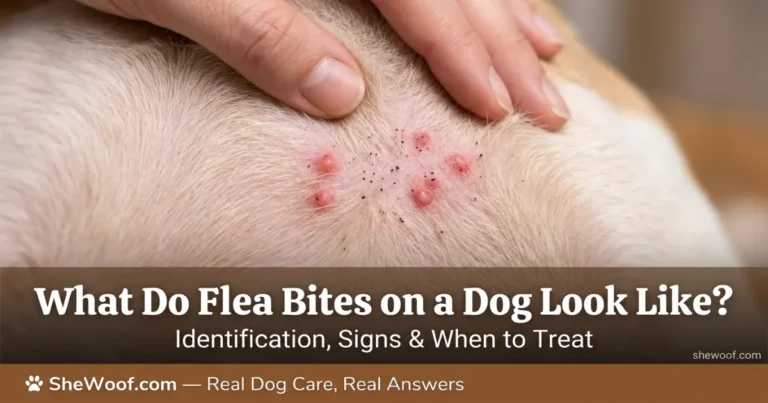
Look for excessive scratching, biting, or licking — especially at the base of the tail, belly, and inner thighs. Check for flea dirt — tiny black specks that turn reddish-brown when placed on a damp white paper towel. Run a flea comb through your dog’s fur over a white surface. You may find flea dirt even when live fleas are not visible.
A veterinarian-recommended monthly flea preventative — oral or topical — applied consistently year-round without gaps. Combine this with regular vacuuming, washing pet bedding in hot water, and keeping outdoor areas mowed and free of leaf litter. Treat all pets in the household simultaneously. Environmental control and pet prevention must work together.
- Fleas are worst from late summer through fall — August to November — when warmth, humidity, and accumulated summer reproduction create peak populations.
- Flea season varies by region: year-round in the South, April through November in the North, and highly dependent on micro-environments like irrigated lawns in arid areas.
- Indoor dogs are not safe. Fleas enter homes on clothing, shoes, and other pets, and thrive in heated indoor environments regardless of outdoor weather.
- Year-round flea prevention is the standard recommendation from most veterinarians. Seasonal gaps allow low-level infestations to build unnoticed and explode when conditions improve.
- Effective flea control treats both the dog and the environment. Vacuum weekly, wash bedding in hot water, and maintain consistent monthly prevention on every pet in the household.
- Climate change is extending flea season — warmer winters and earlier springs mean fleas are active for more months of the year than they were even a decade ago.