What’s the Best Food for Small Dogs? A Complete Nutrition Guide
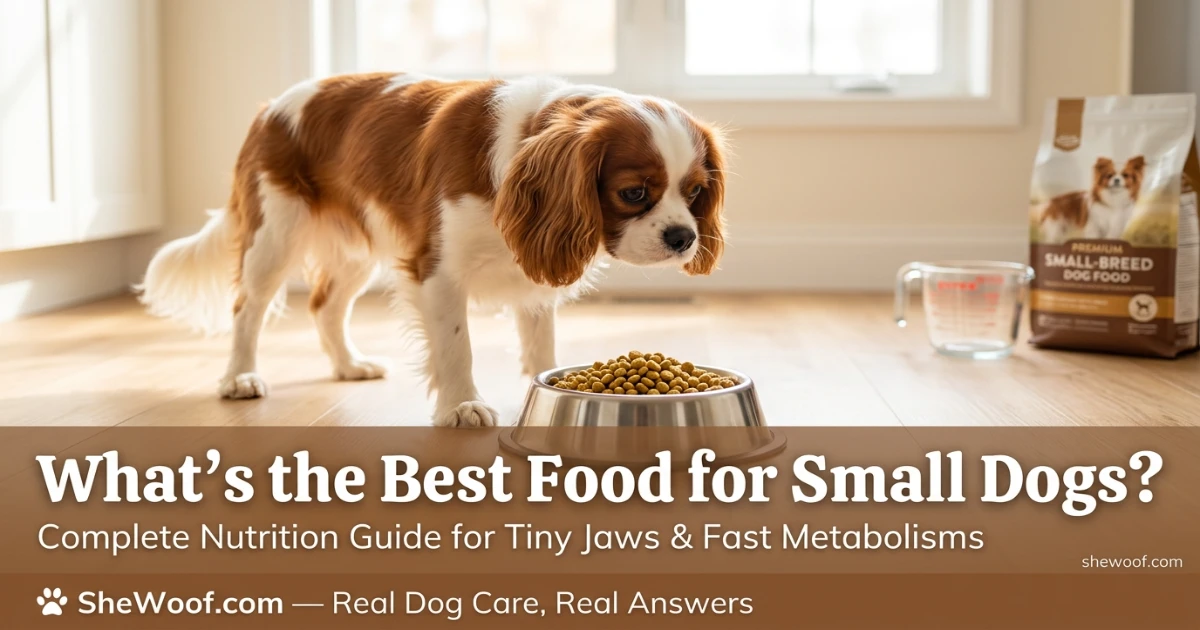
Quick Answer: The best food for small dogs is a high-quality, small-breed-specific formula with small kibble size, higher calorie density per cup, and protein from named animal sources like chicken, salmon, or lamb as the first ingredient. Small dogs have faster metabolisms, smaller stomachs, and different nutritional needs than large breeds. They need more calories per pound of body weight, smaller pieces they can actually chew, and formulas that support dental health, joint health, and the longer lifespan typical of small breeds. Look for foods labeled “small breed” that meet AAFCO standards for your dog’s life stage.
You are standing in the pet food aisle, staring at a wall of bags — large breed, small breed, grain-free, limited ingredient, puppy, senior, weight management. Your Chihuahua is at home, and you just need to know “what’s the best food for small dogs” without reading forty ingredient lists or falling down a rabbit hole of conflicting online reviews. The decision feels high-stakes because it is. Small dogs live long lives — often 12 to 16 years or more — and what they eat every day across those years shapes their health in ways that compound over time.
Small dogs are not simply scaled-down versions of large dogs. Their nutritional needs, metabolism, jaw size, and even their risk profiles for certain diseases are different. Feeding them a large-breed formula — or a generic “all life stages” food that skews toward the needs of a 60-pound Labrador — can lead to weight gain, dental problems, and missed opportunities for targeted nutrition. This guide breaks down exactly what to look for, what to avoid, and how to choose the best food for your small dog at every life stage.
Why Small Dogs Need Different Food Than Large Breeds
Small dogs have faster metabolisms. A 10-pound dog burns more calories per pound of body weight at rest than an 80-pound dog. This means small-breed foods need to be more calorie-dense — more energy in every cup — so a small dog can meet their nutritional needs without having to eat a physically impossible volume of food. A Chihuahua cannot eat the same volume as a Golden Retriever, but they still need complete nutrition. Calorie density solves this problem.
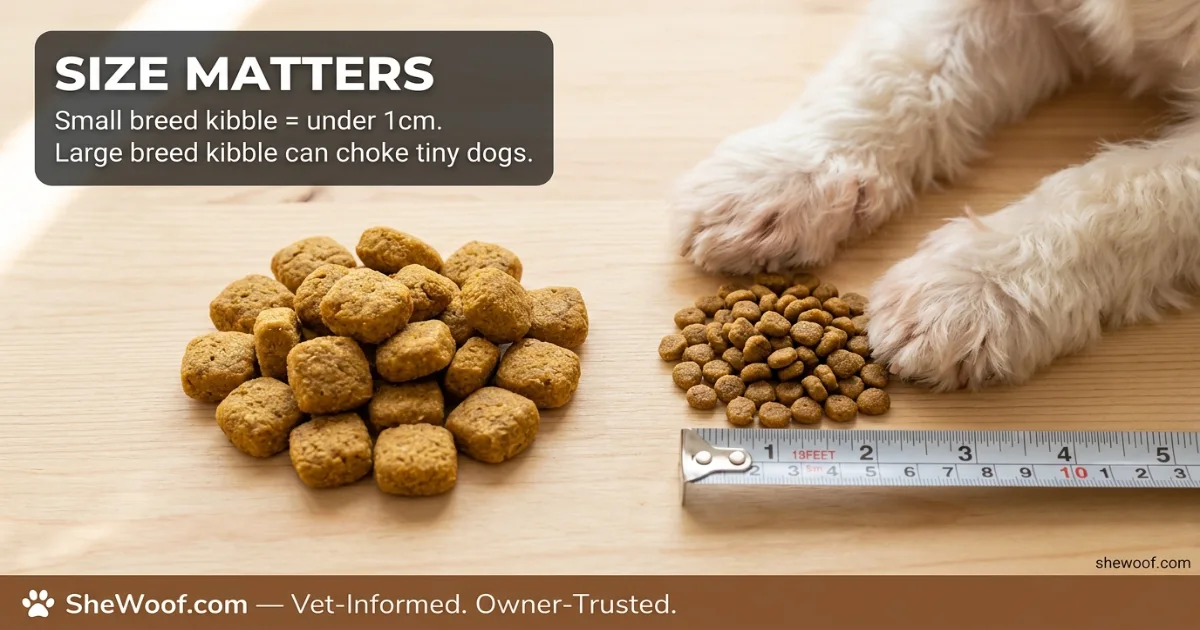
Their stomachs are smaller, too. A small dog’s stomach holds roughly one to two cups of food at a time, and feeding a single large meal can cause discomfort, bloating, or even hypoglycemia in toy breeds who cannot maintain blood sugar between widely spaced meals. Most small dogs do best on two or three small meals per day rather than one large one. The kibble itself must be physically small enough for tiny jaws to grasp, crunch, and swallow without struggling.
Small dogs also live longer. A 12-pound Miniature Poodle may live 14 to 16 years. A Great Dane may live 7 to 10. Longevity changes the nutritional calculus. Small dogs benefit from higher levels of antioxidants to combat oxidative stress over a longer lifetime, joint-supporting nutrients like glucosamine and chondroitin to protect patellas and hips, and dental health support — because small mouths are more prone to overcrowding, tartar buildup, and periodontal disease. A well-formulated small-breed food accounts for all of these factors.
What to Look for in a High-Quality Small Dog Food
The ingredient list tells the story, but you have to know how to read it. The first ingredient should be a named animal protein — chicken, salmon, lamb, turkey, or beef — not a vague category like “meat meal” or “poultry by-product.” Whole protein sources are ideal; meat meals (like “chicken meal”) are also acceptable and are actually concentrated protein sources, but they should come from named animals.
Healthy fats are essential for small dogs. Chicken fat, salmon oil, and flaxseed provide omega-3 and omega-6 fatty acids that support skin, coat, brain, and joint health. Small dogs are prone to luxating patellas and other joint issues — and while diet cannot prevent genetic conditions, omega-3s help manage inflammation. The food should contain a named fat source, not a generic “animal fat.”
Complex carbohydrates like brown rice, oatmeal, sweet potatoes, and barley provide sustained energy without the blood sugar spikes that can trigger hypoglycemia in toy breeds. Avoid foods where corn, wheat, or soy appear as the first or second ingredient — these are often used as inexpensive fillers and provide less bioavailable nutrition than whole grains or vegetable-based carbohydrates. Grain-free diets are not inherently better for small dogs unless a specific grain allergy has been diagnosed.
Probiotics and prebiotics — listed as ingredients like dried chicory root, inulin, or specific bacterial strains like Lactobacillus — support the gut microbiome. Small dogs can be prone to digestive sensitivity, and a healthy gut supports everything from immune function to stool quality. Antioxidants from fruits and vegetables like blueberries, cranberries, carrots, and spinach help combat cellular aging over a longer lifespan.
| Nutrient / Feature | Why It Matters for Small Dogs | What to Look For |
|---|---|---|
| Protein | Muscle maintenance, immune function, energy | Named animal source first — 25-35% minimum |
| Fat | Concentrated energy, skin and coat health | Named fat source — omega-3 and omega-6 rich |
| Kibble size | Chewing ease, dental engagement, choking prevention | Small pieces — under 1cm for toy breeds |
| Calorie density | Meets energy needs without overeating volume | 350-450 kcal per cup for most small breeds |
| Glucosamine / Chondroitin | Joint support for patellas and aging joints | Added in small-breed formulas |
| Antioxidants | Combats cellular aging over long lifespan | Fruits, vegetables, vitamin E, selenium |
Life Stage Matters: Puppy, Adult, and Senior Small Dog Nutrition
Small breed puppies have the fastest metabolic rate of any dog category. They burn through calories rapidly and have tiny energy reserves. Hypoglycemia — low blood sugar — is a real risk in toy breed puppies who go too long without eating. Small breed puppy formulas are the most calorie-dense of all commercial dog foods, designed to be fed in three or four small meals per day. Puppies should stay on a puppy-specific formula until they reach about 80 to 90 percent of their adult weight — typically 9 to 12 months for small breeds.
Adult small dogs — roughly 1 to 7 or 8 years old depending on the breed — transition to a small-breed adult maintenance formula. Calorie needs decrease from puppyhood, but the metabolic rate remains high compared to larger dogs. Adult small dogs typically need between 35 and 45 calories per pound of body weight per day, depending on activity level. A moderately active 12-pound adult dog needs roughly 400 to 500 calories per day. Spaying and neutering reduce calorie requirements by approximately 20 to 30 percent — something many owners overlook until the dog starts gaining weight.
Senior small dogs — typically over 8 years old — benefit from formulas with moderate protein to maintain muscle mass, increased fiber for digestive health, lower fat to prevent weight gain as activity decreases, and boosted antioxidants and joint support. Senior small dogs can live many years past the initial “senior” label, and keeping them lean with targeted nutrition is one of the most impactful things you can do for their longevity.
What Most Owners Get Wrong About Feeding Small Dogs
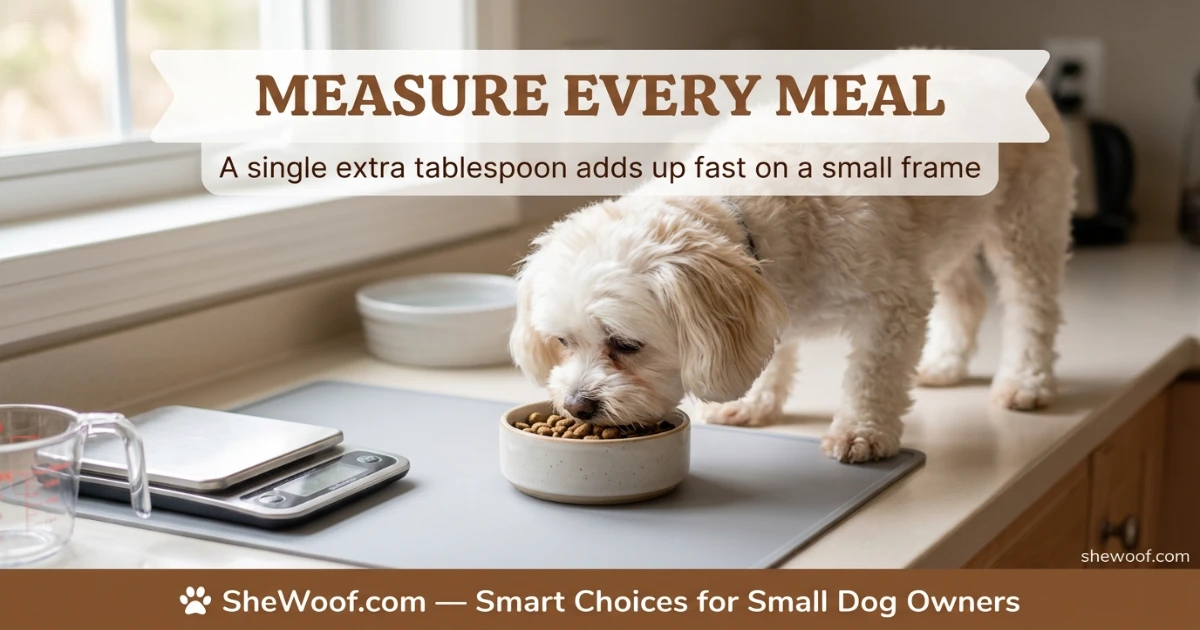
The single most common mistake is overfeeding. A small dog’s calorie needs are easy to overshoot. An extra tablespoon of kibble per meal, a few too many training treats, a daily dental chew that never got counted — these add up fast on a small frame. A 12-pound dog who should weigh 10 pounds is 20 percent overweight — the equivalent of a 150-pound human carrying an extra 30 pounds. Obesity in small dogs contributes to collapsed tracheas, worsened luxating patellas, diabetes, pancreatitis, and shortened lifespan. Portion precision is not obsessive. It is essential.
Another widespread error: feeding “all life stages” food without checking whether it truly meets the needs of a small dog at their specific life stage. Some all-life-stages foods are formulated to meet the needs of growing large-breed puppies — which means they may be too calorie-dense for a sedentary adult small dog, or the kibble may be too large for a toy breed to comfortably eat. Small-breed-specific formulas exist for a reason.
A third mistake involves free-feeding — leaving food out all day for the dog to graze. For small dogs prone to hypoglycemia, scheduled meals are safer than grazing because they ensure the dog eats enough at predictable intervals. For small dogs prone to weight gain, grazing makes it impossible to track intake. Scheduled, measured meals support metabolic health, house training, and the owner’s ability to notice immediately if the dog’s appetite changes — which is often the first sign of illness.
Wet Food, Dry Food, or Both? What Works Best for Small Dogs
Dry kibble offers convenience, cost-effectiveness, and dental benefits — the mechanical action of crunching helps reduce tartar buildup. For small dogs, the key is kibble size. Pieces must be small enough for tiny mouths to manage comfortably. Some owners of toy breeds prefer to soak kibble briefly in warm water to soften it, especially for dogs with missing teeth or dental sensitivity.
Wet food has higher moisture content, which can benefit small dogs who do not drink enough water — common in toy breeds — and is more aromatic, which helps picky eaters. Wet food is also easier to eat for senior dogs with dental disease. The downsides: it is more expensive per calorie, spoils quickly once opened, and does not provide the dental scrubbing action of dry kibble. Many small dog owners use wet food as a topper — a small spoonful mixed into dry kibble — rather than the primary diet.
A mixed approach often works beautifully. A base of high-quality small-breed dry kibble with a small amount of wet food for palatability and moisture gives you the benefits of both formats. Whatever you choose, the total daily calories — across kibble, wet food, treats, and toppers — must still fall within your dog’s target range. Wet food calories count just as much as dry food calories.

Premium small-breed dry dog foods typically range from $3 to $6 per pound, or roughly $15 to $45 per month for a 10-to-12-pound dog, depending on the brand, protein source, and whether the formula is grain-free or includes specialty ingredients. Wet food adds roughly $20 to $40 per month if fed as the primary diet. Prescription diets for specific health conditions cost more. The most expensive food is not always the best — but the cheapest foods often use lower-quality ingredients that may cost you more in veterinary bills over your dog’s lifetime.
Frequently Asked Questions About Small Dog Food
A limited-ingredient diet with a single novel protein source — like salmon, lamb, or venison — and a simple carbohydrate like sweet potato or brown rice often works well. Avoid foods with multiple protein sources, artificial additives, and common allergens like chicken or beef if your dog has shown sensitivity. Probiotics in the formula can also support digestive health.
Most adult small dogs need between 35 and 45 calories per pound of body weight per day, depending on activity level and whether they are spayed or neutered. A moderately active 12-pound dog typically needs 400 to 500 calories per day. Small breed puppies and very active dogs need more; sedentary seniors need less. Your veterinarian can help you calculate your individual dog’s needs.
Not necessarily. Grain-free diets are only better if your dog has a diagnosed grain allergy, which is relatively uncommon. Whole grains like brown rice and oatmeal provide healthy fiber and sustained energy. Be aware of ongoing FDA research into potential links between certain grain-free diets and dilated cardiomyopathy (DCM) in dogs. Discuss any diet choice with your veterinarian.
Most small dogs do best with two or three scheduled meals per day rather than free-feeding. Puppies and toy breeds at risk for hypoglycemia may need three to four small meals daily. Scheduled meals help regulate blood sugar, support house training, and allow you to monitor appetite changes that can signal health issues.
It is not recommended as a regular diet. Large breed foods typically have lower calorie density — meaning your small dog would need to eat a larger volume to meet energy needs — and the kibble size is often too large for small mouths. Large breed puppy foods are especially inappropriate for small breeds because they are formulated with different calcium and phosphorus ratios.
Look for a small-breed senior formula with moderate protein to preserve muscle mass, lower fat to prevent weight gain, added glucosamine and chondroitin for joint support, and boosted antioxidants for aging immune systems. Senior small dogs may also benefit from higher fiber for digestive regularity and wet food or softened kibble if dental issues are present.
Transition gradually over 7 to 10 days. Start with 75% old food and 25% new food for the first two to three days. Move to a 50/50 mix for the next two to three days. Then 25% old and 75% new for the final days before switching completely. This gradual approach reduces the risk of digestive upset, which small dogs are particularly prone to experiencing during food changes.
- The best food for small dogs is a small-breed-specific formula with named animal protein as the first ingredient, small kibble size, and higher calorie density to match their fast metabolism.
- Small dogs need more calories per pound than large breeds, have smaller stomachs that require two to three meals per day, and benefit from targeted nutrients like glucosamine and antioxidants for their longer lifespans.
- Life stage matters — feed small breed puppy, adult, or senior formulas appropriate to your dog’s age rather than a generic “all life stages” food.
- Portion precision is critical. Measure every meal. A single extra tablespoon of food per day can cause significant weight gain on a small frame over time.
- Transition foods gradually over 7 to 10 days. Avoid foods with large kibble, low calorie density, unnamed protein sources, or excessive fillers like corn and wheat as primary ingredients.
- Consult your veterinarian for personalized recommendations, especially if your small dog has health conditions, food sensitivities, or special dietary needs.