How to Stop Dogs Eating Poop
Quick Answer: To stop a dog from eating poop, combine immediate cleanup, supervised outdoor time, a reliable leave it cue, and a veterinary check to rule out medical causes like malabsorption, enzyme deficiency, or parasites. Feed a complete high-quality diet, keep your dog mentally and physically enriched, and never punish the behavior. Consistency over several weeks usually reduces or eliminates coprophagia.
Your dog just ate poop. Again. You are standing in the yard, disgusted and baffled, wondering how a creature who sleeps on your pillow can do something so revolting. You search “how to stop dogs eating poop” because you need a solution that actually works — not old wives’ tales about pineapple or hot sauce. You also need to know whether this is a harmless habit or a sign that something is medically wrong.
The behavior has a name — coprophagia — and it is far more common than most owners realize. The good news: for most dogs, it is manageable and often solvable. The better news: understanding why it happens points you toward the right fix faster than guessing.
Why Do Dogs Eat Poop?
Coprophagia is not one behavior with one cause. It is a symptom that can stem from medical issues, nutritional gaps, instinct, boredom, anxiety, or learned behavior. A dog with malabsorption needs veterinary treatment, not training. A bored dog needs enrichment, not pineapple. Identifying the root matters more than trying random remedies.
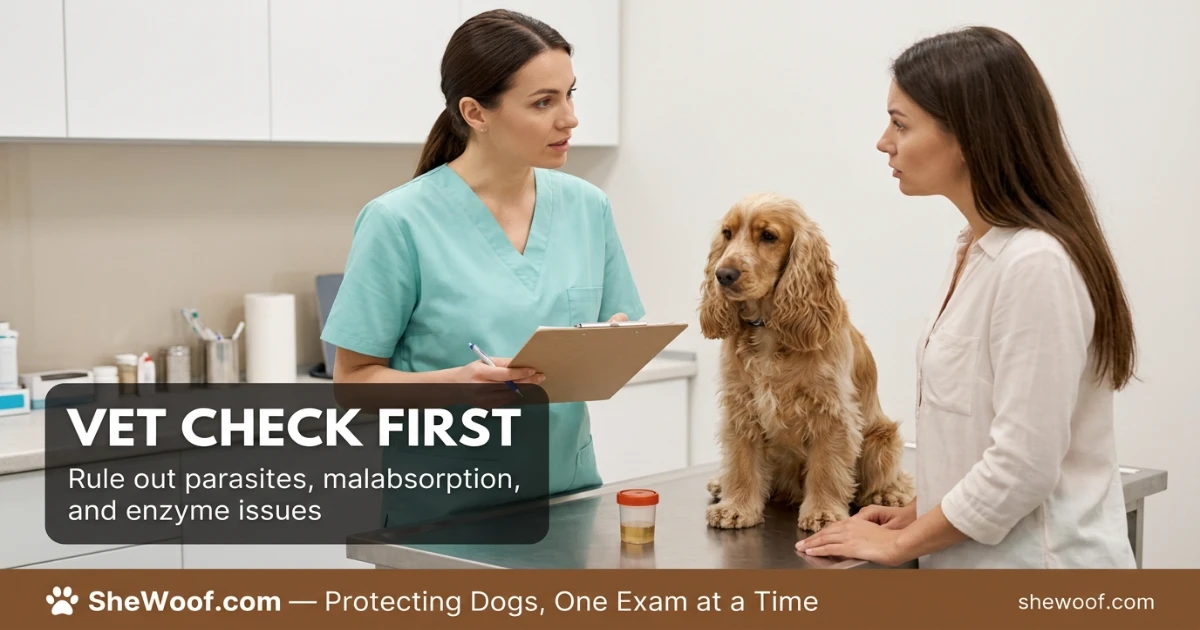
The most common medical causes include exocrine pancreatic insufficiency, intestinal parasites, and malabsorption syndromes. Dogs with these conditions may eat stool because their bodies are genuinely hungry for nutrients that never arrived. A dog who suddenly starts eating poop — especially alongside weight loss, poor coat, diarrhea, or increased appetite — needs blood work and a fecal exam before anything else.
Behavioral causes are more common in otherwise healthy dogs. Puppies explore the world with their mouths. Nursing mothers eat puppies’ stool to keep the den clean. Bored dogs create their own entertainment. Anxious dogs develop repetitive oral behaviors. And some dogs learn that eating poop gets attention — even negative attention — which reinforces the behavior.
What Most Owners Get Wrong About Stopping Coprophagia
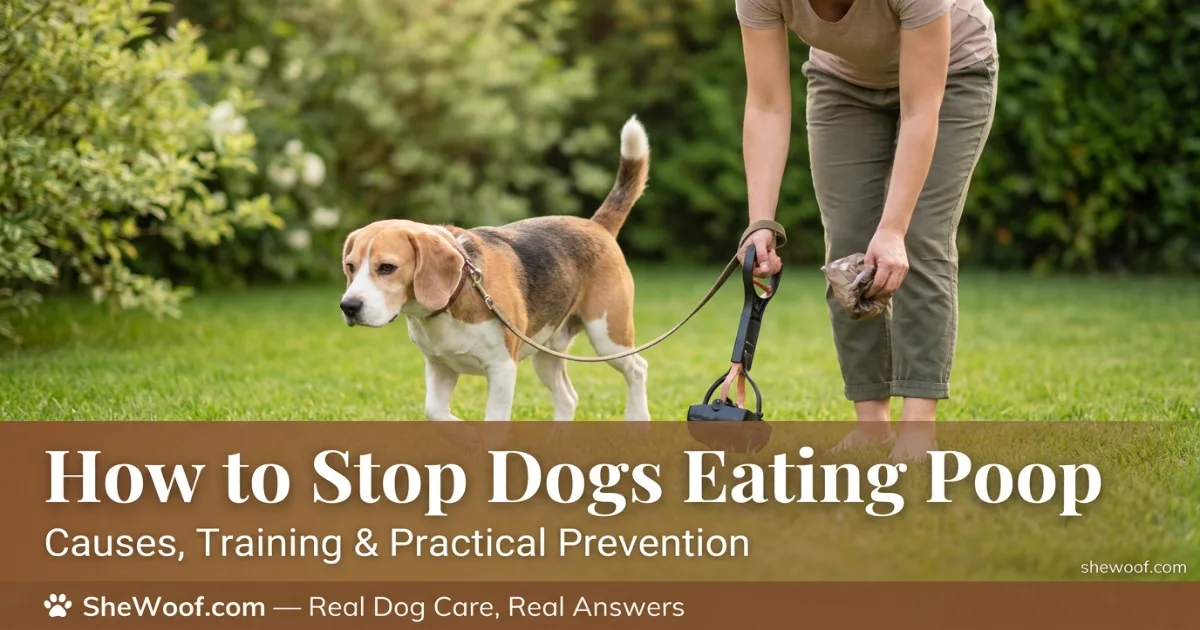
The biggest mistake is punishment. Yelling, rubbing the nose in it, or chasing the dog does not teach that poop is off-limits. It teaches the dog that eating it faster means getting caught less often. Some dogs become anxious and eat more. Punishment is not training. It makes the problem worse.
A second error is relying on food additives without addressing the underlying cause. Pineapple or commercial supplements may change stool taste for some dogs, but they do not fix malabsorption, parasites, boredom, or habit. If the root cause is medical, no additive will help.
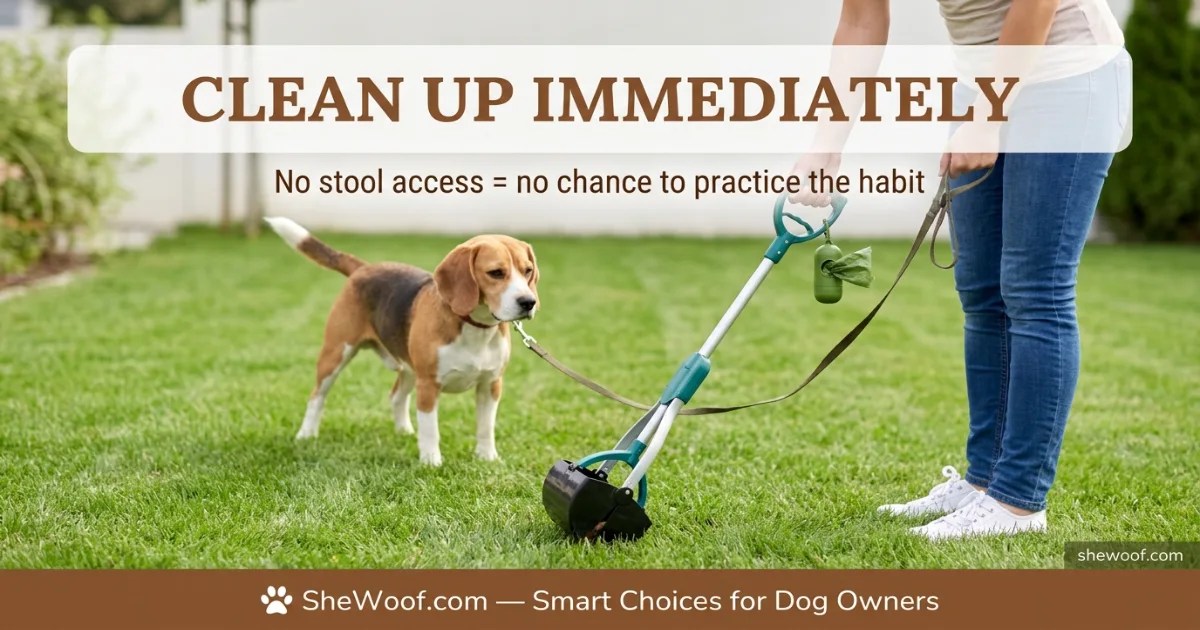
A third mistake is intermittent cleanup. A dog who has access to stool for even part of the day is still practicing the behavior. Poop eating is self-reinforcing. Every successful repetition strengthens the habit. Prevention requires removing access completely.
Step-by-Step:ow to Stop Dogs Eating Poop: Causes, Training Tips & Prevention
- Start with a veterinary check. Bring a fresh stool sample. Rule out parasites, malabsorption, and enzyme deficiencies before behavioral work.
- Remove access completely. Pick up stool immediately after elimination. Keep your dog leashed on walks. Block litter box access.
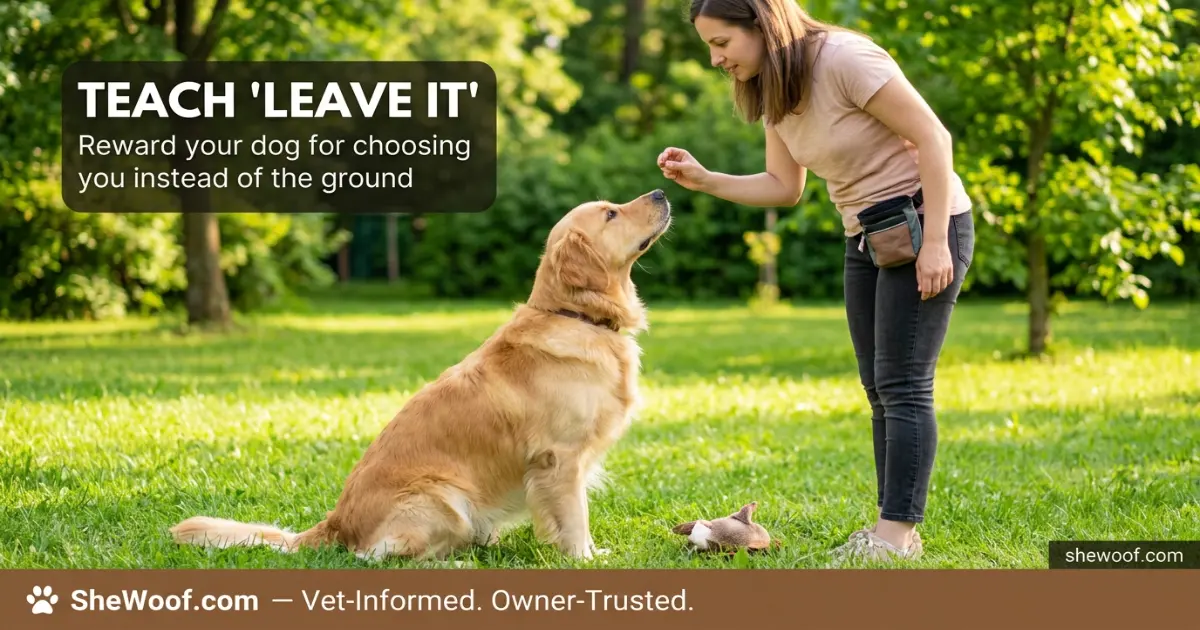
- Teach a reliable leave it cue. Start indoors with low-value items. Gradually practice outdoors. Reward disengagement with high-value treats.
- Improve the diet. Feed a complete balanced high-quality food. Split meals if your dog seems constantly hungry.
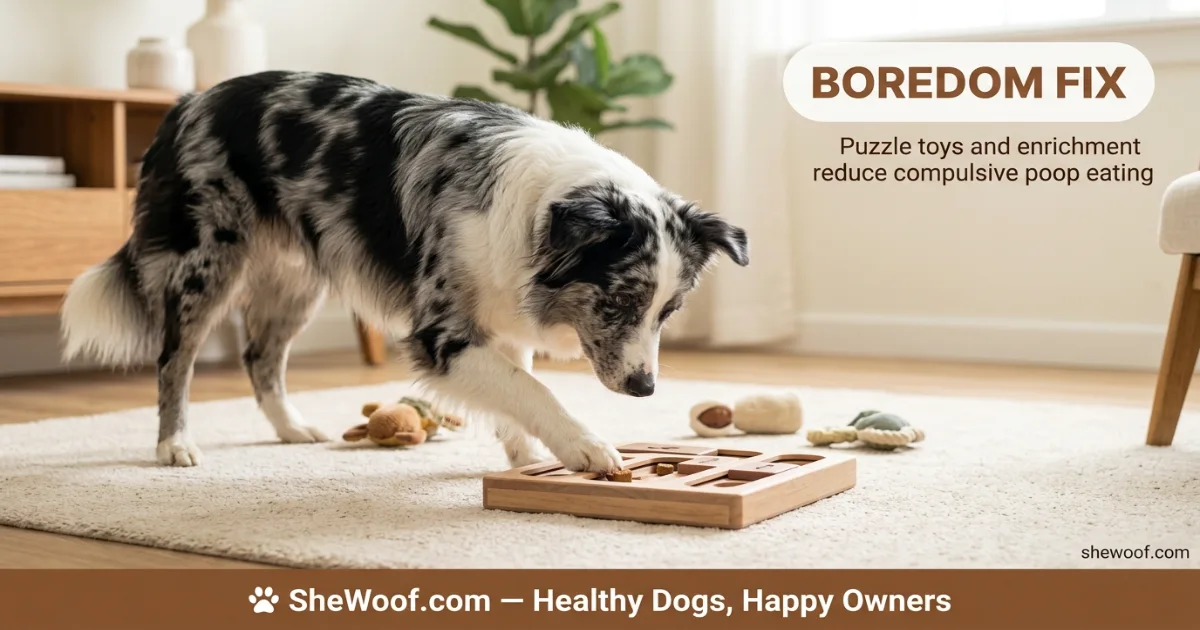
- Increase enrichment. Add puzzle toys, structured play, training, and scent games. A tired engaged dog is less likely to eat stool.
Puppies vs Adult Dogs vs Seniors
Puppies are the most common poop eaters and the most likely to outgrow it. Most stop by 6 to 9 months with management. Puppies still need a fecal exam — parasites are common and can trigger coprophagia.
Adult dogs who develop coprophagia after years of not doing it need a medical workup first. A sudden change in behavior — especially involving appetite or digestion — should never be dismissed as a quirk.
Senior dogs may start eating stool due to cognitive decline, decreased nutrient absorption, or dental pain. For seniors, management often matters more than training. Immediate cleanup and supervision prevent the behavior even when learning is difficult.
| Age Group | Likely Causes | Best Approach |
|---|---|---|
| Puppies (2-9 months) | Exploration, instinct, parasites | Fecal exam, supervision, cleanup, patience |
| Adult dogs | Medical, boredom, anxiety, habit | Vet workup, enrichment, leave it training |
| Senior dogs | Malabsorption, cognitive decline, dental pain | Vet workup, management, supervision |
| Nursing mothers | Den-cleaning instinct | Normal — usually resolves after weaning |
When Training Alone Is Not Enough
If you have done everything right and the behavior persists, bring in professional help. A certified trainer or veterinary behaviorist can identify triggers you missed and assess whether the behavior is compulsive. Some cases of coprophagia are genuinely compulsive and may need medication alongside a training plan.
Frequently Asked Questions About Dogs Eating Poop
Start with a veterinary check including a fecal exam. Remove access completely with immediate cleanup and supervision. Teach leave it. Feed a complete diet and increase enrichment. Never punish.
Common — yes. Long-term normal — no. Many puppies outgrow it by 6 to 9 months with management. Puppies should still have a fecal exam.
No single deficiency causes it in all dogs, but malabsorption, enzyme deficiencies, and poor nutrient absorption can contribute. A veterinary workup is the best way to determine the cause.
Pineapple is a popular remedy but lacks solid evidence. It may change stool taste for some dogs but does not address medical or behavioral causes.
Sudden coprophagia in seniors warrants a vet visit. Causes include malabsorption, cognitive decline, dental pain, or organ dysfunction.
Yes. Stool can contain parasites, bacteria, and viruses — especially from other animals. Regular fecal testing and parasite prevention are important.
A basket muzzle can be useful for rapid grabbers after proper training. But it is a temporary management tool — pair it with leave it training and cleanup.
- Coprophagia has medical, nutritional, and behavioral causes. Start with a veterinary check and fecal exam.
- The most effective prevention is immediate cleanup. Remove stool so the behavior cannot be practiced.
- Teach a reliable leave it cue and reward your dog for checking in with you instead of sniffing the ground.
- Feed a complete balanced diet and increase physical and mental enrichment.
- Never punish coprophagia. Punishment makes the behavior worse and damages your relationship.
- Puppies commonly outgrow the habit. Adult and senior dogs with new coprophagia need a medical workup.
SheWoof’s dog training guides are educational and owner-focused. Medical causes of coprophagia should be evaluated by your licensed veterinarian.