Side Effects of Spaying a Dog in Heat — Risks, Recovery & What to Expect
Quick Answer: Spaying a dog in heat comes with increased risks — including more bleeding, longer surgery time, and a higher chance of complications. The reproductive organs are enlarged and more fragile during heat, making surgery more complex. Side effects can include post-operative bleeding, infection, and prolonged recovery. However, many veterinarians perform in-heat spays safely with proper precautions. The decision depends on your dog’s health, age, and the urgency of the procedure. Always discuss the risks and benefits with your veterinarian.
Your female dog is in heat, and you have a spay surgery scheduled. Or maybe you are trying to decide whether to wait. You have heard that spaying a dog in heat is riskier. But how risky? What are the actual side effects of spaying a dog in heat? These are valid questions. Spaying is a routine surgery, but when a dog is in heat, the procedure becomes more complex. The tissues are different. The risks are higher.
This guide explains exactly what happens during an in-heat spay, the potential side effects, how recovery differs, and what you can do to minimize risks. Whether you are considering the surgery or already have it scheduled, this information helps you make informed decisions and prepare for your dog’s recovery.
What Happens During a Spay in Heat?
When a female dog is in heat, her reproductive organs undergo significant changes. The uterus and ovaries become enlarged, engorged with blood, and more fragile than usual. The tissues are also more vascular, meaning they contain more blood vessels. This makes them more prone to bleeding during surgery.
During a normal spay (when the dog is not in heat), the reproductive organs are relatively small and easy to manipulate. The surgery takes about 30 to 45 minutes. During heat, the organs are larger and more delicate. The surgery may take 45 minutes to over an hour. The incision may need to be larger. The surgical technique must be more careful to avoid excessive bleeding and tissue damage.
The hormonal environment also affects the surgery. The increased blood flow and tissue fragility mean the surgeon must be extra careful when tying off blood vessels. Slippage of ligatures (sutures used to tie off blood vessels) is more common, which can lead to internal bleeding. This is why many veterinarians prefer to wait until the dog is out of heat before performing a spay.

Why This Matters for Dog Owners
Understanding the risks helps you make an informed decision. If your dog is in heat and you are scheduling a spay, you need to weigh the benefits against the potential complications. Some owners choose to spay during heat because they want to prevent pregnancy or because their schedule only allows the surgery at that time. Others prefer to wait to minimize risks.
There is also the financial aspect. An in-heat spay is often more expensive because it takes longer and requires more surgical skill. Some vets charge 25-50% more for an in-heat spay. Knowing this upfront prevents surprises.
The recovery process is also different. Your dog may need more pain medication, a longer recovery period, and closer monitoring. Being prepared for these differences makes the process smoother and less stressful for both of you.
What Most Owners Get Wrong About In-Heat Spays
The most common mistake is assuming that an in-heat spay is the same as a regular spay. It is not. The risks are higher, the surgery is longer, and the recovery is different. Some owners are shocked when they receive a higher estimate or when their dog has a more difficult recovery than expected. Understanding the differences ahead of time helps you prepare.
Another error is delaying a necessary spay for too long. If your dog has a health condition like pyometra or is at high risk of unwanted pregnancy, waiting for the heat cycle to end may not be the best choice. In some cases, the risks of delaying are greater than the risks of spaying during heat. Always discuss the urgency with your veterinarian.
Some owners also underestimate the importance of post-operative care. An in-heat spay requires more careful monitoring. The risk of bleeding, infection, and incision problems is higher. You need to be extra vigilant during recovery.
How Puppies, Adults, and Seniors Differ
Puppies are rarely spayed during heat because most vets recommend spaying before the first heat cycle. Spaying a puppy in heat is even riskier because the organs are very small and delicate. Most vets will wait until the puppy is out of heat or recommend spaying before the first heat.
Adult dogs are the most common candidates for in-heat spays. They are large enough that the surgery is manageable, and the risks are well-understood. If your adult dog is in heat and you need to spay her, your vet can manage the risks with careful technique.
Senior dogs are at higher risk for any surgery. Spaying a senior dog in heat is especially risky due to age-related health issues and increased bleeding risk. If your senior dog is in heat and needs a spay, your veterinarian will likely recommend waiting until the heat cycle is over — unless there is a medical emergency like pyometra.
| Life Stage | Risk Level | What to Consider |
|---|---|---|
| Puppy (under 1 year) | Very High | Organs are tiny — wait until after heat or spay before first cycle |
| Adult (1-7 years) | Moderate | Risks are manageable — discuss with your vet |
| Senior (7+ years) | High | Age + heat = higher risk — consider waiting if not urgent |

Step-by-Step: What to Expect During Recovery
- Your dog will be groggy from anesthesia. This is normal. Keep her in a quiet, warm area.
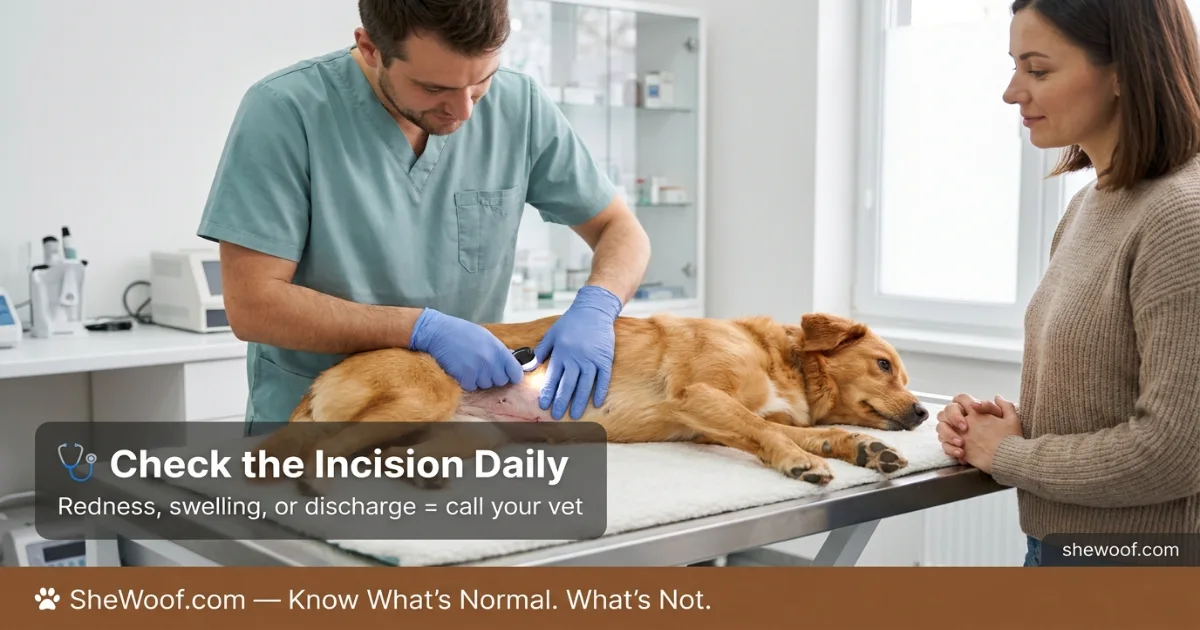
- Check the incision daily. Look for redness, swelling, discharge, or opening of the wound.
- Monitor for bleeding. Check the incision site and your dog’s gums — pale gums may indicate internal bleeding.
- Keep the e-collar on. Prevent licking or chewing the incision. This is crucial.
- Limit activity. No running, jumping, or playing for 10-14 days.
- Follow pain medication instructions. Give prescribed medications exactly as directed.
- Watch for appetite and water intake. Offer small meals and ensure she is drinking.
- Call your vet if you see signs of complications. Better to ask than to wait.
When to Contact Your Veterinarian
Contact your veterinarian immediately if you notice any of these signs after an in-heat spay:
- Excessive bleeding from the incision.
- Pale or white gums. This may indicate internal bleeding.
- Lethargy or weakness.
- Vomiting or diarrhea.
- Refusal to eat or drink for more than 12 hours.
- Swollen, red, or hot incision.
- Foul odor from the incision.
- Signs of pain — whining, panting, restlessness.
- Difficulty breathing.
Do not wait to see if symptoms improve. Call your veterinarian. They can tell you whether to come in or monitor at home.
Cost Differences for In-Heat Spays
Spaying a dog in heat typically costs more than a regular spay. The price increase reflects the longer surgery time, the need for more surgical skill, and the higher risk of complications.
A standard spay for a dog not in heat typically costs $200 to $500. An in-heat spay may cost $300 to $800 or more, depending on your location, the vet’s experience, and whether the surgery is routine or emergency. Factors that affect cost include:
- Location: Urban clinics tend to cost more than rural ones.
- Dog size: Larger dogs may cost more.
- Vet experience: Specialists may charge more.
- Additional medications: Pain control and antibiotics may cost extra.
- Emergency surgery: If the surgery is performed urgently (e.g., pyometra), the cost may be higher.
Talk to your veterinarian about the cost estimate before the surgery. This helps you plan and avoid surprises.
A standard spay typically costs $200 to $500. Spaying a dog in heat may cost $300 to $800+ due to longer surgery time and increased surgical complexity. Emergency spays for conditions like pyometra can cost $800 to $2,000+ depending on the severity. Always ask for a detailed estimate before the procedure.
Frequently Asked Questions About Spaying a Dog in Heat
Spaying a dog in heat is safe when performed by an experienced veterinarian. However, it carries higher risks — including increased bleeding, longer surgery time, and a higher chance of complications. Most vets prefer to wait until the dog is out of heat, but emergency situations may require an in-heat spay.
Side effects include increased bleeding risk during surgery, longer recovery time, hormonal fluctuations that may cause temporary behavioral changes, higher risk of infection, and potential for complications like internal bleeding. Recovery may take 10-14 days instead of the usual 7-10 days.
Yes, a dog can be spayed while in heat. However, the procedure is more complex, takes longer, and carries higher risks. Most veterinarians will recommend waiting 2-3 months after the heat cycle ends unless the spay is urgent — such as in cases of pyometra or unwanted pregnancy prevention.
Spaying can cause weight gain in any dog — not just those spayed in heat — due to hormonal changes that slow metabolism. This is a long-term side effect, not specific to in-heat spays. Proper diet and exercise help prevent weight gain after spaying.
Recovery from an in-heat spay typically takes 10-14 days. This is longer than the standard 7-10 day recovery for a spay performed when the dog is not in heat. The longer recovery is due to the more invasive nature of the surgery and increased tissue trauma.
A standard spay typically costs $200-$500. Spaying a dog in heat may cost $300-$800+ due to the longer surgery time and increased surgical complexity. Emergency spays for conditions like pyometra can cost $800-$2,000+ depending on severity.
Yes, spaying a dog in heat may cause temporary behavioral changes due to the sudden drop in hormones. Your dog may be more tired, less interested in food, or slightly more irritable during recovery. These changes are usually temporary and resolve as the dog heals.
- Spaying a dog in heat carries higher risks, including increased bleeding, longer surgery time, and a higher chance of complications.
- Recovery from an in-heat spay takes longer — about 10-14 days — and requires more careful monitoring.
- Most veterinarians prefer to wait 2-3 months after a heat cycle to perform a spay, unless it is an emergency.
- An in-heat spay costs more — typically $300-$800+ compared to $200-$500 for a standard spay.
- Watch for signs of complications — excessive bleeding, lethargy, pale gums, or refusal to eat — and call your vet immediately if they occur.