Can Dogs Have Beef Broth on Their Food? Safety, Benefits & How to Serve
Quick Answer: Yes, dogs can have beef broth on their food — but only if it is plain, unsalted, and free from onions, garlic, and toxic seasonings. Beef broth adds flavor, moisture, and hydration to your dog’s food. It is especially useful for picky eaters, senior dogs, or those with dental issues. Always choose low-sodium, onion-free, garlic-free broth, or make your own at home. Serve in small amounts — 1–2 tablespoons per meal — and introduce it slowly to watch for digestive upset.
Your dog turns their nose up at their dinner. Again. You are frustrated. You want to make their food more appealing, but you are not sure what is safe. You wonder: can dogs have beef broth on their food? It seems harmless enough. People use it all the time. But dogs are not people. Some ingredients that are safe for us are toxic to them. The good news is that plain beef broth can be a healthy, tasty addition to your dog’s diet — as long as you know what to look for and what to avoid.
Beef broth can be a game-changer for picky eaters, sick dogs, or seniors who need extra hydration. It adds flavor, moisture, and nutrients. But not all broths are created equal. Store-bought versions often contain onion powder, garlic powder, or high levels of sodium — all of which are harmful to dogs. This guide covers everything you need to know about serving beef broth safely.
Is Beef Broth Safe for Dogs?
Plain beef broth made from beef bones, water, and safe vegetables is safe for dogs. It provides hydration, flavor, and some nutrients. The key is keeping it simple. No salt. No onion. No garlic. No spices. The broth should be as plain as possible.
Beef broth is often recommended for dogs who are recovering from illness, have dental issues, or are picky eaters. The warm, savory liquid entices them to eat and can be poured directly over dry kibble. It is also a great way to increase water intake for dogs who do not drink enough on their own.
However, not all beef broth is safe. Many store-bought broths contain onion powder and garlic powder — both of which are toxic to dogs. They also often contain high levels of sodium, which can lead to dehydration and other health issues. Always read the label carefully before serving any store-bought broth to your dog.

Why This Matters for Dog Owners
Adding broth to your dog’s food can solve several common problems. Picky eaters often respond to the enhanced aroma and flavor. Senior dogs with dental issues find it easier to eat softened kibble. Sick dogs need hydration and gentle nutrition. A simple broth can make a significant difference in your dog’s quality of life.
But the risks are real. A single serving of broth with onion powder is not likely to cause immediate harm — but regular exposure can lead to poisoning. The same goes for sodium. Too much salt can cause dehydration, electrolyte imbalances, and even sodium poisoning. Knowing what to look for protects your dog from preventable harm.
There is also the cost factor. Store-bought broths may seem convenient, but they are often low-quality and filled with additives. Making your own broth is cheaper, healthier, and safer. It takes a few hours but yields a large batch that can last for weeks.
What Most Owners Get Wrong About Beef Broth
The most common mistake is assuming that all beef broth is the same. Many owners grab any bottle off the shelf without reading the label. Onion powder and garlic powder are often hidden in the ingredient list under names like “natural flavor” or “spice extract.” Always read the full ingredient list.
Another error is using broth with high sodium content. Even low-sodium broths can be too salty for dogs. A dog’s daily sodium requirement is much lower than a human’s. What seems “low-sodium” to you can still be high for your dog. Unsalted broth is the safest choice.
Some owners also serve too much broth. Broth should be a topper or supplement — not a meal replacement. One to two tablespoons per meal is enough. Too much broth can cause diarrhea, upset stomach, or excessive water intake.
How Puppies, Adults, and Seniors Differ
Puppies have sensitive digestive systems. Introduce broth slowly and in tiny amounts — a teaspoon at a time. Watch for diarrhea or vomiting. Puppies also need balanced nutrition, and broth should not replace their regular food or milk replacer.
Adult dogs can handle broth well, provided it is plain and unsalted. It is a great way to add variety to their meals. For adult dogs with no health issues, 1–2 tablespoons per meal is safe and beneficial.
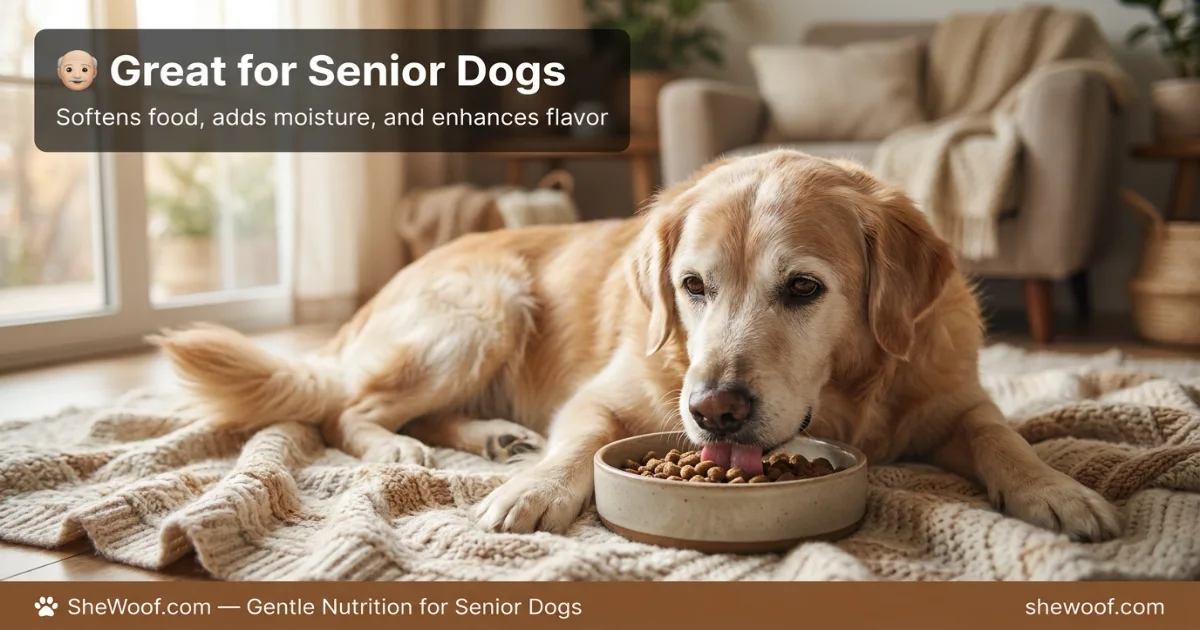
Senior dogs often benefit most from broth. They may have dental issues that make dry food hard to eat. Broth softens kibble and adds moisture. Seniors are also prone to dehydration, and broth is an excellent way to increase fluid intake. If your senior dog has kidney issues, check with your vet before adding broth — sodium and protein levels may need to be monitored.
| Life Stage | Safe Portion | Benefits | Precautions |
|---|---|---|---|
| Puppy (under 1 year) | 1 tsp per meal | Encourages eating, adds moisture | Introduce slowly — watch for digestive upset |
| Adult (1-7 years) | 1-2 tbsp per meal | Flavor, hydration, variety | Use unsalted, onion-free broth |
| Senior (7+ years) | 1-2 tbsp per meal | Softens food, increases hydration, palatability | Consult vet if kidney issues or sodium restrictions |
Step-by-Step: How to Add Beef Broth to Your Dog’s Food Safely
- Choose the right broth. Plain, unsalted, onion-free, garlic-free. Homemade is best.
- Check the temperature. Broth should be warm, not hot. Test it on your wrist.
- Start with a small amount. Pour 1 tablespoon over your dog’s food for small dogs, 2 tablespoons for large dogs.
- Mix it in. Stir the broth into the food so it soaks in evenly.
- Observe your dog. Watch for signs of digestive upset, allergies, or refusal to eat.
- Adjust if needed. If your dog loves it, you can continue serving 1–2 tablespoons per meal.
- Store leftover broth safely. Refrigerate for up to 5 days or freeze in ice cube trays for longer storage.
How to Make Homemade Beef Broth for Your Dog
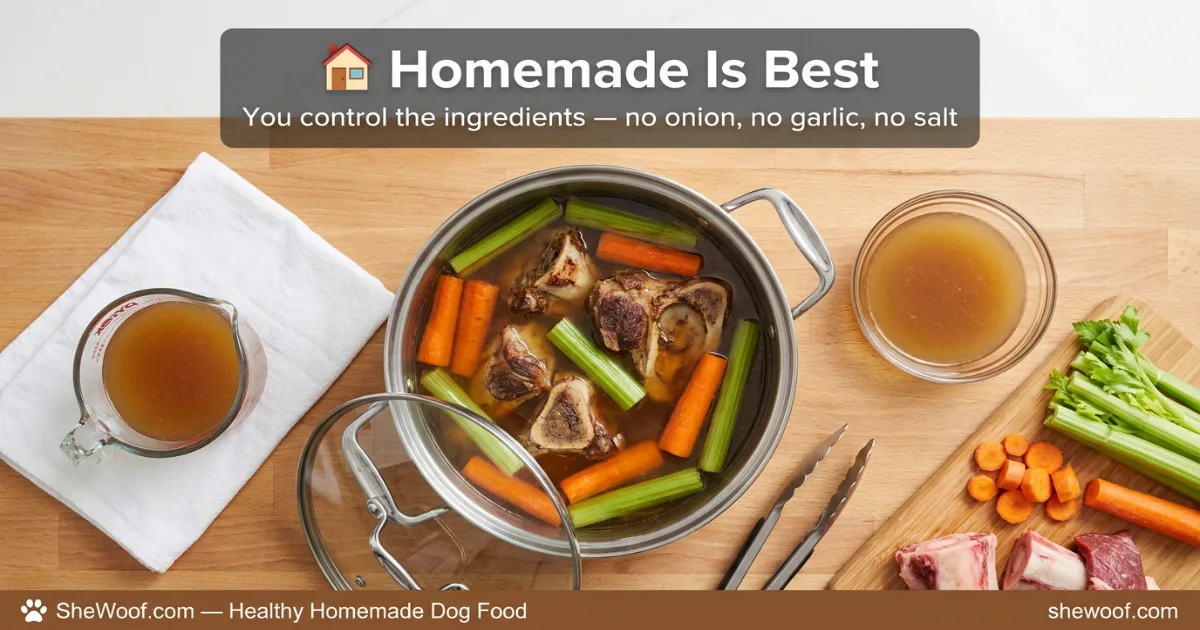
Making homemade beef broth is simple, cheap, and safe. Here is a basic recipe:
- Ingredients: 2–3 pounds of beef bones (marrow bones, knuckle bones, or oxtail), filtered water, and optional dog-safe vegetables like carrots and celery (no onion or garlic).
- Instructions: Place bones in a large pot. Cover with water. Add vegetables if desired. Bring to a boil, then reduce to a simmer. Simmer for 12–24 hours for maximum flavor and nutrients. Strain the liquid, discard bones and vegetables, and cool completely before serving.
- Storage: Refrigerate for up to 5 days or freeze for up to 3 months.
Homemade broth allows you to control every ingredient. You can also add a splash of apple cider vinegar to help draw minerals from the bones — but skip it if your dog has a sensitive stomach.
When to Avoid Beef Broth
Beef broth is not suitable for every dog. Avoid it in these cases:
- Kidney disease: Broth is high in protein and sodium, which can worsen kidney issues.
- Heart disease: Sodium can contribute to fluid retention and worsen heart conditions.
- Food sensitivities: Some dogs are allergic to beef. If your dog shows signs of allergy (itching, digestive upset), stop using beef broth.
- Pancreatitis: Broth can contain fat, which may trigger pancreatitis in sensitive dogs.
- If your dog has a history of gastrointestinal issues: Introduce broth slowly and watch for diarrhea or vomiting.
Always consult your veterinarian before adding new foods to your dog’s diet — especially if your dog has an existing health condition.

Frequently Asked Questions About Beef Broth for Dogs
Yes, dogs can have plain, unsalted, onion-free beef broth on their food every day — in small amounts (1-2 tablespoons per meal). It should be used as a topper, not a meal replacement. If your dog has health issues like kidney or heart disease, consult your vet before making it a daily habit.
Safe beef broth is plain, unsalted, and free from onion, garlic, and spices. Homemade broth is the safest option. If buying store-bought, look for low-sodium, onion-free, garlic-free varieties. Read the ingredient list carefully — “natural flavor” can hide onion or garlic.
Some store-bought beef broths are safe — but many are not. Check for onion powder, garlic powder, high sodium, and artificial additives. Look for brands labeled “low-sodium” and “no onion or garlic.” Organic or natural broths are safer choices. When in doubt, make your own.
Start with 1 tablespoon for small dogs and 2 tablespoons for large dogs per meal. Broth should be a topper, not a meal replacement. Too much broth can cause diarrhea or excessive water intake. Introduce slowly and watch for digestive upset.
Yes, if served in large amounts, broth can cause diarrhea. Too much liquid or fat can upset your dog’s stomach. Start with a small amount and watch for digestive signs. If diarrhea occurs, stop using the broth and consult your veterinarian.
Yes, puppies can have beef broth in small amounts — 1 teaspoon per meal. Introduce slowly to watch for digestive upset. Use plain, unsalted, onion-free broth. Homemade is best. Broth should not replace puppy formula or balanced puppy food.
Beef broth may not be suitable for dogs with kidney disease. It is high in protein and sodium, which can stress the kidneys. Always consult your veterinarian before adding broth to the diet of a dog with kidney issues. Your vet may recommend a specific low-protein, low-sodium alternative.
- Dogs can have beef broth on their food — but only if it is plain, unsalted, and free from onion and garlic.
- Store-bought broths often contain onion powder, garlic powder, and high sodium — always read the label.
- Homemade beef broth is the safest, healthiest, and most affordable option.
- Serve 1–2 tablespoons per meal as a topper — not a meal replacement.
- Consult your vet before adding broth if your dog has health issues like kidney disease, heart disease, or pancreatitis.