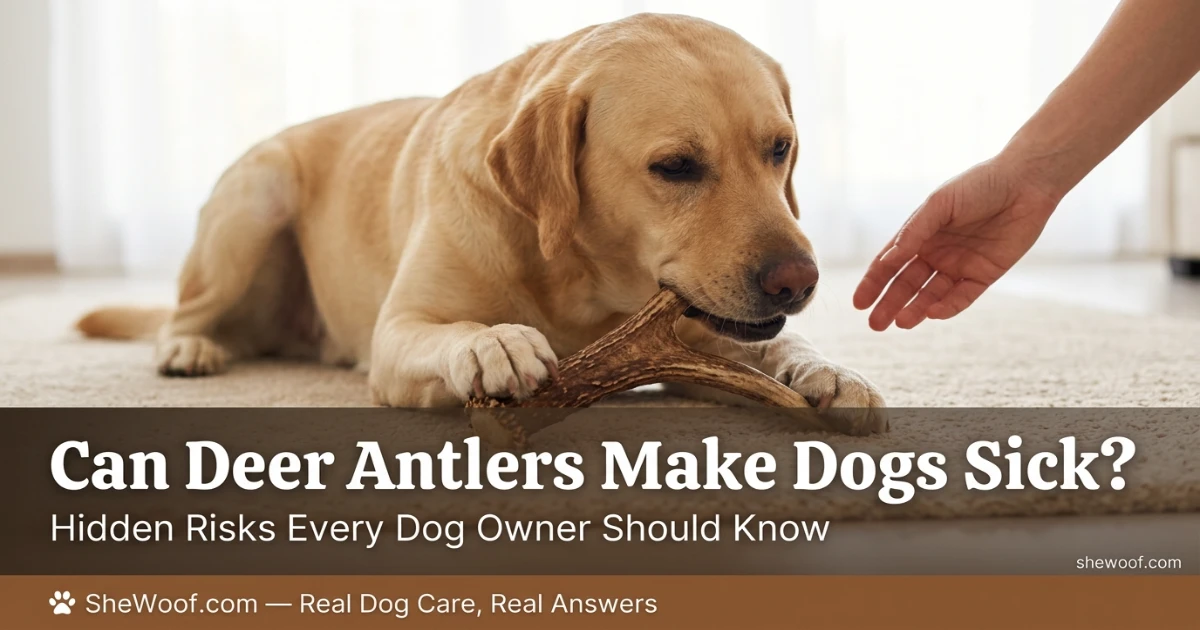
Can Deer Antlers Make Dogs Sick? The Risks Every Owner Should Understand
Quick Answer: Yes, deer antlers can make dogs sick — and in some cases, cause serious injury. The most common problems are fractured teeth, which can lead to painful abscesses and extractions, and gastrointestinal blockages or perforations if a sharp piece is swallowed. Antlers are also hard enough to damage gums and cause bleeding. While many dogs chew antlers without visible problems, veterinarians regularly treat dogs for antler-related dental fractures and digestive emergencies. Safer alternatives exist for nearly every type of chewer.
You bought a deer antler at the pet store because the packaging said it was “all-natural,” “long-lasting,” and “great for aggressive chewers.” A week later, your dog is drooling, pawing at their mouth, and refusing their morning meal. Or maybe you noticed blood on the antler. Or your dog vomited and you found sharp bone-like fragments in the mess. Suddenly you’re searching “can deer antlers make dogs sick” — hoping the answer is no, but fearing it’s yes.
Here is the honest, veterinary-informed truth. Deer antlers are not inert, harmless objects. They are made of dense bone-like material that can crack teeth, splinter into sharp fragments, and cause intestinal blockages or perforations. That doesn’t mean every dog who chews an antler will end up in surgery. It does mean the risk is real, and understanding it — before you hand your dog an antler — is part of responsible ownership.
Why Deer Antlers Are Controversial Among Veterinarians
Walk into any pet supply store and you will find deer antlers prominently displayed — often marketed as premium, natural chews. The packaging rarely mentions risks. Yet if you ask a veterinary dentist how they feel about antler chews, the response is usually blunt. Many veterinary dental specialists strongly advise against them. The reason is simple: antlers are harder than dog teeth.
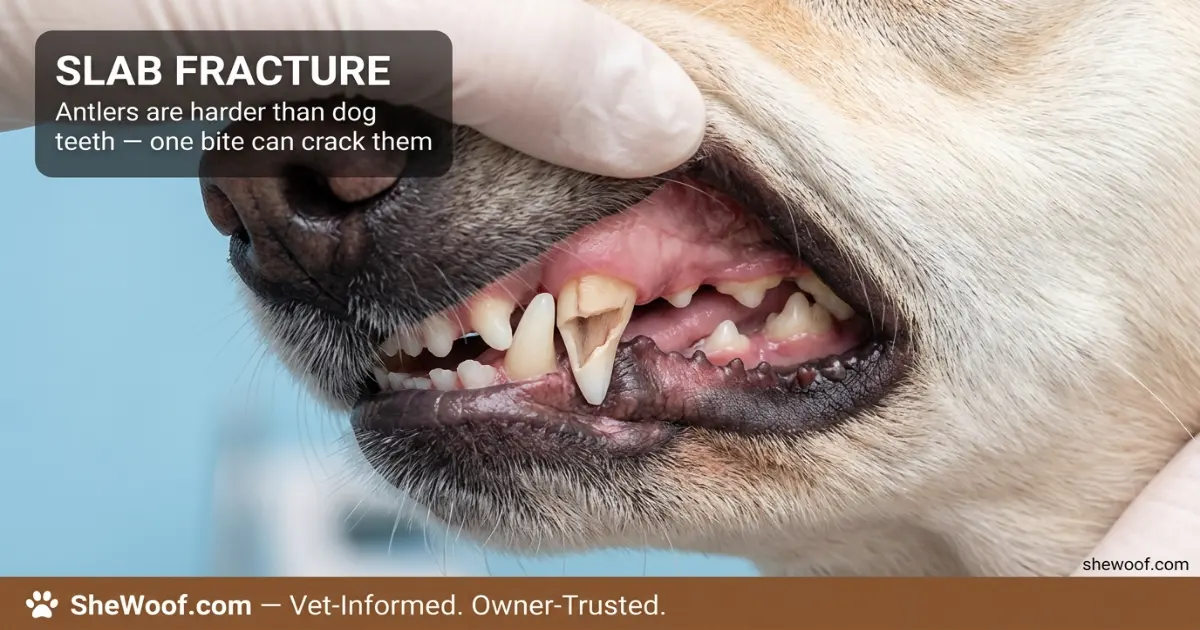
Dog tooth enamel is tough, but it has limits. When a dog bites down on a material that does not yield — like dense antler bone — the tooth can fracture. The most common injury is called a slab fracture, where a portion of the tooth shears off, exposing the sensitive dentin or pulp underneath. These fractures are painful, can become infected, and often require extraction or root canal treatment. A single antler chewing session can result in a veterinary bill of $500 to $3,000 for dental surgery.
Beyond teeth, the digestive risks are equally serious. Antlers can splinter — especially as they dry out or if the dog is a powerful chewer who breaks pieces off. Those sharp fragments can lodge in the esophagus, stomach, or intestines. A piece that perforates the intestinal wall causes peritonitis, a life-threatening infection that requires emergency surgery. Even if perforation does not occur, a partial or complete intestinal blockage often means abdominal surgery to remove the obstruction.
Tooth Fractures: The Most Common Antler Injury
Veterinary dentists report that antler-related tooth fractures are among the most preventable dental emergencies they treat. The teeth most commonly damaged are the carnassial teeth — the large shearing molars in the upper jaw — and the canines. These teeth absorb the majority of the bite force when a dog crunches down on a hard object.
A slab fracture occurs when a portion of the tooth’s side breaks away, often leaving a sharp edge and exposing the inner layers. If the pulp is exposed, the tooth is now a direct pathway for bacteria into the jawbone. The dog may not show immediate signs of pain — dogs are masters at hiding dental discomfort — but the infection will progress. By the time the owner notices swelling under the eye or a reluctance to chew on one side, the tooth often cannot be saved.
Treatment for a fractured carnassial tooth typically involves either extraction or root canal therapy performed by a veterinary dental specialist. Both procedures require general anesthesia. Extraction costs range from $500 to $1,500 for a single tooth. Root canal therapy, which preserves the tooth, can run from $1,500 to $3,000. These are not minor expenses — and they began with a $15 antler chew.
Digestive Blockages and Perforations: When Swallowed Pieces Become Emergencies
A dog who breaks off and swallows a piece of antler faces a different but equally serious set of risks. Unlike rawhide or bully sticks, antler fragments do not soften significantly in stomach acid. They remain hard and sharp as they move through the digestive tract. A piece that is too large to pass through the intestines becomes an obstruction. A piece with a sharp edge can pierce the intestinal wall.
The symptoms of an intestinal blockage include vomiting — especially vomiting that occurs repeatedly and may contain bile or fecal-smelling material — loss of appetite, lethargy, abdominal pain, and an inability to pass stool. These symptoms often develop 12 to 48 hours after the object was swallowed. A complete obstruction is a surgical emergency. Waiting too long risks irreversible damage to the intestinal tissue.
Perforation is even more dangerous. When the intestinal wall is punctured, bacteria-laden contents spill into the abdominal cavity. The resulting infection — peritonitis — causes severe pain, fever, shock, and can be fatal within hours without emergency surgery. This is not a theoretical risk. Veterinary emergency hospitals see these cases, and antlers are frequently identified as the cause.
What Most Owners Get Wrong About Antler Chews
The most dangerous misconception is that “natural” means “safe.” Deer antlers are natural. So are rocks, sticks, and bones — and all of them can cause serious injury to dogs. The natural origin of an object has nothing to do with its safety as a chew toy. Poison ivy is natural. “Natural” is a marketing term, not a safety certification.
Another common error: assuming that because a dog has chewed antlers for years without a problem, they always will. Dental fractures are acute events. They happen in a single bite. A dog who has safely chewed antlers for years is one hard crunch away from a slab fracture. The absence of a past problem is not evidence of future safety — it is luck that has not yet run out.
A third mistake involves size selection. Some owners think choosing a large antler that the dog cannot possibly swallow eliminates the risk. It reduces one risk — swallowing large pieces — but it does nothing to reduce the dental fracture risk. In fact, larger, denser antlers may require even more bite force to break apart, potentially increasing the stress on teeth.
How Breed, Age, and Chewing Style Change the Risk
Not all dogs face the same level of risk from antler chews. Aggressive, power-chewing breeds — Labrador Retrievers, Pit Bulls, Rottweilers, German Shepherds — are at the highest risk for tooth fractures because of their bite force. These dogs can generate enough pressure to crack an antler and their own teeth in the process. Small breeds face proportionally higher risk from swallowing pieces that would pass through a larger dog, because their intestinal diameter is narrower.
Puppies are a special concern. Their teeth are still developing and mineralizing. The adult teeth erupting between 4 and 7 months of age are not yet at full hardness. Exposing these immature teeth to extremely hard chews increases the risk of abnormal wear, fracture, and pulp damage. Puppies also have less jaw control and may bite down unpredictably. Most veterinarians recommend waiting until a dog’s adult teeth are fully mature — around 12 to 18 months — before even considering hard chews, and many suggest avoiding antlers entirely regardless of age.
Senior dogs with existing dental disease, worn teeth, or previous dental work should not chew antlers. Their teeth are already compromised, and the risk of fracture is higher. A senior dog with a painful fractured tooth may require anesthesia for treatment at an age when anesthesia carries additional risk. The calculus changes: a chew that might be acceptable for a healthy 3-year-old could be dangerous for a 10-year-old with pre-existing dental wear.
| Risk Factor | Higher Risk | Lower Risk |
|---|---|---|
| Chewing style | Aggressive, power chewer | Gentle, nibbling chewer |
| Breed examples | Labrador, Pit Bull, Rottweiler, GSD | Shih Tzu, Cavalier, gentle Greyhound |
| Age | Puppy under 18 months, senior over 8 years | Healthy adult 2-6 years |
| Dental history | Previous fractures, worn teeth, dental disease | Clean dental exam, no prior issues |
| Antler type | Dense, thick, weight-bearing base pieces | Softer split antlers with exposed marrow |
What to Do If Your Dog Already Chews Antlers
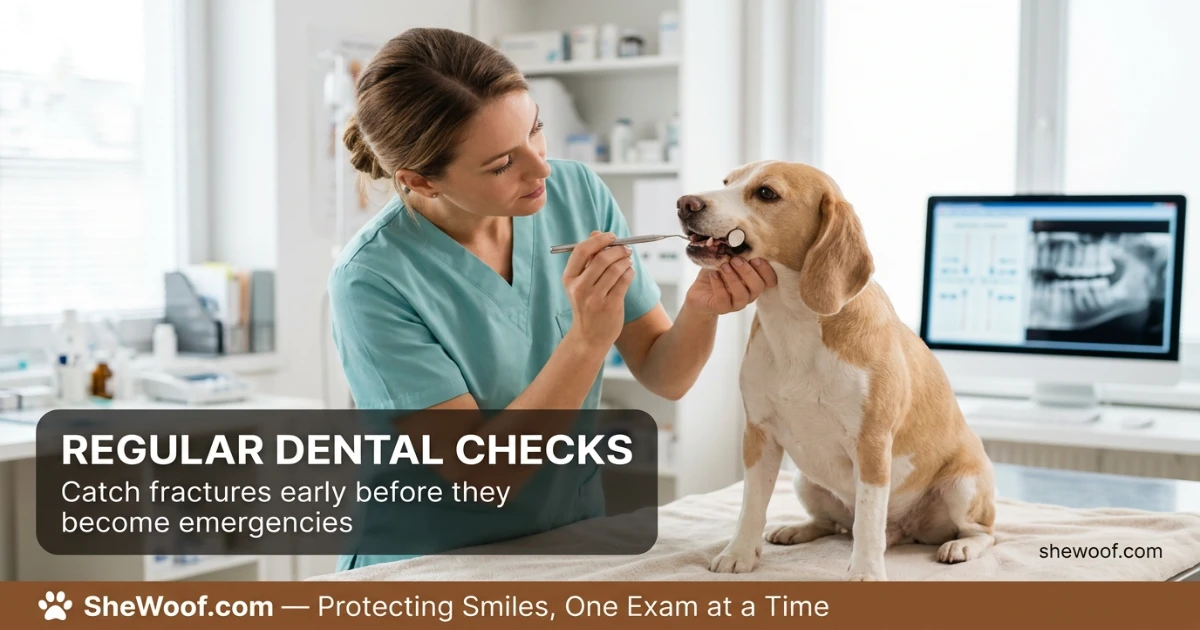
If your dog has been chewing antlers and you are now reconsidering, start by examining their mouth. Look for chipped, discolored, or worn teeth. Gently press along the gum line — swelling, bleeding, or a reaction of pain when you touch a specific tooth are signs of a problem. Check the antler itself for blood spots, which indicate gum bleeding. If you find anything concerning, schedule a veterinary dental exam.
You do not necessarily need to throw out every antler immediately and forever. Some owners choose to allow antler chewing only under direct, close supervision — and remove the antler the moment the dog begins to break pieces off or shows signs of aggressive gnawing. Others switch entirely to split antlers, which expose the softer marrow interior and are less likely to cause slab fractures. However, no antler is risk-free. The safest choice, supported by many veterinary dentists, is to retire antlers entirely and transition to rubber-based or digestible alternatives.
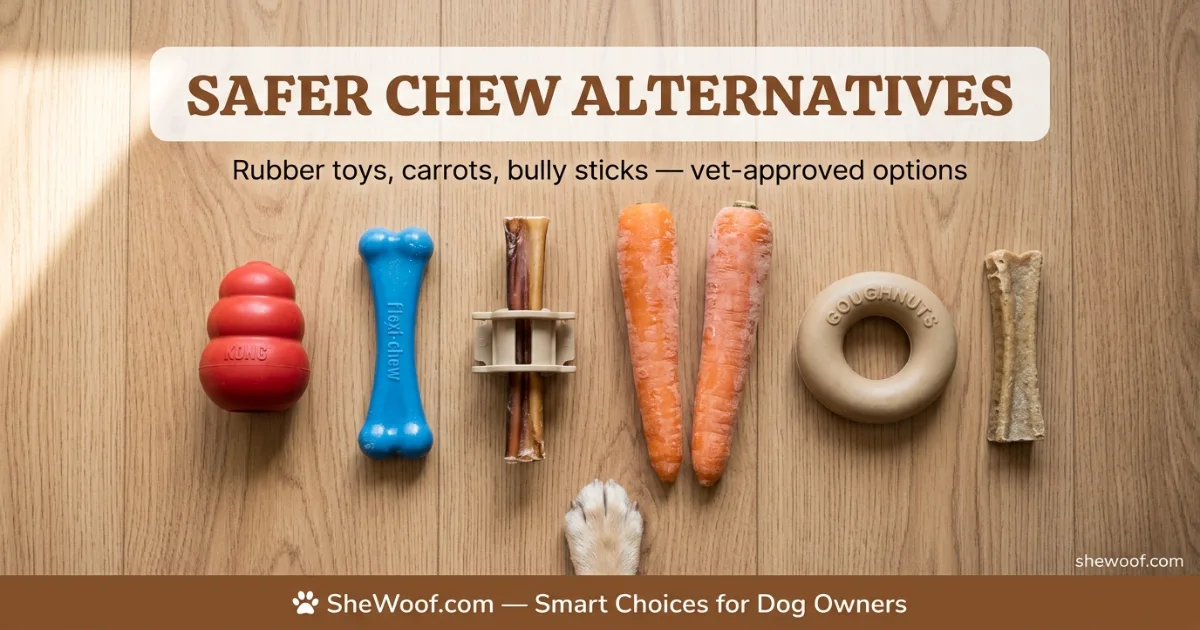
When transitioning away from antlers, do not simply remove the antler and leave a void. Replace it with something satisfying. A frozen stuffed Kong, a bully stick in a safety holder, or a dental chew approved by the Veterinary Oral Health Council provides a similar chewing outlet with a far better safety profile. Your dog may need a few days to adjust, but most dogs transfer their enthusiasm to the new option quickly.

Frequently Asked Questions About Deer Antlers and Dog Health
Yes. Deer antlers can cause fractured teeth, gum lacerations, intestinal blockages, and gastrointestinal perforations. Many veterinary dentists and emergency veterinarians advise against them entirely. While some dogs chew antlers without incident, the risks are significant and well-documented in veterinary practice.
Split antlers expose the softer marrow interior and are less likely to cause slab fractures than dense whole antlers. However, they are not risk-free. Dogs can still break off and swallow pieces, and aggressive chewers can damage their teeth on any antler surface. No antler is completely safe.
Signs include a visible chip or missing piece of tooth, a discolored tooth, swelling around the eye or jaw, drooling, pawing at the mouth, dropping food, chewing on only one side, and reluctance to eat hard food. Any of these signs warrant a veterinary dental examination.
Call your veterinarian immediately. Describe the size of the piece and any symptoms. Do not induce vomiting unless specifically instructed — sharp fragments can cause damage on the way back up. Your vet may recommend monitoring, X-rays, or an immediate examination depending on the situation.
Rubber toys from brands like Kong and Goughnuts are designed to flex rather than resist, reducing tooth fracture risk. Bully sticks soften with saliva and are fully digestible. Frozen carrots and VOHC-approved dental chews are also good options. Rotate multiple safe chews to maintain interest.
Veterinary dentists regularly treat slab fractures and other dental injuries caused by antlers. Emergency veterinarians treat intestinal blockages and perforations from swallowed antler fragments. The combination of dental and digestive risks, plus the availability of safer alternatives, leads many vets to recommend against antler chews entirely.
Puppies should not chew on deer antlers. Their developing adult teeth are not fully mineralized and are more vulnerable to fracture. Puppies also have less jaw control. Most veterinarians recommend avoiding hard chews entirely until adult teeth are mature at 12 to 18 months — and many suggest avoiding antlers at any age.
- Deer antlers can make dogs sick through fractured teeth, gum injuries, intestinal blockages, and perforations — these are not rare, theoretical risks but documented veterinary emergencies.
- The most common injury is a slab fracture of the carnassial tooth, which often requires extraction or root canal therapy costing $500 to $3,000.
- Aggressive chewers, puppies, senior dogs, and dogs with pre-existing dental conditions face the highest risk — but no dog is immune to antler-related injury.
- Split antlers expose softer marrow and may reduce some risk, but no antler is completely safe for every dog.
- Safer alternatives include rubber chew toys like Kongs, bully sticks in holders, frozen carrots, and VOHC-approved dental chews — all of which satisfy the chewing instinct without the dental and digestive dangers.
- If your dog shows drooling, mouth pain, vomiting, or any sign of distress after chewing an antler, contact your veterinarian immediately.