Your Puppy’s First Week Home: A Complete Day-by-Day Guide
Quick Answer: During your puppy’s first week home, focus on safety, trust, sleep, a predictable feeding and potty routine, positive crate introduction, very short reward-based training, gentle handling, and safe controlled socialization. Keep the first few days quiet, take your puppy to the toilet area after waking, eating, drinking and active play, arrange a new-puppy veterinary visit, and introduce independence in tiny steps. Do not try to teach everything in seven days. The most important lesson is simple: this new home is safe and predictable.
You bring home a tiny puppy, put down the carrier, and suddenly realize something nobody really prepares you for: what are you supposed to do now?
Your puppy may charge around the room like they own it. They may hide behind your legs. They may eat every bite of dinner, ignore the bowl completely, sleep for hours, cry the moment you move away, or seem like a different puppy by day four.
That does not automatically mean anything is wrong. Your puppy’s entire world changed in one day. They left familiar people, littermates, smells, sounds, sleeping arrangements and routines. The first week is not about producing a perfectly trained dog. It is about giving a very young animal enough structure to begin feeling secure.
A good first week is usually quieter than new owners expect. Feed consistently. Take your puppy out often. Protect naps. Reward good choices. Introduce new things gently. Keep freedom manageable. And give the relationship time to grow.
Before Your Puppy Arrives: Make the House Smaller and Safer
The easiest first week starts before your puppy walks through the door. Puppies investigate with their noses, paws and mouths, which means ordinary household objects can become instant chew toys or hazards.
Do not give a brand-new puppy unrestricted access to the entire house. Start with one main family area, a secure sleeping space, and a clear route to the toilet area. As your puppy becomes more reliable, you can gradually expand their freedom.
- A correctly sized crate or secure sleeping area
- Washable bedding and a quiet resting spot
- Food and water bowls
- The food your puppy is already accustomed to eating
- Collar or harness, lightweight leash and ID tag
- Several puppy-safe chew and play toys
- Small training treats
- Enzymatic cleaner for accidents
- Baby gates or a puppy playpen
- Waste bags and a designated toilet area
- Any health, vaccination or microchip records supplied with your puppy

Puppy First Week Home: The Day-by-Day Plan
| Day | Main Goal | What to Prioritize |
|---|---|---|
| Day 1 | Decompress | Quiet arrival, toilet area, familiar food, gentle exploration, simple bedtime |
| Day 2 | Build routine | Wake–potty, meal–potty, play–potty patterns and name recognition |
| Day 3 | Crate comfort | Treats, meals, open-door exploration and short relaxed door closures |
| Day 4 | Safe socialization | Household sounds, surfaces, gentle handling and controlled positive experiences |
| Day 5 | Useful training | Name response, recall games, sit, handling and calm redirection |
| Day 6 | Independence | Very brief safe separations without creating panic |
| Day 7 | Review | Notice patterns, adjust the routine and celebrate foundations rather than perfection |
Day 1: Keep the Arrival Quiet and Simple
Day 1 · DecompressionEveryone will want to meet the puppy. People will want photos. Children may want to carry them from room to room. You may be tempted to demonstrate every toy and start teaching “sit” before the puppy has even learned where the water bowl is.
Keep day one boring in the best possible way.
When you arrive home, take your puppy first to the area you want them to use for toileting. Give them time to sniff. If they pee or poop there, praise calmly and reward immediately. Then bring them into a small puppy-safe area and let them investigate without being passed around.
Keep introductions manageable
Immediate household members are enough for the first day. A puppy who is sleepy, cautious or unusually quiet may simply be processing an enormous amount of new information.
Keep food familiar
A new home is already a major change. Unless your veterinarian has advised otherwise, the first few days are usually easier when you continue the food and approximate meal routine the puppy already knows rather than changing everything at once.
Start potty training immediately
Do not wait for the puppy to “settle in” before beginning toilet habits. Take them out after waking, after meals, after drinking, after active play, after exciting interactions and before bedtime. Watch for intense sniffing, circling, wandering away from play or suddenly becoming restless.
Your Puppy’s First Night at Home
The first night is often the moment new owners realize how dramatic the transition feels from the puppy’s point of view. A puppy who slept beside littermates may suddenly be expected to sleep alone in a silent unfamiliar room.
Keep the sleeping area close at first
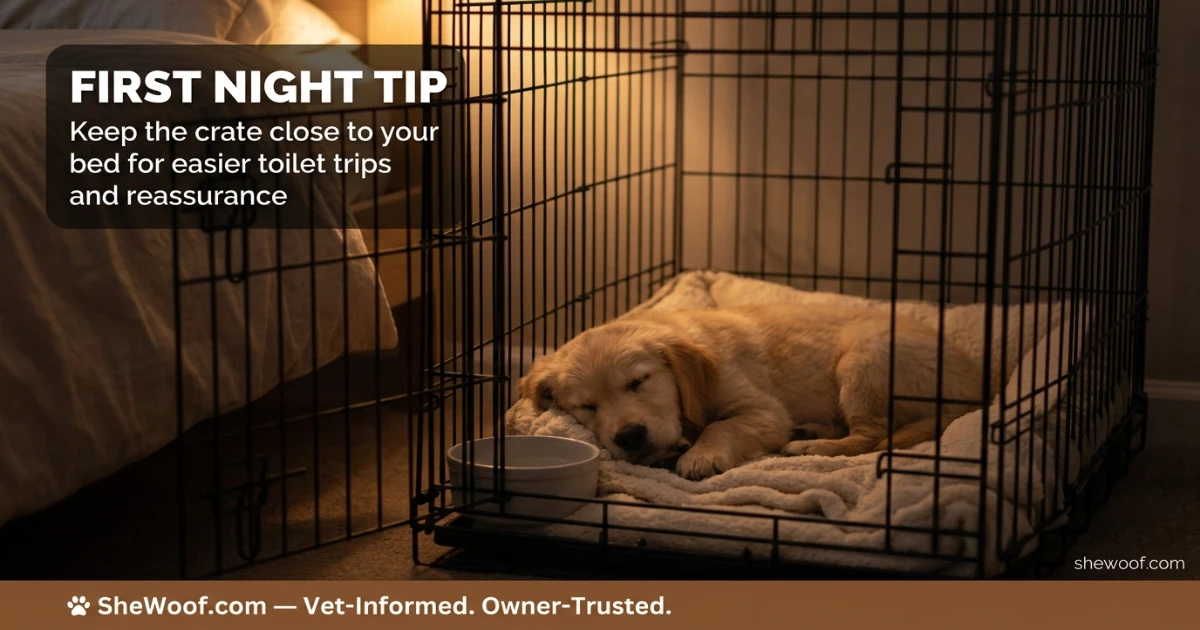
For many puppies, placing the crate or secure sleeping area near your bed during the first few nights makes the transition easier and lets you respond quickly if the puppy genuinely needs a toilet break. You can gradually move the sleeping setup later if your long-term plan is different.
Make the final toilet trip boring
Take your puppy out immediately before bed. Keep the trip calm: toilet, quiet praise, then back to the sleeping area. Avoid turning late-night trips into play sessions.
What if the puppy cries?
First rule out a real need to toilet, discomfort, excessive heat or cold, illness or genuine distress. Very young puppies may need overnight toilet trips. Take them out calmly, give them a chance to go, then return directly to bed.
The goal is not to teach that nighttime crying launches a party. It is to help a young puppy learn that nighttime is safe and predictable.
Day 2: Start Building a Predictable Routine
Day 2 · RoutineBy day two, your puppy has already begun collecting patterns. Where does food appear? Which door leads outside? What happens when I wake up? Who helps me when I am unsure?
Dogs are excellent pattern learners. You do not need a military timetable, but the sequence of the day should begin to feel predictable.
| Trigger | What Happens Next | Why It Helps |
|---|---|---|
| Puppy wakes | Immediate toilet trip | Uses a predictable high-probability potty moment |
| Meal finishes | Toilet trip | Builds a repeatable food-to-potty routine |
| Active play ends | Toilet trip | Excitement and movement often trigger elimination |
| Short training/play | Nap or quiet time | Prevents overtired, bitey behavior |
| Before bedtime | Final calm toilet trip | Supports a clearer nighttime routine |
Start name recognition
Say your puppy’s name once. The moment they look toward you, mark the behavior with a happy “yes” and reward. Repeat a few times, then stop. Your training session can be under a minute and still be useful.
Day 3: Make the Crate a Safe Place, Not Puppy Jail
Day 3 · Crate ComfortA crate can be useful for sleep, travel, toilet training and safe management, but only if your puppy learns that the space predicts rest and good things.
- Leave the crate door open and allow voluntary exploration.
- Drop a treat near the entrance, then another slightly farther inside.
- Feed meals near or inside the crate if your puppy is comfortable.
- Offer an appropriate safe chew while the puppy relaxes there.
- Close the door for only a very short period at first.
- Open it again before your puppy becomes distressed.
- Build duration and distance gradually rather than jumping to long absences.
Do not repeatedly push a puppy into the crate, close the door and hope they “learn to deal with it.” You want the puppy to discover that the crate is predictable, comfortable and boring enough to sleep in.
Day 4: Begin Safe, Controlled Socialization
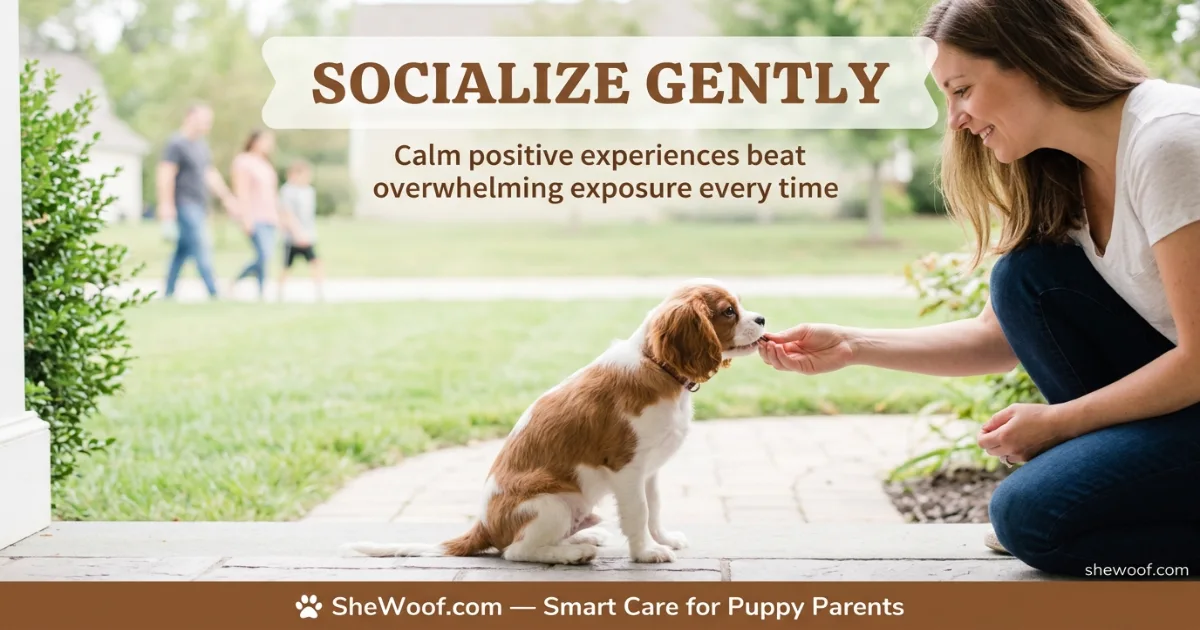
Day 4 · SocializationSocialization does not mean handing your puppy to every stranger or taking them into a crowded dog park. Good socialization means helping a puppy develop positive or neutral feelings about ordinary life.
Early social development matters, but disease risk also matters. You can begin safe experiences before the complete vaccination series is finished while still avoiding high-risk environments where many unfamiliar dogs have toileted or gathered. Ask your veterinarian about local infectious-disease risk and what is appropriate in your area.
Useful first-week experiences can include:
- Different household floor surfaces
- The doorbell and everyday appliance sounds at a comfortable level
- People wearing hats, coats or carrying bags
- Calm supervised children
- Short car rides
- Gentle handling of paws, ears, collar and body
- A soft brush or comb appropriate for the coat
- Watching traffic or people from a safe distance
- Calm, healthy dogs you know and trust when appropriate
Do not force a puppy toward something they are trying to escape. If your puppy freezes, hides, repeatedly backs away or stops taking food, reduce the intensity. Sometimes good socialization means simply watching from farther away.
Day 5: Add Gentle Training That Makes Daily Life Easier
Day 5 · Useful SkillsBy day five, many puppies start showing more confidence — and more mischief. This is a good time to add tiny pieces of practical training.
Name response
Reward your puppy for turning toward you when they hear their name.
Coming toward you
Crouch down, use a cheerful voice and move backward slightly. Reward the puppy for choosing to follow you. Keep early recall games easy enough to win.
Sit
You can use a small piece of food to lure the puppy gently. Reward the moment their bottom touches the ground. Do not physically force the puppy into position.
Handling practice
Briefly touch paws, ears, collar, chest and body, pairing calm handling with treats. This can make future grooming and veterinary examinations easier.
Training should be short. A puppy who becomes frantic, mouthy, zoomy and unable to focus may not need stricter training. They may need a toilet trip, a chew, or simply a nap.
How Much Should a New Puppy Sleep?
Young puppies spend a large part of the day sleeping and resting. Do not assume every waking minute needs socialization, enrichment, exercise and obedience practice.
Sleep supports development and helps prevent the overtired behavior new owners often mistake for stubbornness. If your puppy has eaten, toileted, played for a while and suddenly turns into a tiny biting tornado, a quiet nap may be the most useful next step.
Create a home where sleeping puppies are allowed to sleep. Children should learn that a puppy’s bed or crate is not a place to climb into, poke, pull or wake the dog for entertainment.
Day 6: Practice Very Short Periods of Independence
Day 6 · IndependenceA puppy following you everywhere feels sweet during the first week, but your puppy also needs to learn that brief separation is safe.
Start very small. Set your puppy up in a secure area with an appropriate chew or food activity. Step away for a moment. Return calmly. Repeat at a level your puppy can handle, then gradually increase time or distance.
The goal is not “cry until you give up.” The goal is “sometimes my person moves away and nothing bad happens.”
If your puppy escalates into frantic escape attempts, prolonged panic, heavy panting or an inability to settle, make the next repetition easier. Severe separation distress deserves professional guidance rather than a tougher version of the same exercise.
Day 7: Review the Week Instead of Expecting Perfection
Day 7 · ReviewOne week ago, your puppy did not know your house existed. By day seven, they may recognize their name, understand where meals appear, follow you toward the toilet door, settle more easily at night, walk voluntarily into the crate, and show the beginnings of trust.
They will still have accidents. They will bite hands and clothes. They may forget a behavior they seemed to know yesterday. They may wake during the night. That is not a failed first week. It is puppy development.
- Your puppy is beginning to predict the daily routine.
- You are learning the puppy’s toilet triggers and sleep signals.
- The crate or sleeping area is becoming familiar rather than frightening.
- Your puppy is responding to their name some of the time.
- Handling, grooming and new experiences are being introduced gently.
- Your puppy can spend tiny periods without constant physical contact.
- You have a clearer picture of appetite, stool, energy and normal behavior.
Schedule a New-Puppy Veterinary Visit
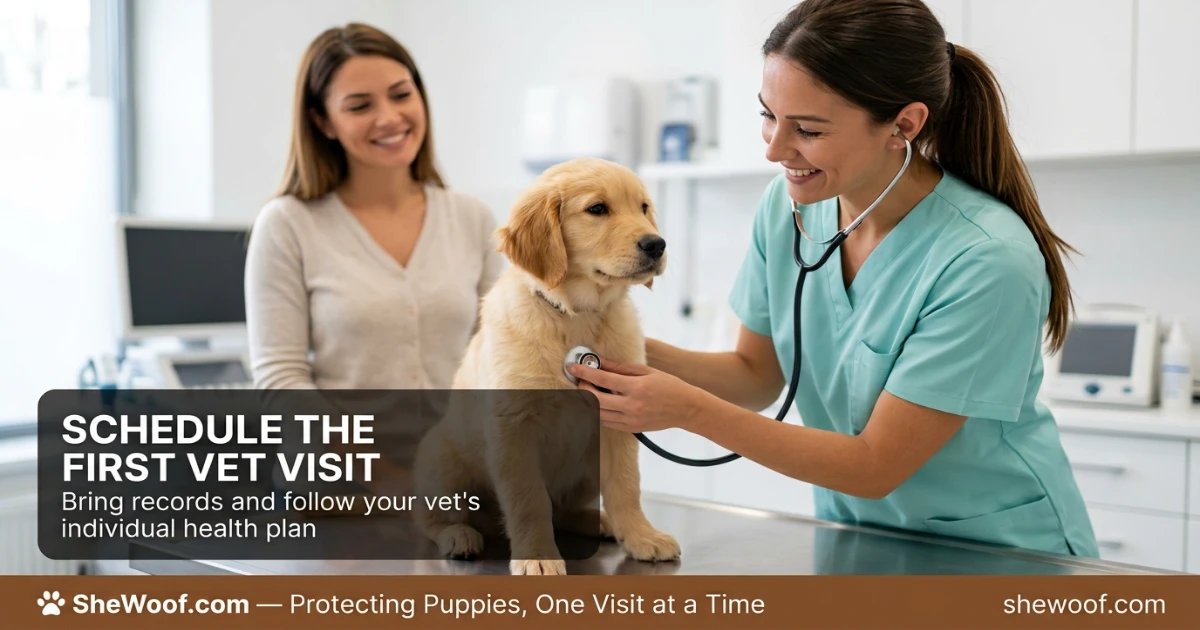
If a veterinary appointment was not arranged before your puppy came home, schedule one promptly. Bring any health records supplied by the breeder, shelter, rescue or previous owner.
Your veterinarian may review body condition, vaccination history, parasite control, deworming history, feeding, microchip details, dental development, safe socialization, breed-specific concerns and future preventive care.
Vaccination and parasite-prevention schedules are not identical for every puppy or every location. Follow the plan recommended for your puppy rather than relying on a generic online timetable.
Feeding During the First Week
The first week is usually not the best time for unnecessary food experiments. If your puppy is healthy and there is no veterinary reason to change food immediately, continuing the familiar diet initially can reduce one source of disruption.
Feed at consistent times. Structured meals make appetite easier to monitor and can also help you predict toilet needs. Use the puppy food’s feeding guide as a starting point and discuss growth, body condition and calorie needs with your veterinarian.
Training treats count as food too. For a small puppy, a reward can be tiny. The puppy cares about the event and repetition far more than receiving a giant piece every time.
Potty Training: What Success Actually Looks Like in Week One
Success does not mean zero indoor accidents. It means you are beginning to understand the pattern behind them.
When an accident happens, ask what happened immediately before it. Did your puppy wake up, drink, eat, play, greet someone, sniff intensely or quietly wander away? Those details help you improve the next repetition.
When your puppy toilets in the correct place, reward immediately while the behavior is still fresh. Do not wait until you are back inside.
For more timing help, read How Long After a Puppy Drinks Do They Pee?
Puppy Biting During the First Week
Your puppy will probably mouth hands, sleeves, shoes and objects you were certain were out of reach. Mouthing is normal puppy behavior, but you can begin building better habits immediately.
Keep appropriate chew toys in the rooms where your puppy spends time. When teeth land on clothing or hands, calmly redirect to a suitable toy. If biting becomes wild and relentless late in the day, consider whether your puppy is overtired or overstimulated.
What Not to Do During Your Puppy’s First Week
- Do not invite everyone over. Your puppy has years to meet people. A quiet beginning is useful.
- Do not punish toilet accidents. Improve timing, supervision and reinforcement instead.
- Do not use the crate as punishment. Protect its value as a safe resting place.
- Do not teach ten commands at once. Start with attention, recall, handling and household routines.
- Do not force frightening interactions. Create distance and let confidence build gradually.
- Do not suddenly change every part of the puppy’s life. New home, people and routine are already a lot.
- Do not expect adult-dog behavior. Bladder control, bite inhibition, leash skills and independence develop over time.
Signs Your Puppy Is Settling In Well
Every puppy adjusts differently, but encouraging signs include regular eating and drinking, normal urination and stool, deep sleep, growing curiosity, playful behavior, seeking appropriate interaction, settling after activity and beginning to follow household routines.
A puppy becoming more mischievous after several quiet days can actually mean they feel secure enough to show more of their normal personality.
When Should You Call the Vet?
Young puppies can become unwell quickly. Contact your veterinarian if you are concerned, especially with repeated vomiting, severe or persistent diarrhea, blood in vomit or stool, extreme lethargy, collapse, breathing difficulty, significant pain, refusal to drink, a swollen or painful abdomen, seizures, suspected toxin exposure, suspected swallowing of a foreign object, or rapid deterioration.
Also contact the clinic when a change simply feels significant for your individual puppy. A veterinary team can tell you whether the situation needs monitoring, a routine appointment or urgent assessment.
Puppy First Week Home Checklist
Health
- Vet appointment arranged or completed
- Vaccination records reviewed
- Parasite prevention discussed
- Eating, drinking, stool and urination monitored
Home
- Puppy-safe area established
- Sleeping area prepared
- Hazards removed
- Safe chews and toys available
Routine
- Regular meal pattern started
- Frequent toilet routine underway
- Bedtime pattern started
- Daytime naps protected
Training
- Name recognition started
- Reward-based potty training started
- Positive crate introduction underway
- Tiny training sessions introduced
Socialization
- Normal sounds introduced gently
- Calm handling practiced
- Safe people or environments introduced
- High-risk dog areas avoided as advised
Independence
- Brief safe separation practiced
- Calm independent chewing/play encouraged
- Constant following is not reinforced every minute
- Difficulty is reduced if panic appears
Frequently Asked Questions About a Puppy’s First Week Home
Some puppies look comfortable within a day or two, while others need several weeks before their full personality appears. Confidence can fluctuate as the puppy encounters new situations. Focus on a predictable routine, enough sleep and gradual positive experiences rather than expecting a fixed adjustment deadline.
Keeping the crate or sleeping area close during the first nights can make reassurance and nighttime toilet trips easier. Once your puppy is settling comfortably, you can gradually transition the sleeping location if your long-term plan is different.
First rule out a genuine need to toilet, discomfort, illness or fear. Brief fussing is different from escalating panic. Introduce the crate positively and build comfort gradually rather than forcing a terrified puppy to remain distressed for long periods.
Take your puppy out after waking, meals, drinking, active play, excitement and before sleep, plus additional trips based on age and individual patterns. Very young puppies need frequent opportunities. Watch the puppy in front of you instead of relying only on a timer.
Extra availability can make the transition easier because young puppies need frequent toilet trips, supervision, meals, naps and gradual training. Even if you are home, practice tiny periods of safe independence so the puppy does not learn that a person is available every second.
Yes, but keep visits calm and limited. One or two gentle visitors are different from a noisy gathering where everyone tries to hold the puppy. Let the puppy approach at their own pace and provide a quiet retreat.
Safe controlled socialization can begin before the full vaccination series is finished, but disease exposure should be managed carefully. A calm meeting with a healthy known dog in a controlled environment is different from visiting a busy dog park. Ask your veterinarian about local disease risk and appropriate options for your puppy.
A change in appetite can occur during a stressful transition, but very young puppies should not go prolonged periods without eating. Contact your veterinarian if poor appetite is persistent or is accompanied by vomiting, diarrhea, weakness, trembling, marked lethargy or other concerning signs.
Training can begin from the first day, but keep it simple and reward-based. Name recognition, toilet habits, calm handling, following you, crate comfort and very short recall games are useful early foundations.
- Your puppy’s first week home should focus on safety, trust, sleep and predictable routines — not perfect obedience.
- Keep the puppy’s environment small initially and expand freedom as household habits improve.
- Begin potty training immediately by using predictable triggers such as waking, eating, drinking and active play.
- Introduce the crate with food, treats, chews and voluntary exploration; do not use it as punishment.
- Expect overnight toilet needs and some first-night crying or restlessness.
- Keep familiar food initially unless your veterinarian recommends a change.
- Begin safe, controlled socialization without unnecessary exposure to high-risk dog environments.
- Use reward-based training and keep sessions very short.
- Protect naps. Overtired puppies often become bitey, frantic and difficult to settle.
- Practice tiny periods of independence so constant contact does not become the only way your puppy can feel safe.
- Arrange a veterinary visit and follow your vet’s individual vaccination, parasite-control and feeding recommendations.
SheWoof Summary
Your puppy’s first week home will probably include accidents, interrupted sleep, confusing moments, tiny wins and at least one evening when your puppy seems to have transformed into a furry set of teeth.
You do not need to produce a perfectly trained puppy in seven days. You need to give your puppy a dependable beginning.
Feed consistently. Take them out often. Let them sleep. Reward good choices. Introduce the world gently. Teach them that their sleeping area is safe and that brief separation does not mean abandonment. When something goes wrong, adjust the setup instead of expecting a baby dog to understand a rule they have never learned.
Your puppy may not remember whether they learned “sit” on Tuesday or Saturday. What matters much more is the lesson underneath the entire first week: you are safe here, and I will help you understand this new world.
SheWoof’s puppy guides are educational and owner-focused. Health, vaccination and disease-risk decisions should be individualized with your licensed veterinarian.